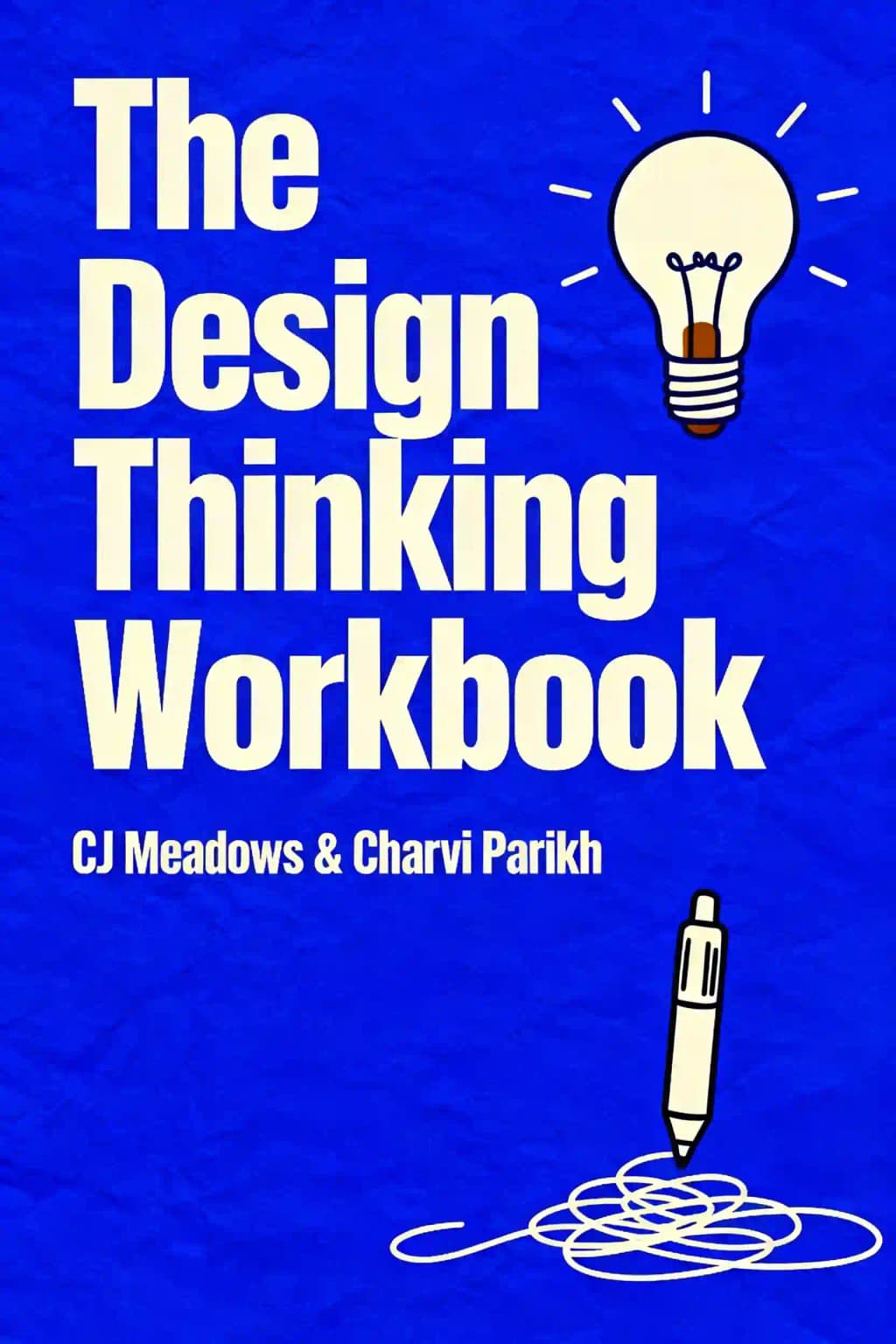
Design Thinking Workbook
Essential Skills for Creativity and Business Growth
Panoramica di Design Thinking Workbook
Transform your innovation process with "The Design Thinking Workbook" - the hands-on guide praised as "required reading for every startup founder." Dr. CJ Meadows, one of Asia's Top-10 Women in IT, reveals the six-step method that's revolutionizing how global companies solve complex problems.
Temi chiave in Design Thinking Workbook
- human-centered problem solving
- empathy mapping
- rapid prototyping
- iterative solution testing
- problem reframing
Citazioni da Design Thinking Workbook
Empathy is the foundation of human-centered design.
The goal is to set aside our assumptions and gain fresh insights.
This is the time to dream big and consider a wide range of possibilities.
Design thinking can help you see challenges in a new light.
Personaggi di Design Thinking Workbook
- CJ MeadowsCo-author and expert in design thinking
- Charvi ParikhCo-author and expert in design thinking
Scarica il riassunto di Design Thinking Workbook
Ottieni il riassunto di Design Thinking Workbook in formato PDF o EPUB gratuito. Stampalo o leggilo offline quando vuoi.
FAQ su questo libro
The Design Thinking Workbook provides a hands-on guide to mastering Design Thinking (DT) principles, tools, and techniques for solving real-world challenges. It emphasizes creativity, empathy, and iterative prototyping to develop human-centered solutions, with exercises and visual methods to enhance problem-solving skills. The book bridges theory and practice, helping readers apply DT across business, education, and social innovation contexts.
This book is ideal for entrepreneurs, business leaders, educators, and anyone seeking to drive innovation through structured creativity. Its practical approach benefits beginners and experts alike, particularly those in roles requiring problem-solving, product development, or organizational change. Policymakers and social entrepreneurs will also find value in its human-centered frameworks.
Yes, the book offers actionable strategies, case studies (like Amazon’s DT journey), and exercises to boost creativity and productivity. Its blend of theory and hands-on activities makes it a valuable resource for professionals aiming to implement Design Thinking effectively. The visual and experiential approach ensures engagement across learning styles.
Core concepts include empathy mapping, observation, critical thinking, prototyping, and customer journey analysis. The authors introduce frameworks like the 7-step DT process, story wording for team collaboration, and problem identification techniques. These tools help users tackle challenges methodically while fostering innovation.
Unlike purely theoretical guides, this workbook prioritizes experiential learning with exercises, templates, and real-world examples. It stands out for its visual methodology and focus on immediate application, making it a practical companion for both training and implementation.
The book features creative exercises like brainstorming sessions, empathy-driven role-playing, prototyping workshops, and visual mapping tools. These activities aim to unlock innovative thinking, refine problem-solving skills, and align solutions with user needs. Examples include Amazon’s DT case study and improv-inspired teamwork drills.
CJ Meadows and Charvi Parikh define Design Thinking as a human-centered, iterative approach to problem-solving that prioritizes empathy, experimentation, and collaboration. It combines analytical rigor with creative exploration to address complex challenges in business and society.
While highly practical, the book requires active participation in exercises to fully benefit, which may challenge time-constrained readers. However, it receives praise for its structured yet adaptable framework, making it a comprehensive resource despite the learning curve.
Its principles remain timeless, particularly with rising demand for innovation in AI, digital transformation, and hybrid work environments. The focus on human-centric solutions ensures continued relevance across industries adapting to rapid technological and social changes.
CJ Meadows holds a Harvard DBA and leads a global innovation center, while Charvi Parikh specializes in education and corporate DT applications. Their combined expertise spans decades of consulting, academia, and cross-industry problem-solving.
- Empathy-first approach: Deeply understanding user needs drives effective solutions.
- Iterative prototyping: Rapid testing and refinement reduce implementation risks.
- Visual collaboration: Tools like journey mapping enhance team alignment and creativity.
Start by conducting empathy interviews to uncover unmet customer needs, then prototype low-cost solutions for testing. For example, Amazon used DT to refine customer experiences, while Castle High School redesigned educational programs. The book’s templates streamline this process.