Capitolo 1
The Dawn of a Genetic Revolution: When Science Fiction Becomes Reality
Jennifer Doudna couldn't sleep. As the coronavirus pandemic shut down her Berkeley lab in early 2020, the renowned biochemist realized scientists needed to rush into the breach. With methodical intensity beneath her calm facade, she assembled teams to develop testing labs and virus detection methods using CRISPR-the revolutionary gene-editing technology she helped pioneer. The tool that earned her a Nobel Prize in 2020 was based on bacteria's virus-fighting mechanisms, making it fitting that CRISPR might now help combat a pandemic.
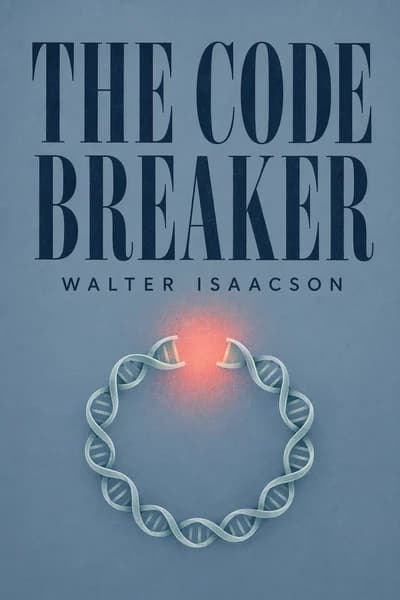
"The Code Breaker" by Walter Isaacson has been hailed as one of the most important science books of the decade, with Bill Gates calling it "the best guide to the most significant scientific breakthrough of our time." The book chronicles how Doudna and her colleagues launched a revolution that allows us to cure diseases, fend off viruses, and potentially enhance our children. Beyond immediate virus battles looms a profound question: should we use gene editing to make humans less susceptible to viruses or eliminate genetic disorders? As we enter the third great revolution of modern times-after the physics and digital revolutions comes the life-science revolution-children studying digital code will soon be joined by those studying genetic code, forever changing what it means to be human.
Capitolo 2
From Hawaiian Shores to Scientific Frontiers: The Making of a Scientist
Jennifer Doudna's journey to becoming a revolutionary scientist began on the lush shores of Hilo, Hawaii. As a blonde, blue-eyed girl among predominantly Polynesian classmates, she experienced the discomfort of being an outsider-called "haole" and teased for her appearance. This early alienation fostered both a defensive wariness and a wide-ranging curiosity about how humans fit into the natural world.
"I felt like a complete freak," Doudna later recalled of her childhood. But this outsider status ultimately strengthened her scientific resolve. Her life improved when her family moved to the slopes of the Mauna Loa volcano, where she made a lifelong friend in Lisa Hinkley and developed the boldness that would later serve her scientific career. Hawaii's rich biodiversity sparked her scientific curiosity through nature walks with biology professor Don Hemmes, who taught her to identify and categorize mushrooms and shells.
The pivotal moment in Doudna's scientific awakening came when her father gave her a used paperback copy of James Watson's "The Double Helix." Initially mistaking it for a detective story, she discovered it was indeed a scientific detective drama about the race to discover DNA's structure. Despite the book's casual sexism toward Rosalind Franklin, Doudna was struck by the revelation that "women could be scientists." The book's core insight-that a molecule's structure determines its biological function-would shape her entire career.
"I never forgot the lesson from that book: science is both a deeply human activity and a kind of detective work," Doudna later wrote. When her high school guidance counselor told her "Girls don't do science," the discouragement only strengthened her resolve. Rather than being deterred, she became more determined, eventually gaining admission to Pomona College's biochemistry program in 1981.
At Pomona, Doudna initially struggled with homesickness and imposter syndrome. When she nearly switched to French, a summer job in Don Hemmes' lab studying cell movement rekindled her scientific passion. Unlike chemistry class with its rigid protocols, research offered the thrill of discovery without predetermined answers. This experience convinced her she could indeed "do science," leading to her first acknowledgment in a scientific journal and setting her on the path that would eventually revolutionize genetic engineering.
Capitolo 3
The Molecular Dance: RNA's Surprising Versatility
While DNA remains the celebrity molecule of genetics, RNA emerged as the unsung hero of Doudna's scientific journey. The "central dogma" of molecular biology describes how genetic information flows from DNA to RNA to proteins-DNA's coded instructions are transcribed into messenger RNA, which travels to the cell's manufacturing region to direct the assembly of amino acids into proteins. These proteins, especially enzymes, catalyze virtually all cellular reactions.
But RNA's role is far more complex than mere messenger. In the early 1980s, Thomas Cech and Sidney Altman independently discovered that RNA could function as enzymes-dubbed "ribozymes." They found certain RNA molecules could catalyze their own splicing, cutting out non-coding sections called introns and rejoining the useful segments. This Nobel Prize-winning discovery suggested RNA might be more fundamental to life's origins than DNA, since RNA could both store genetic information and catalyze chemical reactions.
When Doudna joined Jack Szostak's lab at Harvard for her doctoral research in 1986, he proposed a risky shift from DNA to RNA research. While others rushed toward DNA sequencing for the Human Genome Project, Szostak wanted to explore whether ribozymes could self-replicate, potentially revealing secrets about life's origins. Doudna embraced this contrarian approach, drawn to Szostak's guiding principle: "Never do something that a thousand other people are doing."
From Szostak, Doudna learned another crucial lesson: ask big questions. The origins of life represented one of science's grandest puzzles potentially within reach of solution. The "RNA world" hypothesis, named by Walter Gilbert the same year Doudna joined Szostak's lab, proposed that RNA preceded both DNA and proteins in evolution. If RNA could replicate itself, it might have been life's precursor molecule.
"I'm someone who's thinking about science all the time," Doudna once said, describing her all-consuming passion. This dedication led to breakthrough discoveries about RNA's structure and function. Working with graduate student Jamie Cate, Doudna pioneered RNA crystallography, revealing how RNA folds into complex three-dimensional structures that enable its diverse functions.
Their landmark paper in Science demonstrated how metal ions formed a core around which RNA structure folded, explaining how RNA could function as an enzyme capable of slicing, splicing, and replicating itself. This work established Doudna's reputation in the fundamental science of RNA structure-knowledge that would prove crucial when she later encountered the mysterious RNA-guided bacterial defense system called CRISPR.
Capitolo 4
The Bacterial Immune System: CRISPR's Origins
The story of CRISPR begins not with human ingenuity but with bacterial survival. In 1987, Japanese researcher Yoshizumi Ishino discovered "an unusual structure" in E. coli DNA-five identical 29-nucleotide sequences arranged as direct repeats separated by "spacers." He couldn't determine their function, publishing the observation as a curious footnote.
Three years later, Spanish microbiologist Francisco Mojica found similar repeating sequences while studying salt-loving archaea. Initially thinking he'd made a sequencing error, Mojica laboriously searched printed indexes and library journals, eventually finding Ishino's paper. The discovery of similar repeats in such different organisms convinced him they must serve an important biological purpose.
Despite being told to "stop obsessing about repeats" and struggling for funding, Mojica persisted, believing bacteria wouldn't waste genetic material on functionless sequences. In 2001, he coined the name "CRISPR"-clustered regularly interspaced short palindromic repeats-a clunky phrase but with a crisp, friendly acronym.
Mojica's breakthrough came in 2003 when he realized the spacer segments between CRISPR repeats matched sequences from viruses that attacked those bacteria. He had discovered bacteria's adaptive immune system-they could remember past viral attacks by storing viral DNA fragments. When the same virus attacked again, bacteria could recognize and destroy it using this genetic memory.
"When I made that discovery, I was so excited I couldn't sleep," Mojica recalled. "I ran around the department telling everyone, but nobody seemed to care." Despite the significance, his paper faced multiple rejections before finally being published in 2005, two years after his discovery.
What Mojica had uncovered was the frontline of Earth's longest war: bacteria versus bacteriophages. These phage viruses outnumber all organisms combined-with trillions for every grain of sand. Bacteria have been fighting them for three billion years, evolving sophisticated defense systems. The CRISPR system was ingeniously adaptive-bacteria that survived viral attacks incorporated viral DNA fragments as "spacers" between their CRISPR repeats, creating an acquired immunity that protected future generations.
This bacterial immune system would eventually be repurposed into humanity's most powerful gene-editing tool, but the connection between these microbial defense mechanisms and human genetic engineering wasn't immediately obvious. The crucial link came in 2006 when Berkeley microbiologist Jillian Banfield contacted Jennifer Doudna about strange CRISPR sequences in bacteria from extreme environments.
Meeting at Berkeley's Free Speech Movement Cafe, an enthusiastic Banfield shared printed sequences and hand-drawn diagrams of repeating patterns in bacterial DNA. Doudna, who had never heard of CRISPR before (even thinking Banfield was saying "crisper"), recognized an opportunity for biochemists to complement the microbiologists' theoretical work by isolating and testing CRISPR components in controlled laboratory conditions.
Capitolo 5
The Breakthrough: Engineering CRISPR into a Genetic Tool
The transformation of CRISPR from bacterial curiosity to revolutionary gene-editing tool required bringing together diverse scientific expertise. When Doudna decided to investigate CRISPR, she assembled a team including Blake Wiedenheft, a charismatic Montanan with experience collecting microorganisms from extreme environments, and Martin Jinek, a precise Czech biochemist with expertise in RNA structures.
Their first breakthrough came when they determined the structure of Cas1, the enzyme bacteria use to incorporate viral DNA snippets into their CRISPR arrays-essentially the mechanism for forming immunological memories. This 2009 paper marked Doudna's lab's first contribution to CRISPR research.
Meanwhile, French microbiologist Emmanuelle Charpentier was studying a particularly interesting CRISPR system in the bacteria that causes strep throat. In 2011, she discovered a crucial component called tracrRNA (trans-activating CRISPR RNA) that helped process CRISPR RNA into its active form. When Charpentier presented at a conference in Puerto Rico, she sought out Doudna to propose a collaboration on determining how the Cas9 enzyme cut DNA.
"I think it's going to be fun to work with you," Charpentier told Doudna, who felt a chill run down her spine at these words. The prospect of hunting for one of life's basic mysteries gave Doudna a profound sense of purpose.
The international collaboration that followed-featuring researchers from Hawaii, the Czech Republic, France, and Poland-evolved into a round-the-clock operation. Jinek would conduct experiments, email Vienna, and Chylinski would continue the work during his daytime hours, creating a continuous research cycle.
Their breakthrough came when they discovered that the CRISPR-Cas9 system required three components: the Cas9 enzyme, a guide RNA (crRNA) that matched target DNA, and the tracrRNA that held everything together. The crRNA contained a twenty-letter sequence guiding the complex to matching DNA, while Cas9 did the actual cutting. This was evolution's billion-year miracle, now understood by humans.
The team's stunning realization was that CRISPR-Cas9 could be programmed to target any DNA sequence for cutting by simply changing the guide RNA sequence. When Jinek showed Doudna data demonstrating they could program Cas9 with different guide RNAs to cut DNA at will, they paused and looked at each other in awe. They had developed a means to rewrite the code of life.
The next breakthrough came when they realized both RNAs could be fused into a single molecule that would retain full functionality. This "single-guide RNA" (sgRNA) dramatically simplified the CRISPR system. When they realized the implications, Doudna felt chills and the hairs on her neck stood up.
Their landmark paper, published in Science in June 2012, detailed how this bacterial defense system could be repurposed as a programmable DNA-cutting tool. Though they hadn't yet demonstrated it working in human cells, they had created the foundation for a technology that would transform genetic engineering forever.
Capitolo 6
The Race to Edit Human Genes
The publication of Doudna and Charpentier's paper in Science sparked a fierce competition to adapt CRISPR for editing human genes. Unlike bacterial cells, human cells have their DNA enclosed within a nucleus and packaged differently, presenting additional challenges.
Three main competitors emerged in this race: Feng Zhang of the Broad Institute, whose natural humility masked his ambition; George Church of Harvard, driven more by curiosity than competitiveness; and Doudna herself, who was comfortable with her competitive nature despite criticism from Charpentier, who found her preoccupation with credit somewhat unseemly.
Zhang, a brilliant young scientist born in China and raised in Iowa, had already made significant contributions to neuroscience tools. When he learned about CRISPR, he recognized its potential for human applications and began experiments to adapt it for mammalian cells. Meanwhile, Church, a gentle giant with a wild beard resembling a cross between Darwin and a woolly mammoth, pursued similar work at Harvard.
Despite never having experimented with human cells before, Doudna entered the race, pushing her researcher Martin Jinek to prioritize this work. Their breakthrough came when Alexandra East, a new graduate student trained at the Broad Institute, joined the lab with human cell experience. Though East was initially uncertain about her results, Doudna immediately recognized successful gene editing in the data.
In January 2013, both Zhang and Church published papers in Science demonstrating CRISPR-Cas9 editing in human cells. Their papers appeared online simultaneously on January 3, 2013, creating a virtual tie in the scientific race. Doudna's paper followed weeks later on January 29.
The simultaneous publication of multiple papers on CRISPR editing in early 2013 demonstrated that this revolutionary technology's development was inevitable after the initial test tube demonstration. As Doudna later reflected, "It was like a starter pistol had been fired."
The scientific race quickly evolved into a commercial competition. Doudna and her former student Rachel Haurwitz established Caribou Biosciences, while Charpentier partnered with Rodger Novak to form CRISPR Therapeutics. Zhang, Church, and initially Doudna formed Editas Medicine, though Doudna later left the company over tensions with Zhang regarding patent rights.
These competing startups attracted significant venture capital funding, setting the stage for both scientific advancement and intense commercial competition in the gene editing space. By 2015, CRISPR companies had raised hundreds of millions in investment, with valuations quickly reaching billions of dollars.
Capitolo 7
The Patent Battle: Who Owns CRISPR?
The race to commercialize CRISPR technology inevitably led to a contentious patent dispute that would divide the scientific community. In May 2012, Doudna and the University of California filed a patent application covering the use of CRISPR-Cas9 as a gene-editing tool in all cells. Seven months later, Zhang and the Broad Institute filed their own application specifically for using CRISPR in eukaryotic cells (including human cells).
Though Doudna filed first, Zhang's team paid extra to expedite their application, receiving patents in April 2014 while Doudna's was still pending. When Doudna learned of this, she was "livid" and filed for an "interference" hearing, arguing that Zhang's claims were "not patentably distinct" from her pending application.
The battle centered on whether it was "obvious" that a system working in bacteria would work in human cells. Doudna claimed her application covered "all organisms" with "detailed descriptions" for applying CRISPR to humans, while Zhang countered that her application lacked "features required for Cas9 binding and DNA target site recognition in a human cell."
At the December 2016 patent hearing, Zhang's lawyer strategically displayed Doudna's own statements undermining her case, including her admission: "We weren't sure if CRISPR-Cas9 would work in plant and animal cells." When Judge Katz asked if anyone had stated they believed it would work in eukaryotes, Doudna's lawyer could only point to her calling it "a real possibility."
In February 2017, the judges sided with Zhang, ruling "the invention of such systems in eukaryotic cells would not have been obvious." The U.S. Court of Appeals upheld this decision in September 2018, though with a crucial nuance: it determined there was "no interference" between Zhang's patents and Doudna's applications, but emphasized this was "not a ruling on the validity of either set of claims."
This opened the door for both to receive patents for distinct inventions. In early 2019, the Patent Office granted fifteen patents based on Doudna and Charpentier's 2012 applications. Meanwhile, in Europe, Zhang's patent was revoked after Luciano Marraffini was dropped from the application, causing Zhang to lose his priority date.
The patent dispute highlighted tensions between academic collaboration and commercial interests. Luciano Marraffini, who had collaborated with Zhang since early 2012 and co-authored his Science paper, was devastated when removed from their patent application. "Feng Zhang didn't even have the politeness to tell me directly," Marraffini recalled sadly.
Despite the contentious legal battles, the scientific community continued to recognize both Doudna and Charpentier's fundamental contributions. In 2020, they were awarded the Nobel Prize in Chemistry for "the development of a method for genome editing"-a clear acknowledgment of their pioneering role in creating CRISPR technology.
Capitolo 8
From Laboratory to Clinic: CRISPR's Medical Revolution
While patents and prizes dominated headlines, the real promise of CRISPR lay in its potential to treat human disease. In July 2019, Victoria Gray, an African American mother of four from Mississippi, became the first person in the U.S. treated with CRISPR gene editing for sickle cell disease. Doctors extracted her stem cells, edited them to activate a gene producing fetal hemoglobin (which isn't affected by the sickle-cell mutation), and reinfused them.
Nine months later, the results were remarkable-81% of her bone marrow cells were producing healthy fetal hemoglobin, she'd had no pain attacks, and needed no blood transfusions. "High school graduations, college graduations, weddings, grandkids-I thought I wouldn't see none of that," Gray said. "Now I'll be there."
For Charpentier, hearing Gray's story was deeply moving: "the little baby I helped to create, CRISPR editing, means that she will no longer suffer."
Beyond sickle cell, CRISPR therapies were being developed for numerous conditions. China pioneered CRISPR cancer treatments, beginning in October 2016 when doctors in Chengdu treated a lung cancer patient by extracting T-cells, using CRISPR to disable the PD-1 gene (which cancer cells exploit to evade immune response), and reinfusing them.
In March 2020, at Oregon's Casey Eye Institute, doctors performed the first in-body CRISPR treatment, injecting three drops of fluid containing CRISPR-Cas9 beneath the retina of a patient with Leber congenital amaurosis, a form of genetic blindness. Unlike blood cells, eye cells don't divide and replenish, so if successful, the fix would be permanent.
By early 2020, two dozen clinical trials for various CRISPR treatments were underway, targeting conditions from acute myeloid leukemia to hereditary angioedema. When the coronavirus pandemic hit, many CRISPR researchers, including Doudna, pivoted to developing detection tools and treatments for COVID-19.
Beyond treating existing diseases, researchers were exploring ambitious applications to reduce vulnerability to future diseases. These included adding copies of the P53 gene (which suppresses tumors and is present in 20 copies in cancer-resistant elephants), converting the Alzheimer's-linked APOE4 gene to a benign version, and editing the PCSK9 gene to reduce "bad" cholesterol and heart disease risk.
Despite CRISPR's life-saving potential, treatments could cost $1 million per patient-a concern Doudna confronted during a 2018 Senate meeting. When she mentioned CRISPR's potential to cure sickle cell disease, senators immediately questioned how the healthcare system could afford treating 100,000 U.S. patients at such prices. This prompted Doudna to make affordable sickle-cell treatments a core mission of her Innovative Genomics Institute, partnering with the Gates Foundation and NIH on a $200 million initiative.
Capitolo 9
The CRISPR Baby Scandal: When Science Outpaces Ethics
While medical applications of CRISPR in consenting adults progressed cautiously, a shocking announcement in November 2018 thrust CRISPR into global controversy. He Jiankui, a Chinese scientist who had studied in the United States, revealed he had created the world's first gene-edited babies-twin girls whose CCR5 gene had been modified in an attempt to make them resistant to HIV.
Born in 1984 to impoverished rice farmers in rural Hunan province, He Jiankui had risen through China's academic system, earning a PhD at Rice University before returning to establish multiple biotech companies in Shenzhen. Despite meeting with Jennifer Doudna and other CRISPR pioneers at conferences, He never disclosed his plans to create gene-edited babies.
In 2017, He obtained questionable ethics approval from a hospital ethics committee and began recruiting HIV-positive fathers and their wives for his experiment. His goal was to disable the CCR5 gene to create HIV-resistant children. Working largely in secret with minimal oversight, He successfully implanted edited embryos, resulting in the birth of twin girls, Lulu and Nana, with a third baby on the way.
News of the births broke just before the Second International Summit on Human Genome Editing in Hong Kong in November 2018. When He Jiankui presented his work, the scientific community was appalled by both his ethical violations and technical shortcomings. David Baltimore, a Nobel laureate and summit chair, delivered a powerful rebuke, calling the work "irresponsible" and a failure of self-regulation.
Watching from the audience, Jennifer Doudna felt physically ill-sweating and sick to her stomach as she witnessed her co-invented CRISPR tool being used to create the first genetically designed humans before safety testing, ethical resolution, or social consensus. "I was concerned that the race to do this had been motivated not by medical need but by a desire for attention," she recalled.
He Jiankui's unpublished manuscript revealed troubling details: Lulu's editing was only partially successful, with just one of her two chromosomes properly modified. Additionally, both embryos showed evidence of unwanted off-target edits and were mosaics, meaning some cells remained unedited. As Kiran Musunuru of the University of Pennsylvania later commented, "The first attempt to hack the code of life... had in fact been a hack job."
At the end of 2019, He Jiankui was tried in the People's Court of Shenzhen. Though allowed his own attorneys and permitted to speak in his defense, the outcome was predetermined after he pleaded guilty to "illegal medical practice." He received a three-year prison sentence, a $430,000 fine, and a lifetime ban from reproductive science work.
The trial revealed that a third CRISPR baby had been born to a second woman, though no details were provided about this child or the status of the original twins, Lulu and Nana.
Capitolo 10
The Moral Frontier: Navigating CRISPR's Ethical Landscape
The CRISPR baby scandal forced scientists and society to confront profound ethical questions about human genetic engineering. For the first time in evolutionary history, a species had developed the capacity to edit its own genetic makeup, offering both wondrous benefits and profound moral questions.
Jennifer Doudna's own ethical journey began with a disturbing nightmare. In spring 2014, she dreamt of meeting Adolf Hitler with a pig's face who wanted to learn about gene editing. The nightmare left her shaken and sleepless, confronting the possibility that her work could be perverted. "Emmanuelle and I, and our collaborators, had imagined that CRISPR technology could save lives by helping to cure genetic disease," she later wrote. "Yet as I thought about it now, I could scarcely begin to conceive of all of the ways in which our hard work might be perverted."
Motivated by this nightmare, Doudna organized a conference in January 2015 in Napa Valley with scientists including David Baltimore, who suggested a larger conference modeled after the historic 1975 Asilomar meeting on recombinant DNA. This led to the publication of guidelines calling for a moratorium on clinical applications of human germline editing. Their paper "A Prudent Path Forward" was published in Science in March 2015.
The urgency of their concerns was validated when Chinese scientists published research on CRISPR editing in nonviable human embryos in April 2015, triggering international controversy. This led to the First International Summit on Human Gene Editing in December 2015, bringing together over 500 scientists, policymakers, and bioethicists.
The fundamental ethical questions around CRISPR centered on several key distinctions. First was the difference between somatic editing (changes to targeted cells in living patients that don't affect reproductive cells) and germline editing (changes made to DNA in eggs, sperm, or early embryos that affect every cell in resulting children and all their descendants).
Another crucial distinction was between "treatments" designed to fix dangerous genetic abnormalities and "enhancements" designed to improve human capacities or traits. At first glance, treatments seem easier to justify than enhancements. However, this distinction quickly becomes blurry. Genes might predispose children to be short, obese, have attention deficits or depression. When do modifications cross from treatment to enhancement?
To navigate these ethical questions, scientists and ethicists explored specific cases. Huntington's disease presented perhaps the clearest case for gene editing-a cruel killer caused by abnormal DNA repetition that leads to uncontrollable twitching, loss of focus, inability to walk, talk or swallow, and sometimes dementia.
More complex was the case of sickle-cell anemia. While it causes tremendous suffering, people with just one copy of the gene gain immunity to malaria-the gene serves an evolutionary purpose, especially in sub-Saharan Africa. David Sanchez, a teenager with sickle cell, initially expressed appreciation for how his condition taught him patience and positivity, questioning whether he'd be himself without it. Yet when asked directly if he'd want his future children born without sickle cell, he answered, "Yes, if that's an option, then of course."
The case of Sharon Duchesneau and Candy McCullough, a deaf lesbian couple who deliberately sought a deaf sperm donor, raised questions about what constitutes a disability. They consider deafness part of their cultural identity rather than something to be cured.
Perhaps most concerning was the possibility of enhancing traits like intelligence, athletic ability, or appearance. Gene editing could create super-athletes by modifying genes like MSTN that limit muscle growth-already done in "mighty mice" and cattle with "double muscling." Would we admire the genetic engineer more than the athlete?
The fundamental tension emerges between celebrating natural talent plus disciplined effort versus engineered physical advantages that diminish the role of human effort in victory. As Harvard philosopher Michael Sandel argues, engineering our children's genes undermines our appreciation for life's "gifted character" and diminishes empathy for those less fortunate.
Capitolo 11
CRISPR Meets COVID: Science in a Time of Crisis
When the COVID-19 pandemic emerged in early 2020, Jennifer Doudna recognized that her expertise in RNA and gene editing could be crucial in the fight against the virus. Drawing on her talent for collaboration, she mobilized researchers at the Innovative Genomics Institute (IGI), the joint Berkeley-UCSF research partnership she directed, to tackle the crisis.
On March 13, 2020, Doudna convened a meeting that drew dozens of lab leaders in person and fifty more researchers via Zoom. By their second meeting on March 18, Doudna had established ten project teams with designated leaders. Berkeley's legal team developed a policy for royalty-free licensing of discoveries while protecting intellectual property. "It's not about making money here," Doudna emphasized.
The team transformed a 2,500-square-foot space on the IGI building's ground floor into a coronavirus testing facility in just days-a process that would normally take months. They scavenged supplies from labs across campus, conducting what Enrique Lin Shiao called "a giant scavenger hunt" for equipment like PCR plates.
By early April, the tests were ready. On April 6, a fire department officer delivered the first samples, with Fyodor Urnov promising results by the next morning. The lab's impact was immediately felt by the community-Berkeley's health officer requested 5,000 tests for residents including the poor and homeless, while thirty quarantined firefighters awaited results.
Meanwhile, both Feng Zhang's team at the Broad Institute and Doudna's former students at Mammoth Biosciences rapidly developed CRISPR-based diagnostic tests for SARS-CoV-2. Zhang's SHERLOCK and Mammoth's DETECTR systems offered advantages over conventional PCR tests-cheaper, faster, and potentially usable at home without specialized equipment.
Beyond diagnostics, scientists explored how CRISPR could directly combat the coronavirus. Cameron Myhrvold had already demonstrated that Cas13 could both detect and destroy RNA viruses. When COVID emerged, Stanley Qi at Stanford developed a "PAC-MAN" system using Cas13d to degrade SARS-CoV-2's RNA genome. Qi collaborated with Jennifer Doudna and Ross Wilson at IGI to develop this approach as both a prophylactic and therapeutic.
The pandemic accelerated scientific cooperation in unprecedented ways. Academic labs, led by Doudna and Zhang, made their discoveries freely available rather than guarding intellectual property. Traditional publication gatekeepers were bypassed as researchers posted over a hundred papers daily on preprint servers, allowing real-time information sharing and crowdsourced vetting.
As Doudna wrote in The Economist, science was undergoing rapid, permanent changes "for the better"-with increased public understanding of biology, greater appreciation for funding basic science, and transformed scientific collaboration. George Church observed that COVID became the catalytic biological event bringing science into daily life: "Every now and then a meteor hits, and suddenly the mammals are in charge."
On October 9, 2020, amid this global crisis, Jennifer Doudna was awakened at 2:53 a.m. by a call from a Nature reporter seeking comment on her Nobel Prize. The 2020 Nobel Prize in Chemistry awarded to Doudna and Emmanuelle Charpentier was historic-just the sixth and seventh women among 186 chemistry laureates, a correction reminiscent of Rosalind Franklin's unrecognized contributions to DNA discovery.
During her press conference, Doudna proudly celebrated this milestone for women, noting "I'm proud of my gender!" and reflecting on being told as a schoolgirl that "girls don't do science." By honoring CRISPR during a viral pandemic, the Nobel committee highlighted how curiosity-driven research yields practical applications when society needs them most.
Capitolo 12
The Future of Humanity: CRISPR's Promise and Peril
As we look toward the future, CRISPR technology offers both tremendous promise and profound challenges. The ability to edit our genes raises fundamental questions about what it means to be human and who should control our genetic destiny.
Most moral issues involve two competing perspectives: one emphasizing individual rights and personal liberty, and another focused on what benefits society as a whole. The first tradition argues that people should have freedom to make their own choices as long as they don't harm others. The contrasting view prioritizes societal benefits over individual rights.
Oxford philosopher Julian Savulescu advocates for "procreative beneficence," arguing parents are morally obligated to select the best genes for their children, even if this increases social inequality. But this individual freedom creates problems: a genetic marketplace could reduce human diversity and creativity while permanently encoding inequality into our species.
The discomfort with "playing God" through gene editing stems from both religious and secular perspectives. While some view it as usurping divine power, others see it as hubris to tamper with nature's intricate systems. NIH director Francis Collins questions whether human tinkerers could improve on 3.85 billion years of evolutionary optimization without unintended consequences.
Yet humans have always battled nature's "poisoned offerings"-fighting diseases, fixing disabilities, and breeding better organisms. Darwin himself noted evolution's "clumsy, wasteful, blundering" works, including human design flaws. The wisdom lies in finding balance between mastering nature and accepting the unbidden.
Jennifer Doudna's views on gene editing evolved from initial opposition to cautious support. Her "visceral, knee-jerk reaction" against editing children's genes shifted after organizing the 2015 Napa Valley conference where someone suggested it might be "unethical not to use germline editing to alleviate human suffering." Encounters with families affected by genetic diseases convinced her that preventing such suffering would be moral.
While supporting individual choice in medical decisions, Doudna maintains that CRISPR should only be used when medically necessary with no good alternatives. She worries about inequality if the wealthy can buy genetic enhancements, potentially creating a "gene gap" that widens with each generation.
As we stand at this crossroads of human evolution, we must proceed with both courage and caution. We need not only scientists but humanists, and people comfortable in both worlds, like Jennifer Doudna. Not everything needs to be decided immediately. We can begin by asking what world we want for our children, then feel our way forward together, preferably hand in hand.
The story of CRISPR reminds us that the most revolutionary technologies often emerge from curiosity about nature's mysteries rather than directed efforts to create useful tools. Francisco Mojica's fascination with strange repeated sequences in salt-loving microbes, Doudna's exploration of RNA's structural versatility, and Charpentier's investigation of bacterial immune systems all stemmed from pure scientific curiosity.
As we face the future with this powerful technology in hand, perhaps curiosity itself-pure curiosity-is what will save us. The same drive to understand nature's secrets that led to CRISPR's discovery may guide us toward using it wisely, ensuring that this remarkable tool enhances rather than diminishes our humanity.