Capitolo 1
A Descent into the Human Soul's Darkest Corners
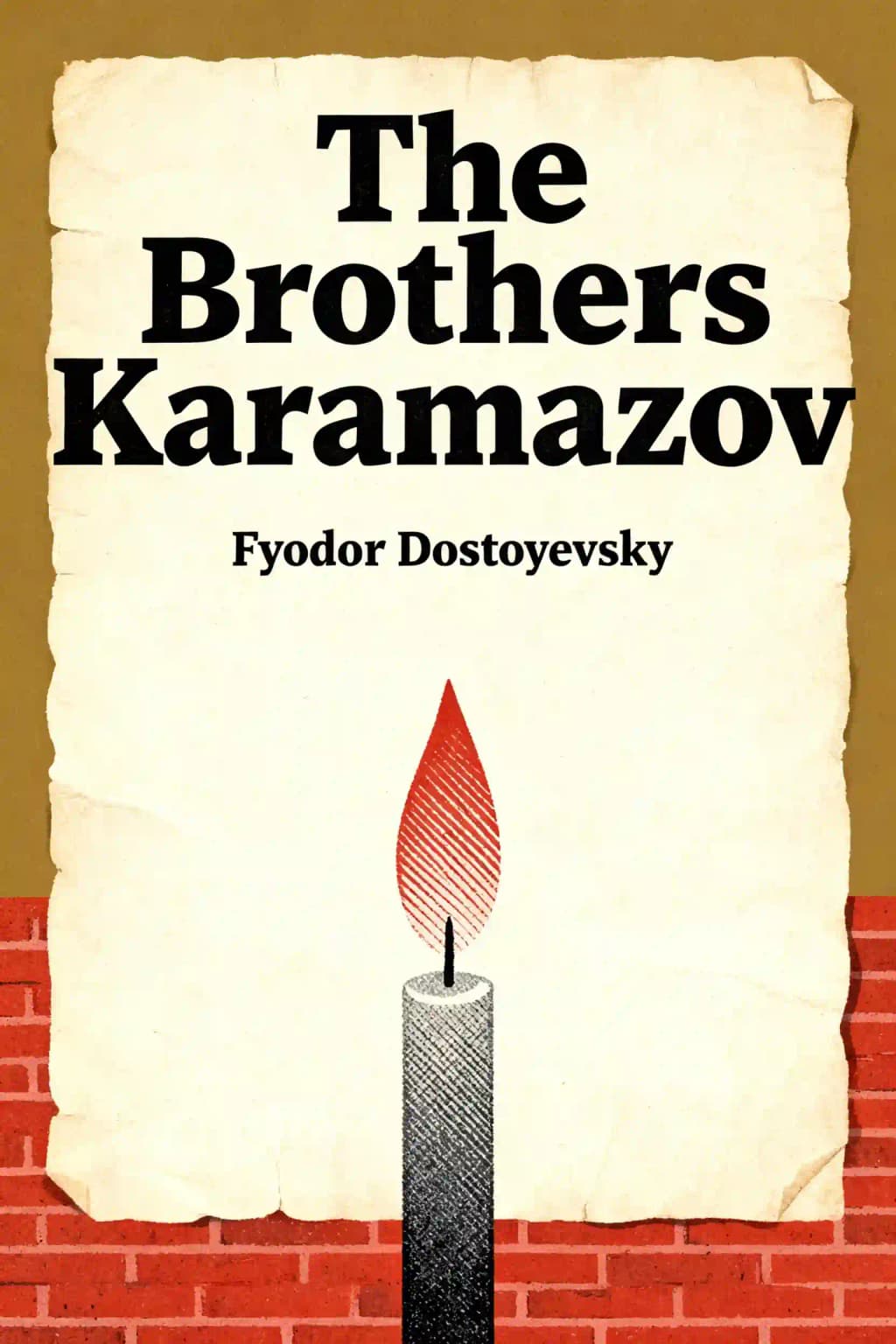
The Brothers Karamazov stands as perhaps the greatest exploration of the human condition ever written. When Sigmund Freud declared it "the most magnificent novel ever written," he wasn't engaging in hyperbole. This towering achievement of Russian literature continues to resonate with readers worldwide-from Jordan Peterson who calls it his favorite book to celebrities like Viggo Mortensen and Oprah Winfrey who cite its profound impact on their worldviews. Even Albert Einstein claimed the novel influenced his scientific thinking about moral responsibility. Dostoevsky's final masterpiece transcends mere fiction to become a spiritual and philosophical journey that asks the most fundamental questions: Does God exist? What gives life meaning? Can we find redemption in a world filled with suffering? As you turn these pages, prepare for a descent into the darkest corners of the human soul-and perhaps, if you're willing to follow Dostoevsky's lead, a path toward the light.
Capitolo 2
The Karamazov Family: A Microcosm of Human Nature
At the center of Dostoevsky's narrative stands the Karamazov family-father Fyodor Pavlovitch and his three legitimate sons: Dmitri, Ivan, and Alexey (Alyosha). Each represents a different facet of human nature, creating a psychological spectrum that encompasses humanity's full range.
Fyodor Pavlovitch embodies unbridled sensuality and moral corruption. A "landowner" who began with nothing but accumulated considerable wealth, he is described as "strange, abject, and vicious." His treatment of his wives and children reveals his complete moral bankruptcy-he abandoned his first son Dmitri to servants after his wife fled, then neglected Ivan and Alyosha after their mother died. His life revolves around debauchery, buffoonery, and the accumulation of money. When we meet him, he's competing with his own son Dmitri for the affections of the seductive Grushenka.
Dmitri (Mitya), the eldest son, represents passionate sensuality tempered by a moral conscience. Like his father, he possesses the "Karamazov nature"-a tendency toward extremes of pleasure and self-destruction. After a military career marked by duels and debts, he returns to his father's town embroiled in a complex love triangle. Engaged to the proud Katerina Ivanovna out of a sense of honor, he falls madly in love with Grushenka, the same woman his father desires. Mitya's internal struggle between his base instincts and his higher nature forms one of the novel's central conflicts. "God and the devil are fighting there, and the battlefield is the heart of man," he declares about his own soul.
Ivan, the middle son, represents the intellectual dimension of humanity. A brilliant writer and thinker, he embodies the rational skepticism of the nineteenth century. His famous declaration that "if God does not exist, everything is permitted" captures the moral crisis of modernity. Though he believes in moral principles, he cannot reconcile them with the suffering of innocent children in a supposedly God-created world. His rebellion against God isn't based on disbelief but on moral outrage-he "returns the ticket" to heaven because he cannot accept a divine plan that includes children's suffering. Ivan's intellectual pride and moral confusion drive him toward madness as the novel progresses.
Alyosha, the youngest brother, represents spiritual purity and active love. A novice monk under the guidance of Elder Zossima, he embodies Dostoevsky's ideal of Christian compassion. Unlike his brothers, Alyosha moves through the world with an open heart, listening without judgment to everyone's confessions. His "loose ego boundaries" allow him to practice what Father Zossima calls "active love"-concrete actions of compassion that can lead to faith. Though tested by doubt and suffering, Alyosha maintains his essential goodness, becoming the novel's moral center.
The illegitimate fourth son, Smerdyakov, represents the darkest possibilities of human nature. Born to "Stinking Lizaveta," a mentally disabled homeless woman allegedly raped by Fyodor Pavlovitch, Smerdyakov grows up as a servant in his father's house. Intelligent but twisted, he develops a philosophy that "everything is permitted" based on Ivan's ideas. His epilepsy, fastidiousness about food, and cruel childhood games with cats mark him as psychologically damaged. As the story unfolds, his role becomes increasingly sinister, embodying the consequences of Ivan's intellectual theories put into practice.
Capitolo 3
Faith and Doubt: The Central Spiritual Struggle
The Brothers Karamazov is fundamentally about the struggle between faith and doubt-not as abstract theological concepts but as lived experiences that shape human destiny. This tension manifests most clearly in the contrast between Elder Zossima and Ivan Karamazov.
Elder Zossima represents faith grounded in active love. As a spiritual guide at the local monastery, he teaches that true Christianity isn't about dogma but about loving one's neighbor concretely and without judgment. His backstory reveals a profound transformation-from a military officer who nearly killed a man in a duel to a monk dedicated to compassion. Zossima teaches that hell is "the suffering of being unable to love" and that salvation comes through recognizing one's responsibility for all humanity's sins. His deathbed teachings form a spiritual manifesto at the heart of the novel: "Love all God's creation, the whole and every grain of sand in it. Love every leaf, every ray of God's light."
Ivan's famous rebellion against God provides the philosophical counterpoint to Zossima's faith. In his conversation with Alyosha, he presents a devastating critique of divine justice. Ivan doesn't reject God's existence but rather His world-specifically, the suffering of innocent children. He collects newspaper stories of children tortured by their parents, asking how any future harmony could justify such suffering. His "poem" about the Grand Inquisitor represents the ultimate challenge to Christ's message of freedom. In it, the Inquisitor argues that humanity cannot bear the freedom Christ offered, preferring instead the security of authority, miracle, and mystery. This tension between spiritual freedom and the human desire for certainty runs throughout the novel.
Alyosha experiences his own crisis of faith after Zossima's death. When the elder's body begins to decompose naturally rather than remaining preserved (as many expected of a saint), Alyosha temporarily loses his spiritual bearings. His visit to Grushenka, intended as a fall into sin, becomes instead a moment of connection when she shows unexpected compassion. Later, during a vision of the wedding at Cana, Alyosha experiences spiritual renewal, throwing himself upon the earth in ecstasy. This moment represents Dostoevsky's vision of faith as something experienced bodily and emotionally, not merely intellectually.
The question of faith extends beyond traditional religion to encompass what gives life meaning. Even characters who reject God search for something transcendent. Dmitri, despite his sensuality, is drawn to poetry and beauty. Ivan, despite his skepticism, cannot escape his moral intuitions. Even Fyodor Pavlovitch, in his debauchery, seeks moments of transcendence through his "insect lust." The novel suggests that humans inherently seek meaning beyond material existence, whether through religion, art, love, or even destruction.
Capitolo 4
Crime and Punishment: The Question of Moral Responsibility
The central plot of The Brothers Karamazov revolves around a murder and its aftermath, using this crime to explore profound questions about moral responsibility. Who is guilty when a father is murdered? Is it only the person who physically committed the act, or do those who wished for it share responsibility?
Fyodor Pavlovitch's murder occurs halfway through the novel, setting in motion a complex examination of guilt and innocence. Though Dmitri is arrested, tried, and convicted for the crime, the actual murderer is Smerdyakov, who acted on what he perceived as Ivan's implicit wishes. This distribution of guilt across multiple characters reflects Dostoevsky's belief that moral responsibility extends beyond physical actions to include intentions and influence.
Ivan's guilt manifests most powerfully in his hallucination of the devil-a sophisticated, world-weary gentleman who torments him with his own ideas. The devil represents Ivan's suppressed conscience, forcing him to confront his role in his father's death. Though Ivan never explicitly instructed Smerdyakov to kill their father, his nihilistic philosophy that "everything is permitted" provided the intellectual justification. When Smerdyakov tells Ivan, "You are the murderer, I was only your instrument," he speaks a psychological truth that drives Ivan toward madness.
Dmitri's trial becomes a microcosm of human judgment, contrasting legal justice with moral truth. Though legally innocent of patricide, Dmitri acknowledges his moral culpability: "I am guilty of drunkenness and dissipation... but I am not guilty of the death of that old man, my enemy and my father." His willingness to accept punishment for his moral failings, if not for the specific crime, represents a step toward redemption. The jury's verdict-guilty on all counts-reflects society's judgment based on circumstantial evidence rather than absolute truth.
Smerdyakov's suicide after confessing to Ivan represents his own form of judgment-he cannot live with the consequences of acting on Ivan's philosophy. Unlike Ivan, who struggles with his conscience, Smerdyakov fully embraces the idea that without God, everything is permitted. His death by hanging echoes Judas's suicide in the Gospels, suggesting a biblical parallel between betraying one's father and betraying God.
Father Zossima's teachings on judgment offer a spiritual counterpoint to the legal proceedings. He advocates for a radical form of responsibility: "Every one is really responsible to all men for all men and for everything." This principle suggests that the entire community shares guilt for creating conditions that allow crimes to occur. Zossima tells a story of a mysterious visitor who confessed to murder years earlier but was never caught-his self-imposed suffering became his punishment, ultimately leading to spiritual renewal.
Capitolo 5
Love in Its Many Forms: Salvation and Destruction
Love appears in multiple forms throughout The Brothers Karamazov-sensual passion, romantic idealization, familial devotion, and spiritual compassion. Each character's capacity for love (or inability to love) determines their fate.
Sensual love, represented primarily by Fyodor Pavlovitch and aspects of Dmitri's character, appears as a destructive force when divorced from higher principles. Fyodor's "insect lust" reduces women to objects of pleasure, while Dmitri's passion for Grushenka initially resembles his father's appetites. Yet Dmitri's capacity for transformation distinguishes him-his love evolves from mere desire to something deeper. When he declares to Grushenka, "I love your wickedness," he acknowledges her full humanity rather than idealizing her.
Romantic idealization appears in Katerina Ivanovna's relationship with Dmitri. After he nobly gives her money to save her father's reputation, she pledges herself to him out of gratitude rather than genuine affection. Her love becomes a form of self-torture-she clings to Dmitri precisely because he humiliates her, allowing her to display heroic fidelity. Ivan recognizes this pattern, telling her she loves "only your own virtue, not him at all." This distorted love brings suffering to everyone involved.
Familial love appears most powerfully in the relationship between Captain Snegiryov and his son Ilusha. Despite his poverty and alcoholism, the Captain shows tender devotion to his dying son. Their evening walks together, where they dream of escaping to another town, represent pure paternal love. When Ilusha dies, the Captain's grief is devastating-he falls to his knees in the snow, crying "Ilusha, old man, dear old man!" This relationship serves as a counterpoint to the dysfunctional Karamazov family.
Spiritual love, or what Father Zossima calls "active love," represents Dostoevsky's ideal. Unlike abstract philanthropy, active love involves concrete actions of compassion toward specific individuals. Zossima teaches that such love can lead to faith rather than the reverse: "Try to love your neighbors actively and indefatigably. In as far as you advance in love you will grow surer of the reality of God." Alyosha embodies this principle, listening without judgment to everyone from the proud Katerina to the sensual Grushenka, creating space for their authentic selves.
The novel's conclusion suggests that love-particularly love for children-offers the greatest hope for redemption. Alyosha's speech at Ilusha's stone urges the boys to remember their unity in kindness: "If a man carries many such memories with him into life, he is safe to the end of his days." This scene, with the boys walking hand in hand shouting "Hurrah for Karamazov!" provides a glimpse of the community based on love that Dostoevsky envisioned.
Capitolo 6
Freedom and Responsibility: The Human Burden
Freedom stands at the philosophical center of The Brothers Karamazov, particularly the tension between human freedom and its terrible responsibilities. This theme receives its most profound treatment in Ivan's poem "The Grand Inquisitor."
In this fictional narrative within the novel, Christ returns to earth during the Spanish Inquisition and is imprisoned by the Grand Inquisitor, who explains why the Church has "corrected" Christ's work. The Inquisitor argues that Christ made a fundamental error in rejecting the devil's temptations in the wilderness-particularly the offer to turn stones into bread. By choosing spiritual freedom over material security, Christ placed an unbearable burden on humanity. "Make us your slaves, but feed us," the Inquisitor claims people will eventually say.
The Inquisitor identifies three powers that could have conquered humanity-miracle, mystery, and authority-all of which Christ rejected in favor of free faith. This decision, the Inquisitor argues, expected too much from weak humans who cannot bear freedom of conscience. The Church, he reveals, has secretly followed Satan for eight centuries, taking "the sword of Caesar" to provide the certainty Christ refused to offer. They will create universal happiness through complete submission, bearing the burden of freedom for the masses.
Christ's response to this devastating critique is simply a kiss-a gesture of compassion that transcends intellectual argument. This silent kiss represents Dostoevsky's vision of love as the ultimate answer to freedom's burden. Through love, humans can bear the responsibility of freedom without succumbing to despair or tyranny.
This philosophical debate extends beyond the poem to the novel's central characters. Dmitri struggles with the freedom to choose between his sensual nature and his higher aspirations. Ivan cannot reconcile intellectual freedom with moral responsibility. Smerdyakov takes Ivan's ideas to their logical conclusion, using freedom to justify murder. Only Alyosha seems capable of bearing freedom's weight through his practice of active love.
The novel's treatment of freedom reflects Dostoevsky's own journey from revolutionary to Christian conservative. Having faced a mock execution and years in Siberian prison for his early political activities, he came to believe that political freedom without spiritual foundation would lead to chaos. Yet he never abandoned his belief in human dignity and the necessity of moral choice. The Brothers Karamazov suggests that true freedom comes not from rejecting all constraints but from voluntarily embracing responsibility for others.
Capitolo 7
The Power of Memory: Redemption Through Remembering
Throughout The Brothers Karamazov, memory functions as a powerful force for both personal identity and moral redemption. Father Zossima emphasizes that memories of goodness, particularly from childhood, can save a person even after years of corruption.
Zossima's own spiritual journey begins with memories of his brother Markel, who underwent a profound transformation before dying young. Markel's deathbed wisdom-"life is paradise, and we are all in paradise, but we won't see it"-remains with Zossima throughout his life, shaping his spiritual vision. Similarly, Zossima recalls a moment from childhood when he heard the biblical story of Job, which planted a "seed of God's word" that would later flourish.
The power of childhood memories appears most dramatically in Dr. Herzenstube's testimony during Dmitri's trial. The elderly doctor recalls buying nuts for young Mitya, who was "running about without boots" in his father's yard. Twenty-three years later, a grown Dmitri sought out the doctor to thank him for this small kindness, moving both men to tears. This story creates a momentary favorable impression of Dmitri during his trial, suggesting that his capacity for gratitude reveals an essential goodness beneath his wild exterior.
Captain Snegiryov and Ilusha create intentional memories during their evening walks together, knowing the boy is dying. They dream about moving to another town and buying a horse and cart, creating a shared fantasy that comforts them both. After Ilusha's death, the Captain clings to these memories, along with physical mementos like his son's little boots, which he kisses in his grief.
The novel concludes with Alyosha explicitly addressing the redemptive power of memory. Speaking to the boys at Ilusha's stone, he urges them to remember their unity in kindness: "You must know that there is nothing higher and stronger and more wholesome and good for life in the future than some good memory, especially a memory of childhood, of home." He suggests that such memories might someday save them from wickedness, even after years of corruption.
This emphasis on memory reflects Dostoevsky's belief that moral identity depends on continuity with one's past. The novel's characters who reject their pasts-like Fyodor Pavlovitch abandoning his children or Smerdyakov denying his origins-lose their moral compass. Those who maintain connection with their memories, particularly memories of love and kindness, retain the possibility of redemption.
Capitolo 8
The Karamazov Legacy: Suffering and Redemption
As The Brothers Karamazov concludes, each character's fate reflects Dostoevsky's complex vision of suffering and redemption. The novel suggests that suffering can lead either to spiritual renewal or to destruction, depending on how it is embraced.
Dmitri's conviction for a murder he didn't commit represents suffering that potentially leads to redemption. Though he initially rages against this injustice, he gradually accepts it as an opportunity for spiritual transformation. "I accept the torture of accusation, and my public shame," he declares. "I want to suffer and by suffering I shall be purified." His plan to escape to America with Grushenka represents a compromise between complete acceptance and complete rejection of his suffering. Though he won't serve the full sentence in Siberia, he accepts exile and hard work as his punishment for moral, if not legal, guilt.
Ivan's suffering takes the form of brain fever and hallucinations-the physical manifestation of his intellectual contradictions. His vision of the devil represents his conscience tormenting him with his own ideas. Unlike Dmitri, who accepts external punishment, Ivan punishes himself through internal torment. The novel leaves his fate ambiguous-Alyosha believes he will either "rise up in the light of truth" or "perish in hate," suggesting that intellectual suffering can lead either to spiritual breakthrough or to destruction.
Katerina Ivanovna's suffering stems from her pride and her distorted love for Dmitri. Her dramatic revelation of his incriminating letter during the trial represents her choice of vengeance over forgiveness. Yet her later care for the feverish Ivan suggests the possibility of genuine love replacing her earlier romantic idealization. Her suffering, like Ivan's, remains unresolved at the novel's end.
Grushenka's suffering transforms her from a vengeful seductress to a woman capable of genuine love. Her five years of waiting for her first lover, who ultimately rejects her, created a hardened exterior that masked her vulnerability. Through her love for Dmitri, she rediscovers her capacity for compassion, vowing to follow him to Siberia and "work for him." Her suffering leads to a form of redemption through devoted love.
The epilogue's focus on Ilusha's funeral suggests that suffering reaches beyond individual characters to affect the entire community. Captain Snegiryov's grief represents the most devastating form of suffering-the loss of a beloved child. Yet even this unbearable pain creates the possibility for community healing, as the boys unite around Ilusha's memory. Alyosha's final speech transforms collective suffering into hope for the future, suggesting that shared memories of goodness can redeem even the deepest pain.
Capitolo 9
The Novel's Enduring Legacy: Timeless Questions in Modern Life
The Brothers Karamazov continues to resonate with readers because it addresses fundamental questions that remain relevant in our contemporary world. Despite being written in 1880 Russia, its exploration of faith, doubt, freedom, and moral responsibility speaks directly to modern concerns.
The novel's psychological insights anticipated Freudian psychoanalysis by decades. Dostoevsky's portrayal of unconscious motivation, family dynamics, and repressed desires reveals his profound understanding of human psychology. Characters like Ivan, whose intellectual positions contradict his emotional needs, or Katerina, whose love masks a desire for self-torture, demonstrate psychological complexity that continues to feel authentic today.
The philosophical debate between faith and atheism presented in the novel remains central to modern discourse. Ivan's argument that a just God wouldn't allow children's suffering anticipates much of twentieth-century existentialism. His insistence that "if God does not exist, everything is permitted" foreshadows the moral crisis of modernity after the "death of God" proclaimed by Nietzsche. Meanwhile, Father Zossima's vision of faith grounded in active love offers an alternative to both rigid dogmatism and empty nihilism.
The novel's political dimensions also speak to contemporary concerns. The Grand Inquisitor's critique of freedom and his vision of authority providing security at the cost of liberty anticipates twentieth-century totalitarianism. His claim that humans will surrender freedom for bread and security remains relevant in discussions of surveillance, authoritarianism, and the balance between liberty and order in modern societies.
Perhaps most importantly, The Brothers Karamazov addresses the human need for meaning in a world that increasingly questions traditional sources of value. Each character searches for purpose-Dmitri through passion, Ivan through intellect, Alyosha through faith, and Smerdyakov through destruction. Their struggles reflect our own quest for significance in a complex world.
The novel's enduring message is ultimately one of hope through connection. Despite portraying humanity's darkest impulses-murder, betrayal, cruelty-Dostoevsky maintains faith in the possibility of redemption through love. Alyosha's final words to the boys-"Certainly we shall all rise again, certainly we shall see each other"-express this fundamental hope. In a world increasingly characterized by isolation and division, The Brothers Karamazov reminds us that our shared humanity, with all its flaws and possibilities, remains our greatest resource for meaning and redemption.