Capitolo 1
The Extraordinary Ordinary: How Humans Became the Paragon of Animals
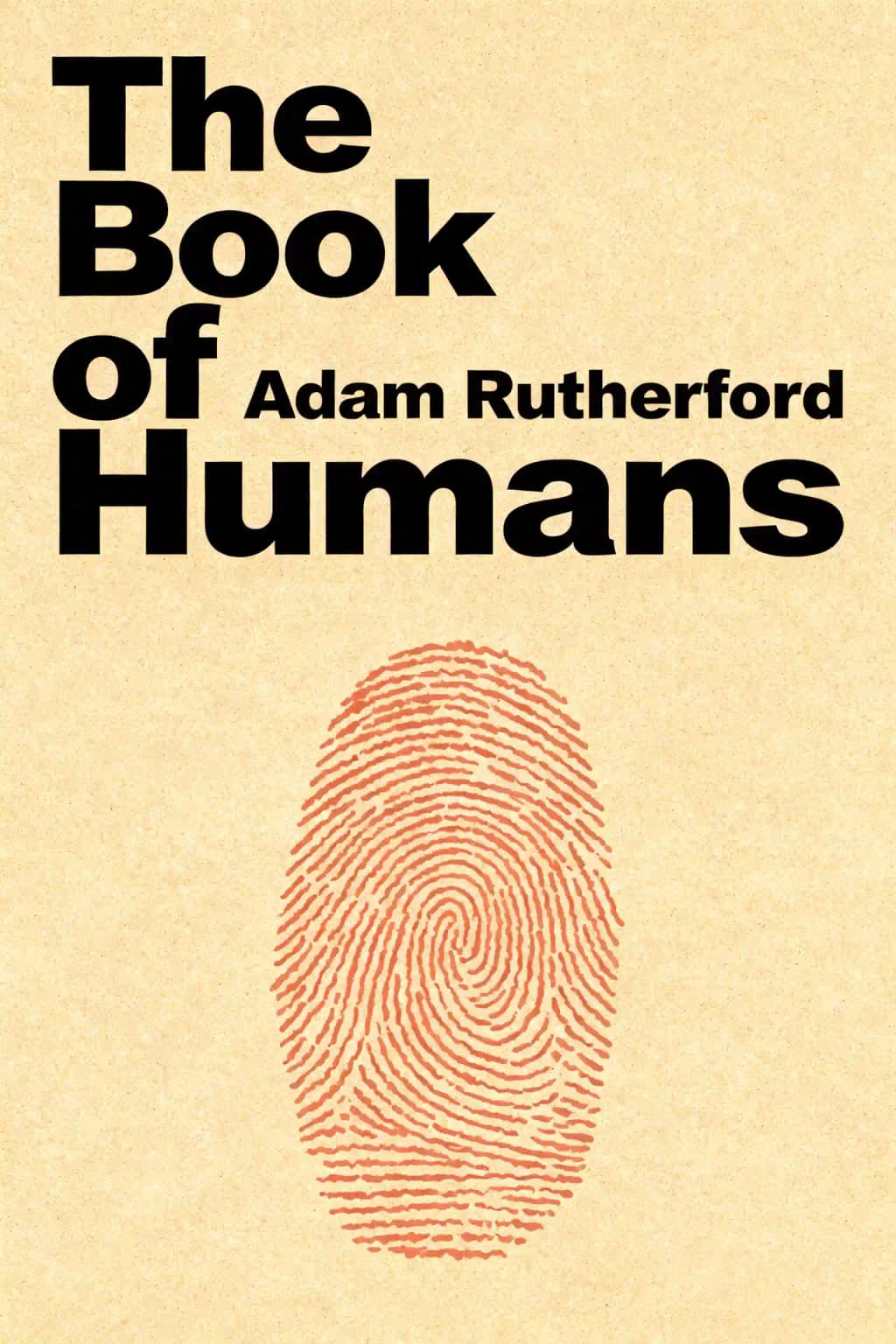
Imagine observing humanity from a distance-tool-wielding creatures who farm their food, engage in complex social interactions, and constantly exchange information through speech. Adam Rutherford's "The Book of Humans" invites us to see ourselves with fresh eyes, exploring the paradox of human existence: we are simultaneously ordinary animals and extraordinary beings. This book has captivated readers across disciplines, from evolutionary biologists to casual science enthusiasts, becoming a Sunday Times bestseller and earning praise from luminaries like Richard Dawkins. Rutherford, a geneticist who identified the first known genetic cause of childhood blindness during his PhD, brings his scientific expertise and storytelling prowess to challenge our understanding of what makes us uniquely human-and what doesn't.
Capitolo 2
The Paradox of Being Human: Extraordinary Yet Ordinary
We humans occupy a peculiar position in the natural world. While we share our evolutionary heritage with all living things, we've developed capabilities that seem to set us apart. Unlike other species with limited cultural transmission, humans systematically teach and accumulate knowledge across generations. Our capacity for abstract thought, symbolic representation, and complex language distinguishes us from our closest primate relatives. Our evolution wasn't sparked by a single genetic change but emerged gradually through interconnected biological and cultural developments, including the development of sophisticated tool use, cooking, and social cooperation.
Darwin noted that we bear "the indelible stamp of our lowly origin," yet we've become something extraordinary-creatures who can understand our own evolution and find meaning in each other. We create art, music, and literature; we build cities and spacecraft; we contemplate our existence and plan for futures we can imagine but haven't yet experienced. This paradox forms the central question of human evolution: how did an average ape develop extraordinary intellectual powers while remaining fundamentally animal in our basic needs and drives?
The puzzle deepens when we consider that physically modern humans existed for tens of thousands of years before displaying the "full package" of modern behaviors. Archaeological evidence shows that anatomically modern humans emerged around 300,000 years ago, but sophisticated cultural expressions like cave paintings, musical instruments, and complex tools appeared much later. Evidence of modern behavior appeared independently in Europe, Indonesia, Africa, and Australia at different times, making a purely genetic explanation unlikely. For instance, the elaborate cave paintings in France's Chauvet Cave (dated to 32,000 years ago) appeared thousands of years after similar artistic expressions in Indonesia.
Recent research suggests that population size and structure drove the emergence of modernity. Mathematical models confirm that larger populations enable far more efficient transfer of complex cultural skills, while small, isolated populations lose skills through inefficient transmission. Studies of contemporary hunter-gatherer societies demonstrate this principle: larger, more connected groups maintain more complex tool sets and cultural practices than isolated ones. This demographic explanation aligns with our fundamental nature as social beings who transmit knowledge horizontally (to peers) not just vertically (to offspring), distributing specialized expertise throughout our communities.
While natural selection operates at the gene level, cultural transmission operates differently-it's not encoded in DNA but selected for at the population level, providing adaptive benefits through collective knowledge sharing. Cultural innovations can spread rapidly across populations and adapt to new circumstances without requiring genetic changes. This interplay between biology and culture creates the unique phenomenon we call humanity, where our genetic heritage provides the foundation for extraordinary cultural achievements that transform our world far faster than biological evolution alone could achieve.
Capitolo 3
Tools: The Extensions of Ourselves
Humans are fundamentally technological creatures. While we associate "technology" with modern devices, all tools-from computers to paintbrushes-represent technology. Tools are external objects used to extend an animal's physical capabilities, and virtually all human creative and cultural activities depend on them, making us an animal whose entire existence relies on technological extensions.
The gap between human and great ape technological abilities represents a significant evolutionary leap. Tool-making requires foresight, imagination, and fine motor control-all demanding substantial brain power. Our hands possess remarkable complexity with 20-30 degrees of freedom, enabling extraordinary dexterity from violin playing to cricket ball spinning.
While humans have unusually large and folded brains with approximately 86 billion neurons, we don't top every neurological metric: sperm whales have heavier brains, African elephants have more neurons (250 billion), and pilot whales have more cortical cells. The encephalization quotient (EQ) ranks mammals by comparing actual brain mass to predicted mass based on body size, with humans coming out on top, followed by dolphins, orcas, and chimps.
Though less than 1% of animal species use tools, this technological behavior spans nine taxonomic classes. Many animals use rocks as food processors-macaques crack open shellfish, sea otters smash mollusks on their bellies, and chimpanzees break open nuts. Sticks are the most common tool: Jane Goodall first observed chimpanzee David Greybeard modifying twigs for termite fishing in 1960, while orangutans use sticks to test water depth before crossing.
Despite their remarkable intelligence, dolphins' tool use is limited by their flippered anatomy. The most notable cetacean tool use occurs in Shark Bay, Australia, where bottlenose dolphins place cone-shaped sea sponges on their beaks to protect themselves while foraging. This behavior isn't encoded in DNA but is culturally transmitted, primarily from mothers to daughters, all descending from a single innovative female ("Sponging Eve") who lived around 180 years ago.
Birds-particularly corvids and parrots-demonstrate remarkable cognitive abilities despite small brain sizes. New Caledonian crows craft and use hooked tools to fish out grubs, showing analogical reasoning by using one tool to retrieve another. Their cognitive abilities stem from neurons packed more densely than in primates, with corvids and parrots having forebrains comparatively the same size as great apes.
Capitolo 4
Fire: The Transformative Element
Fire represents a paradoxical tool-simultaneously destructive yet transformative to human evolution. Darwin considered fire-making "probably the greatest [discovery], excepting language," a statement that underscores its fundamental role in human development. Evidence suggests Homo erectus used fire as early as 1.5-1.7 million years ago, with secure archaeological evidence dating to one million years ago in South Africa's Wonderwerk Cave, where scientists discovered burned bone fragments and plant ash alongside stone tools.
As pyrophiles (fire lovers), humans uniquely cook food, which breaks down complex molecules externally rather than relying solely on digestion. This thermal pre-processing makes nutrients more accessible, reducing the energy required for digestion by up to 30%. Cooking also neutralizes many harmful bacteria and toxins, expands the range of edible foods, and reduces chewing time from approximately 5.2 hours to 1.2 hours daily, decreasing vulnerability to predation. This efficiency allowed early humans to develop smaller jaws and teeth, potentially contributing to increased brain size through reduced muscle mass in the skull. The ability to cook also enabled humans to expand into colder regions, where raw food sources were scarce and thermal protection essential.
Other animals demonstrate fascinating relationships with fire. Vervet monkeys and savannah chimpanzees have adapted to living among wildfires, using burned landscapes to improve predator visibility and access fleeing prey. Some species, like certain beetles, have even evolved infrared sensors to detect and seek out fires. However, none control fire as humans do, marking a crucial evolutionary distinction.
The relationship between wildlife and fire reaches sophisticated levels in some species. In Australia, "firehawks"-including black kites (Milvus migrans), whistling kites (Haliastur sphenurus), and brown falcons (Falco berigora)-have been observed deliberately spreading wildfires by carrying burning sticks to unburned areas, sometimes up to 50 meters away. Aboriginal knowledge of this behavior predates scientific documentation by centuries, with multiple independent observations confirming that these birds intentionally spread fire to flush out prey. This represents a sophisticated understanding of cause and effect, documented in indigenous oral histories across northern Australia's tropical savannas. However, even this remarkable behavior falls short of the human mastery of fire, which extends beyond hunting to cooking, warmth, protection, and eventually metallurgy and industry, fundamentally reshaping our species' trajectory and our planet's ecology.
The control of fire also played a crucial role in social development, creating gathering points that fostered communication, storytelling, and community bonds - elements that would become central to human culture and civilization. This mastery of fire ultimately led to technological innovations from pottery to steam engines, marking it as perhaps humanity's most transformative discovery.
Capitolo 5
The Mind's Mirror: Self-Awareness and Consciousness
Self-awareness-recognizing oneself as an individual with agency-represents one of consciousness's most fascinating frontiers. The classic mirror test, developed by Gordon Gallup Jr. in 1970, involves placing a subtle mark on a subject's body and observing their reaction when facing a mirror. Human children typically pass this milestone around age two, joining an exclusive club of self-aware species including bottlenose dolphins, killer whales, and an Asian elephant named Happy at the Bronx Zoo. Among birds, only a single Eurasian magpie has demonstrated this ability, though recent studies suggest ravens may possess similar capabilities.
The mirror test, while groundbreaking, faces significant methodological challenges. It heavily favors visual processing when many species navigate their world primarily through smell, sound, or touch. Consider wolves, who recognize themselves through scent marking, or bats, who rely on echolocation. The test also presents an artificial scenario rarely encountered in nature - mirrors don't exist in most animals' natural habitats. Gorillas' consistent failure particularly illustrates these limitations; their poor performance likely stems from cultural avoidance of direct eye contact rather than cognitive deficits. When B.F. Skinner successfully trained pigeons to pass the test through operant conditioning, he exposed how learned behaviors might masquerade as genuine self-recognition.
Self-awareness encompasses far more than visual self-recognition. Proprioception allows creatures to navigate space by sensing their body's position and movement - watch a cat leap precisely between furniture or a spider coordinate eight legs across its web. Interoception - awareness of internal states like hunger, pain, or fatigue - guides fundamental behaviors across species. These systems form the foundation of basic consciousness: the recognition that one exists as distinct from the environment. Recent research suggests this baseline awareness may be more widespread in the animal kingdom than previously thought.
The attribution of emotions to animals, particularly pets, remains both common and controversial. Modern animal behaviorists have developed sophisticated frameworks distinguishing between basic emotions (fear, anger, pleasure) and complex ones requiring higher cognitive functions (jealousy, shame, regret). While compelling evidence exists for grief-like behaviors in elephants mourning their dead or chimpanzees responding to loss, proving genuine emotional experiences presents significant challenges. Scientists must carefully distinguish between anthropomorphic projections and observable behaviors.
Regret stands out as particularly intriguing - a complex emotion requiring mental time travel, counterfactual thinking, and self-evaluation. While long considered uniquely human, groundbreaking research challenges this assumption. In the "Restaurant Row" experiment, rats faced choices between different food flavors with varying wait times. When they abandoned a preferred option only to receive a less desirable reward after an even longer total wait, they exhibited classic signs of regret: they paused to look back at their missed opportunity, their orbitofrontal cortex showed activity patterns matching human regret responses, and - most significantly - they adjusted future decisions based on these experiences. This suggests that even seemingly sophisticated emotional experiences may have evolutionary precursors in other species.
Capitolo 6
Language and Symbolism: The Scaffolding of Human Culture
Art, craft, and culture require sophisticated minds and language to communicate abstract concepts within social groups. The evolution of these traits likely occurred gradually rather than in discrete steps. Language acquisition might have progressed from simple object naming ("cave lion") to attaching actions ("approaching cave lion"), then adding detailed attributes ("two large cave lions approaching"), and finally developing awareness of others' consciousness ("are you aware of the two large cave lions approaching?")-each stage adding survival value through more effective information sharing.
Language capabilities were likely in place by 70,000 years ago when humans dispersed from Africa. The emergence of speech was gradual, occurring sometime after our lineage separated from other great apes 6-7 million years ago and after our brains began growing significantly 2.4 million years ago. By 40,000 years ago, humans displayed "behavioral modernity" through art. Cave paintings in Indonesia date back 39,000-52,000 years, while European caves like Chauvet contain artwork from 37,000 years ago.
The Lion Man of Hohlenstein-Stadel-a 40,000-year-old ivory carving of a human figure with a lion's head-demonstrates profound skill, imagination, and the ability to conceive things that don't exist in nature. Similarly ancient Venus figurines with exaggerated sexual characteristics suggest abstract thinking about fertility or sexuality.
Words aren't simply stored in lookup tables but are understood symbolically. When you read "nose," you comprehend the concept without seeing an actual nose. You can even combine abstract concepts like "humungous red nose" to form mental images that don't exist in reality.
With rare exceptions like onomatopoeia, linguistic symbolism is largely arbitrary-different languages use entirely different sounds to represent the same concepts. However, a 2016 study analyzing basic vocabulary across unrelated languages found subtle patterns: words for "red" often contain "r" sounds, while words for "nose" frequently include nasal sounds.
Unlike parrots merely copying sounds, humans apply symbolic meaning to both words and gestures. Other animals also use symbolic communication-prairie dogs and vervet monkeys have specific alarm calls for different predators, bees perform waggle dances conveying distance and direction information, and elephants communicate through infrasonic vocalization. Great apes like Kanzi and Koko have learned hundreds of symbolic gestures in captivity, comparable to a three-year-old's vocabulary. However, they lack grammar and sentence structure.
Capitolo 7
The Genetic Blueprint: How DNA Shapes Human Uniqueness
Species are defined by morphology rather than DNA, though humans share the same chromosome count-23 pairs compared to 24 in other great apes. Our chromosome 2 formed when two ancestral chromosomes fused about 6-7 million years ago, representing a rare viable major mutation that persisted through our lineage.
Genetic variations translate into physical differences through proteins, with mutations subject to natural selection. Though we share most genes with other great apes, subtle differences create our uniqueness. Genome duplication has been particularly significant in primates-about 5% of our genome comes from duplications, with a third of these unique to humans.
Genome duplication works like photocopying a musical score-it preserves the original while allowing experimentation with the copy. When DNA sections duplicate, the copy can mutate to acquire new functions without losing the original's purpose. This process enabled primates to evolve three-color vision from two-color vision about 30 million years ago.
Several duplicated genes show intriguing human-specific functions. NOTCH2NL, absent in chimps but corrected in our lineage around 3 million years ago, appears to boost brain cell growth. SRGAP2C, emerging 2.4 million years ago when our ancestors' brains enlarged and stone tools appeared, increases neuron dendrite density in the cortex. These genes provide clues to our distinctive brain development, though none acts as a singular trigger for human uniqueness.
Our genome is significantly viral-around 8% was forcibly implanted rather than inherited from ancestors. Viruses act as genetic hijackers, inserting their DNA or RNA into our cells to commandeer our cellular machinery. Remarkably, viral genes drive the formation of syncytiotrophoblast cells in the placenta, the crucial interface between mother and embryo that exchanges nutrients and suppresses maternal immune rejection. Primates acquired these genes from a virus 45 million years ago, while mice independently acquired similar genes from an entirely different virus-an extraordinary example of convergent evolution at the molecular level.
Capitolo 8
Sex Beyond Reproduction: The Diversity of Desire
Sexual behaviors across species demonstrate that sex has evolved far beyond mere reproduction. While autoerotic acts and other non-reproductive sexual behaviors may exist simply because they're pleasurable, human sexual activity also reinforces social bonding. Bonobos, our close evolutionary relatives, engage in an extraordinary range of sexual behaviors with unmatched frequency. Living in matriarchal societies, female bonobos use genital-to-genital contact ("GG rubbing") to express bonding, occurring between all age and sex combinations approximately every two hours.
Though reproduction is the primary evolutionary purpose of sex, humans rarely have sex to reproduce. Masturbation is extremely common among humans-conservative surveys indicate most sexually capable people masturbate at least once yearly. This behavior isn't unique to humans-some 80 species of male primates and 50 species of female primates masturbate regularly. Animals without hands find ways too: cetaceans rub against surfaces, elephants use their prehensile penises, and penguins gyrate against the ground.
While only heterosexual intercourse produces offspring, homosexuality is widespread in humans, with varying statistics showing that roughly 20% of adults have experienced same-sex attraction. This poses an evolutionary puzzle: how can a non-reproductive sexual behavior persist at high frequencies? The answer lies partly in nature, where homosexuality abounds. Giraffes provide a striking example-their famous necking behavior between males often leads to penetrative sex, with one study showing 94% of observed sexual mountings were male-on-male.
Sexual reproduction takes incredibly diverse forms across the animal kingdom. Most species fall into two broad categories: those with two sexes (male and female) and those with multiple "mating types" (like fungi with potentially thousands of sexes). In mammals, sex determination happens through chromosomes-females have two X chromosomes while males have an X and Y. Birds, reptiles and butterflies use similar chromosome systems but reversed. Some reptiles determine sex not by genetics but by temperature-in many species, eggs in the center of a clutch become males due to slightly warmer temperatures.
Capitolo 9
Cultural Evolution: The Human Superpower
Agriculture transformed humanity irreversibly about 10,000 years ago. Within a millennium after the last Ice Age, farming emerged wherever humans lived-cultivating rye in Mesopotamia, einkorn in the Levant, domesticating boars and sheep across Europe and Asia. This revolutionary shift occurred independently in multiple regions: rice cultivation in Asia, corn in Mesoamerica, and potatoes in the Andes. The transition enabled permanent settlements, sophisticated food storage systems like granaries and clay vessels, and drove technological innovation including pottery, plows, and irrigation systems. It centralized valuable commodities, created unprecedented economic disparity, and fostered complex trade networks that would eventually span continents.
Farming profoundly changed our biology and genes. Europeans developed a mutation allowing lifelong milk digestion (lactase persistence) around 7,000 years ago, providing a new protein source we controlled. This wasn't just natural selection but co-evolution with organisms we'd domesticated. Similar genetic adaptations occurred globally - populations developed varying abilities to process starches, metabolize alcohol, and resist diseases that emerged from living in dense settlements.
We're not the only farmers in nature, though our agricultural practices are uniquely sophisticated. Leaf-cutter ants have practiced agriculture for over twenty million years, maintaining complex underground gardens. Rather than eating the leaves they carry, they use them as substrate for cultivating Lepiotaceae fungi, which produce nutritious filaments called gongylidia specifically for ant consumption. This mutual dependence extends further-the ants manually weed fungal infections and carry Pseudonocardia bacteria that produce targeted antibiotics. Other species like termites and certain species of beetles also practice forms of agriculture, cultivating fungi for food.
Unlike animal decoration, human fashion transcends mere sexual selection and serves as a complex social signaling system. While peacocks' tails and birds of paradise plumage evolve slowly through female preference for exaggerated traits, our fashion changes rapidly and serves multiple purposes - indicating social status, group affiliation, personal identity, and cultural values. Some creatures do adorn themselves-Majoidea crabs attach objects to their shells for camouflage or as repellents, assassin bugs carry backpacks of prey carcasses, and bower birds collect colorful objects-but these serve primarily defensive or reproductive functions.
Our fashion more likely reflects ephemeral group membership and tribalism-changing constantly as Oscar Wilde noted, "an ugliness so intolerable that we have to alter it every six months." This transience may represent behavior that distances us from natural selection's constraints. Fashion's rapid evolution demonstrates our unique ability to create and manipulate symbolic meaning, allowing us to form complex social hierarchies and identities that transcend biological imperatives. From the elaborate headdresses of ancient civilizations to modern designer brands, fashion continues to serve as a powerful tool for social organization and cultural expression.
Capitolo 10
The Human Paradox: Ordinary Yet Extraordinary
Darwin's famous assertion that the difference between human and animal minds is one of "degree and not kind" may be too simplistic. While we share basic emotions and cognitive faculties with other animals, our technological sophistication, complex sexual behaviors, and especially our elaborate culture transcend mere positioning on a spectrum. From our ability to create abstract art to developing complex mathematical theories, humans demonstrate capabilities that appear qualitatively different from our closest animal relatives.
We desperately seek the trigger that made us human, but evolution doesn't work through dramatic flips or singular moments. Scientists have proposed various candidates - from the development of language to the control of fire, from tool use to cooperative hunting - but none alone explains our unique trajectory. Unlike rare pivotal events in Earth's history-like the birth of complex life or the dinosaur extinction-human evolution proceeded messily and gradually through multiple interconnected changes. Our understanding is hampered by inconceivable timescales spanning hundreds of thousands of generations and our tendency to seek simple causes for complex systems.
What makes us different is our unparalleled capacity to accumulate and transmit culture across generations and communities. This cultural transmission operates on multiple levels - through language, written records, art, technology, and social institutions. A modern smartphone, for instance, represents the culmination of countless innovations built upon previous discoveries, something no single human could create alone. This creates a state where we are simultaneously ordinary animals and extraordinary beings-creatures who can understand our own evolution and find meaning in each other.
We are the paragon of animals, unique in our self-awareness yet fundamentally connected to all life. Our biological heritage is evident in our basic needs and instincts, while our cultural achievements - from Shakespeare to space travel - showcase our exceptional nature. This duality defines the human experience: we are bound by our animal nature yet capable of transcending it through our collective knowledge and creativity. Understanding this paradox is crucial to comprehending both our limitations and our potential as a species.