Capitolo 1
The Brain Beyond Itself: Unmasking the Cerebral Mystique
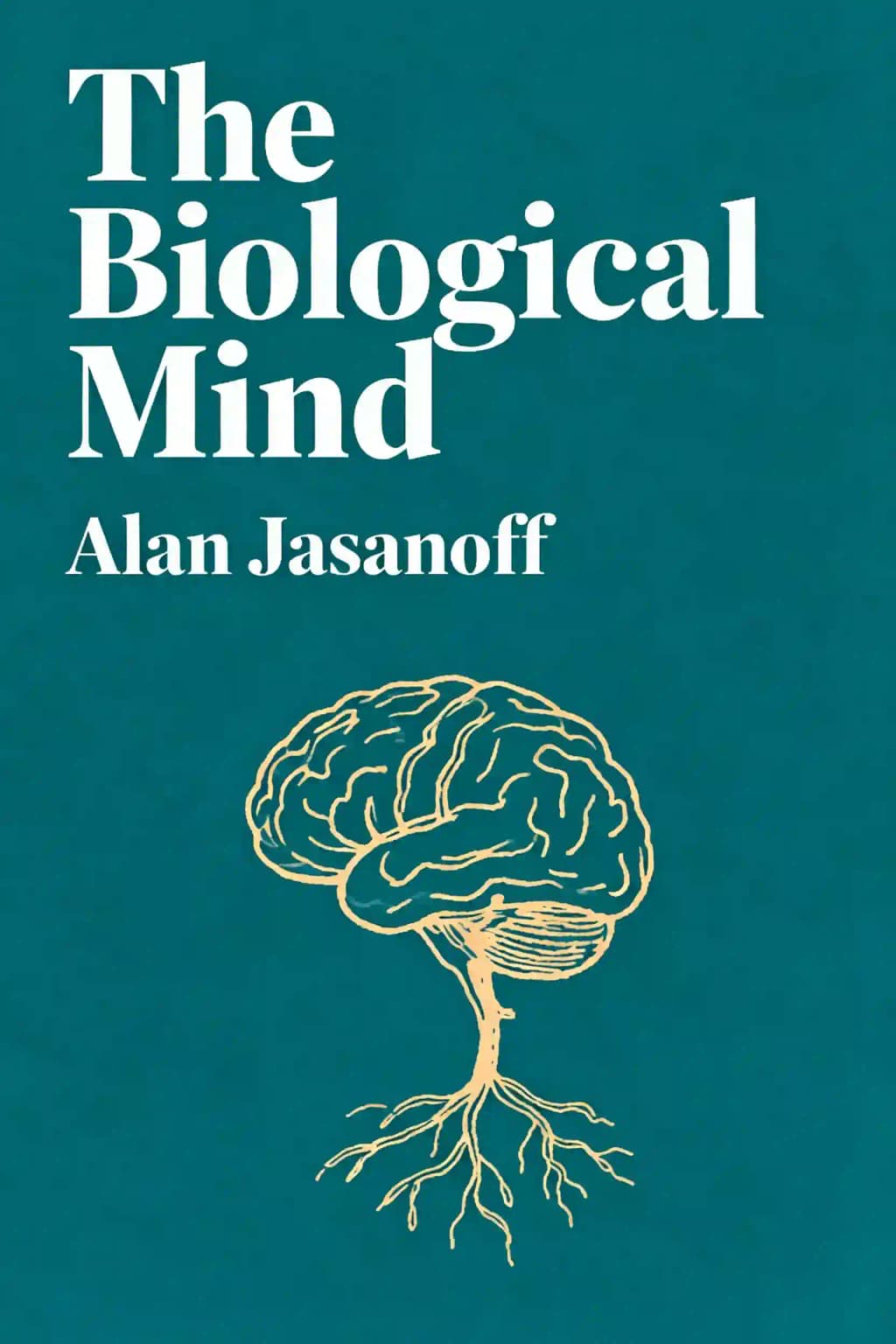
What makes you truly you? While most of us instinctively point to our brains as the essence of our identity, this reflexive brain-centrism might be leading us astray. In Alan Jasanoff's provocative exploration "The Biological Mind," we're challenged to reconsider our reverence for the three-pound universe between our ears. The book has garnered praise from neuroscientists and philosophers alike, with Steven Pinker calling it "a much-needed antidote to the simplistic thinking that permeates popular neuroscience." Since its 2018 publication, it's become required reading in neuroscience ethics courses at universities worldwide, offering a compelling counternarrative to what Jasanoff terms the "cerebral mystique" - our tendency to elevate the brain to an almost mystical status, separate from our bodies and environment.
Capitolo 2
The Cerebral Mystique: How We Mythologize Our Brains
When 23-year-old cancer patient Kim Suozzi arranged to have her brain cryogenically preserved after death, she exemplified our culture's profound belief that we are, essentially, our brains. This notion permeates modern thinking, from scientific literature to popular culture. We protect our heads instinctively, pride ourselves on our brainpower, and would likely consider our brains the last body part we'd exchange with someone else.
But this identification creates what Jasanoff calls the "cerebral mystique" - a false idealization that divorces our brains from their biological nature. This mystique appears in both supernatural depictions of ultra-sophisticated brains in fiction and in scientific conceptions that emphasize inorganic qualities or confine mental processes within neural structures.
The cerebral mystique promotes five specific themes that elevate the brain above the natural realm. First is abstraction - viewing the brain as an abiotic machine fundamentally different from other living entities, exemplified by computer analogies. Second comes complexification - seeing the brain as so vastly complicated it defies understanding, a convenient hiding place for unexplainable capabilities like free will. Third is compartmentalization - stressing functional localization without deeper explanations, often through oversimplified interpretations of brain imaging. Fourth is bodily isolation - seeing the brain as piloting the body independently, minimally influenced by processes outside the skull. Finally, there's autonomy - viewing the brain as self-governing despite environmental influences.
This mystique has real consequences. It perpetuates psychiatric stigma by recasting mental conditions as "brain disorders." While this view relieves us from seeing mental illnesses as moral failings, it can be equally damaging. Society tends to view "broken brains" as less curable than moral flaws, leading to medication overreliance and undervaluing behavioral interventions. The mystique also inspires technological visions around "hacking the brain" that are less promising than portrayed, while overlooking how our most effective enhancements might remain outside our heads.
By demystifying the brain - recognizing it as a biological organ deeply integrated with our bodies and environments - we can better address scientific and ethical challenges while enhancing our lives in more practical ways.
Capitolo 3
The Brain as Biological Tissue: More Than a Computer
My first encounter with brain was in a Spanish omelet in Seville. Years later, handling a sheep's brain in an MIT laboratory, I was struck by the profound contradiction: this jellylike organ represented years of ovine experience and bore witness to a life now ended, yet it was also simply biological tissue - similar in consistency to Jell-O, composed mostly of water with some fat and protein.
Our cultural reverence for brains contrasts sharply with their physical reality. While we avoid eating brains (they rank last in popularity among organ meats), we exhibit a figurative hunger for brain knowledge that emerged prominently during the Victorian era with phrenology. Franz Gall, phrenology's founder, developed theories connecting cranial features to mental capacities through observations at a Viennese asylum. Despite later scientific criticism, phrenology became extraordinarily influential, representing the first broad intellectual trend seeking explanations of human behavior in the material brain.
This fascination continues today. Brain collections house thousands of specimens for scientific research, while public interest in neuroscience has grown exponentially. The Society for Neuroscience conference now draws 35,000 attendees, brain-related literature has doubled each decade since the 1970s, and psychology has become the second most popular college major in America.
Yet despite our growing awareness of brain science, we maintain an extraordinary level of denial about the biological nature of our minds. Our cultural depictions reinforce this disconnect - brains in media appear as mystified forms, often glowing or ghostly, projecting both power and enigma like religious icons. These supernatural representations both reflect and reinforce the "cerebral mystique."
The computer metaphor dominates our understanding of the brain today. This analogy permeates our culture, from Mr. Spock's brain controlling a planet's systems in Star Trek to robots with computerized brains in science fiction. The similarities include their shared dependence on electricity, detectable through methods like electroencephalography, and the brain's electrical signals arising from voltage differences across neural membranes. Neurons fire action potentials at frequencies similar to electronic impulses in digital devices, and neural circuits function analogously to integrated circuits in computer chips.
But this comparison creates what I call "scientific dualism," a modern parallel to traditional mind-body dualism. This scientific dualism, a ubiquitous manifestation of the cerebral mystique, echoes Descartes' philosophy that mind and body are separate substances. Even in daily life, we operate with implicit dualism, speaking of mind and spirit as distinct from the body, often failing to connect mental and physical wellbeing.
The reality is far more complex and biological. Surprisingly, neurons comprise at most half of brain cells. The remainder are glial cells - smaller, non-spiking cells historically dismissed as mere support cells (the word "glia" means "glue" in Greek). Recent research reveals that these supposedly passive elements actively participate in brain function, with some glial cells in the visual cortex even more responsive than neurons to certain visual features.
Beyond cells, the brain's chemical nature defies computational models. While "brain chemistry" might evoke thoughts of psychedelics, to neuroscientists it primarily means neurotransmitters and neuromodulators. A "chemocentric" perspective would see electrical signals as enablers for chemical communication rather than vice versa. This chemical brain resembles the ancients' humoral vision - not four humors but a hundred vital substances vying for influence, plus thousands more inside each cell - revealing it as a descendant of Earth's primordial soup and cousin to other chemical organs like the liver or kidneys.
Capitolo 4
The Complexity Myth: Understanding the Brain's True Nature
The brain is routinely described as "the most complex object in the known universe" - a sentiment echoed by countless scientists and writers. This complexity is invoked to explain why we struggle to understand consciousness, to justify more funding for neuroscience, or even to support pseudoscientific beliefs. But this emphasis on complexity serves to distance the brain from less mystifying aspects of biology and nature, contributing to the cerebral mystique.
The case for the brain's complexity often relies on numbers. Brazilian neuroscientist Suzana Herculano-Houzel developed methods to count brain cells by reducing brains to a slurry where cell nuclei could be identified and counted. Her research found approximately 171 billion cells per human brain, roughly half being neurons.
To count synapses, scientists stain brain tissue with metallic chemicals that adhere to synapses, then examine ultra-thin slices under electron microscopes at 50,000x magnification. This painstaking process reveals up to ten thousand synapses per neuron in the human cortex. If each synapse functioned like a computer bit, the brain would have storage capacity equivalent to about 100,000 gigabytes - enough for 20,000 high-definition movies.
Brain complexity uniquely emerges from cell-to-cell interactions. Neurons extend hundreds of projections to touch scores of other cells simultaneously, with axons sometimes stretching several centimeters. White matter fiber length exceeds 100,000 kilometers in adults - twice Earth's circumference and longer than America's interstate highway system.
Despite these impressive numbers, not every cell is essential. Normal adult brains vary by 50% in volume (1-1.5 liters), yet this correlates weakly with intelligence, accounting for only about 10% of IQ variability. Brain volume decreases by 0.4% annually during normal aging and over 2% yearly in early Alzheimer's, suggesting billions of cells can die with only mild cognitive effects.
Corvids and parrots perform complex behaviors with brain sizes less than 1% of human cerebral volume. Though they couldn't compose Poe's poems or Rossini's arias, their abilities rival those of chimpanzees and gorillas with twenty times more neurons. Conversely, whales and elephants have 3-5 times our brain mass yet are considered less intelligent, proving absolute brain size doesn't explain cognition.
If brain volume and cell count don't determine intelligence, what does? Neuroscientists believe brains contain manageable sets of cell types defined by their neurochemicals and connection patterns - like specialized construction workers performing consistent roles. This component-based approach has worked well for other complex organs. Kidneys contain more cells than the cerebral cortex but operate through millions of identical nephrons working in parallel.
"What I cannot create, I do not understand," wrote physicist Richard Feynman - words some cite as the ultimate goal for brain science. The billion-dollar Human Brain Project aims to simulate a hundred billion "virtual neurons," while American initiatives seek to record "every spike from every neuron" in mammalian brains. Yet many neuroscientists remain skeptical of these ambitious projects. We can't yet successfully simulate single biological molecules or cells, let alone organs, and can barely record from a few hundred deep brain cells.
Unlike cars with their singular purpose, the brain is multifaceted and inseparable from the organism it serves. How it supports consciousness may differ entirely from how it guides decisions, regulates sleep, or develops seizures. Demanding that neuroscience account for all brain functions at cellular or molecular levels imposes an unreasonable standard. Although brains have intricate features, their numerical complexity doesn't fundamentally distinguish them from other biological systems or body parts.
Capitolo 5
Brain Imaging: Seeing Through the Hype
Neuroimaging - the ability to scan living brains without surgery - represents one of medicine's greatest recent advances, profoundly shaping popular conceptions of the brain. With over ten thousand medical research articles published yearly and applications spanning from economics to law, brain scanning has become ubiquitous. Most people have seen brain images, whether displaying tumors or colorful activity patterns, and many have undergone CT or MRI scans themselves.
Functional MRI (fMRI), which measures the brain in action rather than just its structure, emerged in the 1990s as neuroscience's most powerful human brain mapping tool. By analyzing time-varying changes in brain scans that correlate with subjects' behaviors or experiences, researchers have identified brain regions processing everything from basic sensory information to complex emotions and abstract concepts.
While neuroimaging might seem like an antidote to the cerebral mystique by showing us our brains at work, the evidence suggests otherwise. Brain imaging results often permit contradictory interpretations that reinforce dualistic perspectives rather than challenging them.
Surprisingly, both dualists (who believe in an incorporeal soul) and physicalists (who believe the mind is entirely material) react similarly to brain images. Including actual brain images only slightly increases interest for both groups. This contradicts the hypothesis that brain imaging fascinates people primarily by providing physical evidence for abstract cognitive processes.
In fact, some committed dualists actively embrace functional brain imaging. The Dalai Lama has collaborated with neuroscientist Richard Davidson to study monks' brains during meditation. While physicalists might interpret the resulting brain activation differences as showing how brain activity underlies meditation, the Dalai Lama simply reverses this logic, viewing the studies as showing "the extent to which the mind itself... may have an influence upon the brain."
The field of neurotheology, which applies neuroimaging techniques to spiritual and religious activities, thrives on this compatibility between brain imaging and religious belief. Studies compare brain activity in believers and nonbelievers during reasoning, moralizing, or prayer, sustained by religious volunteers who find the experiments unthreatening to their concepts of the soul.
Despite technological advances, all neuroimaging methods remain fundamentally limited: they measure indirect effects occurring seconds after neural activity, at resolutions far coarser than individual neurons, requiring complex statistical processing that can sometimes produce misleading results - as demonstrated by Craig Bennett's infamous "dead salmon" study showing apparent brain activity in a deceased fish.
Despite these limitations, researchers like Nancy Kanwisher have used fMRI to identify specialized brain regions for specific cognitive tasks. However, critics argue this approach resembles phrenology by oversimplifying mind-brain relationships. Russell Poldrack has compiled examples where modern fMRI studies implicitly support phrenological categories, while research titles like "Neural Correlates of Superior Intelligence" suggest complex traits can be reduced to brain blotches.
This localization approach faces both technical and theoretical problems: technically, each activation represents millions of cells with fMRI capturing only the "loudest" neural signals; theoretically, it black-boxes how cognitive processes actually work. James Haxby's research suggests mental processes are distributed across wide brain regions rather than compartmentalized. Despite these limitations, neuroimaging continues to foster "neurosegregation" that artificially bounds mental processes.
Capitolo 6
The Embodied Mind: Why You Are Not Just Your Brain
The notion that "you are your brain" permeates neuroscience discourse. Francis Crick claimed "'You'... are nothing more than the behavior of a vast assembly of nerve cells," while philosophers like Bennett and Hacker argue such personification of brains creates a "neuro-mythology." Organizations like the Brain Preservation Foundation and Alcor preserve brains after death based on this equation of personhood with the brain.
Yet King Tutankhamen's mummified remains reveal how the mind intertwines with the entire body - his bone disorders and malaria would have shaped his consciousness without directly affecting his brain tissue. Similarly, studies show roughly 20% of psychiatric patients have underlying somatic disorders causing mental symptoms through disruptions to blood sugar, oxygen, and hormones.
The hypothalamic-pituitary-adrenal (HPA) axis exemplifies how emotions involve the entire body, not just the brain. During stress, the hypothalamus releases corticotropin releasing hormone, triggering a cascade through the pituitary gland and adrenal glands that produces cortisol and adrenaline. These hormones create physical responses like pupil dilation, increased heart rate, and flushing that form feedback loops between brain and body. Emotional states aren't simply controlled by the brain - they're embodied experiences.
Lauri Nummenmaa's research mapped distinct body-wide patterns for fourteen emotions, showing how sadness creates diminished sensations in limbs while love activates the face, upper abdomen, and groin. Antonio Damasio's somatic marker hypothesis suggests these bodily responses are integral to decision-making, with patients having ventromedial prefrontal cortex damage showing normal IQ but poor judgment in risky situations.
Our physical bodies fundamentally shape our cognitive abilities in ways that extend beyond emotions. Beavers demonstrate embodied cognition perfectly - their dam-building expertise integrates their iron-reinforced teeth, trowel-like tails, webbed feet, and instinctual response to running water. Our human environments are constructed with affordances matched to our specific anatomy - doorknobs, keyboards, and chairs that would remain unusable even to a hypothetically intelligent dog.
George Lakoff and Mark Johnson argue that even abstract concepts are built from metaphors grounded in physical experience - we discuss happiness in terms of "up," time as a physical resource, and arguments using language of physical fights. Experiments confirm these connections: people leaning left give lower numerical estimates, subjects lean forward when thinking about the future, and exercise enhances creativity and cognitive function through increased blood flow and neurotrophic factors that promote brain cell growth.
Organ transplants provide compelling evidence that body parts beyond the brain influence our minds. Mouse studies dramatically demonstrate this connection - when timid BALB/c mice received fecal matter from outgoing NIH Swiss mice, they became more exploratory, while NIH Swiss mice receiving BALB/c gut bacteria grew more anxious. Similarly, mice fed with Lactobacillus rhamnosus showed increased stress resilience and exploratory behavior. Both experiments produced measurable neurochemical changes, confirming the microbiome-gut-brain axis.
Capitolo 7
The Environmental Brain: How the World Shapes Our Minds
Our sensory systems represent clear pathways through which the environment shapes our thoughts and actions. Like the Hindu allegory depicting senses as five horses pulling the body's chariot, sensory organs continuously bombard our brains with information - even during sleep or anesthesia. Vision exemplifies this overwhelming influence: each photon of light can generate multiple neural impulses, with retinal ganglion cells firing constantly even in darkness. The human eye transmits approximately one megabyte of visual data per second to the brain through a million ganglion cells per retina - comparable to a computer's internet connection.
Beyond vision, our auditory system fires millions of impulses per second, with most neurons firing at least fifty spikes per second even at low sound levels. The skin - our largest sensory organ - contains eight different types of receptors, with touch receptors alone reaching densities of two thousand per square centimeter. Collectively, our senses transmit tens of millions of action potentials every second - equivalent to ten standard internet connections or about ten megabytes of data per second.
Sensory input permeates virtually every corner of the brain. Most signals enter through the thalamus (except smell, which goes through the olfactory bulb) before reaching specialized cortical areas. Over 40 percent of the cortex processes sensory information, with visual processing divided between dorsal streams (analyzing location and motion) and ventral streams (recognizing objects and faces). Surprisingly, sensory areas show cross-modal responses: visual cortex can register auditory signals, while auditory cortex responds to visual and tactile stimuli.
Even subtle environmental factors significantly alter brain activity. Resting-state imaging studies reveal that continuous visual stimulation - whether engaging films or bland abstract shapes - perturbs functional connectivity across multiple brain networks. Even meaningless acoustic noise affects brain function, including regions of the default mode network.
Temperature provides compelling evidence for environmental influence on behavior. Real police officers show 50% greater tendency to shoot in warm rooms (81F) than cooler ones (70F). Numerous studies link higher temperatures to increased aggression and violence across diverse settings - even on an hourly basis within cities. This temperature-aggression link operates outside conscious awareness and appears hardwired rather than learned.
Colors profoundly influence our behavior and mental states. Baker-Miller pink, a light magenta shade, demonstrably reduces heart rate, breathing, and even hostility in prison inmates. Controlled studies confirm color's direct impact on cognition. Mehrabian and Valdez found that color saturation affects arousal levels, with saturated blue-green-yellow hues proving most stimulating, while people consistently rate blue-purple tones more pleasing than yellows or greens. Red markings on tests significantly reduce performance compared to green or gray markings, with EEG recordings confirming subtle brain activity changes despite subjects remaining unaware of the color influence.
Sensory inputs constantly compete for dominance over our brains, not merely serving as information for a central processor. The "irrelevant sound effect" demonstrates how background noise disrupts visual memory and reading comprehension, with children suffering nearly four times the performance decline of adults. Different sensory modalities interact and compete - closing your eyes enhances tactile sensitivity and musical appreciation. The McGurk effect reveals vision's dominance over hearing: watching someone mouth "fa, fa, fa" while hearing "bah, bah, bah" makes you perceive the visual "fa" sound, until you close your eyes and hear the actual "bah" again.
Even our supposedly voluntary "top-down" attention remains heavily influenced by the environment. Our attention spans typically last only minutes before distractions take over - neuroscientist John Medina defines a "ten minute rule" for lectures, after which engagement requires emotional stimuli to exploit bottom-up attention mechanisms. Digital devices further reduce this to mere seconds according to Microsoft research.
Capitolo 8
Beyond the Broken Brain: Rethinking Mental Illness
If your behavior comes from your brain, then behavioral defects must spring from brain defects - the logic behind recasting mental illnesses as brain disorders. This shift, coinciding with neuroscience's growth and the cerebral mystique's rise, aims to reduce stigma. As Eric Kandel says, "Schizophrenia is a disease like pneumonia. Seeing it as a brain disorder destigmatizes it immediately."
Yet the cerebral mystique contributes to mental illness remaining such a scourge in three significant ways. First, it replaces traditional stigma with the new stigma of having a "broken brain." James Holmes, the Aurora movie theater shooter, repeatedly referred to his brain as damaged, writing "I tried to fix it... using something that's broken to fix itself proved insurmountable." This self-perception as physically worthless can be devastating. Patients who see themselves as compromised by immutable neurological fate often feel helpless.
Worse, biological explanations haven't improved public acceptance of mental illness patients. While reducing blame, they suggest patients are "fundamentally different or less human," potentially more dangerous or incapable. This biological stigmatization enabled history's worst abuses, from forced sterilizations like Carrie Buck's to Nazi "euthanasia" programs that killed 70,000 psychiatric patients whose brains were studied by neurologists.
Nineteenth-century asylums housed patients whose illnesses often originated from bodily and environmental sources, unlike today's focus on schizophrenia, bipolar disorder, and depression as brain diseases. Victorian commitments resulted from financial difficulties, intemperance, masturbation, domestic troubles, "feminine problems," and childbirth. The most devastating conditions were general paresis (late-stage syphilis causing progressive dementia) and pellagra (causing dermatitis, diarrhea, and dementia from vitamin B3 deficiency). These conditions demonstrate mental illnesses can simultaneously be brain diseases, physical ailments, and social pathologies - acting through the brain but not because of it, challenging simple equivalences between mental illnesses and brain diseases.
Mental illnesses show varying degrees of genetic influence, with schizophrenia showing high heritability (0.81) while major depression shows much lower heritability (0.37). These statistics reveal both genes and environment contribute significantly to mental disorders. Mental illness is more like a car accident than a broken car - a combination of brain function, genetic predisposition, and environmental factors all conspiring together.
Unlike diseases with identifiable physical markers, mental illness diagnosis hinges on professional opinion and communally determined standards. In America, these standards are codified in the DSM, now in its fifth edition. Yet disease boundaries remain vague - schizophrenia diagnosis requires displaying two of five symptoms within an arbitrary one-month period, with subjective judgments about onset and severity. The DSM has evolved from listing 106 disorders in 1952 to about 300 today, with categories added and removed reflecting cultural shifts as much as scientific advances.
Thomas Szasz's provocative 1960 essay argued that mental symptoms are "inextricably tied to the social (including ethical) context." He maintained that for genuine brain diseases, "the concept of mental illness is unnecessary and misleading," while conditions without obvious brain abnormalities are merely "problems in living" that shouldn't be medicalized. Though controversial, Szasz highlighted how our understanding of mental illness guides treatment approaches.
Capitolo 9
Neurotechnology Unbound: Enhancement Beyond the Brain
The concept of "hacking the brain" carries ambiguous connotations - from violent cutting to clever technical pranks - but consistently suggests invasion and indelicacy, whether breaking into physical spaces or digital systems. Most people think of brain hacking as breaking into and manipulating the brain, typically through electrodes or scanners, drawing on the brain-as-computer analogy.
Medical contexts dominate brain manipulation history, from the infamous prefrontal lobotomy (which killed 5% of patients and left many others impaired) to modern techniques like deep brain stimulation (DBS) for Parkinson's disease and brain-machine interfaces (BMIs) that allow paralyzed patients like Cathy Hutchinson to control prosthetic limbs with their thoughts.
Transhumanism exemplifies how idealization of the brain shapes futuristic visions centered on enhancing cognitive abilities. Zoltan Istvan, founder of the Transhumanist Party and 2016 presidential candidate, represents this "growing group consisting of futurists, life extensionists, biohackers, technologists, singularitarians, cryonicists, techno-optimists, and many other scientific-minded people" who embrace radical technological change to overcome death.
Transhumanists envision futuristic brain interfaces including Matrix-like BMIs and nanobots - microscopic robots small enough to swim through the body and communicate with individual brain cells. For many transhumanists, immortality runs through the brain via "uploading" - copying one's brain content to a computer system or simulated environment. As transhumanist Natasha Vita-More explains, "The upload is the posthuman... copying and transfer of the brain, your cognitive properties, onto a non-biological system."
The transhumanist quest represents the cerebral mystique at its most extreme, elevating the brain to religious status. This approach ignores the socially and environmentally dependent nature of human mental life, focusing instead on individual enhancement while trivializing broader societal problems.
Practical examples demonstrate the advantages of working around rather than within the brain. Les Baugh, who lost both arms in an electrical accident as a teenager, underwent targeted muscle reinnervation at Johns Hopkins University. After neural remapping, he was fitted with cybernetic arms controlled by his reinnervated chest and shoulder muscles. With just ten days of training, he could stack blocks and drink from a cup. Unlike "locked-in" patients requiring direct brain connections, Baugh's solution exploited the brain's embodiment in a broader biological system rather than bypassing it.
While futuristic brain implants remain distant, nootropic substances - "mind-bending" chemicals that enhance cognition - are already widespread. These range from caffeine and nicotine to prescription stimulants like Adderall and Ritalin, which are widely abused by students seeking academic advantages. A 2005 survey found 7 percent of American college students illegally using prescription stimulants, with rates reaching 25 percent at some institutions.
Both enthusiasm and fear about neurotechnology stem from an inflated sense of the brain's significance compared to body and environment. From birth, humans experience vastly different cognitive advantages - some biological, but many social: pushy parents, wealth disparities, educational opportunities, and cultural contexts all shape brain development as surely as any drug. Given this extraordinarily uneven playing field, currently available neurotechnologies likely cannot significantly worsen existing inequalities.