Capitolo 1
The Birth of a Social Revolution: When Harvard Met Silicon Valley
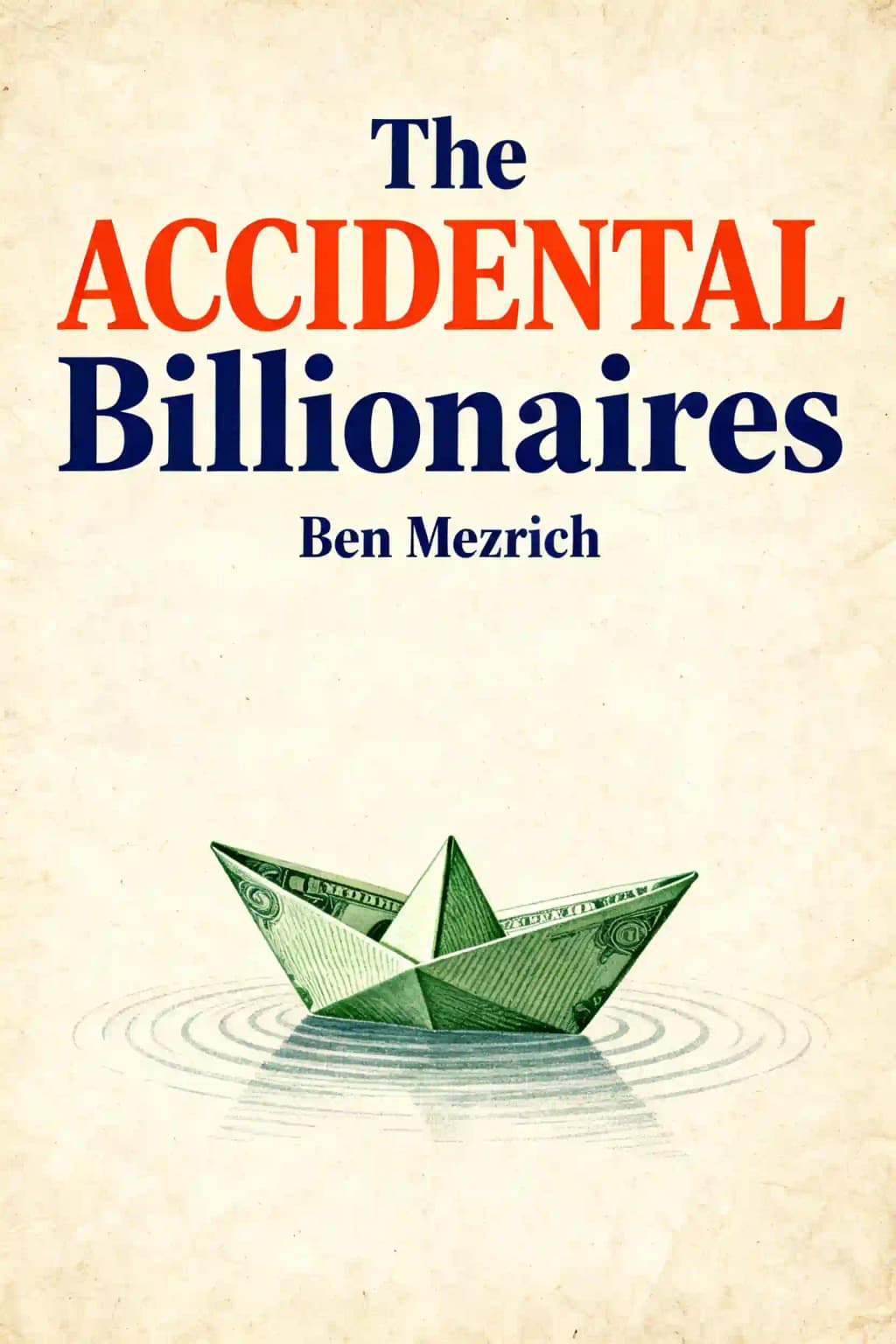
In 2010, a film called "The Social Network" captivated audiences worldwide with its dramatic portrayal of Facebook's controversial origins. Behind this Oscar-winning adaptation was Ben Mezrich's "The Accidental Billionaires," a book that pulled back the curtain on one of the most significant technological developments of our generation. The book quickly became a New York Times bestseller, with celebrities like Justin Timberlake (who would later portray Sean Parker in the film) citing it as a must-read. What makes this story particularly fascinating is that it unfolds not in a garage in Silicon Valley, but in the prestigious halls of Harvard University, where an awkward computer science student named Mark Zuckerberg transformed from social outcast to tech visionary overnight. The tale combines elements of friendship, betrayal, innovation, and litigation-showing how a simple idea to connect college students digitally would eventually reshape how billions of people around the world interact, all while leaving a trail of broken relationships and legal battles in its wake.
Capitolo 2
Harvard's Hierarchy: The Social Landscape That Birthed Facebook
In the fall of 2003, Harvard University remained a bastion of traditional social hierarchies, where status was largely determined by exclusive Final Clubs - centuries-old private social organizations that represented the pinnacle of campus social life. These clubs, with names like Phoenix, Porcellian, and Fly, occupied magnificent mansions around campus and hosted the most coveted social events. Their member selection process, known as "punching," was notoriously selective, accepting perhaps 20 students from hundreds of hopefuls each year.
Eduardo Saverin, a Brazilian-born economics major with a talent for investment, desperately wanted entry into this elite world. Standing nervously at a Phoenix Club punch event, dressed immaculately in a pressed suit, Eduardo embellished stories about his investment successes - including a clever oil futures trade that had earned him $300,000 - to impress the club members. He knew that admission would transform his social standing overnight, granting him access to powerful alumni networks and the upper echelons of Harvard society.
Meanwhile, in a different corner of Harvard's social universe stood Mark Zuckerberg - a sophomore computer science major with curly hair, slider sandals, and an awkward demeanor that seemed to repel people rather than attract them. Despite his social limitations, Mark had already gained a reputation as a programming prodigy within the computer science department. He had previously created Synapse, a music recommendation program sophisticated enough that Microsoft reportedly offered him $1-2 million for it (which he declined), and more recently Course Match, a tool allowing Harvard students to see others' class schedules. His earlier creation, Facemash, though controversial, had demonstrated his ability to create viral applications.
The social stratification at Harvard created a perfect breeding ground for what would become Facebook. The university's tradition of publishing physical "facebooks" - directories with student photos and basic information - provided the raw material. These books, distributed to freshmen upon arrival, became dog-eared as students thumbed through them repeatedly, trying to learn about their classmates. The exclusivity of Final Clubs offered a model for social validation, demonstrating how restricted access could increase desirability. And the competitive, achievement-oriented culture fostered both the ambition to create something revolutionary and the willingness to step on others to reach the top - traits that would later prove crucial in Facebook's aggressive expansion.
Eduardo and Mark's friendship represented an unlikely pairing: the socially ambitious investor and the socially awkward programmer. When Eduardo invited Mark to tag along to a Phoenix Club party - an environment where Mark looked comically out of place in his signature hoodie and flip-flops - neither could have imagined they were taking the first steps toward creating a platform that would eventually connect billions of people worldwide. Their partnership, born in Harvard's unique social ecosystem, would prove both powerful and fragile - destined to spectacularly implode under the weight of its success, mirroring the very social dynamics that inspired Facebook's creation.
Capitolo 3
The Spark: From Rejection to Revolution
Every great innovation has an origin story, and Facebook's begins with a cocktail of rejection, alcohol, and late-night coding. After being stood up for drinks with two girls from Eduardo's Phoenix Club connections, Mark returned to his Kirkland House dorm room in October 2003, beer in hand and frustration in his heart. At 8:13 PM, he started a blog titled "Harvard Face Mash/The Process," where he vented about a girl who had rejected him and began contemplating a website that would compare students' attractiveness. The blog's tone was bitter and sardonic, reflecting both his wounded pride and the casual misogyny that would later haunt his reputation.
What began as a drunken prank quickly evolved into something more sophisticated. Instead of comparing students to farm animals as initially considered, Mark decided to create a site where visitors would compare two student photos side by side - a "hot or not" concept specifically for Harvard students. To gather the necessary images, he systematically hacked into Harvard's house facebook databases, documenting his progress in real-time blog entries with remarkable technical precision and increasingly slurred typing.
"Let the hacking begin," he wrote at 9:48 PM, slightly intoxicated and completely focused. His blog entries revealed both his coding expertise and his cavalier attitude toward institutional security measures. Each successful breach was celebrated with a mixture of pride and defiance.
House by house, Mark broke through varying security measures, downloading thousands of student photos. Some houses had minimal protection ("child's play" as he described Kirkland and Eliot's open Apache configurations), while others required more sophisticated approaches. He exploited security holes in the authentication systems, used brute force attacks where necessary, and demonstrated an impressive understanding of network vulnerabilities. By 4 AM, armed with thousands of photos and mathematical algorithms to power his site, Mark finalized his vision for Facemash.com, which would greet visitors with the provocative line: "Were we let in for our looks? No. Will we be judged on them? Yes."
When Mark launched Facemash just days later, the site went viral across campus with shocking speed - demonstrating for the first time the viral potential of social comparison platforms. Within two hours, it had logged twenty-two thousand votes, with four hundred students accessing it in just thirty minutes. Students shared the link across dorm email lists and campus forums, creating an unprecedented surge of traffic. The site's popularity was so overwhelming that it crashed Harvard's network, bringing down several crucial university services and leading to Mark's appearance before the university's Administrative Board on charges of breaching security, violating copyrights, and violating individual privacy.
Though Mark escaped with just probation - largely due to his status as a first-time offender and his willingness to take the site down immediately - the Facemash incident demonstrated both his technical brilliance and his willingness to push boundaries. More importantly, it revealed something profound about human nature and technology: people were hungry for digital social interaction centered around real identities rather than anonymous personas. The incredible engagement metrics showed that students were fascinated by the ability to interact with and judge their peers in a digital space. This insight would become the foundation for what came next - a more sophisticated platform that would transform from a Harvard phenomenon into a global social network revolution.
Capitolo 4
The Winklevoss Connection: A Fateful Meeting
Tyler and Cameron Winklevoss - identical six-foot-five Olympic-caliber rowers and members of Harvard's ultra-exclusive Porcellian Club - represented the epitome of Harvard's traditional elite. Their privileged background included a Greenwich, Connecticut upbringing and years of competitive rowing at prestigious institutions. For nearly two years, they had been methodically developing an idea for a Harvard-specific social network called Harvard Connection, envisioning a platform that would digitize the exclusive social connections that defined Harvard's culture.
When they read about Mark's Facemash adventure in the Harvard Crimson, they saw beyond the controversy. Where others saw a troublemaker who had violated privacy rules, the twins recognized a programming virtuoso who could transform their vision into reality. Mark's ability to build a site that attracted 22,000 hits in its first four hours particularly impressed them.
Through their business partner Divya Narendra, a math major from Harvard's class of 2004, they reached out to Mark with what would become a historically significant email: "Let's see if this Zuckerberg kid wants to be a part of history." The casual tone masked the weight this connection would later carry in Silicon Valley lore.
The meeting in Kirkland dining hall in November 2003 was carefully orchestrated. The twins, dressed in their signature matching outfits, pitched Harvard Connection as more than just a website - they presented it as a gateway to social legitimacy. Tyler, particularly adept at reading people, emphasized two key points: the potential financial rewards and, more enticingly for Mark, the chance to become "the centerpiece" of Harvard's social scene. Looking at the hoodie-clad sophomore before them, they recognized his desire for social acceptance and strategically positioned their offer as a path to prominence.
Mark's initial enthusiasm seemed genuine. He asked detailed technical questions and appeared to grasp both the social and technological aspects of their vision. The twins left the meeting confident, having shared their comprehensive documentation and development timeline.
What followed was a masterclass in subtle evasion. Over the next two months, Mark engaged in a complex dance of communication - 52 emails and multiple phone calls - each containing promises of progress but lacking concrete deliverables. His updates became increasingly technical and vague, peppered with programming jargon about "front-end" issues and missing "functionality." During their January meeting, his evasiveness reached new heights as he cited complex technical challenges while avoiding specific commitments.
Unknown to the Winklevosses, Mark had already begun coding "The Facebook" in January 2004, incorporating several features similar to those discussed in their meetings. This parallel development would later become central to multiple lawsuits and a $65 million settlement. The intersection of these contrasting figures - the privileged athletes and the coding prodigy - would evolve into one of Silicon Valley's most infamous disputes, raising fundamental questions about intellectual property, idea ownership, and the ethics of innovation in the digital age.
Capitolo 5
The Facebook: From Dorm Room to Digital Empire
While stringing along the Winklevoss twins, Mark was secretly developing his own vision for a Harvard-specific social network. In January 2004, he approached Eduardo with "the Facebook"-an exclusive online community where Harvard students could create profiles, share pictures, and connect with friends. Unlike existing sites like Friendster or the Winklevosses' proposed Harvard Connection, Mark's concept emphasized interactivity and exclusivity-users could invite friends into their online social circle, but membership required a Harvard.edu email address.
Eduardo immediately recognized the brilliance of the concept-essentially moving real social networks onto the web. When Mark asked for $1,000 in startup money for servers, Eduardo, who had made $300,000 trading oil futures, readily agreed. They formalized their partnership with a 70-30 split, with Mark as majority owner and Eduardo as CFO.
On February 4, 2004, thefacebook.com launched with a clean, simple design featuring a dark blue header and registration buttons. Eduardo helped spread the word by sending emails to Phoenix Club members-social influencers who would quickly popularize the site-along with the Kirkland House email list. The response was immediate and overwhelming. Within days, hundreds of Harvard students had signed up. Within a month, more than half the undergraduate population had accounts.
The site's rapid success was driven by several key factors:
1. Exclusivity: By requiring Harvard.edu email addresses, Facebook created a sense of privileged access.
2. Real identities: Unlike many internet platforms of the time, Facebook required users to use their real names, creating authenticity.
3. Network effects: Each new user made the platform more valuable for existing users.
4. Social validation: Friend requests and connections provided the digital equivalent of social acceptance.
As Facebook's popularity exploded, Mark decided to expand beyond Harvard to other elite schools-Yale, Columbia, and Stanford-while maintaining exclusivity through school email requirements. The team grew to include Mark's roommates Dustin Moskovitz (as VP of programming) and Chris Hughes (handling publicity), with ownership restructured to give Mark 65%, Eduardo 30%, and Dustin 5%.
By March 2004, Facebook had nearly 50,000 users across multiple elite universities. By May, that number had grown to 100,000. The site had become more than just a college directory-it was transforming how students interacted, dated, and defined their social identities. And it was just getting started.
Capitolo 6
Silicon Valley Calling: The California Migration
As the spring semester of 2004 ended, Facebook stood at a crossroads. With 150,000 members and thousands joining daily, the site had outgrown its dorm room origins. Mark announced plans to move the operation to California for the summer, along with Dustin, to work on Facebook and a new side project called Wirehog-a file-sharing program with social network features.
Eduardo, meanwhile, had accepted a prestigious investment banking internship in New York. Though concerned about being separated from the day-to-day operations, he agreed to handle business matters remotely, depositing $18,000 into a new company account and providing Mark with blank checks for expenses. The physical separation would prove fateful for their partnership.
In California, Facebook's team settled into a rented house in Palo Alto that quickly transformed into a hacker's paradise-complete with a zip line in the backyard, late-night coding sessions, and a culture that blended work and play until they became indistinguishable. Mark's unconventional hiring process-coding competitions fueled by whiskey shots-attracted talented programmers willing to follow his vision.
The California move also brought Facebook into the orbit of Sean Parker, the charismatic and controversial co-founder of Napster. When Sean discovered Facebook on a Stanford student's laptop in March 2004, he immediately recognized its potential. Unlike Friendster (essentially a dating site) or MySpace (a "narcissistic playground"), Facebook connected actual friends in a fluid, simple, beautiful way. Sean tracked down Mark and quickly inserted himself into Facebook's inner circle.
For Mark, Sean represented everything exciting about Silicon Valley-its rebellious spirit, its visionary thinking, and its potential for massive success. Sean regaled the Facebook team with stories of his battles with record companies and venture capitalists, painting himself as a revolutionary fighting against established powers. More importantly, he opened doors to Silicon Valley's elite investors and mentors.
Eduardo, visiting from New York, was immediately suspicious of Sean's influence. During a night out at a club, Eduardo watched in astonishment as a Victoria's Secret model touched Mark's leg, then led him out by the hand-a scene unimaginable back at Harvard. The California experience was transforming not just Facebook but Mark himself, pulling him further from Eduardo's influence and deeper into Sean's world of Silicon Valley excess and ambition.
Capitolo 7
The Betrayal: How Eduardo Got Diluted
The tension between Eduardo's East Coast caution and Mark's Silicon Valley ambitions came to a head in July 2004. After Eduardo froze Facebook's bank account in response to feeling sidelined from investor meetings, the relationship deteriorated rapidly. Though they reached a temporary detente, with Eduardo agreeing to step back while finishing school, the seeds of his eventual removal had been planted.
In October 2004, Facebook secured its first significant investment-$500,000 from PayPal founder Peter Thiel for approximately 7% of the company and a seat on the five-person board. When Eduardo visited California to sign the incorporation documents for the restructured company, the papers showed he would have 1,328,334 shares, representing 34.4% ownership of Facebook (up from his original 30%). Mark would have 51%, Dustin 6.81%, Sean Parker 6.47%, and Thiel around 7%. Eduardo signed, believing his position was secure.
By December 2004, Facebook celebrated its millionth member at a lavish party at Frisson, Peter Thiel's trendy San Francisco restaurant. Eduardo attended, telling anyone who would listen that he cofounded Facebook, but noticed people seemed only interested in Mark. Throughout the evening, Sean Parker watched Eduardo from across the room, thinking to himself that "everything was going exactly according to plan" with the restructuring agreements Eduardo had signed.
The true betrayal was revealed in April 2005, when Eduardo visited Facebook's new office in downtown Palo Alto. Instead of the business meeting he expected, he was ambushed by a lawyer who handed him papers revealing that in January and March, Facebook had authorized millions of new shares-3.3 million for Mark, 2 million for Dustin, and over 2 million for Sean Parker. These new shares had diluted Eduardo's ownership from 34% down to less than 10%, potentially to almost nothing.
When Eduardo refused to sign the papers, the lawyer coldly informed him he was no longer part of Facebook-not an employee, not management, completely expunged from the corporate history. The dilution was perfectly legal due to clauses in the documents Eduardo had previously signed, but the manner of his removal-executed while he was finishing his Harvard degree-left him feeling betrayed by his former friend.
The episode revealed the cutthroat nature of Silicon Valley startups and raised questions about loyalty, friendship, and the human cost of building a billion-dollar company. For Mark, anyone who threatened his creation-whether the Winklevosses, Eduardo, or later Sean Parker himself-had to be removed, regardless of personal relationships.
Capitolo 8
The Fallout: Lawsuits and Legacy
The aftermath of Facebook's explosive growth and Eduardo's removal spawned multiple lawsuits that would follow the company for years. The Winklevoss twins, having launched their renamed website ConnectU to little success, pursued legal action against Mark for allegedly stealing their idea. Eduardo filed his own lawsuit seeking to restore his ownership stake and recognition as co-founder.
These legal battles revealed the complex questions surrounding intellectual property in the digital age. Did the Winklevosses "own" the idea of a Harvard social network simply because they discussed it with Mark? Did Eduardo deserve his original ownership stake despite not moving to California during Facebook's critical growth period? The courts would eventually have to decide.
When the Winklevosses appealed to Harvard President Larry Summers, citing violations of the university's honor code, they were dismissed with a cold reality check: "You entered into a code of ethics with the university-not with each other. This issue is between you guys and Mark Zuckerberg." The twins felt betrayed by the system and the university itself, realizing that Harvard was going to let Mark "get away with it."
Meanwhile, Sean Parker's own position at Facebook would prove tenuous. Despite his instrumental role in connecting Facebook with investors and guiding its early growth, a party raid resulting in his arrest for cocaine possession (though he was never charged) gave Mark the excuse to remove him from the company. Like Eduardo and the Winklevosses before him, Sean discovered that anything threatening Mark's creation had to be dealt with decisively.
By 2008, Facebook had grown to nearly 200 million users worldwide, with Microsoft buying a 1.6% stake valuing the company at $15 billion-making Mark Zuckerberg possibly the youngest self-made billionaire ever. The Winklevoss twins eventually settled their lawsuit for approximately $65 million (though they remained unsatisfied) and went on to compete in the 2008 Beijing Olympics. Eduardo's lawsuit resulted in a confidential settlement and his reinstatement as "cofounder" in Facebook's corporate history.
One night in 2004, after freezing Facebook's bank account, Eduardo encountered one of the Winklevoss twins at a club. In a moment of raw honesty, Eduardo approached the twin and confessed: "I'm sorry. He screwed me like he screwed you guys," before disappearing back into the crowd-a poignant acknowledgment of their shared experience with Mark Zuckerberg's single-minded pursuit of his vision.
Capitolo 9
The Legacy: How Facebook Changed Everything
Facebook's meteoric rise from a Harvard dorm room project to a global technology giant represents one of the most significant business and cultural transformations of the early 21st century. What began as an exclusive network for Ivy League students evolved into a platform connecting billions of people worldwide, fundamentally changing how we communicate, share information, and perceive ourselves.
The innovations that drove Facebook's growth were often deceptively simple. The "wall" allowed friends to leave public messages on each other's profiles. Photo sharing and tagging created a new way to document and share experiences. The newsfeed, introduced in 2006, automatically broadcast profile changes to friends, transforming Facebook from a static directory into a dynamic, constantly updating social experience.
These features tapped into fundamental human desires for connection, validation, and self-expression. By requiring real identities rather than anonymous usernames, Facebook created an online environment that mirrored real-world social dynamics while amplifying their reach and permanence. The "friend request" became a new form of social currency, and the ability to curate one's online presence offered unprecedented control over personal image.
Beyond its social impact, Facebook pioneered a new business model based on attention and data. By creating an addictive platform that captured users' personal information and browsing habits, Facebook built an advertising machine of unprecedented precision and scale. The company's ability to target ads based on detailed demographic and behavioral data revolutionized digital marketing and raised profound questions about privacy and surveillance.
The story of Facebook's creation, as told in "The Accidental Billionaires," reveals the complex interplay of innovation, ambition, and betrayal that often accompanies technological revolution. Mark Zuckerberg emerges as a contradictory figure-technically brilliant but socially stunted, visionary in his understanding of human connection yet seemingly callous in his treatment of actual relationships.
Perhaps the most telling symbol of this contradiction is the business card Mark created after securing Facebook's first major investment. It read simply: "I'm CEO-Bitch." The crude statement captured both the brash confidence of Silicon Valley's young disruptors and the personal cost of prioritizing corporate success above all else. As Facebook grew from college project to global corporation, it remained, at its core, an extension of Mark's true love-the computer-with human relationships often treated as secondary to the platform's expansion.
The legacy of Facebook extends far beyond the personal fortunes of its founders or the legal battles they fought. It represents a fundamental shift in how we understand privacy, identity, and community in the digital age-a shift whose full implications we are still grappling with today.