Capitolo 1
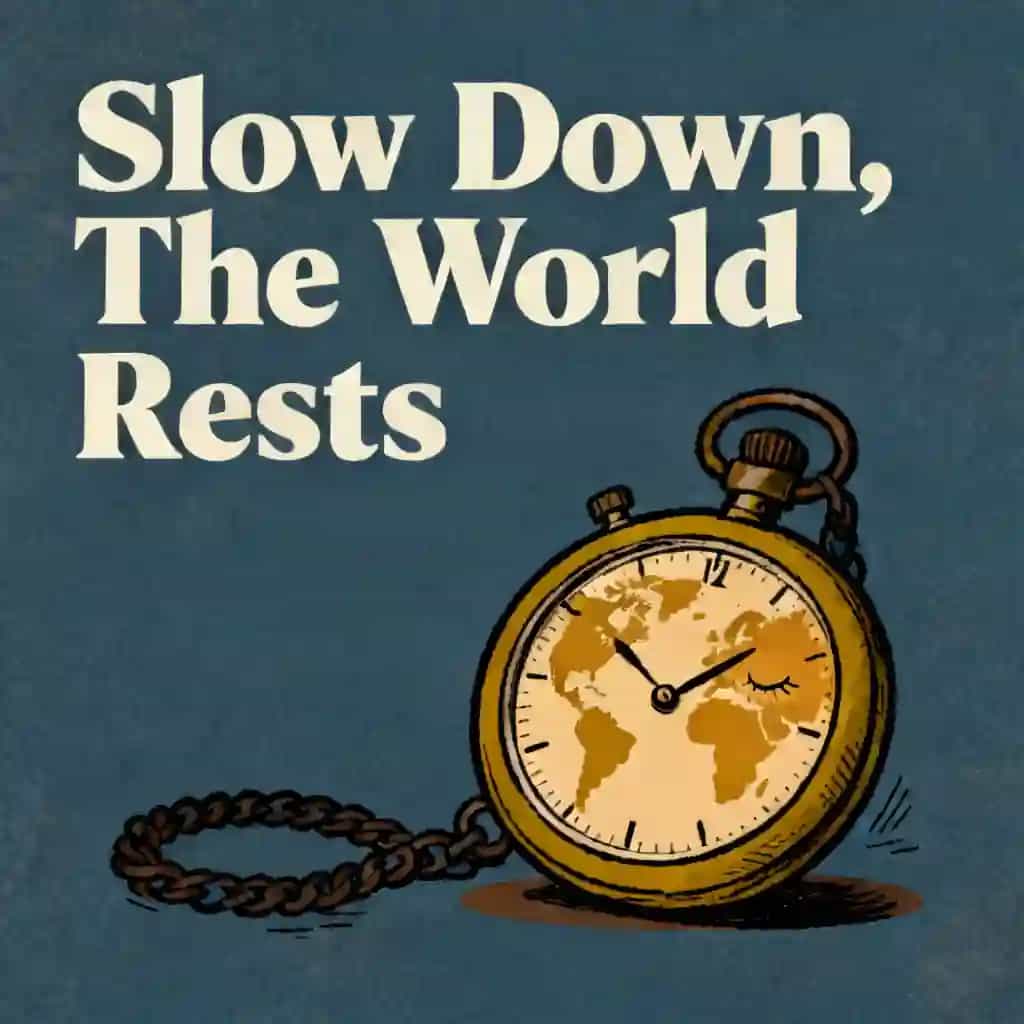
Time's Hidden Gift: The Art of Slowing Down
In a world obsessed with speed, Eknath Easwaran offers a revolutionary perspective: slowing down actually helps us accomplish more. This paradoxical wisdom comes from a man who lived completely in the present moment, demonstrating that hurry is not a requirement for productivity but rather its enemy. When Oprah featured "Take Your Time" on her influential book club in 2004, it sparked a nationwide conversation about our relationship with time. The book has since become a cornerstone text in mindfulness circles, with tech executives in Silicon Valley and celebrities like Hugh Jackman citing its principles as essential to maintaining balance in high-pressure environments. What makes Easwaran's approach unique is that it doesn't ask us to abandon our busy lives but instead teaches us how to navigate them with greater presence, purpose, and peace.
Capitolo 2
The Paradox of Modern Time Management
The more we try to fit into our fixed twenty-four hours, the less time we seem to have. Our days begin with anxious clock-checking and end with exhaustion, having raced through meals, conversations, and commutes without truly experiencing them. We arrive at work just in time, treat colleagues as obstacles rather than people, and return home too drained to engage meaningfully with loved ones.
Yet some people manage to be punctual without hurrying and accomplish tasks without getting flustered. This ability to live without hurry isn't an innate gift but a learnable skill. I discovered this through Gandhi's example while juggling a full teaching load, department management, committee meetings, student hours, writing, and radio lectures in India. Despite my promising career after India's independence, I felt an emptiness that no professional success could fill.
Like the character in H.G. Wells' story who repeatedly passes a mysterious door because he's always checking his watch and rushing elsewhere, I was too busy pursuing success to explore what truly mattered. The Buddha warns that constant hurrying serves as anesthesia, preventing us from asking life's important questions. As I approached forty, I needed to reevaluate: What did I really want? What was life for?
Looking beyond educated, successful people for models of fulfillment, I recalled my childhood in Kerala, a lush coastal state in southern India. Our village lacked electricity, cinema, and police, but offered clean air, pure water, fertile soil, and self-sufficiency. Despite lacking modern conveniences, villagers enjoyed classical music, dance, and education from retired professionals. Though not paradise, they seemed happier than my university colleagues, suggesting that fulfillment comes from within rather than from external circumstances.
My grandmother exemplified this inner contentment. In our rare matriarchal society, she was revered throughout the village for her wisdom. Rising with the morning star and working until evening, she gave each task her full attention without pressure or hurry. Though unlettered and traditional, she encouraged my rebellion against orthodoxy when family pressured me toward engineering, telling me to "follow your own star." Completely fearless in a culture filled with fears, she would sit beside corpses in our home's "dark room" when others were terrified. I realized I wanted her inner strength combined with my modern, active life.
Capitolo 3
The Secret of Gandhi's Unhurried Mind
Gandhi demonstrated how to face immense pressure without losing inner peace. Leading a nonviolent revolution of 400 million people against the world's most powerful empire, he remained perpetually relaxed. Unlike most Indians of his time, Gandhi valued punctuality, wearing a pocket watch pinned to his waist and gently correcting anyone late for appointments. Though educated in London and formerly a wealthy barrister, he understood time's value while maintaining remarkable calm.
Gandhi accomplished extraordinary things with tremendous vitality, yet appeared as relaxed as a cat. Like a cat that suddenly explodes into action, his quiet demeanor concealed enormous energy that could stir millions to action. Unlike time-driven personalities obsessively chasing achievement, Gandhi remained calm at his center while rousing selfless action when needed.
During a tense CBS radio broadcast from London, while everyone around him was anxious about technical arrangements, Gandhi calmly waited for his cue. When finally told "They are waiting in America!" he simply asked "You want me to speak into this?" - already on air. His question broke the tension, and he proceeded to deliver one of the most moving speeches ever recorded.
Gandhi's secret was living completely in the present moment - whatever he did, he was one hundred percent present. This complete absorption was the key to his unhurried mind, which remained calm, alert, and ready for anything. A calm mind sees deeply, opening doors to rich relationships, excellence in work, and quiet joy.
After Gandhi's assassination and my grandmother's passing, I realized life was racing by and I needed to master this skill. Without abandoning my academic career, I turned to meditation and developed a systematic approach to combine an active, meaningful life with mental mastery - an eight-point program I would later bring to America, "the pacesetters of the modern world."
Capitolo 4
Eight Practical Ways to Slow Down
Upon arriving in New York, I was shocked by the ceaseless stream of traffic and bewildering display of speed that continued even after nightfall. I immediately resolved never to be caught in this "rat race" and have kept that promise for over thirty years, helping thousands of others slow down too. Here are eight practical ways to make the best of your time each day:
1. Give Yourself More Time: The simplest way to find more time is getting up earlier, which sets a calm pace that carries through the day. The junction between night and day offers natural calm when the mind can grow peaceful. Having a leisurely breakfast (never standing up!) and arriving at work early enough for reflection helps establish an unhurried rhythm.
2. Don't Crowd Your Day: The pressure to fit too much into limited time is pervasive, with technology only adding to the burden. We can't possibly absorb all available information, so we must make choices - which requires an unhurried mind. Rather than skimming many books, read one good book with complete concentration. Rather than channel-surfing, turn off the television. A creative mind requires a long attention span, not the fragmented attention we've come to accept as normal.
3. Ask What's Important: When I wanted to make time for meditation, I listed all my obligations, then took a red pencil and crossed out everything not truly necessary or beneficial. This exercise revealed activities I'd continued purely out of habit. Testing these decisions for a few weeks, I discovered that many "essential" activities were actually expendable - and surprisingly, nobody even noticed my absence.
4. Take Time for Relationships: Personal relationships are often the first casualties of a hurried life. Though relationships require time, it's time well spent. As life accelerates, many have abandoned the practice of sharing leisurely meals together. By making time to eat with friends or family, we create oases in our day where we can shut out pressures and enjoy human company.
5. Take Time for Reflection: Pausing to reflect isn't just part of slowing down-it's one of its rewards. Though rare emergencies require immediate action, most situations benefit from a moment of thought. At university exams, students who paused to study the essay choices and plan their time often outperformed brighter peers who began writing immediately.
6. Don't Let Yourself Get Hurried: Even in seemingly urgent situations, we can resist being hurried. Emergency medical technicians report that maintaining a cool, concentrated mind is essential during crises-a speeded-up mind only interferes with their trained responses. With reflection, we can often avoid or prepare for situations where we'll face pressure to hurry.
7. Cultivate Patience: Patience, though rarely celebrated in songs or poems, is the very heart of love and perhaps life's most valuable skill. It's essential for slowing down and serves as insurance against emotional and physical problems. Few are born patient, but everyone can develop this quality through daily practice.
8. Slow Down Your Mind: Developing an unhurried mind is the essence of slowing down. As Meher Baba taught, "A mind that is fast is sick. A mind that is slow is sound. A mind that is still is divine." Our minds are like televisions with thoughts constantly changing channels without our control. The more we slow our thinking, the more control we gain-becoming naturally concentrated, kind, and loving.
Capitolo 5
The Power of One-Pointed Attention
Our uncontrolled thoughts often pull us away from the present moment, dwelling on past grievances or wandering aimlessly. This resembles driving a car with a mind of its own, swerving off the highway against the driver's will. When washing dishes, our minds might travel from California to Minnesota in seconds, showing how little control we typically have over our attention. Rather than us thinking our thoughts, our thoughts think us.
Fortunately, attention can be trained, and directing it at will is life's most precious skill, enabling achievement in any field. Training our attention allows us to reclaim vital energy trapped in past resentments and future anxieties. The Buddha taught that when we learn to keep our attention completely in the present, we restore our vital wealth to this moment. With persistent practice, we can reach a state where we're fully present - not that we can't remember the past or plan for the future, but we're not entangled in either. We become one hundred percent alive.
Giving undivided attention to others, especially children, creates profound connection. When children share their stories, they notice when our minds wander. My grandmother would ask me to recount my entire day, giving me her complete focus. This taught me to listen in return. Our undivided attention is more precious to children than any purchased gift.
In conversations, we should focus our eyes, ears, mind, and heart on the person speaking. At social gatherings, most people's eyes wander, indicating their minds are elsewhere. Nothing can be interesting without our attention. This one-pointed focus is particularly valuable with difficult people - we can disarm hostility simply by listening without judgment, with complete and loving attention.
Opposition and criticism offer opportunities for growth rather than reasons for resentment. I compare life to a challenging tennis match where equally skilled opponents bring out the best in each other. With unbroken concentration, we can view opposition as a test that develops our patience, courtesy, and conviction. This ability to remain calm and compassionate under pressure requires time and practice to develop.
The Buddha advised avoiding "wobbling" - dividing our attention between multiple tasks. When we engage with only part of our mind, nothing truly impacts us, creating an inner emptiness that drives us to seek more experiences. The solution isn't more activity but slowing down to live completely in the present. One-pointed attention intensifies our experience of beauty - making music more beautiful, colors more vivid, and revealing what Thomas Traherne called "the heart of life."
Capitolo 6
Finding Dynamic Balance in a Restless World
Finding balance means neither rushing hectically nor living in boredom, but approaching each task with energy and focus. Like sailors on San Francisco Bay, we sometimes race with skill, sometimes careen out of control, and sometimes remain tied to the dock. According to yoga philosophy, our personality constantly shifts between three states: inertia, energy, and harmony. All three are always present, though one dominates at any given time. The goal is to convert our energy into a state of dynamic balance full of vitality and power.
Having abundant energy is valuable, but without direction it becomes dangerous. When we misinterpret life's call to adventure, we waste energy on restless seeking. People with excess energy feel compelled to act constantly, even doing trivial things. As Thoreau noted, the important question isn't whether we're busy, but what we're busy about. Discrimination-knowing when to engage and when to refrain-is essential.
Like travelers displaying stickers from their journeys, people with overabundant energy display two identifying markers: hurry and worry. These companions travel together because hurried people lack time to think clearly and make sound decisions, causing them to constantly fret about outcomes. When we slow down enough to think clearly and act wisely, worry becomes unnecessary because we know we're doing our best.
The fascinating paradox of energetic people is that their energy isn't always available when needed. It either overflows uncontrollably or completely dries up. Most of us have abundant energy for activities we enjoy but struggle with tasks we find uninteresting. Like the farmer who paints his cart wheels when he should be harvesting rice, we divert our energy to more attractive tasks when faced with challenging work.
Our personal energy oscillates between activity and inertia, like water freezing and thawing. The energy remains present but shifts between frozen and uncontrolled states. This explains why fitness programs often begin with enthusiasm but quickly fade - we become "heroes at the beginning" whose energy fizzles out. The good news is that vigor, vitality, and will can all be developed; I've seen lackadaisical individuals become dynamos through proper training.
Inertia resembles driving with the brakes engaged - you may have gas in the tank and a well-functioning engine, but progress remains difficult. Conversely, excessive energy creates the opposite problem: no brakes at all. We need balance - the ability to accelerate when necessary but always ready to brake when situations start getting out of control.
Beyond our constant making and doing, we need time to cultivate our inner garden - to reflect on our values and how we're spending our lives. Inner stillness brings healing, making us more sensitive and helping us see life whole. Perfect balance comes when will and desire work in harmony - not eliminating desires but keeping them under control.
Capitolo 7
Freedom from Rigid Preferences
To truly enjoy life, we must learn not to cling to pleasures but to appreciate them as they come and go. As William Blake wrote, "He who binds to himself a Joy, Doth the winged life destroy; But he who kisses the Joy as it flies Lives in Eternity's sunrise." When we grasp at pleasure, we only create frustration, since pleasure cannot last. Living in detachment means neither yearning for the past nor anticipating the future, but dwelling fully in the present moment.
When we free ourselves from rigid preferences, we gain remarkable flexibility. We can enjoy activities for their own sake or through others' enjoyment of them. This freedom allows us to adapt when plans change without disappointment. Rigidity in preferences creates friction in relationships, as when partners want different Saturday night activities. By choosing to attend your partner's Shakespeare play instead of your preferred movie, you not only strengthen the relationship but might discover unexpected enjoyment through their perspective.
A mind rigidly conditioned by likes and dislikes remains in constant turmoil, unable to slow down. By observing our reactions to small preferences - our disappointment at an unappetizing meal or delight at a favorite dessert - we can practice wearing these preferences more loosely. This casual approach to preferences extends beyond trivial matters, helping us face unpleasant tasks at work, handle unexpected changes, and work harmoniously with difficult people.
We must carefully examine experiences that promise pleasure, considering their long-term effects beyond immediate gratification. The Buddha offered a practical guideline: experiences that calm the mind and foster compassion are beneficial; those that agitate, excite senses, or provoke anger should be avoided. Rigid preferences also impede love, as we expect others to enjoy what we enjoy. To grow closer to others, we must loosen our expectations and learn to appreciate their enjoyment even of things that don't interest us personally.
Food provides an excellent training ground for working with rigid preferences. Our taste buds reveal our inner state - when the mind is calm, they request nourishing foods; when agitated, they demand old favorites. Through conscious effort, we can transform our eating habits completely, as I did by reducing my dependence on spicy Indian food and learning to appreciate new foods like asparagus. Modern culture encourages increasingly specific preferences - 147 ice cream flavors, countless coffee varieties - narrowing what we can tolerate and making us slaves to our preferences.
Unchecked preferences become increasingly inflexible with time. We've all known elderly people who require absolute routine - the same chair, TV programs, dinner, and conversations. But rigidity affects people of all ages, from the friend who must meticulously rearrange restaurant place settings before eating to those who become violently angry when someone takes "their" parking space.
Capitolo 8
The Heart of Human Connection
In our technology-driven world, human connections are becoming increasingly tenuous as we sacrifice personal interaction for speed and convenience. From automated tellers replacing bank interactions to the fundamental relationships in our lives, we simply don't take time for human companionship anymore. Yet relationships can be beautiful if we're willing to nurture them deliberately, especially in our hurried world.
While we've made technological advances, we've regressed in areas essential to our humanity. Modern conveniences like autotellers and computers are useful but not fundamental. The true essentials-compassion, kindness, goodwill, and forgiveness-are where our age is lacking. Our society promotes mechanization for its own sake and automation for speed, corroding our sympathy and making us machine-like in a world of machines.
Coming from India, where life was rich in personal relationships across all social strata, I grew up supported by intimate family bonds. My grandmother, mother and I were inseparable. Even in high school, I would run a mile home during lunch break just to eat with them, perfectly timed and waiting. Nothing was allowed to interfere with this family time. Every evening I'd rush home after soccer to share every detail of my day with them. This foundation of security gave me confidence that has withstood every storm in life.
We all need both casual human contacts and intimate relationships, yet our modern lifestyle deprives us of time for these connections. We can cultivate personal relationships everywhere - with bank tellers, mail carriers, everyone we encounter. When I lived in Berkeley, I developed a friendship with my postman who delivered mail twice daily. He learned about my family, and I learned about his. Similarly at my bank, I made connections with the tellers rather than using automated machines. These weren't just financial transactions but human relationships where trust and concern grew.
Our world offers fewer personal contacts between people, diminishing opportunities for trust and intimacy to flourish. Television has devastated human companionship - we claim no time for neighbors yet watch five hours daily. I suggest not eliminating television but keeping it reasonable, perhaps watching good programs with friends to maintain human connection.
We naturally want to be liked and to please those we love. Bringing joy to someone we care about provides unmatched security. As John Donne said, "No man is an island" - selfless relationships lead to happiness while self-centeredness breeds loneliness. Though connection is our nature, it's easily forgotten when we're rushed, making us insensitive to others' needs.
Why do we expect professional success to require effort but take relationship success for granted? When conflicts arise, don't withdraw - move closer and prioritize the other's welfare. Kindness, patience and love are deeply connected. Most disagreements stem not from ideological differences but from self-will and lack of respect. Instead of listening, we mentally block others until we can speak again. Try listening with complete attention during conflicts - often the other person's anger subsides when met with calm respect.
Capitolo 9
Discovering Our Higher Nature
Our bodies and minds are like vehicles carrying us through life, but we should be the drivers, not the driven. The central dilemma of our civilization is that we live without knowing who we truly are. This fundamental lack of understanding causes all our problems, from personal stress to environmental devastation. As long as we believe we're merely physical creatures - reinforced constantly by media - we'll try to satisfy all needs physically, never discovering our spiritual essence.
Despite intellectual agreement that humans are more than physical, our actions reveal our true self-image. We've embraced such a low view of humanity that books and media reinforcing this animal-like image become bestsellers. Yet we are exalted creatures with a divine spark that nothing can extinguish. To counter constant conditioning to the contrary, spiritual reading from the world's traditions offers essential reminders of our higher nature.
The mantram has immense power to slow the racing mind and remind us of our true nature. It acts as a brake when emotions like anger or anxiety accelerate thoughts, helping us tap into inner reserves of strength and peace. Combined with meditation, these two tools master the thinking process - meditation slows it down during morning practice, while the mantram prevents acceleration throughout the day.
Unlike meditation, which requires quiet time and discipline, the mantram can be used anywhere, anytime. Through sustained meditation on inspiring passages from spiritual traditions, we gradually embody their ideals in our character. This practice reveals our true self - not a separate fragment subject to death, but an immortal being connected to all life, bringing boundless joy beyond all worldly pleasures.
True meditation has two vital aspects: it calms and steadies the mind through sustained focus on inspiring passages, while simultaneously transforming us into what we meditate upon. The passages must be carefully chosen - positive, practical, universal and reflecting authentic spiritual experience. Though demanding, meditation pays rich dividends. With practice, attention becomes effortlessly one-pointed, allowing us to cruise through life without emotional turbulence.
Through persistent meditation practice, even with initial struggles to maintain focus, we gradually develop unwavering attention. When this culminates in complete integration of consciousness, we experience a supreme state where the senses close down and we know the body is merely our temporary home. This experience brings boundless joy that makes worldly pleasures seem insignificant.
Capitolo 10
The Healing Power of Stillness
We all experience moments of complete self-forgetfulness - like a reserved person jumping up during an exciting football game - and these are precisely when we feel happiness. In deep meditation, the mind gradually comes to a temporary stop, reaching what Zen Buddhism calls "no mind." This profound experience reveals that we are not our minds but the drivers of them. Most people leave their minds "idling on the street" wasting energy, but meditation teaches us to turn it off completely.
When your thinking slows down, you gain the ability to observe your thoughts with detachment, like watching lambs gamboling on hillsides. You can appreciate beautiful thoughts and notice even small, tender ones growing like wildflowers. This detachment allows you to examine your mind like a watchmaker studying a timepiece - making precise adjustments rather than discarding it when it runs too fast.
In deep meditation, your attention focuses completely inward as your mind slows to a crawl. You discover the interval between thoughts - a state of "no mind" that brings unshakable security. This stillness becomes your sanctuary during life's difficulties - whether bereavement, job loss, or financial troubles. As Buddha taught, "Not your parents, not your partner, not your best friends can bring you such peace as a well-trained mind."
The gap between thoughts is our safety zone - like maintaining proper distance between cars on a highway. People prone to anger allow no space between emotional reactions, creating a dangerous "tailgating" of thoughts. But anger isn't continuous; it comes in separate bursts. The mantram acts like a traffic cop, inserting itself between angry thoughts to slow them down.
A patient, unhurried mind protects us when life presents its inevitable challenges. When problems arise, we can avoid magnifying them by not feeding them with our attention. Instead, we focus fully on our work, repeat our mantram, and maintain the stillness found in morning meditation. This approach shrinks problems rather than letting them swell.
Every human heart deeply needs to love - not just one person but all of life. This universal love flows naturally from a still mind. Compared to this, romantic love is merely preschool; saints like Francis of Assisi and Teresa of Avila truly understand love's meaning. The joy of being in love with one person multiplies a millionfold when extended to all beings.
Like a brook in Yosemite whose gentle music can only be heard when the daytime noise of people, cars and radios falls silent, the still center within us reveals itself only when the mind's constant chatter subsides. As long as our minds blare with their usual tumult, we cannot hear the "still, small voice" inside. When we quiet this cacophony through meditation, we discover the healing silence that has always been within us.