Capitolo 1
The Empathy Revolution: Understanding Others to Transform Society
Have you ever wondered why some people seem to naturally understand others while others struggle to connect? In her groundbreaking book "Social Empathy," Elizabeth Segal explores this fundamental human capacity that shapes everything from our personal relationships to our political systems. The concept has gained remarkable traction in recent years, with figures from Barack Obama to Brene Brown highlighting empathy as essential for addressing society's deepest divisions. What makes Segal's work particularly compelling is how she bridges neuroscience, psychology, and social policy to reveal empathy not just as a personal virtue but as a transformative social force. As polarization increases in America and globally, this book offers a timely framework for understanding how empathy operates at both individual and societal levels-and why developing it might be our most urgent collective task.
Capitolo 2
The Science of Connection: What Empathy Really Means
Empathy is commonly understood as putting ourselves in another's shoes, but this simplistic definition barely scratches the surface. The concept encompasses multiple dimensions: cognitive empathy (understanding others' thoughts), emotional empathy (feeling what others feel), and what Segal uniquely identifies as social empathy-understanding groups' experiences including historical contexts and structural inequalities. Each dimension plays a crucial role in human connection and social understanding, working together to create a complete empathic response.
The scientific understanding of empathy has evolved dramatically since its conceptual origins. In the early 1900s, psychologists Theodor Lipps and Edward Titchener coined the term, borrowing from German aesthetics (einfuhlung or "feeling into") and Greek (empatheia or "in passion"). While religious traditions have long referenced empathic concepts through variations of the Golden Rule, modern neuroscience has revolutionized our understanding by identifying the neural mechanisms that make empathy possible. Research using fMRI scanning has revealed that specific brain regions, particularly the anterior cingulate cortex and anterior insula, activate when we observe others in pain or distress.
Our brains are remarkably equipped for empathic connection through multiple overlapping systems. When we see someone crying or about to hurt themselves, our brain activates multiple responses simultaneously-knowledge, memory, and physical reaction-even without anything actually happening to us. This process involves five key components: affective response (immediate unconscious reactions, such as wincing when seeing someone fall), affective mentalizing (imagining experiences that trigger physiological responses, like feeling nauseous when hearing about someone's food poisoning), self-other awareness (maintaining boundaries between ourselves and others while still connecting), perspective-taking (mentally toggling between another's situation and our own, considering their unique circumstances), and emotion regulation (controlling our emotional reactions to maintain helpful responses rather than becoming overwhelmed).
What makes social empathy distinct is the addition of two crucial elements: contextual understanding and macro perspective-taking. These components require us to consider others' differing life situations, personal histories, and group histories, including generational trauma and systemic barriers. When discussing Hurricane Katrina, for example, social empathy means going beyond immediate crisis reactions to understand how decades of neglect of levees disproportionately affected poor, predominantly African American communities with histories of discrimination and limited access to resources. This deeper understanding encompasses historical redlining practices, evacuation challenges for those without private transportation, and the long-term impact on community displacement.
Importantly, empathy differs from related concepts like sympathy, pity, or compassion, each serving distinct psychological functions. Sympathy allows us to remain emotionally removed while feeling bad for someone, creating distance rather than connection. Barbara Bush's comment that Hurricane Katrina evacuation "worked very well" for "underprivileged" people demonstrated sympathy without empathic understanding of their loss of homes, communities, and cultural ties. Compassion evokes charitable feelings toward others' distress but doesn't involve shared emotional experiences or deep understanding of circumstances. True empathy requires both emotional connection and cognitive understanding-feeling with rather than merely feeling for others-and involves active engagement with others' experiences while maintaining healthy boundaries.
Modern research has also identified that empathy can be developed and strengthened through practice, much like a muscle. Activities such as active listening exercises, exposure to diverse perspectives through literature and art, and intentional perspective-taking can enhance empathic capacity. This scientific understanding has led to the development of empathy-building programs in schools, workplaces, and healthcare settings, demonstrating the practical applications of empathy research in improving human connections and social understanding.
Capitolo 3
Beyond Survival: Why Empathy Matters for Human Flourishing
Empathy extends far beyond basic survival mechanisms. While it builds on fundamental skills like detecting fear in others and recognizing offspring's needs, complete empathy represents an advanced human ability that propels us beyond mere survival to thriving and flourishing. People skilled in both interpersonal and social empathy navigate social situations more successfully, build deeper relationships, and experience greater well-being. Research shows that individuals with high empathy scores demonstrate better conflict resolution skills, stronger leadership abilities, and more satisfying personal relationships.
Our need for belonging-to something larger than ourselves-reflects our evolutionary understanding of survival. This connection begins with our earliest relationships, explained by attachment theory. Secure emotional connections from infancy promote healthy development by providing children a safe base from which to explore the world. When securely attached, children can venture out knowing they have somewhere to return if things become frightening. Studies show these early attachments influence everything from stress response to future relationship patterns. Research on Romanian orphanages demonstrated the devastating effects of physical care without emotional attachment-children developed smaller brains, cognitive delays, and impaired attachment abilities. Follow-up studies revealed that even after adoption into nurturing homes, many children struggled with emotional regulation and forming close relationships, highlighting the critical nature of early emotional bonds.
Empathy promotes prosocial behavior-altruism, cooperation, compassion, morality, and justice. While we can behave prosocially without empathy (like doing good for reputation or social pressure), empathy makes prosocial actions more likely and more genuine. Altruism-doing good for others without direct personal benefit-seems counterintuitive to survival instincts but makes sense through kin selection and empathic bonds. Studies in behavioral economics show that people often choose to help others even at personal cost, particularly when they can emotionally connect with the recipient's situation. Empathy helps us understand others' situations, connect better, and minimize misunderstandings. Research shows empathy makes us more likely to overlook others' negative unintended behaviors-we "cut people slack" when we understand their circumstances and motivations.
Surprisingly, empathy benefits both recipients and givers through multiple pathways. Even toddlers show more happiness when sharing treats than receiving them, suggesting prosocial behavior may be intrinsically rewarding rather than merely learned. Neuroimaging studies reveal that acts of kindness activate reward centers in the brain similar to those triggered by personal pleasure. Though the causal relationship between happiness and empathy remains complex, helping others generally promotes happiness through increased social connection, sense of purpose, and positive self-image. The World Happiness Report reveals that despite economic growth, American happiness has declined due to decreasing social support, diminished personal freedom, and perceived corruption, highlighting the crucial role of social bonds and empathy in well-being.
Throughout human history, empathy has steadily risen alongside decreasing violence, though progress has been uneven. As Jeremy Rifkin documents in "The Empathic Civilization," the shift from isolated tribal living to diverse cosmopolitan communities created cross-cultural exchanges that expanded empathy beyond blood relationships. This expansion accelerated with global trade, communication technologies, and increased exposure to different cultures. Steven Pinker similarly notes that economic cooperation between different groups proved more beneficial than violent conquest, as trading partners needed to understand each other-the work of empathy. Modern research in cultural psychology shows that exposure to different perspectives and ways of life naturally increases empathic capacity, suggesting our potential for empathy continues to evolve with our increasingly interconnected world.
Capitolo 4
The Empathy Barriers: Why Connection Can Be So Difficult
The moment fear activates, our bodies instinctively shift into survival mode-releasing adrenaline, deepening breathing, increasing heart rate-all to answer one unconscious question: how do I protect myself? This primitive response blocks empathy. Only when we pause to think rationally can we access empathy. In our modern world, even verbal attacks trigger these survival mechanisms, as our bodies don't distinguish between physical and emotional threats.
Humans are wired for survival, which paradoxically both enables and limits empathy. Our ability to read others helps with attachment, danger recognition, and collaboration-all crucial survival skills. While living in groups enhanced human survival throughout evolution, this tribal instinct creates boundaries. When we perceive others as threatening our survival, empathy diminishes.
Researchers use "ingroup" and "outgroup" to describe how we divide between those like us and those different. Our brains process ingroup members as unique individuals but outgroup members as part of a collective. Neural imaging shows we experience ingroup pain firsthand but outgroup pain secondhand. These differences create fundamental barriers to cross-group empathy, as our brains literally react differently when observing someone similar versus different from us.
Race remains America's most visible and entrenched form of otherness. Perception gaps are stark-two-thirds of blacks say being black in America is much harder than being white, while only one-quarter of whites agree. Even wealth and fame provide no protection, as demonstrated when LeBron James's home was vandalized with racial slurs during the NBA Finals. As James noted, "No matter how much money you have, no matter how famous you are, being black in America is tough."
Neural research confirms our brains respond differently to the pain of racial ingroup versus outgroup members. In one study, participants viewing hands being pricked with needles showed strongest empathic responses to their own race, weaker responses to neutral "purple hands," and weakest responses to racial outgroups. Importantly, racial bias appears to be culturally transmitted rather than innate. Unlike age and gender recognition, which are encoded for survival, race as a marker is relatively new in human history and serves as a proxy for the more fundamental "friend or foe" assessment.
Beyond race, social stigma creates empathy barriers. Brain imaging studies show people experience less empathic sharing toward stigmatized groups like the homeless or drug addicts. Even circumstances matter-participants showed greater sensitivity to pain for those who contracted AIDS through blood transfusions versus intravenous drug use. This empathy gap influenced public policy during the AIDS crisis of the 1980s.
Capitolo 5
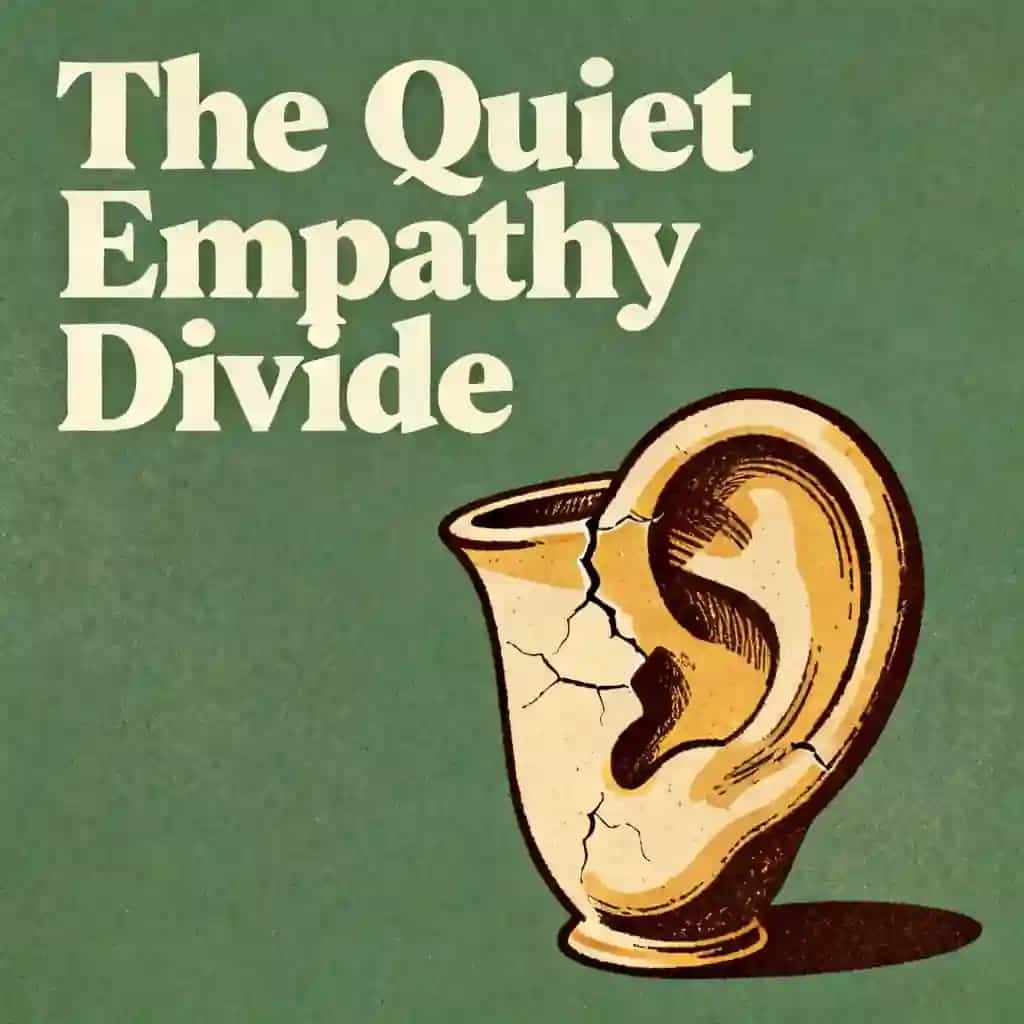
Power, Politics, and the Empathy Divide
Power dynamics permeate political environments, creating hierarchies that can inhibit empathy. During the author's time working in Washington, she experienced firsthand how power operates at every level of politics. In a Senate office, simply mentioning her workplace opened doors, but she was constantly reminded of her outsider status as an academic.
Political identity significantly impacts empathy. Research shows neurological differences between liberals and conservatives: liberals tend to process complex social cues and context, while conservatives focus more on individuals and maintaining habitual patterns. Genetics may influence political attitudes more than environment, with traits appearing in preschoolers that predict later political orientation. Conservatives typically demonstrate discomfort with uncertainty and compliance with directions, while liberals show autonomy and expressiveness.
Power diminishes empathy for two key reasons. First, power has a "disinhibiting effect"-powerful people feel freer to satisfy their desires, from turning off annoying fans to higher rates of unethical behavior like cheating and lying. Second, the powerful maintain a self-focus, being more inspired by their own internal states than others'. Brain scans confirm these differences-those with power show activation in brain regions associated with approach and goal achievement, while the powerless show activation in regions reactive to external events.
Power brings positive outcomes despite its empathy-reducing effects. The powerful demonstrate decreased procrastination, better focus, increased persistence, flexibility, and goal-directed behavior-invaluable traits for meeting deadlines and completing major projects. However, these benefits often come at the cost of processing others' feelings.
Despite power's tendency to diminish empathy, history shows powerful people can effectively use empathy to create meaningful social change. Barack Obama described empathy as "at the heart of my moral code" and "a call to stand in somebody else's shoes." Frances Perkins, the first female cabinet member as Roosevelt's Labor Secretary, witnessed the Triangle Shirtwaist Factory fire firsthand and used that empathic experience to champion labor reforms including the Social Security Act of 1935.
Reading people accurately doesn't necessarily translate to empathy. Research shows supervisors score higher on recognizing others' emotions than their subordinates-a useful leadership skill when interacting with employees, customers, and partners. However, this ability to read emotions doesn't guarantee empathic understanding. True empathy requires walking in another's shoes and understanding their life context, not merely identifying their feelings.
Capitolo 6
The Biological Foundations and Barriers to Empathy
Empathy begins in our bodies as both physical and mental processes, involving complex neurological systems that have evolved over millions of years. Our brains detect others' behaviors through specialized neural networks, triggering similar physical reactions that we then cognitively process through multiple brain regions. This intricate dance of neural activity requires seamless communication between the anterior cingulate cortex, insula, and prefrontal regions. When these pathways face competing demands from experiences like stress, depression, grief, or intoxication, our empathic capacity may be significantly compromised.
The groundbreaking discovery of mirror neurons began in the 1990s when Italian researchers, led by Giacomo Rizzolatti, observed Macaque monkeys' brains activating in the same pattern whether they performed an action or merely watched others perform it. This finding revolutionized our understanding of social cognition. While the existence of specific mirror neurons in humans remains somewhat controversial, the mirroring process itself is well-accepted in empathy research. The human brain, with its remarkable 86 billion neurons each making approximately 10,000 connections, represents computational power that exceeds our most advanced technology by orders of magnitude.
Our bodies evolved sophisticated mechanisms to handle periodic stress, but not the prolonged, chronic stress common in modern life. When we perceive threats, our limbic system triggers cascading hormonal responses - epinephrine provides immediate energy for "fight or flight," while cortisol sustains the stress response by prioritizing survival functions over growth, immune function, and higher-level thinking. This system works remarkably well for immediate threats but becomes deeply problematic when stress persists. Chronic stress maintains elevated cortisol levels, disrupting neural functioning, suppressing immunity, and potentially causing lasting damage to brain structure - particularly the prefrontal cortex crucial for empathy's cognitive components and emotional regulation.
PTSD, affecting approximately 7-8% of the population, is an anxiety disorder that develops after experiencing threatening or harmful events. Recent research reveals an fascinating neural processing difference in people with PTSD: their affective empathy (emotional mirroring) registers less intensely, while cognitive empathy components like perspective-taking remain largely intact. This reduced emotional reactivity may actually serve as a protective coping mechanism for those whose bodies remain on high alert from trauma, allowing them to engage with others without becoming overwhelmed.
Poverty affects over 43 million Americans - about one in seven people - creating persistent environmental stress with significant health consequences. Groundbreaking research on brain development shows children from lower-income backgrounds have measurably less brain matter thickness in key regions, correlating with lower academic achievement and cognitive function. However, parental education level may be more significant than income alone in determining outcomes, suggesting intellectually stimulating environments and engaged caregiving can partially override poverty's negative effects on neural development.
Intriguingly, while poverty may impair certain aspects of brain development, lower social class may actually enhance empathic capabilities. Multiple studies consistently show lower-class individuals demonstrate greater attentiveness to social context, more genuine interest in interpersonal engagement, and higher empathic accuracy than their higher-class counterparts. People from higher socioeconomic backgrounds often show less interest in others' emotional states and their surroundings, possibly due to reduced dependence on social connections for survival and success.
Capitolo 7
Religion, Technology, and the Future of Empathy
Religion and empathy share an intricate and often paradoxical relationship. While every major faith tradition - from Buddhism's compassion to Christianity's golden rule to Islam's emphasis on charitable giving - incorporates empathy as a core virtue, historical evidence reveals countless atrocities committed in religion's name that demonstrate profound empathic failure. This fundamental contradiction - between the universal teaching of loving others as oneself while simultaneously waging war on those with different beliefs - creates deeply confusing messages about empathy's role in religious practice and spiritual development.
Religion becomes particularly harmful when it shifts from being inclusive and adaptable to rigid and exclusive. Religious scholar Charles Kimball identifies five critical warning signs of religions that have lost their way: claiming absolute truth that brooks no disagreement, demanding blind obedience from followers, establishing an "ideal time" for their divine work, believing ends justify any means, and declaring holy war against perceived enemies. This dangerous pattern appears repeatedly throughout history, from the medieval Crusades to the Spanish Inquisition to modern extremist movements like ISIS and radical Christian nationalism. The underlying problem stems from fundamentalism's categorical inability to acknowledge the legitimacy of alternative worldviews, creating a toxic "us versus them" mentality that systematically dehumanizes others and provides moral justification for violence against them.
Technology's relationship with human empathy remains largely uncharted territory, presenting both opportunities and challenges. While human face-to-face communication has existed for at least fifty thousand years, technological communication is remarkably recent - telephones appeared in 1876, email in 1971, and social media platforms like Facebook only in 2004. This means today's young adults represent the first generation raised with these technologies as an integral part of their social development, leaving researchers with more questions than answers about their long-term impact on empathy and emotional intelligence.
Recent research provides some encouraging insights: contrary to popular concerns, online communication doesn't necessarily reduce face-to-face interaction and might actually increase offline connections with existing social circles. Studies comparing empathy in different contexts found that while face-to-face empathy scores were consistently higher than virtual empathy scores, they correlated positively, suggesting individuals skilled at in-person empathy also demonstrate greater online empathy. Similarly, feelings of social support were stronger through in-person interactions than virtual ones, though online understanding still provided meaningful value, particularly for individuals with mobility limitations or social anxiety.
The impact of violent media and video games presents a more nuanced picture. While exposure shows immediate brain changes that may temporarily reduce emotion regulation and increase desensitization, longitudinal research suggests these effects are typically short-term with minimal lasting impact on personality or behavior. Rather than causing aggression or low empathy, violent content may simply attract and reinforce existing personality traits and predispositions. Technology appears to function more as an amplifier of existing tendencies - enhancing empathy for those already developing it while potentially reinforcing isolation for those struggling with social connections. This suggests the need for balanced approaches that leverage technology's benefits while maintaining awareness of its limitations.
Capitolo 8
Building a More Empathic World
Social empathy extends beyond interpersonal empathy to understand broader social groups by perceiving their life situations, including historical contexts and structural inequalities. We are naturally wired to share others' feelings and mirror their experiences, though we can choose to engage with or ignore these connections. Empathy requires effort-distinguishing between our feelings and others', imagining others' lives, and managing our own emotions while doing so.
Fully engaging in empathy requires enhancing awareness of our surroundings and others, followed by developing deeper understanding. Our empathic feelings evolved to be strongest toward those who help us survive-originally our tribe, those who looked like us. This tribal instinct, while useful in early human history, now limits societal expansion and creates an unhelpful "us versus them" mentality. Today's reality is that we're a global, multicultural world-members of humanity's largest tribe. Social empathy helps overcome small-tribe biases to embrace human diversity.
A person can learn empathy at any age, though it's easier when young. Children's brains have greater neuroplasticity-the ability to change through different experiences and adjust to new ways of thinking. This is fundamental to human development as the brain grows and develops neural pathways through new experiences. Research on neuroplasticity shows our brains can change both through physical practice and mental imaging.
Examining poverty through a social empathy lens reveals the disconnect between policy and reality. Twenty years after welfare reform, the data shows TANF coverage dropped from 82% to 28% of eligible families while poverty rates remained unchanged. The rhetoric shifted from helping people become self-sufficient to avoiding giving "free stuff" to "takers." This perspective lacks empathy by failing to consider the full context of poverty.
When policymakers lack social empathy, citizens can mobilize to advocate for themselves and others. The civil rights movement of the 1960s exemplifies how social pressure can lead to legislative change when those in power finally understand the experiences of oppressed communities. Similarly, the MeToo movement demonstrates how empathic insight can drive social change. When the powerless are heard and supported, interpersonal empathy evolves into social empathy that can reshape policies.
Teaching social empathy requires developing three interconnected skills: interpersonal empathy, contextual understanding of systemic barriers, and macro perspective-taking. Experiential learning activities like privilege walks help participants viscerally understand social inequality by physically demonstrating how advantages accumulate for some while barriers impede others. Museums can serve as powerful venues for building social empathy by showcasing diverse perspectives and connecting visitors to unfamiliar experiences.
While it might seem naive to suggest social empathy as a path to a better world, even small increases in empathy can spread from person to person, group to group, until differences fade and "they" becomes "us." Through deliberate practice and education, we can expand our empathic abilities beyond our immediate circles to embrace the full diversity of human experience-creating a world where understanding replaces fear, and connection transcends division.




![[2603.15245] Practicing with Language Models Cultivates Human Empathic Communication](/_next/image?url=https%3A%2F%2Fd1y2du6z1jfm9e.cloudfront.net%2Fassets%2Fpodcast%2Fyellow.png&w=1024&q=50)