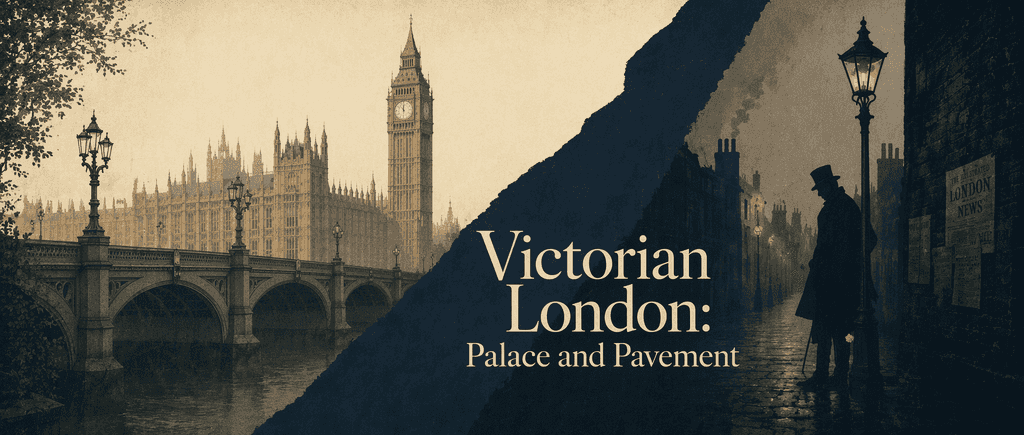
Panoramica di Poor Things
In Alasdair Gray's "Poor Things," Victorian Glasgow witnesses Bella Baxter's extraordinary rebirth. This feminist gothic masterpiece - now a celebrated Lanthimos film - brilliantly dissects male control through contradicting narratives. What if the most subversive tale of female autonomy came from a man's pen?
- Bella Baxter’s feminist rebellion redefines Victorian gender roles through unapologetic self-creation.
- Embrace Caledonian Antisyzygy: We are both monster and creator in our fractured identities.
- Transformation emerges from degradation—Lanthimos’ film mirrors Gray’s theme of growth through suffering.
- Glasgow’s gothic backdrop challenges Frankenstein ethics with feminist resurrection and political satire.
- Metafictional layers expose how men distort women’s narratives in historical and personal accounts.
- Bella’s socialist awakening critiques imperial capitalism’s exploitation of vulnerable populations.
- Imperfect rebirth: Flawed humanity triumphs over scientific perfection in Gray’s moral vision.
- Reject Victorian respectability—Bella’s sexual agency becomes her ultimate political weapon.
- Alasdair Gray’s dual narrative structure blurs truth and fiction to question authorship.
- “Poor Things” redeems brokenness as strength through Bella’s unyielding pursuit of selfhood.
- Glasgow’s industrial grit mirrors Bella’s messy yet resilient path to emancipation.
- Gray’s feminist Frankenstein asks: Who controls the story of women’s bodies and minds?
Sull'autore di Poor Things
Alasdair James Gray (1934–2019) was a groundbreaking Scottish novelist, artist, and postmodernist visionary, acclaimed for his genre-defying novel Poor Things. A central figure in Scotland’s literary renaissance, Gray blended satire, historical fiction, and surrealism to explore themes of identity, social justice, and the complexities of human nature. His work drew from his multifaceted career as a muralist, playwright, and professor of creative writing at the University of Glasgow, where he mentored future generations of writers.
Gray’s reputation rests on his “Scottish trilogy” — Lanark (1981), 1982, Janine (1984), and Poor Things — each celebrated for innovative narrative structures and biting social commentary. Poor Things, winner of the Whitbread Novel Award and the Guardian Book of the Year, reimagines the Frankenstein myth through a feminist lens, showcasing Gray’s signature wit and richly layered prose. His politically charged works, including essays advocating Scottish independence and socialism, reflect his lifelong engagement with cultural and ethical debates.
A polymath who illustrated his own books, Gray’s legacy extends beyond literature: Poor Things was adapted into a 2023 Oscar-winning film directed by Yorgos Lanthimos, cementing its status as a modern classic.
FAQ su Poor Things
What is Poor Things by Alasdair Gray about?
Poor Things follows Bella Baxter, a woman resurrected through an experimental brain transplant by Dr. Godwin Baxter, granting her an infant’s mind in an adult body. Her journey of self-discovery challenges Victorian societal norms, exploring themes of identity, gender, and morality through satirical adventures across Europe. The novel critiques scientific hubris and social inequality, blending Gothic fiction with postmodern narrative techniques.
Who should read Poor Things?
Readers of postmodern literature, feminist critiques, and darkly humorous satire will appreciate Poor Things. Fans of Mary Shelley’s Frankenstein or postmodern authors like Salman Rushdie will find its exploration of identity and societal constructs compelling. It suits those interested in Scottish literature or unconventional narrative structures.
Is Poor Things worth reading?
Yes—Poor Things won the 1992 Whitbread Novel Award and Guardian Fiction Prize for its inventive storytelling and sharp social commentary. Its blend of absurdist humor, philosophical depth, and richly layered narrative makes it a standout in contemporary Scottish literature.
What are the main themes in Poor Things?
Key themes include identity construction, gender roles, and moral responsibility. Gray critiques Victorian hypocrisy, scientific ethics, and societal power imbalances through Bella’s unconventional perspective. The novel also examines Scottish nationalism and the fragility of human reality.
How does Poor Things compare to Frankenstein?
Both novels explore creation myths and ethical dilemmas of playing God. While Frankenstein focuses on creator-creation alienation, Poor Things satirizes gender dynamics and class oppression. Bella, unlike Frankenstein’s monster, embraces her agency to subvert patriarchal norms.
What is the significance of Bella Baxter’s character?
Bella symbolizes liberation from societal constraints. Her childlike curiosity and lack of social conditioning allow her to challenge Victorian morality, particularly regarding female autonomy and sexuality. Her evolution critiques the absurdity of “civilized” behavior.
How does Alasdair Gray use narrative structure in Poor Things?
Gray layers conflicting accounts—a memoir, rebuttal letter, and editorial notes—to question objective truth. This fragmented approach mirrors themes of identity fluidity and highlights the subjectivity of historical narratives.
What critiques exist about Poor Things?
Some critics argue Bella’s sexual freedom risks reducing her to a male fantasy, while others praise her as a feminist icon. The dense postmodern style may alienate readers preferring linear plots, but its ambition is widely celebrated.
How does Poor Things address Scottish identity?
Gray parallels Bella’s rebirth with Scotland’s cultural struggles under British dominance. The novel’s Glasgow setting and critique of English hegemony reflect Gray’s socialist and pro-independence views.
Why is Poor Things relevant today?
Its themes—questioning authority, gender inequality, and scientific ethics—resonate in debates about AI, bodily autonomy, and social justice. Bella’s defiance of norms inspires modern discussions on identity and resistance.
What symbolism is used in Poor Things?
Bella’s brain transplant symbolizes societal attempts to control women’s intellect. Dr. Baxter’s grotesque appearance mirrors the moral corruption of “civilizing” forces, while European settings highlight colonial exploitation.
How does Poor Things critique Victorian society?
The novel exposes hypocrisy in gender roles, medicine, and class through Bella’s interactions. Her refusal to conform to piety or subservience undermines Victorian ideals of femininity, while wealthy characters personify greed and moral decay.
Senti il libro attraverso la voce dell'autore
Trasforma la conoscenza in spunti coinvolgenti e ricchi di esempi
Cattura le idee chiave in un lampo per un apprendimento veloce
Goditi il libro in modo divertente e coinvolgente
Personaggi di Poor Things
- Bella BaxterA woman with an infant's brain
- Godwin BaxterA brilliant surgeon with an ogre-like body
- Archibald McCandlessA Scottish public health officer and memoirist
- Victoria McCandlessA pioneering feminist doctor
- Alasdair GrayThe fictionalized editor of the found manuscript
Temi chiave in Poor Things
- unreliable narration
- scientific ethics
- victorian medical experimentation
- female autonomy
- metafictional framework
Citazioni da Poor Things
lies.
unprovable blethers.
a woman-shaped emptiness
taking him for granted as much as the floor under her.
Esplora il Tuo Modo di Imparare
 Modalità Riassunto Rapido
Leggi o ascolta il riassunto di Poor Things in 9 minuti
Scomponi le idee chiave di Poor Things in punti facili da capire per comprendere come i team innovativi creano, collaborano e crescono.

 Modalità Divertente
Lezioni da Poor Things Raccontate in Storie di 22 Min
Vivi Poor Things attraverso narrazioni vivide che trasformano le lezioni di innovazione in momenti che ricorderai e applicherai.
 Modalità Personalizza
Vivi Poor Things nel tuo stile di apprendimento
Chiedi qualsiasi cosa, scegli il tuo stile di apprendimento e co-crea intuizioni che risuonano davvero con te.
Creato da alumni della Columbia University a San Francisco
"Instead of endless scrolling, I just hit play on BeFreed. It saves me so much time."


"I never knew where to start with nonfiction—BeFreed’s book lists turned into podcasts gave me a clear path."


"Perfect balance between learning and entertainment. Finished ‘Thinking, Fast and Slow’ on my commute this week."
"Crazy how much I learned while walking the dog. BeFreed = small habits → big gains."
"Reading used to feel like a chore. Now it’s just part of my lifestyle."

"Feels effortless compared to reading. I’ve finished 6 books this month already."
"BeFreed turned my guilty doomscrolling into something that feels productive and inspiring."

"BeFreed turned my commute into learning time. 20-min podcasts are perfect for finishing books I never had time for."
"BeFreed replaced my podcast queue. Imagine Spotify for books — that’s it. 🙌"

"It is great for me to learn something from the book without reading it."
"The themed book list podcasts help me connect ideas across authors—like a guided audio journey."
"Makes me feel smarter every time before going to work"
Creato da alumni della Columbia University a San Francisco
"Instead of endless scrolling, I just hit play on BeFreed. It saves me so much time."
"I never knew where to start with nonfiction—BeFreed’s book lists turned into podcasts gave me a clear path."
"Perfect balance between learning and entertainment. Finished ‘Thinking, Fast and Slow’ on my commute this week."
"Crazy how much I learned while walking the dog. BeFreed = small habits → big gains."
"Reading used to feel like a chore. Now it’s just part of my lifestyle."
"Feels effortless compared to reading. I’ve finished 6 books this month already."
"BeFreed turned my guilty doomscrolling into something that feels productive and inspiring."
"BeFreed turned my commute into learning time. 20-min podcasts are perfect for finishing books I never had time for."
"BeFreed replaced my podcast queue. Imagine Spotify for books — that’s it. 🙌"
"It is great for me to learn something from the book without reading it."
"The themed book list podcasts help me connect ideas across authors—like a guided audio journey."
"Makes me feel smarter every time before going to work"
"Instead of endless scrolling, I just hit play on BeFreed. It saves me so much time."
"I never knew where to start with nonfiction—BeFreed’s book lists turned into podcasts gave me a clear path."
"Perfect balance between learning and entertainment. Finished ‘Thinking, Fast and Slow’ on my commute this week."
"Crazy how much I learned while walking the dog. BeFreed = small habits → big gains."
"Reading used to feel like a chore. Now it’s just part of my lifestyle."
"Feels effortless compared to reading. I’ve finished 6 books this month already."
"BeFreed turned my guilty doomscrolling into something that feels productive and inspiring."
"BeFreed turned my commute into learning time. 20-min podcasts are perfect for finishing books I never had time for."
"BeFreed replaced my podcast queue. Imagine Spotify for books — that’s it. 🙌"
"It is great for me to learn something from the book without reading it."
"The themed book list podcasts help me connect ideas across authors—like a guided audio journey."
"Makes me feel smarter every time before going to work"
"Instead of endless scrolling, I just hit play on BeFreed. It saves me so much time."
"I never knew where to start with nonfiction—BeFreed’s book lists turned into podcasts gave me a clear path."
"Perfect balance between learning and entertainment. Finished ‘Thinking, Fast and Slow’ on my commute this week."
"Crazy how much I learned while walking the dog. BeFreed = small habits → big gains."
"Reading used to feel like a chore. Now it’s just part of my lifestyle."
"Feels effortless compared to reading. I’ve finished 6 books this month already."
"BeFreed turned my guilty doomscrolling into something that feels productive and inspiring."
"BeFreed turned my commute into learning time. 20-min podcasts are perfect for finishing books I never had time for."
"BeFreed replaced my podcast queue. Imagine Spotify for books — that’s it. 🙌"
"It is great for me to learn something from the book without reading it."
"The themed book list podcasts help me connect ideas across authors—like a guided audio journey."
"Makes me feel smarter every time before going to work"

Scarica il riassunto di Poor Things
Ottieni il riassunto di Poor Things in formato PDF o EPUB gratuito. Stampalo o leggilo offline quando vuoi.