Capitolo 1
Between Two Worlds: A Journey Through Memory and Identity
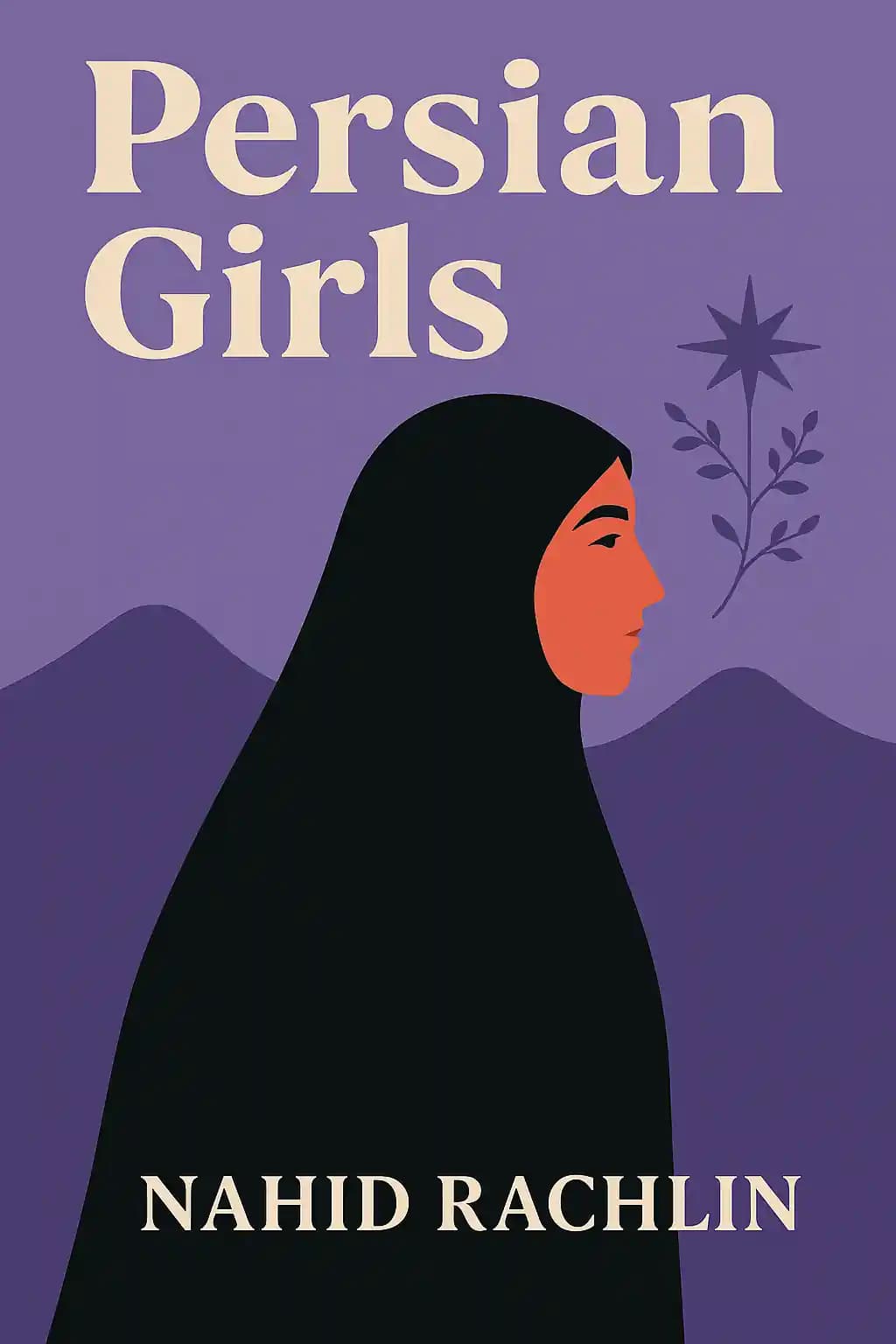
Imagine being ripped from the only mother you've ever known, transported across a country to live with strangers who claim to be your real family. This is how Nahid Rachlin's memoir "Persian Girls" begins-with a nine-year-old girl forcibly taken from her adoptive mother in Tehran to live with her biological parents in Ahvaz. This powerful opening sets the stage for an intimate exploration of family bonds, cultural identity, and the struggle for personal freedom against the backdrop of Iran's tumultuous political landscape. Since its publication, "Persian Girls" has resonated deeply with readers worldwide, earning praise from literary icons like Anne Tyler and becoming a staple in women's studies and Middle Eastern literature courses. The memoir's unflinching examination of family dynamics and female experience in pre-revolutionary Iran offers a rare glimpse into a world that remains largely misunderstood in Western consciousness, making it as culturally significant today as when it first appeared.
Capitolo 2
The Rupture: A Childhood Divided
The story begins in 1955 Iran, during the Shah's aggressive modernization efforts, when nine-year-old Nahid is abruptly taken from her classroom by her biological father-a stern-faced stranger she barely recognizes from two brief previous encounters. Despite her violent protests, fever, and physical illness during the grueling journey south, she's transported from the familiar streets of Tehran to the sweltering city of Ahvaz to live with her birth mother Mohtaram and siblings who are little more than names to her. The transition proves deeply traumatic; torn from Maryam, the only mother she's known for nine years, Nahid finds herself in an unfamiliar home where even her welcome embrace from Mohtaram feels hesitant and emotionally distant compared to the warm, enveloping arms of Maryam that she desperately misses.
The complex backstory reveals that Nahid was given to her childless aunt Maryam when she was just six months old, a common practice in Iranian families at the time. Maryam, a traditional widow who strictly followed Islamic customs, raised Nahid with extraordinary devotion-singing ancient Persian lullabies, telling elaborate stories under mosquito nets on sticky summer nights, and creating a world of warmth and security in their ancient Tehran neighborhood near the grand bazaar. She taught Nahid prayers, took her to religious ceremonies, and instilled in her a deep appreciation for Persian poetry and tradition. This early childhood formed the bedrock of Nahid's sense of belonging and identity, making her father's sudden appearance and forcible removal all the more devastating to her young psyche.
In Ahvaz, a city known for its oppressive heat and oil refineries, Nahid encounters a family dynamic entirely foreign to her carefully structured world. Her father, a circuit judge known for his harsh sentences, rules the household with authoritarian control, demanding absolute obedience and strict adherence to his rules. Her biological mother Mohtaram, who had given birth to ten children (with five surviving the harsh conditions of early childhood), maintains a peculiar emotional distance from Nahid while clearly favoring her other daughter Manijeh. The siblings-particularly her brothers who enjoy special privileges as males in the household-remain essentially strangers to her, speaking in unfamiliar colloquialisms and following social customs she doesn't understand. Only her sister Pari, with her quiet wisdom and gentle demeanor, shows genuine kindness, forming what will become the most significant and enduring relationship in Nahid's life.
The stark contrast between her two mothers becomes a defining feature of Nahid's fractured childhood: Maryam represented unconditional love, traditional values, and spiritual devotion, spending hours teaching Nahid about faith and culture, while Mohtaram embodied a more "modern" approach-wearing Western clothing and makeup, leaving her hair uncovered, and dismissing daily prayers as old-fashioned-yet paradoxically enforcing strict gender roles and arranged marriages for her daughters. This profound dichotomy creates in Nahid a deep sense of displacement and persistent questions about her identity that will follow her throughout life, shaping her understanding of motherhood, tradition, and belonging in ways that will echo through generations.
Capitolo 3
Daughters and Destiny: Female Experience in Pre-Revolutionary Iran
In the Rachlin household, as in much of Iranian society, daughters faced fundamentally different expectations than sons. While Nahid's brothers were sent to America for university education with generous financial support and encouragement, the girls were being methodically prepared for arranged marriages regardless of their personal aspirations or academic achievements. This stark gender divide manifested in countless daily interactions - from the freedom of movement granted to male siblings to the strict supervision of daughters' social activities and dress codes.
When Pari secures a role in "The Glass Menagerie," she must orchestrate an elaborate deception, hiding rehearsals under the guise of study groups and extra tutoring sessions. Her father eventually discovers it through the school principal, who betrays Pari's confidence during a parent-teacher meeting. Though initially furious, he allows her this "one time" performance, perhaps moved by her passionate pleading or seeking to avoid public embarrassment. Pari's talent shines as she transforms completely into Laura, earning a standing ovation that makes her brief taste of artistic freedom even more poignant.
The memoir meticulously documents a society where women's value is determined primarily through marriage, with virginity being the most precious commodity a girl possesses. Wealthy families invest heavily in their daughters' appearances - girls as young as fourteen undergo rhinoplasty for smaller, more "acceptable" noses or breast enhancement surgery to increase their marriage prospects. Underground networks facilitate hymen reconstruction for those who "slipped," while matchmakers maintain detailed dossiers on eligible girls' family backgrounds, physical attributes, and domestic skills.
Most girls at Nahid's school are already engaged by sixteen or seventeen to men in their thirties or forties, forming exclusive social circles based on their fiances' professional status. They parade their engagement rings and recite their future husbands' credentials like talismans - "My colonel," "My doctor," "My engineer" - while those still unattached are subtly ostracized or pitied. The pressure to secure a "good match" creates a competitive atmosphere where girls scrutinize each other's appearance and behavior mercilessly.
Even supposedly progressive reforms like the Shah's 1967 Family Protection Law, which theoretically granted women more rights in marriage and divorce, prove hollow in practice. When Pari finally obtains a divorce from her abusive husband after years of physical and emotional torment, she discovers that male-dominated courts interpret the law selectively. She loses both her financial settlement and custody of her son Bijan, forced to watch helplessly as her ex-husband's family whisks him away to Tehran. Her experience becomes a cautionary tale, demonstrating how legal reforms often failed to penetrate deeply entrenched social structures.
The concept of destiny (ghesmat) weaves through the narrative like an invisible thread. Maryam frequently invokes it to explain life's inequities, telling young Nahid, "It was your destiny to be my child. An angel writes each baby's destiny on their forehead with invisible ink." This traditional belief in predetermined fate serves multiple purposes - offering comfort in times of hardship, justifying social hierarchies, and absolving individuals of responsibility for challenging the status quo. Yet for Nahid, this fatalistic worldview increasingly chafes against her growing awareness of injustice and her burning desire for self-determination, creating a philosophical tension that drives much of her personal development throughout the memoir.
Capitolo 4
The Sanctuary of Words: Literature as Escape and Identity
From an early age, books become Nahid's refuge from the chaos and constraints of her life. After being taken from Maryam, she begins stopping at a stationery store to buy Gheseh (Story) magazine, carefully saving her pocket money to purchase each new issue. She reads every piece "in hopes the words might provide me with answers" about why her birth mother had given her away, poring over stories of families and mothers with particular intensity. The magazine's colorful illustrations and engaging tales offer her first taste of literary escape, creating a private world where she can safely explore her emotions.
As a teenager, Nahid discovers a small bookstore off Pahlavi Avenue where the owner, Jalal, becomes her literary mentor and guide. The shop itself becomes a sanctuary, with its towering shelves and the comforting smell of old paper. Jalal introduces her to both revered Iranian poets like Hafez and Rumi, and translated foreign novels from authors such as Victor Hugo and Charles Dickens. These books offer glimpses into other worlds and possibilities beyond the limitations of her current existence, each page opening new horizons of thought and imagination. When Jalal secretly offers her a banned copy of "Les Miserables," carefully wrapped in plain paper, she takes it home "fearful yet excited by the forbidden knowledge," reading late into the night by flashlight under her covers.
The political implications of reading become starkly apparent when her father conducts periodic searches through her books, warning that certain titles could get them in trouble with SAVAK, the Shah's notorious secret police. She learns to hide her most dangerous books beneath floorboards and inside hollow textbooks. This connection between literature and political freedom underscores the larger themes of intellectual and personal liberty that run throughout the memoir, revealing how even the act of reading becomes an act of resistance in an authoritarian state.
Writing emerges as not just an escape but a means of processing trauma and claiming agency. When Nahid writes a story about a woman who abandoned her blind child to marry a man who wouldn't accept the disability, she pours her own feelings of abandonment into the narrative. Her teacher Mrs. Soleimani recognizes the deeper truth in the story, praising its realism and using it to encourage the class to fight against limitations placed on women. These words move Nahid deeply and plant the seed that America might offer an escape from these constraints, leading her to dream of a place where she could write freely.
The memoir traces Nahid's evolution as a writer from these early beginnings through her education in America, her first publications in literary journals, and ultimately to the creation of the memoir itself. She describes the challenges of writing in English, her second language, and how she gradually finds her voice in a new cultural context. In the epilogue, she reveals her profound motivation for writing: "Yes, dearest Pari, it is to bring you back to life that I write this book." Literature thus becomes not just personal salvation but a way to preserve and honor those she has lost, transforming private grief into public testimony and individual memory into shared history.
Capitolo 5
Sisters in Struggle: The Bond Between Nahid and Pari
Among the complex web of family relationships in "Persian Girls," the bond between Nahid and her sister Pari emerges as the emotional core of the narrative. Despite having different mothers in practice (Nahid raised by Maryam, Pari by Mohtaram), they form an alliance against the restrictions of their household and society.
Pari shows kindness to Nahid from the moment she arrives in Ahvaz, inviting her to see her room and sharing her collection of American movie star photos. "I still remember when Aziz took you away," she tells Nahid. "I was almost five then but the memory stayed with me because I missed you." This immediate connection grows as Pari introduces Nahid to American cinema and takes her on adventures to the Karoon River and shops in town.
Their sisterhood deepens through shared dreams and resistance to parental pressure. In the scorching summer heat of Ahvaz, with temperatures reaching 110 degrees, they find comfort in each other's company-cooling themselves in the shallow courtyard pool, watching movies at the Sahara Cinema across the street, and promising each other to marry only for love, not through arrangement.
Pari's trajectory becomes a cautionary tale that shapes Nahid's determination to escape Iran. Despite her intelligence and artistic talent, Pari is forced into marriage with Taheri, a wealthy businessman who initially promises to support her acting aspirations but quickly reveals his true controlling nature. After discovering Taheri's dark secret-he had killed a woman in a hit-and-run accident-and enduring his physical and psychological abuse, Pari eventually obtains a divorce but loses custody of her son Bijan.
Their separation when Nahid goes to America doesn't diminish their connection. They maintain correspondence, with Pari sharing her struggles and Nahid feeling increasingly guilty about her relative freedom. When Nahid returns to Iran years later, she learns of Pari's tragic death-falling down the stairs in circumstances that suggest possible suicide. This loss leaves "a hole in my existence," as Nahid describes it, driving her to investigate the truth about her sister's death and ultimately to write the memoir as a way of bringing Pari "back to life."
Capitolo 6
Crossing Borders: Cultural Identity in America
Nahid's journey to America begins with her father's surprising decision to allow her to attend college there, influenced by her brother Parviz who knew of scholarships at a women's college near his medical school. His permission comes with conditions: "Don't imitate American girls or get ideas about American men. You'll come back and marry here." She realizes he fears her rebellious nature and knows she'd fight an arranged marriage harder than Pari had.
Upon arriving at Lindengrove College, Nahid immediately feels isolated yet free. The campus with its colonial architecture seems worlds away from Iran. She struggles with unfamiliar food, broken English conversations, and classes chosen for their minimal language requirements. While other students socialize and date, Nahid studies constantly, determined to succeed despite her limited resources.
Cultural misunderstandings abound. For Parents' Day, the dean insists Nahid wear a "native costume"-specifically a chador, which she'd never worn in Iran. Though it feels like bondage to her, she reluctantly complies, only to become an exotic exhibit for curious American parents. When a dormmate asks if she's Catholic because of her "habit," Nahid realizes how little Americans understand about her culture.
The memoir poignantly captures the immigrant experience of belonging nowhere completely. Despite becoming an American citizen, Nahid doesn't feel American, yet she's abandoned many Iranian traditions. This sense of cultural displacement inspires her novel "Foreigner" about an Iranian woman married to an American who questions her life choices during a visit to Iran.
This liminality becomes especially painful during the Iranian hostage crisis when anti-Iranian sentiment floods American media. Nahid finds herself caught between worlds-her American friends suddenly become patriots who lump all Iranians, including her, with the hostage-takers. Even her seven-year-old daughter comes home asking if she could change her Iranian name to "Cindy" after a classmate's negative reaction.
Yet America also offers Nahid opportunities for self-determination impossible in Iran. She marries Howie, a Jewish American psychology student, without family present-relieved there are "no vigilant eyes on me, no one inspecting sheets for virginal blood the morning after." She pursues her writing career, eventually publishing novels and stories that draw on her cross-cultural experiences. The birth of her daughter Leila brings both joy and melancholy as she resolves to parent like Maryam-lenient and encouraging-while feeling guilty that Maryam isn't sharing in her granddaughter's life.
Capitolo 7
The Shadow of Politics: Iran's Transformation
Though primarily a personal narrative, "Persian Girls" unfolds against the backdrop of Iran's dramatic political transformation from the Shah's secular autocracy to the Islamic Republic. The memoir offers an intimate perspective on how these seismic changes affected ordinary lives, particularly women's.
Nahid's childhood coincides with the Shah's modernization efforts following the 1953 CIA-backed coup that restored him to power. This period is characterized by cultural confusion-a mixture of traditional Iranian/Muslim customs and Western values. Though Nahid's family doesn't pray or follow religious practices, her parents believe in arranged marriages and traditional gender roles. This cultural contradiction mirrors Ahvaz itself, with its mixture of Iranians, Americans, English, and Arab immigrants living amid tension between conservative and Westernized values.
As a teenager, Nahid encounters the darker side of the Shah's regime when her father warns about SAVAK agents who could be disguised as handymen or electricians. Her beloved composition teacher Mrs. Soleimani disappears after receiving warnings for "brainwashing young girls" with discussions about women's rights. Later, Nahid learns she was killed in what appeared to be a SAVAK assassination.
The Shah's extravagance amid widespread poverty becomes apparent during the 1971 celebration of the 2,500th anniversary of Cyrus the Great in Persepolis. The monarchy spent nearly two billion dollars on the event while many Iranians lived in poverty-importing luxury items from Europe while villages were demolished to prepare the site. Meanwhile, students were arrested for anti-Shah graffiti and Khomeini condemned the "evil celebration" from exile.
When Nahid returns to Iran in 1979, she witnesses the Islamic Revolution firsthand. The streets have transformed-Khomeini's grim-faced photographs have replaced the Shah's, armed bearded guards stand watch, and walls bear slogans like "Death to America." Street names have changed to mournful titles like "Martyr Square" and "Execution Avenue."
The Iran-Iraq war (1980-1988) brings further suffering, with Nahid's hometown of Ahvaz particularly affected due to its proximity to the border. Her family members are scattered-Maryam expelled from Karbala due to the war and relocated to Dubai, Mohtaram joining her after Father's death.
In later visits after Khomeini's death in 1989, Nahid observes how rules remain in constant flux-sometimes she must hide her American passport, sometimes she needs her husband's permission to visit. Under President Khatami (1997-2005), reforms allow more internet access, enabling women to glimpse different ways of life, yet fundamental restrictions remain.
Capitolo 8
The Price of Freedom: Reconciliation and Loss
As Nahid builds her life in America-completing her education, establishing her writing career, creating a family with Howie-she must reckon with what she has gained and lost in her pursuit of freedom. The memoir's final sections explore themes of reconciliation, forgiveness, and the irreparable losses that accompany her chosen path.
After years of estrangement, Nahid begins visiting Maryam regularly when political conditions allow. She finds her adoptive mother aged but essentially unchanged in her warmth and traditional outlook. These reunions bring healing but also highlight the years lost between them-Maryam never witnessed her granddaughter Leila's childhood or shared in Nahid's literary success.
More surprisingly, Nahid develops a newfound understanding of Mohtaram, her biological mother from whom she felt so alienated throughout childhood. "I've come to forgive and love Mohtaram," she writes, "understanding her difficult life-married at nine, bearing ten children from age fourteen, losing many." This compassion extends even to Manijeh, her once-hostile sister, who confesses her regret: "I wish I had behaved differently when you came home. I was so insecure and jealous."
Yet the most profound loss-one that cannot be reconciled-is Pari's death. The circumstances remain ambiguous, with suggestions of suicide rather than accident. Nahid is haunted by uncertainty about whether Pari jumped intentionally, unable to bear her separation from her son Bijan and the crushing of her dreams. This loss is compounded by Nahid's inability to locate Bijan afterward, leaving her without even this connection to her beloved sister.
The memoir concludes with Nahid's acknowledgment that writing itself is an act of preservation and resurrection: "Yes, dearest Pari, it is to bring you back to life that I write this book." In this final revelation, we understand that the memoir serves not just as personal testimony but as memorial-a way of ensuring that Pari's struggles and dreams are not forgotten.
This ending circles back to the book's opening themes of destiny versus choice. While Nahid has achieved the freedom she sought, escaping the constraints that claimed her sister, she carries the weight of that escape. The price of independence is a fractured identity-"longing to mesh my present life with those faraway days"-and the knowledge that her liberation came at the cost of leaving others behind.
Capitolo 9
A Tapestry of Memory: Finding Home in Stories
Throughout "Persian Girls," physical objects serve as powerful repositories of memory and identity. When Nahid is taken from Tehran to Ahvaz, she finds Maryam's paradise tapestry on her bed-the embroidery Maryam had made for her dowry-and hangs it in her room, finding comfort in its birds in flight. This tapestry follows her to America, becoming a tangible connection to her first mother and homeland.
Similarly, photographs become touchstones of identity and loss. Nahid places Pari's photograph on her desk in her American college dormitory, creating a small shrine to the sister she left behind. Years later, after Pari's death, she stares at this same photograph, seeing her sister's "hopeful bright smile" and remembering how she banished her loneliness.
The memoir itself emerges as the ultimate tapestry-weaving together fragments of memory, family stories, political events, and personal reflections to create a coherent narrative from a fractured life. In writing her story, Nahid performs an act of integration, bringing together the disparate parts of her identity: the child raised by Maryam, the unwanted daughter in her father's house, the foreign student in America, the writer, the wife, the mother.
This integration is never complete or perfect. The final image of Nahid standing outside her old elementary school in Tehran, watching students in headscarves in the courtyard while remembering her beloved teacher Miss Modaresi, captures the persistent sense of being caught between worlds. A fragment of poetry returns to her: "...a half-forgotten house, full of sunshine one moment and shadowy the next..." This poetic fragment encapsulates the memoir's central insight about memory and identity-that our past is both illuminated and obscured, present and irretrievable.
In the end, "Persian Girls" offers no simple resolution to the questions of belonging and identity that have haunted Nahid since childhood. Instead, it suggests that home might be found not in a physical place but in the stories we tell about ourselves and those we love. By writing her memoir, Nahid creates a space where all versions of herself can coexist, where her sister Pari can live again, and where the complex, contradictory strands of her experience can be woven into a meaningful whole.