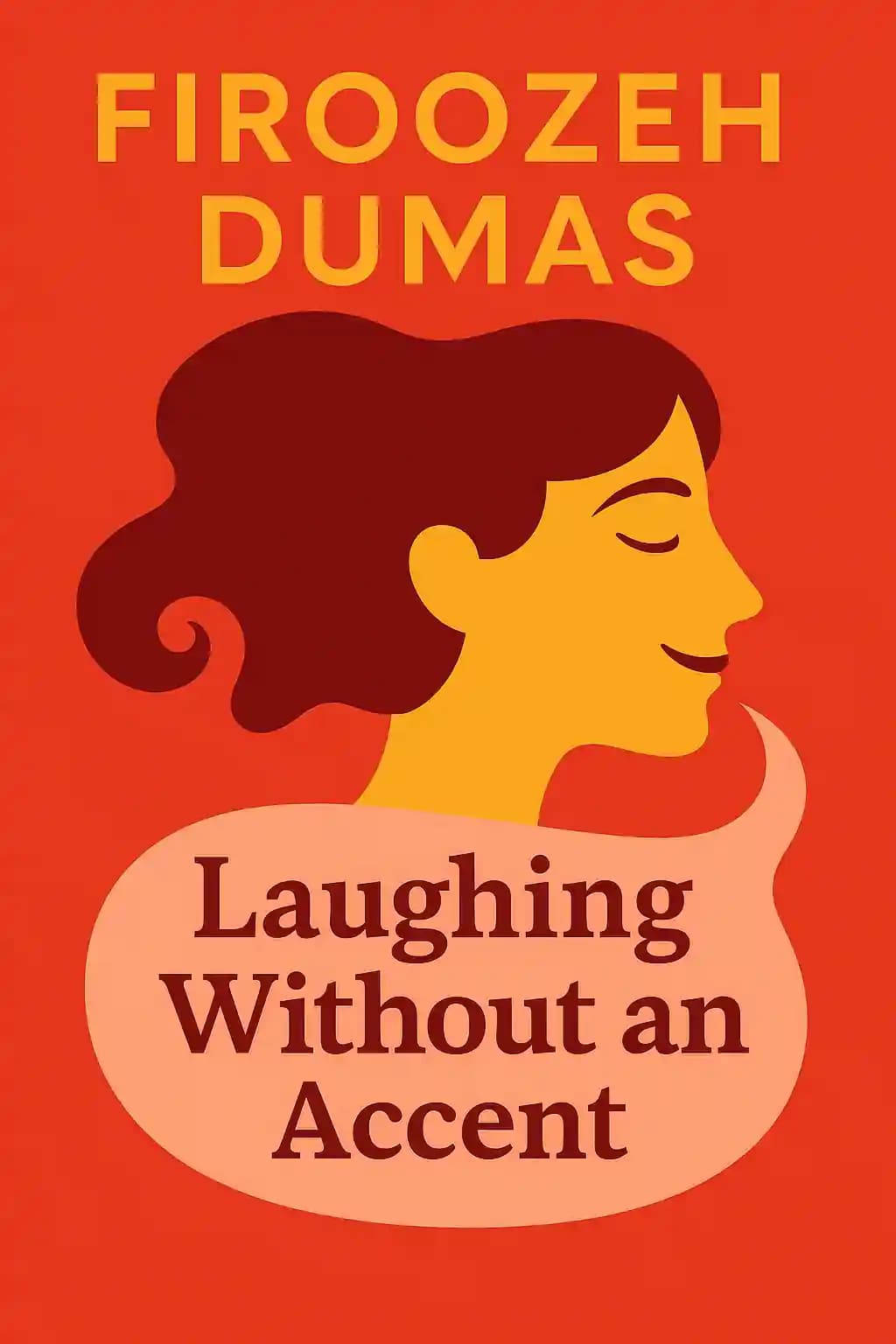
Laughing Without an Accent
Adventures of an Iranian American, at Home and Abroad
Panoramica di Laughing Without an Accent
In "Laughing Without an Accent," Firoozeh Dumas hilariously navigates life between Iranian roots and American culture. With a 3.79 Goodreads rating and classroom adoption nationwide, this memoir asks: can humor truly bridge cultural divides that even presidents and prejudice cannot?

Temi chiave in Laughing Without an Accent
- iranian diaspora experience
- cultural translation
- immigrant family dynamics
- cross-cultural humor
- bridging cultural divides
Citazioni da Laughing Without an Accent
humor had achieved something remarkable: it had created a bridge of understanding.
We don't hate Americans.
The bustling Tehran streets with their constant noise and strangers represented everything I disliked-a city without an "off button."
Sometimes the smallest spaces can host our biggest adventures.
My first American teacher, Mrs. Sandberg, completely bewildered me with her kindness.
Personaggi di Laughing Without an Accent
- Firoozeh DumasThe author and narrator of the memoir
- Mohammad Soleimani NiaThe translator who worked on the Persian edition
- Mrs. AhmadiA neighbor whose phone calls the author overheard
Sull'autore
Sull'autore di Laughing Without an Accent
Firoozeh Dumas, bestselling author of Laughing Without an Accent: Adventures of an Iranian American, at Home and Abroad, is celebrated for her witty, heartfelt explorations of cultural identity and immigration.
Born in Abadan, Iran, Dumas moved to California at age seven, later shuffling between Iran and the U.S. during her youth—experiences that fuel her memoirs’ themes of belonging and cross-cultural humor.
A UC Berkeley humanities graduate, she began writing to preserve family stories, leading to her breakout memoir Funny in Farsi (2003), a PEN/USA Award finalist and New York Times bestseller.
Her work spans essays in The New York Times and NPR commentaries, alongside her acclaimed middle-grade novel It Ain’t So Awful, Falafel. Dumas’s books, often taught in schools, blend autobiographical insights with universal truths about family and resilience.
Laughing Without an Accent debuted on the New York Times bestseller list and has been translated into multiple languages, cementing her voice in contemporary immigrant literature.
Scarica il riassunto di Laughing Without an Accent
Ottieni il riassunto di Laughing Without an Accent in formato PDF o EPUB gratuito. Stampalo o leggilo offline quando vuoi.
FAQ su questo libro
Laughing Without an Accent is a humorous memoir exploring cultural identity through Firoozeh Dumas' experiences as an Iranian-American immigrant. It blends personal anecdotes about family traditions, cross-cultural misunderstandings, and the universal search for belonging. The book contrasts Iranian and American norms through stories like adapting to U.S. Costco culture while preserving Persian New Year rituals.
This book appeals to readers interested in multicultural narratives, immigrant experiences, or humorous cultural observations. Fans of Dumas' debut Funny in Farsi, educators teaching cross-cultural communication, and anyone exploring identity in globalized societies will find value. Its accessible humor makes it suitable for teens and adults.
Yes – the New York Times bestseller offers unique insights into bridging cultural divides through wit and warmth. As a Thurber Prize finalist, it combines literary merit with laugh-out-loud moments while addressing serious themes like grief and prejudice. Dumas' perspective as one of the first prominent Iranian-American humorists makes it culturally significant.
Key themes include:
- Cultural adaptation: Navigating Iranian traditions in American contexts
- Family dynamics: Humorous yet poignant parent-child relationships
- Shared humanity: Finding common ground through food, humor, and storytelling
- Identity negotiation: Balancing "hyphenated" Iranian-American experiences
Dumas employs self-deprecating wit to discuss immigration challenges, parental loss, and post-9/11 prejudice. For example, she frames cultural censorship in Iran through comic misunderstandings about her first book's Persian translation. This approach makes complex issues accessible while maintaining emotional depth.
The memoir contrasts:
- American casual dining vs. Persian hospitality rituals
- U.S. self-help culture vs. Iranian communal wisdom
- Western individualism vs. Middle Eastern family obligations
- Free speech norms vs. Iranian censorship experiences
While both are humorous memoirs, this sequel broadens its scope beyond Iranian-American experiences to global citizenship themes. It delves deeper into adult responsibilities like parenting multicultural children and coping with grief, reflecting Dumas' personal growth since her debut.
Some readers note the episodic structure lacks narrative momentum compared to traditional memoirs. Others suggest cultural generalizations occasionally oversimplify complex issues. However, most critics praise its authentic voice and ability to humanize cross-cultural experiences.
The book remains timely amid ongoing debates about immigration and cultural polarization. Its emphasis on shared human experiences through humor offers a counterpoint to divisive rhetoric, particularly valuable for educators and workplaces navigating multicultural environments.
Notable passages include:
- "Laughter needs no translation – it’s the accent we all understand"
- "In every culture, bad drivers are the true global citizens"
- "Grief taught me that tears and laughter flow from the same well"
The chapter "Sob" chronicles Dumas' emotional journey after her father's death, using raw honesty tempered with dark humor. She illustrates how cultural rituals and family bonds provide resilience, contrasting Persian mourning customs with American therapeutic approaches.
Key takeaways include:
- Using food traditions as cultural bridges
- Reframing accents as linguistic superpowers
- Finding humor in bureaucratic cross-cultural challenges
- Leveraging family stories to preserve heritage
Yes – Penguin Random House provides a reading guide with questions about cultural humor norms, grief processing through comedy, and comparing Iranian/U.S. social customs. These resources make the book popular for book clubs and diversity training programs.
Readers often pair it with:
- Born a Crime by Trevor Noah (cross-cultural humor)
- Me Talk Pretty One Day by David Sedaris (immigrant comedy)
- Americanized by Sara Saedi (Iranian-American memoir)