Capitolo 1
The Master of Horror's Roadmap to Writing Excellence
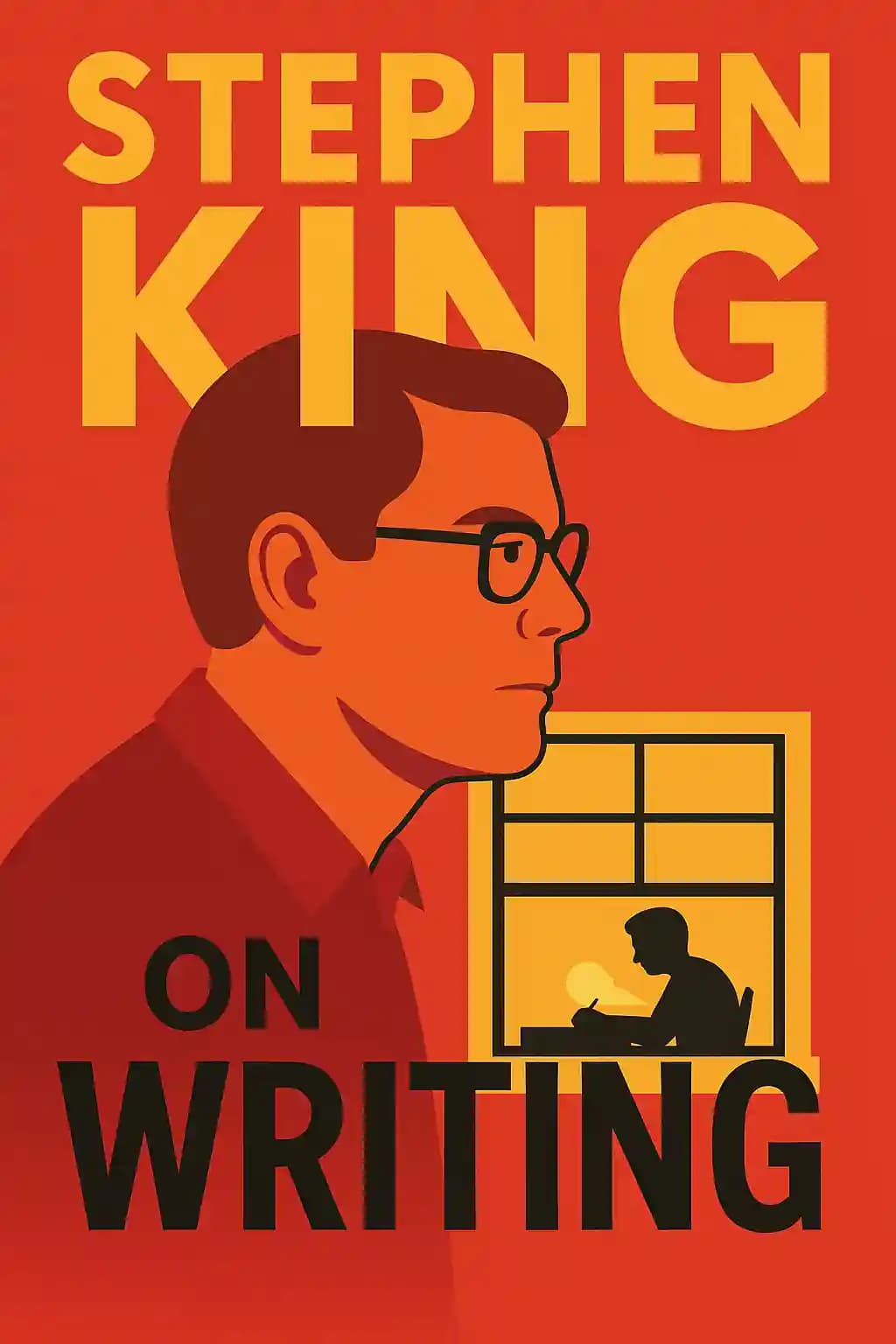
Stephen King's "On Writing" stands as the rare writing guide that transcends its genre-a book so influential that it's become required reading in creative writing programs nationwide. Published in 2000 following King's near-fatal accident, this memoir-cum-writing manual has sold over a million copies and continues to inspire aspiring writers two decades later. Even literary giants like George R.R. Martin and Neil Gaiman cite it as essential reading. What makes this book so powerful is King's unflinching honesty-he strips away the mystique of writing to reveal the disciplined craft beneath. In a literary landscape cluttered with pretentious advice, King offers something refreshingly straightforward: write a lot, read a lot, and tell the truth. His approach resonates because it comes from a man who has published over 60 novels and sold more than 350 million books worldwide. When the master of horror shares his secrets, writers listen.
Capitolo 2
From Comic Books to Bestsellers: The Making of a Writer
Long before Stephen King became a household name, he was just a skinny kid in Maine with an ear infection and a passion for stories. During a prolonged illness that kept him home from first grade, young Stephen devoured comic books, Tom Swift adventures, and Jack London tales. Eventually, he began copying Combat Casey comics word for word in his Blue Horse tablet, sometimes adding his own descriptions. When he showed one to his mother, she encouraged him to write his own stories instead. This suggestion opened a world of possibilities that would shape his entire life.
His first original creation was a four-page tale about magical animals led by a large white bunny named Mr. Rabbit Trick. When his mother read it, she laughed in all the right places and delivered the words that would sustain him through decades of rejection: "It's good enough to be in a book." She sent these stories to her four sisters, earning Stephen his first dollar as a writer-a symbolic entry into the profession that would eventually make him millions.
The young King's world expanded through movies, particularly horror films at the Ritz Theater in Lewiston, which he hitchhiked fourteen miles to reach almost every weekend. After seeing "The Pit and the Pendulum," he had what seemed like a brilliant idea-he would novelize the film and print it on his brother's drum press! Working feverishly, he produced an eight-page, single-spaced "book" complete with a hand-drawn title page showing a pendulum dripping blood. Priced at twenty-five cents each, he sold three dozen copies by lunch hour at school, making nine dollars before the principal shut down his operation.
His entrepreneurial spirit continued with "Dave's Rag," a family newspaper he produced with his brother. While Dave handled printing and photography, Stephen was responsible for "cutting stencil"-typing content with minimal errors. This early experience taught him the discipline of regular writing and the satisfaction of seeing his words in print, however modest the circulation.
Perhaps the most valuable early writing lesson came from John Gould, editor of the Lisbon Weekly Enterprise, who hired the teenage King as a sports reporter at half a cent per word. Gould's ruthless editing of King's first pieces demonstrated the power of concision: "When you write a story, you're telling yourself the story. When you rewrite, your main job is taking out all the things that are not the story." This principle of cutting unnecessary words would become central to King's approach to writing.
Capitolo 3
The Writer's Toolbox: Essential Equipment for the Journey
Every writer needs a toolbox filled with the right implements to tackle any job that comes along. Just as King's Uncle Oren carried his carpenter's toolbox to fix a broken screen (explaining, "I didn't know what else I might find to do once I got out here"), writers must be prepared for whatever challenges arise in their work. This metaphorical toolbox isn't just about storing tools-it's about organizing them in order of importance and frequency of use, ensuring quick access to the most essential implements when needed.
At the top level of this metaphorical toolbox sits vocabulary-the raw material of writing. King advocates for simplicity here, warning against dressing up your vocabulary out of some misguided shame for using simple words. "Use the first word that comes to mind, if it is appropriate and colorful," he advises. This doesn't mean dumbing down your language; it means choosing words that precisely express what you mean rather than reaching for distant cousins to your actual thoughts. For instance, why say "terminate" when you mean "end," or "utilize" when you mean "use"? The goal is communication, not impression-making. King points to writers like Hemingway and Steinbeck as masters who built enduring works with straightforward language.
Grammar belongs on the top shelf too, though King doesn't dwell on it at length. Either you've absorbed your language's grammatical principles through conversation and reading, or you haven't. The essentials are simple: nouns and verbs make sentences. While you needn't always write complete sentences, following basic grammatical rules creates clarity. King particularly warns against the passive voice ("The meeting will be held at seven" versus "The meeting's at seven") and excessive adverbs, especially in dialogue attribution. He suggests that instead of writing "he said angrily" or "she stated firmly," let the dialogue and context convey the emotion.
Beneath vocabulary and grammar lie the elements of style. King recommends Strunk and White's "The Elements of Style" as the clearest guide to these principles, emphasizing its famous directive to "omit needless words." The paragraph emerges as the basic unit of writing, where coherence begins. Unlike the rigid structure of expository writing, fiction paragraphs breathe with the narrative's needs-sometimes consisting of a single sentence to vary pace or create transitions. King demonstrates this flexibility in his own work, using paragraph length as a rhythm tool to control pacing and tension.
When these tools work in harmony, something magical happens-the words create sentences, sentences create paragraphs, and sometimes paragraphs quicken and begin to breathe, like Frankenstein's monster suddenly opening its eyes. This alchemy of writing transforms mere words into living stories. With these fundamental tools, you can build anything from a simple story to entire mansions of words that readers never want to leave. The key is understanding that these tools aren't just mechanical devices-they're instruments of creation that, when mastered, allow writers to construct worlds as real as the one we inhabit.
Capitolo 4
Reading and Writing: The Non-Negotiable Fundamentals
If you want to be a writer, you must do two things above all others: read a lot and write a lot. There's simply no way around these two things. King himself reads seventy or eighty books a year, mostly fiction-not to study the craft but because he loves stories. Yet every book teaches something, and often bad books teach more than good ones. Reading shows you what's been done, what works, and what doesn't.
This isn't casual advice-it's a fundamental requirement. If you don't have time to read, you don't have time to write. Reading is the creative center of a writer's life. King recommends taking a book everywhere-waiting rooms, checkout lines, the bathroom, the treadmill. Turn off the television-it's the last thing an aspiring writer needs. The "glass teat" takes too much time that could be spent reading or writing.
When it comes to writing itself, King maintains a rigorous schedule. His approach is clear-cut: mornings for new writing, afternoons for naps and letters, evenings for reading and family. Once he starts a project, he doesn't stop unless absolutely necessary. If he doesn't write daily, the characters begin to feel like characters instead of real people, and the excitement fades. Writing is best when it's inspired play, fresh and almost too hot to handle.
King sets a daily goal of 2,000 words (about 10 pages), which yields a good-sized novel in three months. Sometimes he finishes by 11:30 AM, sometimes he's still working at teatime, but he rarely quits before hitting his quota. This discipline isn't about forcing creativity-it's about creating the conditions where creativity can flourish. By showing up at the same time every day, you train your mind to be ready for work, much like your body learns to expect sleep at certain times.
The writing space itself doesn't need to be fancy-King wrote his first novels in a trailer's laundry room-but it absolutely needs a door you're willing to close. That closed door tells the world and yourself that you mean business. Set an achievable daily writing goal and don't open that door until you've met it. Eliminate distractions: no phone, no TV, no video games. Your writing room should be private, a place to dream.
Capitolo 5
Crafting Stories: Situation, Character, and Truth
What should you write about? King's answer is simple: anything you want-as long as you tell the truth. The old dictum "write what you know" should be interpreted broadly. Beyond your occupation, your heart and imagination know things too. Your emotional experiences, fears, dreams, and observations are all valid sources of material. You'll likely begin by writing what you love to read. If you love science fiction, write science fiction; if mysteries, write mysteries. The key is authenticity - your passion for the genre will naturally inform your writing.
King distrusts plot for two reasons: our lives are largely plotless despite our planning, and plotting conflicts with spontaneous creation. Life rarely follows a neat three-act structure - it's messy, unpredictable, and full of unexpected turns. He believes stories make themselves-the writer's job is to give them a place to grow and transcribe them. Stories are found things, like fossils in the ground, and the writer must excavate them carefully with the right tools. This archaeological metaphor suggests patience and attention to detail rather than forced construction.
Instead of plot, King prefers situation-a premise that can be expressed as a "What if" question: What if vampires invaded a small New England village? What if a young mother and son became trapped in their car by a rabid dog? What if a pandemic wiped out 99% of the world's population? His best novels have come from simple situational premises rather than elaborate plotting. For example, Misery began with a dream about a writer held captive by a psychotic fan. Though he initially imagined a particular ending, the characters took over and created something more complex and meaningful than he'd planned. The Stand grew from a simple question about societal collapse into an epic exploration of good versus evil.
Creating characters requires paying attention to real people and telling the truth about what you observe. This means noticing how people talk, move, react to stress, and reveal their true nature through small actions. Characters aren't drawn directly from life on a one-to-one basis, but they must behave in ways that seem reasonable given what we know about them. A character's background, experiences, and personality should inform their decisions and reactions. When characters are well-developed, they come to life and start doing things on their own, solving many storytelling problems in the process. King often describes this as characters "taking over" the story, making decisions that surprise even the author.
The core ideas of good storytelling are that practice is invaluable and honesty is indispensable. Skills in description, dialogue, and character development come down to seeing or hearing clearly and transcribing with equal clarity. This means developing keen observational skills and the ability to translate those observations into compelling prose. Writers should use any technique that improves their writing without getting in the way of the story. This might include outlining, character sketches, research, or pure improvisation - whatever serves the story best. The key is to find methods that enhance rather than inhibit the natural flow of storytelling.
Capitolo 6
Revising with Fresh Eyes: The Art of the Second Draft
For King, writing involves two drafts and a polish (which with word processing has become closer to a third draft). After finishing your first draft, celebrate! Then put your manuscript away for at least six weeks-this resting period is crucial.
During this time, resist all temptation to peek at your work. You'll likely be tempted to re-read passages you remember as brilliant, but don't. You might find them worse than remembered and rush to fix them, or worse, find them better and decide to dive back in prematurely. Instead, work on something completely different-preferably shorter like a novella.
When the six weeks are up, read your entire manuscript in one sitting if possible. This creates a strange, exhilarating experience-recognizing your work while simultaneously seeing it through fresh eyes, as if reading someone else's writing. With this distance, you'll spot plot holes and character inconsistencies that were invisible during the daily grind of composition.
During this first read-through, make mechanical corrections while asking deeper questions: Is the story coherent? What are the recurring elements? Do they form a theme? What will give the story resonance that lingers with readers? Most importantly, look for what you meant so you can reinforce that meaning in the second draft while cutting material that goes in other directions.
After these revisions, it's time to show the manuscript to trusted readers. Every novelist has an ideal reader-King's is his wife Tabitha. She's both supportive and unflinching, catching inconsistencies and providing honest feedback. Beyond his wife, King sends manuscripts to 4-8 trusted friends who've critiqued his work before.
Some writing guides warn against using friends as critics, but King isn't looking for unbiased opinions-he wants thoughtful feedback from people he trusts. When multiple readers point out the same problem, you'd better fix it. If opinions contradict each other, the tie goes to the writer.
One of the most valuable revision principles King learned came from a rejection slip: "Formula: 2nd Draft = 1st Draft - 10%." This taught him that every story is collapsible. If you can't cut 10% while maintaining the essence, you're not trying hard enough. The effect is immediate and amazing-literary Viagra. You'll feel it and your ideal reader will too.
Capitolo 7
The Business Side: Agents, Publishing, and Persistence
Beyond "Where do you get your ideas?", aspiring writers most frequently ask how to get an agent and make publishing contacts. These questions often come with bewilderment or anger, reflecting the suspicion that success requires an "in" with publishing's supposedly incestuous family. Many believe there's a secret handshake or hidden network that gatekeeps entry into the publishing world.
This isn't true. Agents, publishers, and editors are all looking for the next hot writer who can sell books and make money-not just young writers either, as proven by authors like Frank McCourt, who published "Angela's Ashes" at 66, or Laura Ingalls Wilder, who began her "Little House" series at 65. If your work is salable-or even just shows promise-you'll find an agent with moderate effort. The key is understanding that publishing is first and foremost a business, and treating your writing career with the same professional approach.
Begin as your own advocate by reading magazines publishing your kind of writing. Study their style, content, and editorial preferences. Get Writer's Market, the most valuable tool for new writers, which lists thousands of publishers and includes detailed descriptions of what each market uses, their submission guidelines, and payment rates. Note literary agents in writing magazines like Writer's Digest and Publishers Weekly, and consider adding Literary Market Place to your reference shelf. Be canny and careful in your search, but most importantly, read the market. Submitting stories without first reading the market is like playing darts in a dark room - you're unlikely to hit your target.
King shares the composite story of "Frank," an aspiring writer who began submitting stories to magazines during college, carefully reading each publication before submitting. He created spreadsheets tracking submission dates, response times, and editor comments. Despite no professional publications during school, he placed pieces in his campus literary magazine and received encouraging personal rejections from several professional markets - notes saying "close, but not quite" or "please try us again."
After college, Frank's persistence paid off with his first acceptance-a twelve-hundred-word vignette sold to a small magazine for twenty-five dollars plus contributor's copies. Though the money was negligible, the validation was priceless. Through careful record-keeping and networking at writers' conferences, Frank gradually built a portfolio of published stories in increasingly prestigious magazines that eventually helped him secure agent representation for his novel.
The key lessons from Frank's story include proper manuscript presentation (clean white bond paper, double-spacing, appropriate contact information), professional correspondence (no cute gimmicks or colored paper), and thorough research when selecting an agent. Beginning writers should be wary of anyone claiming to be an agent who charges reading fees-most such "agents" are unscrupulous. Legitimate agents make money by selling your work, not by charging upfront fees. They typically take a 15% commission on domestic sales and 20% on foreign rights.
Success in publishing requires equal parts talent, persistence, and business savvy. While raw talent is essential, understanding the industry's mechanics and maintaining a professional approach are just as crucial to building a writing career.
Capitolo 8
Writing Through Pain: The Accident and Recovery
In June 1999, King was enjoying an extraordinarily happy week with his family at their summer house in western Maine when tragedy struck. While taking his usual four-mile walk along the highway, he was hit by a blue Dodge van driven by Bryan Smith, who had been distracted by his rottweiler trying to get into a cooler of meat.
The damage was catastrophic: his lower leg broken in at least nine places ("marbles in a sock"), his knee split down the middle, hip fractures, spine chipped in eight places, four broken ribs, collarbone stripped raw, and a scalp laceration requiring dozens of stitches. After five marathon surgeries, King's leg was held together by a steel and carbon-fiber external fixator with eight large pins through his bones and five smaller rods radiating from his knee.
On July twenty-fourth, five weeks after being hit, King began writing again. He had started On Writing in late 1997 but had put it aside half-finished in early 1998, unsure how to continue. Despite constant pain, restricted mobility, and difficulty sitting for more than forty minutes, he felt he'd reached a crossroads moment with no other choices. Writing had helped him through terrible situations before, allowing him to forget himself for a while.
It was his wife Tabby who cast the deciding vote. Instead of her usual caution about overworking, she asked where he wanted to set up. She created a perfect workspace in their back hall-laptop, printer, reference materials, even a framed picture of their younger son. That first session lasted an hour and forty minutes-King's longest time sitting upright since the accident. He was drenched in sweat, exhausted, and in near-apocalyptic pain. The first five hundred words were terrifying, as if he'd never written before, moving from word to word like an old man crossing a stream on wet stones.
There was no miraculous breakthrough that day, just the ordinary miracle of creation. The words gradually came faster. The pain remained but seemed farther away. King had gotten going, and that was something. The scariest moment is always just before you start. After that, things can only get better.
Capitolo 9
The Magic of Writing: A Permission Slip for Creativity
Writing isn't about money, fame, or relationships. It's about enriching readers' lives and your own-about getting up, getting well, getting over, getting happy. King's book has been partly about how he learned to do it and how you can do it better. The rest is a permission slip: you can, you should, and if you're brave enough to start, you will.
Throughout his career, King has written because it fulfilled him. Yes, he's made a great deal from his fiction, but he never wrote a single word thinking about being paid. He did it for the buzz, the pure joy of creation. And if you write for joy, you can do it forever.
There have been times when writing was an act of faith, a spit in the eye of despair. The second half of On Writing was written in that spirit. Writing isn't life, but sometimes it can be a way back to life-something King discovered during his recovery from the accident that nearly killed him.
The most profound lesson King offers is that writing is magic, as much the water of life as any creative art. The water is free. So drink. Drink and be filled up. The journey won't always be easy-there will be rejections, setbacks, and moments of doubt-but the act of creation itself is the reward. When you close that door and face the blank page, you're engaging in an ancient and powerful form of magic: creating worlds from nothing but your imagination and the twenty-six letters of the alphabet.
King's approach strips away the mystique and pretension that often surrounds discussions of writing. There are no secret formulas, no arcane techniques accessible only to the initiated. There is only the work-reading widely, writing regularly, and telling the truth as you see it. In the end, that's what separates the writers from the wannabes: the willingness to do the work, day after day, whether inspiration strikes or not.
The final gift King offers is permission-permission to try, permission to fail, permission to keep going anyway. Writing isn't a special club for the talented few; it's a craft that can be learned through practice and dedication. So pick up your pen. Close your door. And write.