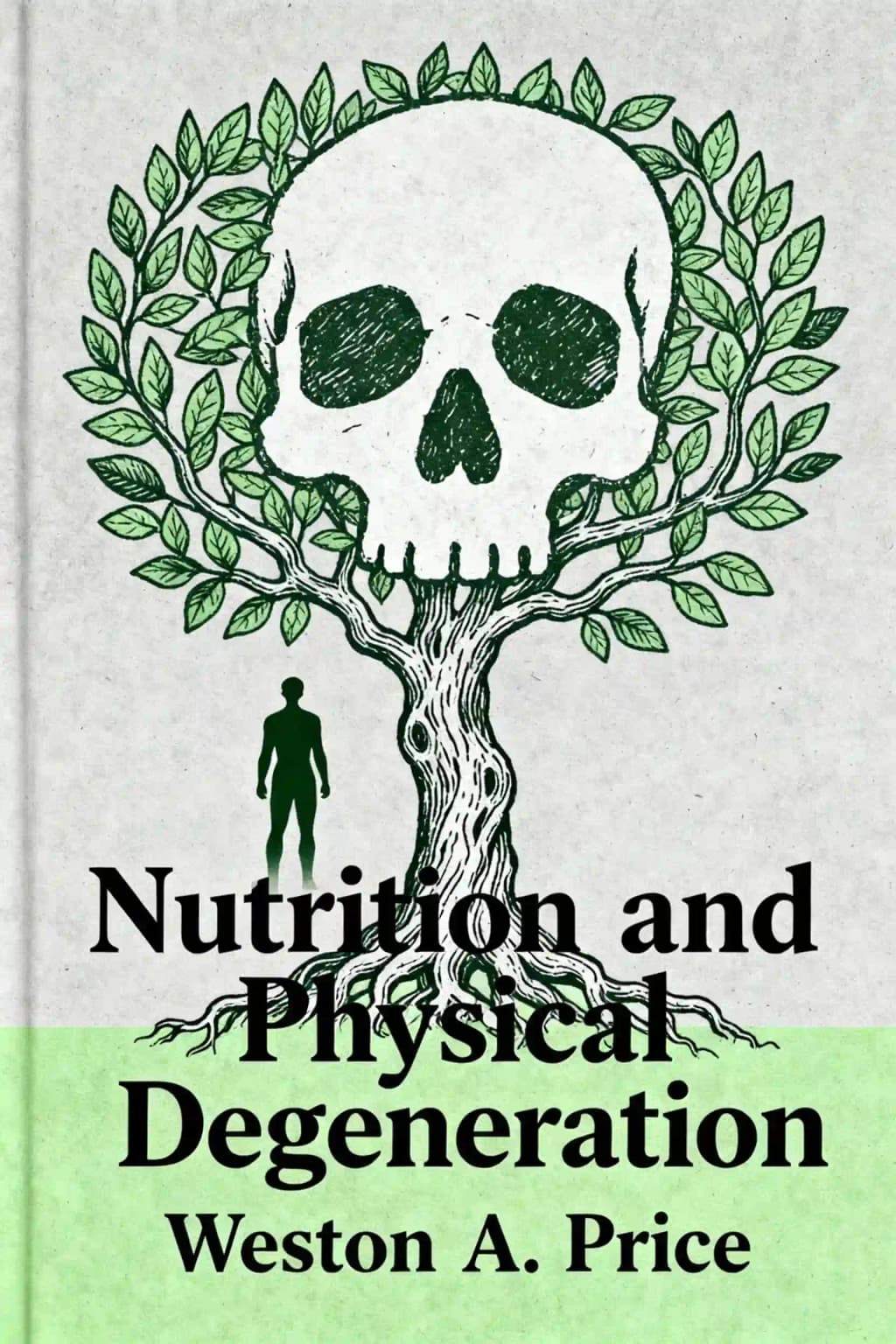
Nutrition and physical degeneration
Panoramica di Nutrition and physical degeneration
In 1939, a dentist's global expedition uncovered the shocking link between modern diets and physical degeneration. Called "The Charles Darwin of Nutrition," Dr. Price's controversial findings still challenge how we eat today. What ancient wisdom did traditional societies know that we've forgotten?

Temi chiave in Nutrition and physical degeneration
- traditional diet wisdom
- dental arch development
- fat-soluble vitamin deficiency
- modern food processing
- physical degeneration causes
Citazioni da Nutrition and physical degeneration
Each generation has seen some lowering of the American average level of general ability.
Primitive humans demonstrated remarkable freedom from tooth decay.
Dental infections and deformations pose an existential threat to human survival.
Most repeated offenders are far from robust; they are frail, sickly, and infirm.
Modern civilization confronts four critical threats to its survival.
Personaggi di Nutrition and physical degeneration
- Weston A. PriceDentist and researcher who studied global diets
- Sir George NewmanBritain's Chief Medical Officer
- Earnest HootonRenowned anthropologist who studied dental health
- Cyril BurtResearcher who studied crime and physical health
Sull'autore
Sull'autore di Nutrition and physical degeneration
Weston Andrew Valleau Price (1870–1948) was a pioneering Canadian dentist and nutrition researcher, best known for his groundbreaking work, Nutrition and Physical Degeneration: A Comparison of Primitive and Modern Diets and Their Effects.
Price, often referred to as the "Isaac Newton of Nutrition," uniquely combined his dental expertise with anthropological study. In the 1930s, he traveled extensively to isolated communities around the world, meticulously documenting the health benefits of traditional diets. These diets, rich in animal fats, organ meats, and fermented foods, were found to be highly effective in preventing dental decay and chronic disease.
His research offered a stark contrast to the effects of industrialized food systems and provided a foundation for contemporary holistic nutrition movements. As a founder of the National Dental Association, which later became part of the American Dental Association, Price also authored Dental Infections, Oral and Systemic. This work explored the crucial connections between oral health and systemic disease.
Price's enduring legacy is carried on by the Weston A. Price Foundation, an organization dedicated to promoting ancestral dietary principles. Nutrition and Physical Degeneration remains a seminal text in the field, cited in over 1,200 academic studies and translated into 15 languages, solidifying Price’s position as a visionary in preventive health science.
Scarica il riassunto di Nutrition and physical degeneration
Ottieni il riassunto di Nutrition and physical degeneration in formato PDF o EPUB gratuito. Stampalo o leggilo offline quando vuoi.
FAQ su questo libro
Nutrition and Physical Degeneration documents Dr. Weston A. Price’s global study of traditional diets and their impact on health. Through visits to isolated communities, Price reveals how nutrient-rich, whole-food diets prevented dental decay, chronic diseases, and physical degeneration, while modern processed foods caused rampant health issues like cavities, tuberculosis, and skeletal deformities.
This book is essential for nutritionists, dentists, and anyone interested in ancestral diets or holistic health. It offers critical insights for those seeking to understand the link between nutrition, immunity, and degenerative diseases, and provides evidence-based arguments against processed foods.
Yes—it’s a foundational text in nutritional anthropology, with photographs and case studies demonstrating diet’s role in health. While dense, its findings on traditional diets’ superiority over modern processed foods remain influential in holistic health circles.
Price argues that nutrient deficiencies from modern diets—high in refined sugars, flour, and vegetable oils—cause physical degeneration, including dental caries, facial deformities, and chronic diseases. Traditional diets rich in animal fats, organ meats, and whole foods prevent these issues.
Price observed near-zero cavities and well-formed dental arches in traditional societies, contrasting sharply with modern populations suffering from overcrowded teeth and decay. He identified diet as the primary factor, linking nutrient-poor foods to jaw malformations and oral diseases.
Traditional diets included 4–10x more minerals and fat-soluble vitamins (A, D, K) than modern diets. Key components included raw dairy, organ meats, fish eggs, and fermented foods. These diets strengthened immunity, prevented tuberculosis, and supported robust skeletal development.
Price connects processed foods to tuberculosis, heart disease, arthritis, diabetes, and mental health disorders like anxiety. He documented outbreaks of these conditions in populations transitioning to Western diets.
Price calls refined sugars, bleached flour, and canned goods “foods of commerce” that strip essential nutrients. These foods disrupt immunity, alter facial development, and increase susceptibility to infections and degenerative diseases.
Price identified fat-soluble vitamins (especially A and D) as critical for nutrient absorption and bone development. Traditional diets provided these through animal fats and organ meats, which he linked to stronger immunity and fewer birth defects.
The book underpins ancestral-diet movements like Paleo and Weston A. Price Foundation recommendations. It spurred interest in fermented foods, bone broths, and avoiding processed ingredients, though some critiques note outdated methodologies.
Critics highlight Price’s early focus on discredited “focal infection theory” and anecdotal observations. Some argue his sample sizes were small and lacked control groups, though his photographic evidence remains compelling.
As chronic diseases and dental issues rise, Price’s warnings about processed foods resonate. His work supports modern calls for regenerative agriculture, whole-food diets, and reducing sugar—making it a staple in functional medicine.