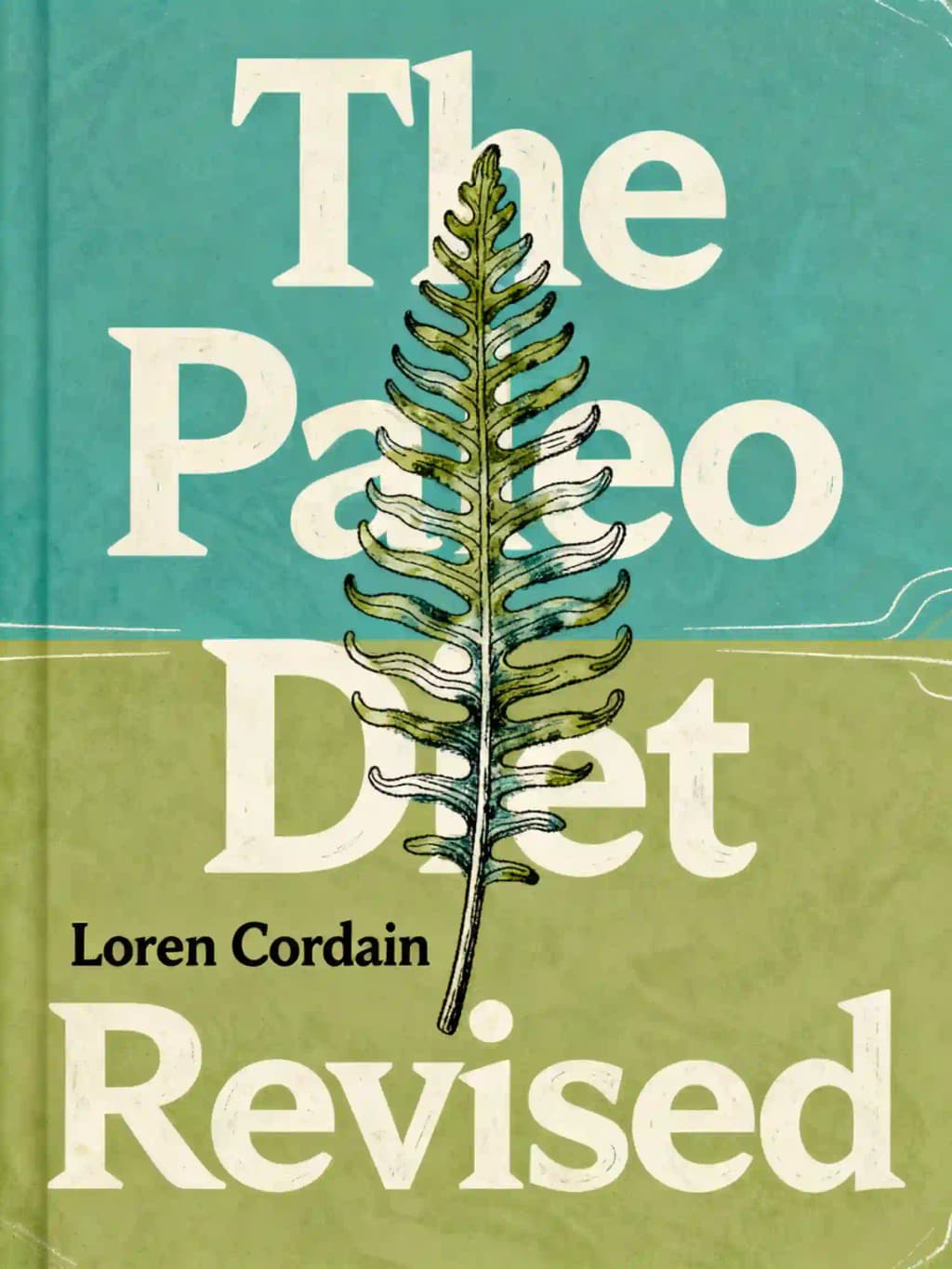
The Paleo diet
lose weight and get healthy by eating the foods you were designed to eat
Panoramica di The Paleo diet
Discover the revolutionary eating plan that sold over 100,000 copies and became CrossFit's nutritional blueprint. Dr. Cordain's peer-reviewed research reveals why eliminating grains and dairy could prevent modern diseases. What ancient wisdom about eating might transform your health forever?

Temi chiave in The Paleo diet
- evolutionary biology
- hunter-gatherer nutrition
- ancestral health
- glycemic index
- metabolic mismatch
Citazioni da The Paleo diet
The white man's food is not good for us.
We're essentially Stone Age humans living in a Space Age world.
Our bodies simply weren't designed to process the foods that dominate modern diets.
Personaggi di The Paleo diet
- Loren CordainAuthor and scientist who developed the diet
- Malaya KulujukBaffin Island Eskimo who observed dietary changes
Sull'autore
Sull'autore di The Paleo diet
Loren Cordain, author of The Paleo Diet Revised: Lose Weight and Get Healthy by Eating the Foods You Were Designed to Eat, is a pioneering nutrition expert and professor emeritus at Colorado State University’s Department of Health and Exercise Science.
A leading authority on evolutionary nutrition, Cordain developed the Paleo Diet® concept through two decades of research into ancestral dietary patterns, collaborating with renowned scientists like Dr. Boyd Eaton and Dr. Staffan Lindeberg. His work emphasizes aligning modern eating habits with humanity’s genetic adaptations, advocating for whole foods, lean proteins, and unprocessed fats while eliminating grains, dairy, and refined sugars.
Cordain’s expertise spans over 100 peer-reviewed studies, and he has authored several bestselling books, including The Paleo Diet for Athletes and The Paleo Answer. His research is widely cited in academia and popular health circles, reinforcing the diet’s focus on preventing chronic diseases through ancestral nutrition.
A dedicated educator, Cordain has made his extensive body of work accessible via platforms like ResearchGate, bridging scientific rigor with public understanding. The Paleo Diet Revised remains a cornerstone of nutritional literature, inspiring global adoption of hunter-gatherer dietary principles.
Scarica il riassunto di The Paleo diet
Ottieni il riassunto di The Paleo diet in formato PDF o EPUB gratuito. Stampalo o leggilo offline quando vuoi.
FAQ su questo libro
The Paleo Diet Revised outlines a nutrition plan mimicking the eating habits of Paleolithic hunter-gatherers, emphasizing lean meats, fish, fruits, vegetables, nuts, and seeds while excluding grains, legumes, dairy, and processed foods. Dr. Loren Cordain argues this approach aligns with human genetics to promote weight loss, prevent chronic diseases like heart disease and diabetes, and optimize health. The revised edition includes meal plans, recipes, and updated research on ancestral nutrition.
This book is ideal for individuals seeking sustainable weight loss, improved metabolic health, or science-backed dietary changes. It appeals to those interested in evolutionary nutrition, CrossFit enthusiasts, and anyone avoiding processed foods. Critics of modern diets high in grains or dairy may also find its alternatives valuable.
Dr. Cordain’s six core principles include prioritizing lean meats, fish, fresh produce, and nuts/seeds while eliminating grains, legumes, dairy, salt, and refined sugars. The diet emphasizes a high protein intake, balanced omega-3/omega-6 fats, and alkalizing foods to reduce inflammation. Three adherence levels—entry, maintenance, and maximal weight loss—allow flexibility.
Yes, the book provides six weeks of meal plans and recipes to simplify transitioning to Paleo eating. Sample meals feature dishes like Atlantic salmon, spinach salad, and steamed broccoli, designed to meet 100% of RDAs for essential nutrients. Travel and dining-out tips are also included.
Cordain contrasts Paleo meals with standard American diets, showing Paleo options exceed 100% of RDAs for all 22 nutritional categories, while the latter meets only 80% in seven categories. The diet’s focus on unprocessed foods and lean proteins aims to address deficiencies linked to chronic diseases.
Cordain cites studies linking Paleo eating to reduced inflammation, improved insulin sensitivity, and weight loss. The diet’s avoidance of processed foods and emphasis on nutrient density align with research on ancestral health patterns. Critics, however, note challenges in replicating exact Paleolithic conditions and potential nutrient gaps.
While promoting the diet’s benefits, Cordain acknowledges critiques about excluding entire food groups like grains and dairy. The book argues these foods emerged post-agriculture and conflict with human genetics. Nutritionists counter that modern adaptations and fortified foods mitigate historical deficiencies.
The diet claims rapid weight loss—up to 75 pounds in six months—by stabilizing blood sugar, reducing calorie-dense processed foods, and increasing satiety through protein and fiber. A dedicated chapter shares success stories, and the “maximal weight loss” level restricts non-Paleo meals to once weekly.
Cordain recommends physical activity mimicking ancestral movement patterns, such as walking, lifting, and sprinting, to complement dietary changes. Exercise is framed as a natural component of holistic health rather than a standalone weight-loss tool.
As the foundational text by the diet’s creator, The Paleo Diet Revised integrates decades of peer-reviewed research and CrossFit endorsements. It stands out with structured meal plans, acid-base food tables, and global implementation strategies absent in many derivative works.
Cordain posits benefits for metabolic syndrome, cardiovascular disease, and autoimmune disorders by reducing inflammation and improving nutrient intake. However, readers with medical conditions should consult healthcare providers before adopting the diet.
Strategies include sourcing wild game or grass-fed meats, prioritizing omega-3-rich foods, and using nut flours as grain substitutes. The “user’s manual” section simplifies grocery shopping and social dining, acknowledging modern lifestyle challenges.