Capitolo 1
The Mythologist's Lens: Barthes' Radical Deconstruction of Everyday Life
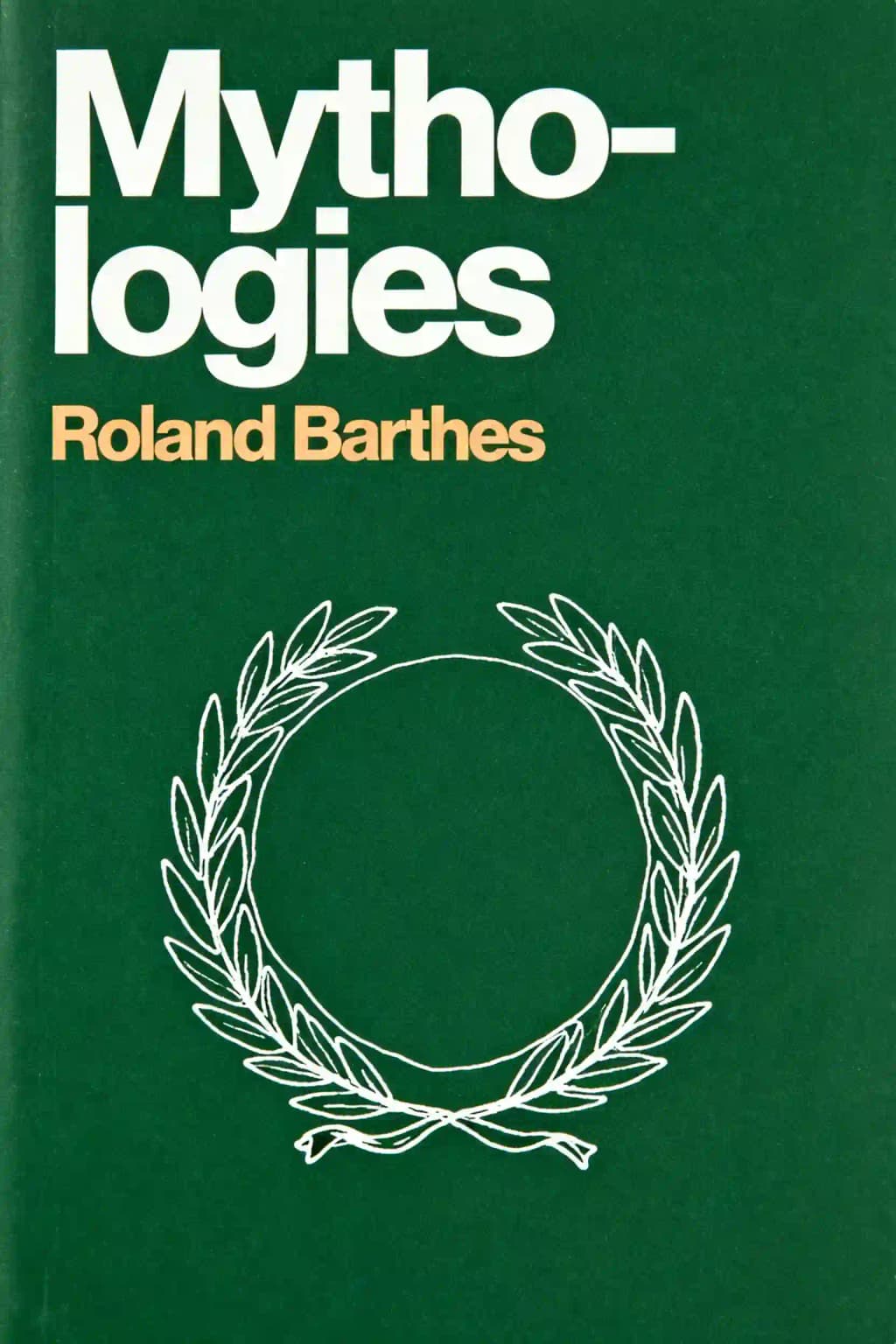
Have you ever looked at a wrestling match and seen not just entertainment, but an elaborate moral theater? Or considered how the frothy bubbles in your laundry detergent might be selling you a fantasy rather than cleanliness? In Roland Barthes' groundbreaking 1957 work "Mythologies," the ordinary transforms into the extraordinary through his penetrating cultural analysis. This collection of essays, which Susan Sontag called "one of the most important books of cultural criticism of the 20th century," revolutionized how we understand the hidden meanings in everyday objects and practices. Before semiotics became fashionable in academic circles, Barthes was already dissecting the secret language of wrestling matches, soap advertisements, and children's toys-revealing how these seemingly innocent cultural artifacts perpetuate ideological systems. Even today, celebrities from Zadie Smith to Phoebe Waller-Bridge cite Barthes' work as fundamental to understanding how power operates through cultural symbols. His insights continue to influence everything from media studies to advertising strategy, proving that what appears "natural" is often anything but.
Capitolo 2
The Theater of Wrestling: Spectacle of Excess and Moral Clarity
Wrestling, Barthes tells us, is not a sport but a spectacle-a grandiose theatrical performance akin to ancient Greek drama. Unlike boxing, which demonstrates excellence through competition and skill, wrestling presents an exaggerated display of suffering and justice that demands immediate interpretation rather than suspense about the outcome. The wrestler's primary function isn't winning matches but performing expected gestures with excessive clarity, pushing each motion to its meaning's limit. Like ancient theater with its masks and elevated footwear, wrestling offers exaggerated expressions of human suffering that transcend reality to reach mythological proportions, creating a modern-day morality play that resonates with deeply held cultural values.
Each wrestler's physique constitutes a basic sign containing the entire fight's meaning, serving as a physical embodiment of moral archetypes. The repulsive Thauvin, with his obese, sagging body and aggressive demeanor, embodies baseness and treachery - the quintessential villain whose very appearance signals moral corruption. The blond Reinieres, with his pretty-boy features and clean-cut appearance, represents passive suffering and virtue under siege. The cock-like Mazaud displays grotesque conceit through his strutting and preening, a peacock-like manifestation of pride before the fall. These bodies provide the fundamental text, elaborated through gestures and expressions that make intentions unmistakably obvious to the audience, creating a physical vocabulary that needs no translation.
Wrestling functions as immediate pantomime, revealing perfect relationships between causes and effects with theatrical precision. When a villain receives punishment, it must be spectacularly visible-the "forearm smash" brings catastrophe to maximum obviousness, while the flaccid collapse of defeated wrestlers signifies exemplary abasement. Every grimace, every gesture of pain, every triumphant pose is amplified to ensure perfect legibility from the cheapest seats. This creates what Barthes calls "the perfect intelligibility of reality," where signs correspond perfectly to causes without ambiguity or contradiction, offering a clarity rarely found in real life.
Above all, wrestling portrays justice-not abstract justice, but an immanent, quantitative sequence where the villain must "pay" for his transgressions through elaborate ritual punishment. The public delights in deserved punishment, even when rules must be broken to deliver it, understanding that true justice sometimes requires going beyond conventional boundaries. Fair fights are rare exceptions, valued briefly as demonstrations of skill before returning to the "orgy of evil" that defines true wrestling. The audience doesn't demand realism but perfect intelligibility-the transmutation of everyday life into mythological clarity where good and evil are clearly defined and justice, however delayed, is always served.
This theatrical nature extends beyond individual matches to create ongoing narratives of betrayal, redemption, and revenge that can span months or even years, drawing audiences into epic sagas of moral conflict. The wrestling ring becomes a stage where society's fundamental values are enacted through larger-than-life characters whose every action carries symbolic weight far beyond mere athletic competition.
Capitolo 3
The Cinema's Rome: Signs and Stereotypes of Historical Fiction
In Mankiewicz's "Julius Caesar," Roman identity is reduced to a single overwhelming sign: the fringe hairstyle. Every character sports this distinctive frontal lock, making their identity unmistakably "Roman" regardless of their clearly American features. This visual shorthand functions as constant reassurance, allowing Hollywood actors with "Yankee mugs" to debate profound questions while maintaining historical plausibility through this simplistic marker. The fringe becomes a universal passport to antiquity, allowing actors like John Gielgud and James Mason to traverse two millennia through a simple adjustment of their coiffure.
The fringe appears comical when placed on obviously non-Latin faces, revealing how the sign overshoots its target. Yet on Marlon Brando's naturally Mediterranean features, it integrates perfectly-perhaps explaining his European success in the role of Mark Antony. The authenticity of his appearance creates a striking contrast with his co-stars, highlighting the artificiality of this cinematic convention. Other capillary signs include the "nocturnal surprise" of uncombed hair for women awakened at night: flowing locks for young Portia suggesting passion and vulnerability, an asymmetrical plait for middle-aged Calpurnia indicating maternal concern and domestic disorder. These carefully orchestrated hair arrangements serve as visual shorthand for both social status and dramatic situation.
Another persistent sign is sweat, which streams down every face as a moral indicator. Everyone perspires because everyone experiences inner torment, creating a visible manifestation of psychological struggle. The common people sweat profusely in crowd scenes to show emotional intensity and simplicity, their glistening faces reflecting both physical exertion and collective passion. Virtuous men like Brutus sweat to demonstrate the "enormous physiological labor" of virtue contemplating crime, their perspiration becoming a visual metaphor for moral anguish. Cassius sweats with conspiracy, while Antony's perspiration signals righteous fury. In this visual system, to sweat is literally to think-except for Caesar, who remains dry-faced because he "does not think" but merely exists as an exhibit, his imperviousness to perspiration suggesting both his elevation above common humanity and his fatal disconnection from reality.
These signs reveal a fundamental ambiguity-they are superficial yet pretend to depth, intentional yet appearing spontaneous. This exposes what Barthes calls "the ethical problem of bourgeois art": it fears both simple reality and total artifice, inserting a hybrid sign pompously christened "nature" between intellectual and visceral expression. The cinema doesn't present history but rather a collection of recognizable signs that stand in for historical reality, creating a comfortable illusion of authenticity. This careful balance between historical suggestion and modern accessibility reveals Hollywood's broader strategy in historical epics: to make the past simultaneously exotic and familiar, foreign yet comprehensible to contemporary audiences. The result is not Rome as it was, but Rome as cinema needs it to be - a stage where modern drama can play out in ancient costume.
Capitolo 4
The Mythology of Everyday Objects: Soap, Toys, and Plastic
The psycho-analysis of cleaning products reveals distinct relationships between dirt and its cure. Chlorinated fluids act as "liquid fire" that "kills" dirt, while powders like Persil and Omo are "separating agents" that liberate objects from imperfection. Omo's advertising emphasizes "deep" and "foamy" qualities-suggesting linen has depth that needs penetration and that foam signifies luxury through its airy, abundant proliferation. This creates a euphoric image of a substance that governs molecular order without damage, transforming the mundane act of cleaning into a mythological quest for purity.
French toys reveal how adults view children as smaller versions of themselves-homunculi requiring miniaturized adult objects. These toys almost always signify something entirely socialized, replicating adult institutions: Army, Post Office, Medicine, Transport, Science. By literally prefiguring the adult world, they prepare children to accept these realities as natural and inevitable. Unlike blocks that encourage creativity, these toys position children as users, not creators-they use the world rather than invent it. The bourgeois status of toys appears in both their functional forms and their substances. Modern toys' plastic materials-gross yet hygienic-destroy the pleasure and humanity of touch. Wood, with its natural warmth and organic qualities, is disappearing, replaced by chemical substances that introduce a "coenaesthesis of use, not pleasure."
Plastic itself represents modern alchemy-its very name suggests infinite transformation. At exhibitions, crowds witness the magical transmutation of greenish crystals into shiny objects, overseen by half-god, half-robot attendants. This perpetual miracle of sudden nature-transformation impregnates plastic with wonder; it's less object than trace of movement. Each terminal form-suitcase, brush, car-body, toy-presents an enigma of origin, creating amazement at matter's proliferation. Yet plastic's success comes at a cost: sublimated as movement, it barely exists as substance. Unlike historical bourgeois imitation materials that pretended to be luxury substances, plastic has "climbed down" to become prosaic-the first magical substance consenting to ordinariness, transforming nature's function from Idea to imitate into mere raw material for human invention.
Capitolo 5
National Mythologies: Wine, Steak, and French Identity
Wine functions as France's totem-drink-a national possession as fundamental as its 360 cheeses and rich cultural heritage. This "dry" substance masterfully supports contradictory myths without tension: it simultaneously quenches thirst while resembling blood, transforms weakness to strength, and converts silence to spirited speech. Wine's alchemical power performs a remarkable transmutation of reality, serving distinctly different functions for various social classes-providing manual laborers with "heart for work" while offering intellectuals an escape from pretension toward a more "natural virility." Unlike Anglo-Saxon or Nordic countries where drunkenness often becomes the explicit goal, in France it emerges merely as an incidental consequence-the true pleasure residing in the leisurely, social drinking gesture itself.
This universality creates a powerful cultural conformism: non-drinkers face significant integration problems in French society, while those who participate in wine culture gain immediate social acceptance. Wine provides a moral foundation so strong that even crimes committed under its influence become matters of fate rather than character flaws. It ceremonially ornaments every French ritual from casual afternoon snacks (le gouter) to elaborate formal dinners, seamlessly adapting to all climates, seasons, and social situations. The wine glass appears at family celebrations, business lunches, and countryside picnics alike. Despite wine's perceived inherent goodness, its mythology strategically conceals its deep entanglement with capitalist production methods and colonial history, particularly in regions like Algeria, making it an engaging yet politically complicated myth.
Steak parallels wine's sanguine mythology-it represents meat in its most essential state, transmitting symbolic bull-like strength to its consumers. Its cultural prestige derives primarily from its quasi-rawness, with visible blood suggesting ancient ambrosia and primal vitality. The French vocabulary for cooking degrees expresses blood imagery rather than mere temperature: saignant (recalling bright arterial flow), bleu (suggesting dark venous blood), or a point (indicating a limit rather than perfection). Each preparation style carries its own cultural connotations and class associations. Steak functions as both nature and morality incarnate, supposedly benefiting all temperaments and notably redeeming French intellectuals from accusations of sterile cerebral dryness. When paired with pommes frites (chips), both items transform into powerful symbols of Frenchness, exemplified when General de Castries specifically requested chips for his first meal after the Indo-China armistice-representing not mere material preference but a ritual reappropriation of French community identity.
These national foods constitute what Barthes identifies as "alibis"-seemingly natural preferences that actually encode complex social and political values. Their consumption transcends mere nutrition, participating in an intricate system of cultural meanings that simultaneously reinforce national identity, maintain class distinctions, and perpetuate social hierarchies. The rituals surrounding their consumption serve as daily performances of Frenchness, creating a shared cultural vocabulary that both unites and divides society along carefully maintained lines of class, region, and tradition.
Capitolo 6
Icons and Ideologies: The Face of Garbo and Einstein's Brain
Garbo's face represents a pivotal moment in cinema history when human visages wielded unprecedented power over audiences' emotions and imaginations. During this golden age of silent film, faces could literally drive viewers to despair - Rudolph Valentino's death in 1926 reportedly triggered mass hysteria and several suicides among his devoted fans. Garbo's face-object possessed a unique quality: a pristine, alabaster-like surface with the dense opacity of plaster, unmarred by obvious makeup. Only her eyes, described as "tremulous wounds," pierced this perfect facade, creating a striking contrast between immutable surface and emotional depth. This duality made her face a complex signifier, simultaneously concrete and abstract.
Unlike the traditional Italian theatrical masks that suggested hidden depths and mysteries beneath, Garbo's face functioned as an absolute mask - a complete statement unto itself. It presented what might be called a Platonic Idea of the human countenance, transcending gender while remaining unmistakably iconic. Her nickname "the Divine" was apt, as she maintained this same ethereal, solitary visage throughout her career, famously retreating from public life rather than allowing audiences to witness the inevitable effects of time on her legendary beauty. This decision only reinforced her mythical status.
The transition Garbo's face represents between two distinct iconographic ages is particularly significant. She bridges the gap between an era of awe-inspiring, essential beauty and one of approachable, existential charm. This contrast becomes clear when comparing her to later icons like Audrey Hepburn, whose beauty was more individualized and specific - an "Event" composed of particular features and expressions. Garbo's face, by contrast, remained conceptual - less a collection of beautiful features than Beauty itself incarnate, making her the perfect vessel for mythological projection.
Einstein's brain occupies a similarly mythical position in modern culture, though it represents intellectual rather than aesthetic perfection. The paradox of Einstein's brain lies in how it represents supreme intelligence while simultaneously being reduced to a mechanical object - the ultimate thinking machine. After his death, the physical organ became a contested artifact, fought over by medical institutions like a sacred relic. Popular mythology frequently depicted Einstein connected to electrical apparatus while contemplating relativity, reducing the act of genius-level thinking to measurable energy produced by biological machinery. This image perfectly encapsulates modern society's conflicted relationship with scientific materialism.
The equation E=mc2 emerged as a kind of magical formula, supposedly containing the universe's deepest secrets. Einstein's inability to complete his unified field theory before death actually enhanced rather than diminished his mythical status. This "necessary failure" preserved both scientific progress's promise and life's ultimate mystery, perfectly fulfilling myth's traditional function of reconciling human agency with cosmic fate. His brain thus became more than mere gray matter - it transformed into a powerful symbol of modernity's contradictory desires for both rational explanation and transcendent meaning, simultaneously demystifying the natural world while creating new forms of scientific mystification.
Capitolo 7
The Spectacle of Modern Life: Jet-men and New Automobiles
The jet-man represents a new race in aviation, closer to robot than hero. Paradoxically, his mythology eliminates speed-at 2,000 km/h there's "no impression of speed at all"-as if his vocation consists in overtaking motion itself. Unlike classical aviators whose speed was an occasional, humanizing adventure, the jet-man knows only a condition defined by weight, diet and habits. His anti-G suit and helmet introduce him to "a novel type of skin in which even his mother would not know him"-a racial conversion from propeller-mankind to jet-mankind.
Despite scientific trappings, this mythology merely displaces the sacred into monastic terms: continence, temperance, community life, and uniform clothing signify flesh submitting to collective ends. The jet-man's situation comprises a religious call, with initiatory proceedings testing the postulant. Yet unlike traditional heroes who flew without forgoing humanity, the jet-man keeps none of the romantic individualism while maintaining the sacred role itself-a "reified hero" representing an anthropological compromise between humans and Martians.
The new Citroen DS ("Deesse" or "Goddess") descends from the sky as a superlative object, displaying both perfection and absence of origin-a fairy-tale silence transformed from life into matter. Like science fiction's Nautilus, it excites interest through component junctions rather than substance. While not cake-icing smooth, its dove-tailed sections fascinate the public, who keenly finger window edges and rubber grooves-suggesting a new phenomenology of assembly where elements hold together by wondrous shape alone, promising a more benign Nature.
Glass dominates pressed metal, creating vast walls of air and space with soap-bubble brilliance. The Citroen emblem has become winged, suggesting spontaneous motion over mere propulsion. This marks a shift from bestiary power to spiritual objecthood-the dashboard resembling a modern kitchen rather than factory control-room. The public divines this novelty, moving from visual wonder to tactile discovery-touching bodywork, palpating upholstery, caressing doors. The Goddess, originating from heavenly Metropolis, is within minutes appropriated and domesticated-the essence of petit-bourgeois advancement, transforming technological wonder into comfortable possession.
Capitolo 8
The Politics of Representation: Photography, Criticism, and Exoticism
Electoral portraits establish personal connections beyond mere political programs, offering a physical climate and daily choices expressed through morphology, dress, and posture. Photography restores elections' paternalistic nature by condensing ineffable social realities into anti-intellectual weapons that replace politics with "manner of being." These images transmit not plans but deep motives, family circumstances, and lifestyle choices that simultaneously produce, exemplify, and entice. Candidates offer social settings and bourgeois comforts-Sunday Mass, xenophobia, steak and chips-constituting an ideology.
Electoral photography creates complicity: voters see themselves glorified and elevated into types, delegating their "race" through physical transference. These types include the socially respectable (sanguine for National parties, genteel for Christian Democrats), the intellectual (sanctimonious for centrists, "searching" for Communists), and the "good-looking chap" projecting health and virility. Photographic conventions carry their own signs: full-face shots with scrutinizing glasses suggest realism and frankness, while three-quarter poses soar nobly toward supernatural light, elevating candidates to an Olympus where political contradictions dissolve.
The documentary "The Lost Continent" illuminates our current myth of exoticism. Under the pretense of ethnography, bearded Italians venture into the Malay Archipelago, engaging in childish amusements rather than addressing historical or sociological problems. The Orient-now the political center of the world-is flattened into a gaudy postcard through color, which denies reality by disembodying it. This irresponsibility allows the film to postulate an Orient exotic in form yet fundamentally similar to Western spiritualist thought. Every ritual becomes both specific spectacle and quasi-Christian symbol; Buddhism's nuns, monks, and gold-covered statues are reduced to Catholic parallels.
This syncretism promotes the notion that "all things are alike" beneath superficial differences, with Christianity holding the key to human nature. Folklore illustrates only cosmic commonplaces-seasons, storms, death-never particular historical orders or social statuses. Fishermen and refugees become eternal essences rather than workers in specific societies. This exoticism denies identification through History; by appending "native" signs to Eastern realities, they're immunized against responsible content. The Established Order either trivializes the foreign as entertainment or defuses it as Western reflection-either way depriving it of history.
Capitolo 9
Myth Today: The Mechanics of Modern Mythology
Myth is a type of speech, a system of communication, a message-not an object or concept but a mode of signification with historical limits and conditions of use. Anything can become myth when conveyed through discourse-there are formal limits to myth, but no substantial ones. Objects, images, writing, and representations can all serve as supports for mythical speech.
In myth, we find a tri-dimensional pattern of signifier, signified and sign, but with a crucial difference: myth is a second-order semiological system built upon an existing chain. What is a sign in the first system becomes a mere signifier in the second. Two systems exist in relation to each other: the language-object (what myth gets hold of) and the metalanguage (myth itself).
The signifier in myth presents itself ambiguously: simultaneously meaning and form. As meaning, it has sensory reality and richness. When it becomes form, it empties itself of this contingency and history, becoming impoverished. Yet the form doesn't suppress meaning-it only distances it, keeping it available as a "reserve" to nourish the mythical form. This constant hide-and-seek between meaning and form defines myth.
The signification is the myth itself, where form and concept meet in a dynamic relationship of distortion. Unlike other semiological systems, myth hides nothing-both elements remain visible, but the concept deforms the meaning without abolishing it. This creates a "constantly moving turnstile" between meaning and form. Myth is "speech stolen and restored"-when returned, it's frozen, naturalized, innocent-seeming.
Myth functions through depoliticization, transforming historical reality into natural justification. The bourgeoisie's remarkable phenomenon is its self-naming: while openly acknowledging capitalism economically, politically it struggles to name itself, and ideologically it completely disappears through "ex-nomination"-defining itself as the social class that refuses to be named.
Revolutionary language resists mythification because it speaks to transform reality rather than preserve it as image. When man links language to making things, metalanguage refers to a language-object, making myth impossible. However, myths can emerge on the Left when revolution becomes "the Left"-when it accepts wearing a mask and generating innocent metalanguage. Left-wing myths are fundamentally inessential, rare, and impoverished.
Myth flourishes on the Right-essential, well-fed, expansive, ceaselessly self-inventing. It colonizes every aspect of life: law, morality, aesthetics, diplomacy, household equipment, literature, entertainment. This expansion mirrors bourgeois ex-nomination itself. While the oppressed has only the language of emancipation, the oppressor possesses rich, multiform language with exclusive rights to metalanguage.
The mythologist participates in world-making by unveiling the profound alienation hidden beneath assumed innocence in bourgeois society. Yet the mythologist remains excluded-speaking a metalanguage that unveils but doesn't act, distanced from both revolutionary action and myth-consumers. What we must seek is reconciliation between reality and humanity, between description and explanation, between object and knowledge-a way to understand the world without either accepting its myths uncritically or destroying its richness through demystification.