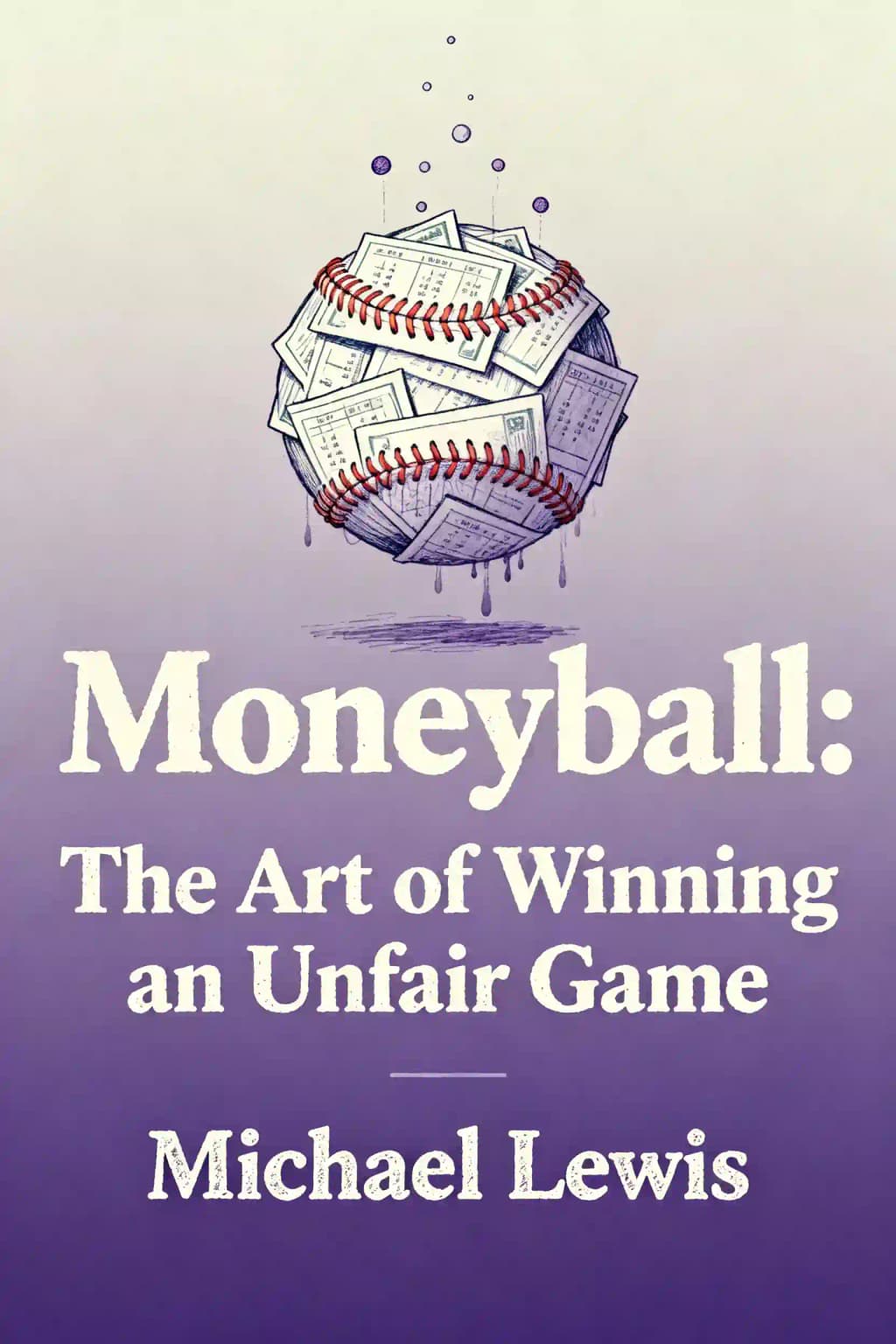
How a cash-strapped baseball team outsmarted the Yankees using math. "Moneyball" revolutionized sports analytics, inspired Brad Pitt's Oscar-nominated film, and changed how billionaire owners like John Henry build championship teams. Baseball's ultimate underdog story.
Senti il libro attraverso la voce dell'autore
Trasforma la conoscenza in spunti coinvolgenti e ricchi di esempi
Cattura le idee chiave in un lampo per un apprendimento veloce
Goditi il libro in modo divertente e coinvolgente
Imagine walking into a casino where the house always wins, except you've discovered a mathematical formula that tilts the odds in your favor. This is essentially what Billy Beane accomplished with the Oakland Athletics in the early 2000s. In a sport where financial inequality reigned supreme-the New York Yankees outspent Oakland three-to-one-Beane's A's consistently made the playoffs and won more games than teams with triple their payroll. Baseball had become fundamentally unfair. Rich teams like the Yankees could afford to make expensive mistakes while small-market teams like Oakland had zero margin for error. When the Yankees signed a $120 million player who underperformed, they simply bought another one. When Oakland made similar mistakes, they were crippled for years. Yet somehow, this small-market team with a shoestring budget competed year after year. How? By rejecting baseball's century-old wisdom and embracing data-driven decision-making that valued players differently than the market did. While other teams chased the obvious talents, Beane and his team looked for hidden value-players whose contributions to winning weren't reflected in their salaries. This wasn't just a sports revolution-it was a thinking revolution. The principles behind Moneyball have since influenced everything from Wall Street investment strategies to presidential campaigns. At its heart, this story isn't just about baseball-it's about challenging conventional wisdom, recognizing the biases that cloud human judgment, and finding competitive advantage where others see nothing of value.
Scomponi le idee chiave di Moneyball: The Art of Winning an Unfair Game in punti facili da capire per comprendere come i team innovativi creano, collaborano e crescono.
Distilla Moneyball: The Art of Winning an Unfair Game in rapidi promemoria che evidenziano i principi chiave di franchezza, lavoro di squadra e resilienza creativa.

Vivi Moneyball: The Art of Winning an Unfair Game attraverso narrazioni vivide che trasformano le lezioni di innovazione in momenti che ricorderai e applicherai.
Chiedi qualsiasi cosa, scegli la voce e co-crea spunti che risuonino davvero con te.

Creato da alumni della Columbia University a San Francisco
"Instead of endless scrolling, I just hit play on BeFreed. It saves me so much time."
"I never knew where to start with nonfiction—BeFreed’s book lists turned into podcasts gave me a clear path."
"Perfect balance between learning and entertainment. Finished ‘Thinking, Fast and Slow’ on my commute this week."
"Crazy how much I learned while walking the dog. BeFreed = small habits → big gains."
"Reading used to feel like a chore. Now it’s just part of my lifestyle."
"Feels effortless compared to reading. I’ve finished 6 books this month already."
"BeFreed turned my guilty doomscrolling into something that feels productive and inspiring."
"BeFreed turned my commute into learning time. 20-min podcasts are perfect for finishing books I never had time for."
"BeFreed replaced my podcast queue. Imagine Spotify for books — that’s it. 🙌"
"It is great for me to learn something from the book without reading it."
"The themed book list podcasts help me connect ideas across authors—like a guided audio journey."
"Makes me feel smarter every time before going to work"
Creato da alumni della Columbia University a San Francisco

Ottieni il riassunto di Moneyball: The Art of Winning an Unfair Game in formato PDF o EPUB gratuito. Stampalo o leggilo offline quando vuoi.
