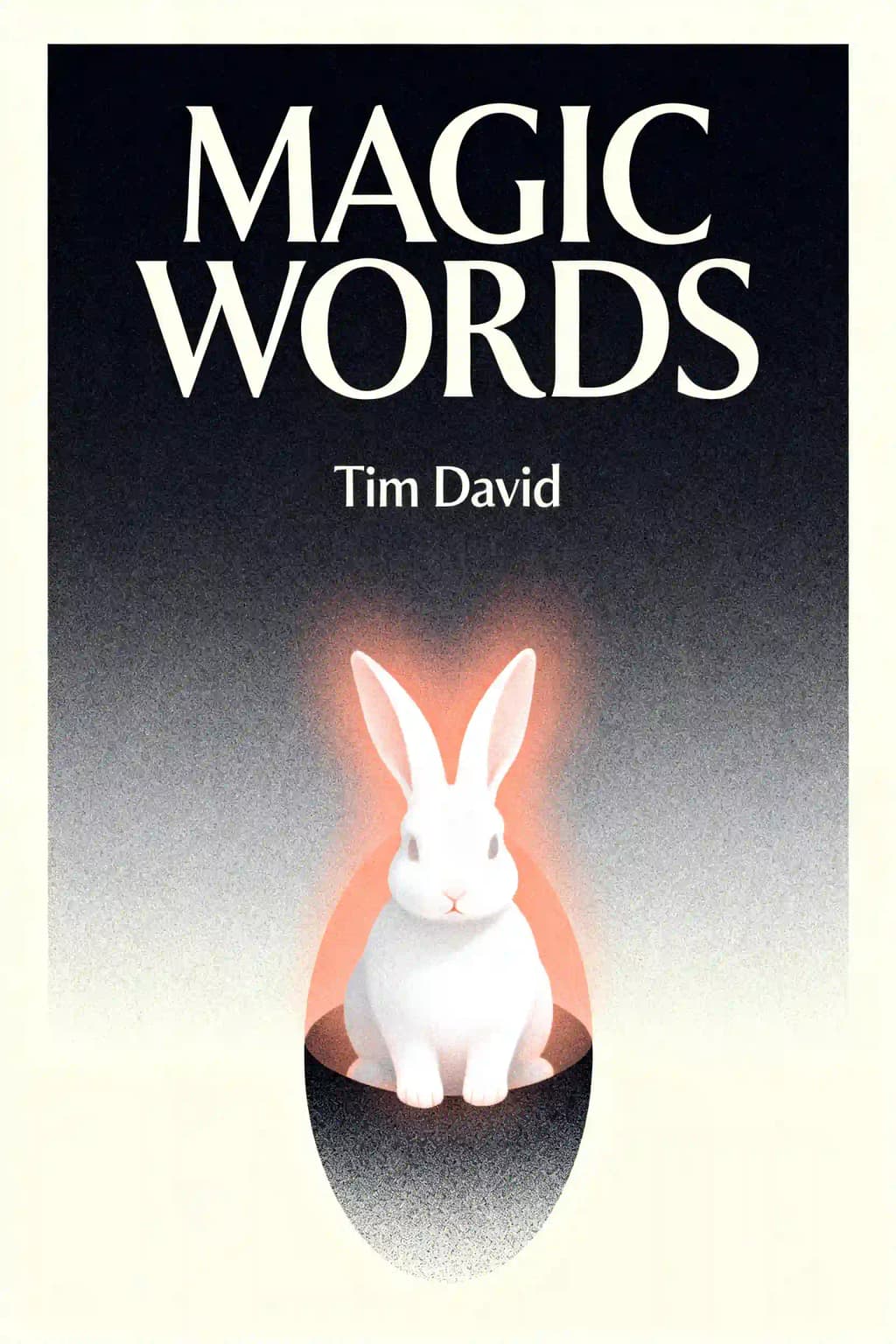
Discover the seven words that Harvard research proves can instantly transform your influence. "Magic Words" reveals psychological triggers behind "because," "name," and five other verbal keys that boost persuasion by 50% in business and relationships. A communication game-changer hiding in plain sight.
Tim David, author of Magic Words: The Science and Secrets Behind Seven Words that Motivate, Engage, and Influence, is a renowned communication strategist and former professional magician who specializes in the psychology of human connection. His work merges behavioral science with practical tactics to help leaders and sales professionals master influence, persuasion, and meaningful engagement.
A prolific author, David also penned FLIP: The Four Levels of Influencing People and The 7-Day Digital Diet, which explore modern challenges in productivity and interpersonal dynamics. With over a decade of global speaking engagements and corporate training programs, his frameworks are utilized by Fortune 500 companies and entrepreneurial teams alike.
Known for blending storytelling with actionable strategies, David’s insights have been featured in major business publications and industry podcasts. Magic Words has become a staple in leadership development curricula, translated into 12 languages and endorsed by executives at Google and Microsoft.
David’s unique journey—from stage magician to communication authority—fuels his mission to combat digital-age disconnection through scientifically grounded dialogue tools.
Magic Words reveals seven psychologically powerful words—like "because," "name," and "thanks"—that enhance persuasion, motivation, and influence in business and life. Drawing from Harvard research, call center studies, and Tim David’s experience as a magician, the book explains how subtle language shifts can nudge decisions, calm conflicts, and build connections.
Managers, sales professionals, parents, and leaders seeking to improve communication will benefit. The book offers actionable scripts for motivating teams, resolving disputes, and fostering trust, backed by neuroscience and real-world examples.
Yes—readers praise its blend of scientific rigor (e.g., Harvard’s motivation studies) and practical advice, like using "because" to justify requests or "but" to reframe criticisms. The concise, story-driven format makes complex psychology accessible.
The seven words are:
Harvard research cited in the book shows “because” activates the brain’s reward center by providing logical justification, even if the reason is obvious. For example, “Submit this report by Friday because it impacts our Q4 goals” boosts compliance.
Repeating a person’s name (e.g., “John, this proposal aligns with your priorities”) creates subconscious rapport, as Dale Carnegie noted. Overuse backfires, but strategic placement signals respect and attentiveness.
The “But Eraser” technique replaces confrontational language. Instead of “Your work is good, but you missed the deadline,” say “You missed the deadline, but your work is excellent.” This softens criticism while maintaining honesty.
“Thanks” feels more casual and sincere in informal settings, reducing perceived transactional intent. A study of gratitude expressions found “thanks” increased likability by 21% compared to formal alternatives.
Parents can use “help” to foster responsibility (“Can you help me set the table?”) or “you” to validate emotions (“You seem upset—want to talk?”). These words reduce defiance by appealing to autonomy.
The book equips professionals to negotiate raises (“This adjustment aligns with my contributions because…”), resolve conflicts (“I understand your concern—but here’s another angle…”), and lead teams using intrinsic motivation.
Magicians master audience perspective—practicing “angles” to control visibility and engagement. Similarly, Magic Words teaches communicators to anticipate how listeners interpret phrases, avoiding misinterpretations.
Over-reliance on scripts without adapting to context. For example, forcing “because” into every request feels manipulative. The book emphasizes observing reactions and adjusting language organically.
Senti il libro attraverso la voce dell'autore
Trasforma la conoscenza in spunti coinvolgenti e ricchi di esempi
Cattura le idee chiave in un lampo per un apprendimento veloce
Goditi il libro in modo divertente e coinvolgente
The first magic word is your prospect's name.
The second magic word is 'because.'
The third magic word is 'if.'
The fourth magic word is 'but'.
Scomponi le idee chiave di Magic Words in punti facili da capire per comprendere come i team innovativi creano, collaborano e crescono.
Distilla Magic Words in rapidi promemoria che evidenziano i principi chiave di franchezza, lavoro di squadra e resilienza creativa.

Vivi Magic Words attraverso narrazioni vivide che trasformano le lezioni di innovazione in momenti che ricorderai e applicherai.
Chiedi qualsiasi cosa, scegli la voce e co-crea spunti che risuonino davvero con te.

Creato da alumni della Columbia University a San Francisco
"Instead of endless scrolling, I just hit play on BeFreed. It saves me so much time."
"I never knew where to start with nonfiction—BeFreed’s book lists turned into podcasts gave me a clear path."
"Perfect balance between learning and entertainment. Finished ‘Thinking, Fast and Slow’ on my commute this week."
"Crazy how much I learned while walking the dog. BeFreed = small habits → big gains."
"Reading used to feel like a chore. Now it’s just part of my lifestyle."
"Feels effortless compared to reading. I’ve finished 6 books this month already."
"BeFreed turned my guilty doomscrolling into something that feels productive and inspiring."
"BeFreed turned my commute into learning time. 20-min podcasts are perfect for finishing books I never had time for."
"BeFreed replaced my podcast queue. Imagine Spotify for books — that’s it. 🙌"
"It is great for me to learn something from the book without reading it."
"The themed book list podcasts help me connect ideas across authors—like a guided audio journey."
"Makes me feel smarter every time before going to work"
Creato da alumni della Columbia University a San Francisco

Ottieni il riassunto di Magic Words in formato PDF o EPUB gratuito. Stampalo o leggilo offline quando vuoi.
Have you ever noticed how some people effortlessly influence others while you struggle to get your point across? The secret lies in seven specific words that trigger predictable responses in the human brain. These "magic words" aren't about manipulation but about understanding how language shapes thought and behavior. When we communicate without understanding these principles, we're like magicians performing tricks without knowing how they work - sometimes successful, often not, never understanding why. The science is clear: certain words activate specific neural pathways that either create connection or trigger resistance. Master these seven words, and you'll transform your ability to motivate others, resolve conflicts, and build deeper relationships in every area of life. We face a universal challenge that transcends all relationships: getting others to take action. Despite technological advances that have multiplied our communications, genuine connection has declined dramatically. Research shows empathy has dropped 40% among young adults since the 1980s, while narcissism has risen correspondingly. This explains why traditional motivation attempts fail. We resort to begging, bribing, or excessive reasoning. When these approaches inevitably fall short, we escalate to nagging or manipulation - further damaging relationships rather than building them.