Capitolo 1
The Learning Revolution: Adapt or Perish in the Knowledge Economy
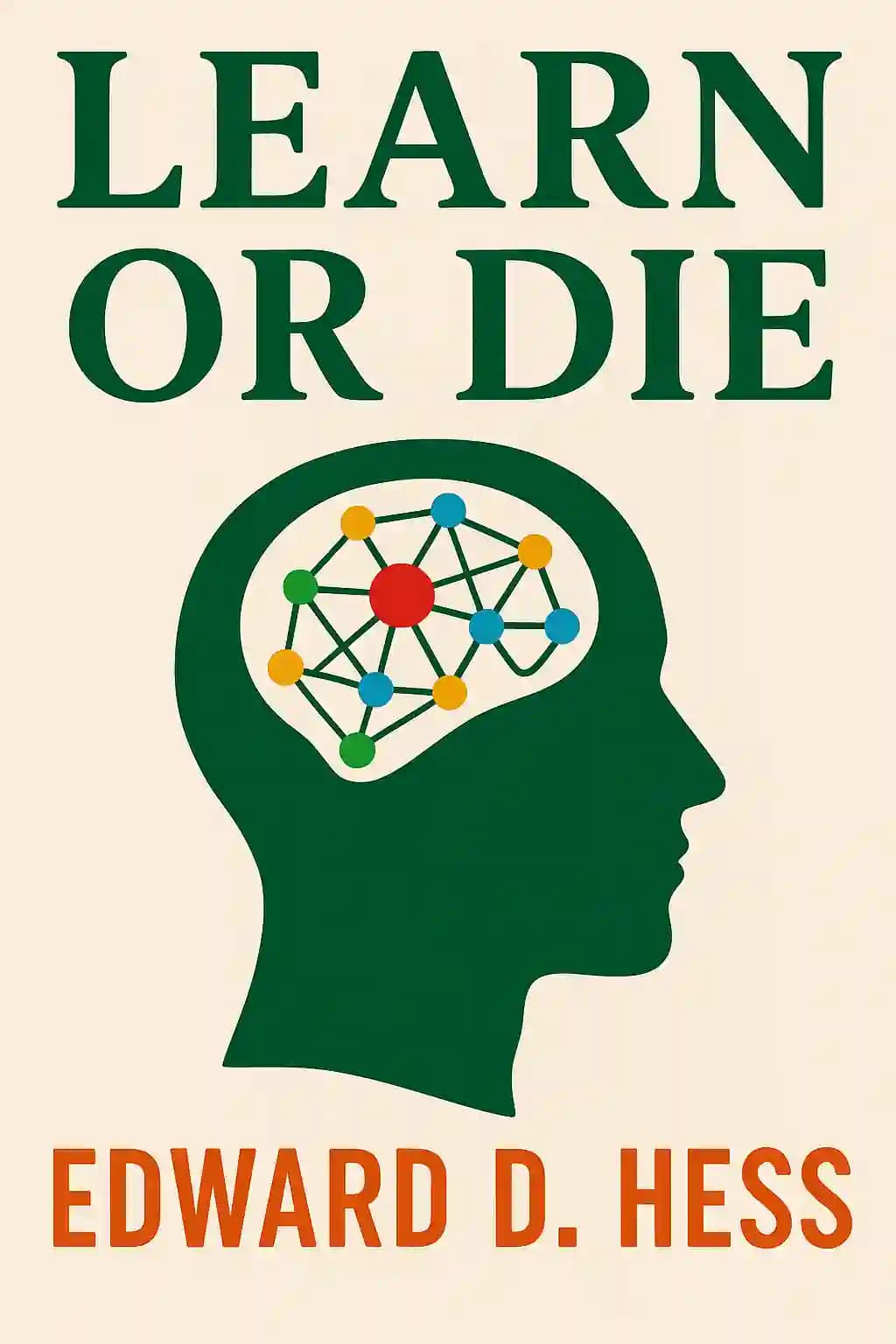
Have you ever wondered why some organizations consistently outperform their competitors while others, once dominant, fade into obscurity? Ray Dalio, founder of Bridgewater Associates-the world's largest hedge fund managing $150 billion in assets-attributes his firm's exceptional 13% annual returns over 25 years to one factor: learning faster and better than others. "Learn or die" isn't merely a catchy phrase; it's the fundamental imperative of our age. This philosophy has made Edward Hess's book a favorite among Silicon Valley executives and a required reading at elite business schools. Featured in Harvard Business Review's "Ideas That Shaped Management" series, the book has influenced organizations from Google to the U.S. Military in developing their learning cultures. In today's knowledge economy, where S&P 500 company lifespans have shrunk from thirty years to just eighteen since 1980, the message is clear: those who learn fastest, win.
Capitolo 2
The Science Behind Our Learning Limitations
Learning isn't simply about acquiring information-it's about discovering relationships between stimuli and effects, the "if this, then that" patterns that help us navigate our world. As we accumulate experiences, we develop mental models that become our unconscious operating system for interpreting reality. These models, shaped by our personal histories, cultural contexts, and emotional experiences, act as filters through which we process new information. Unlike computer software, however, our mental models are emotionally charged and stubbornly resistant to change, often leading us to defend our existing beliefs even in the face of contradictory evidence.
Our brains, while only 2.5 percent of our body weight, consume 20 percent of our energy, which explains our preference for mental shortcuts and heuristics. This biological constraint has profound implications for how we learn and make decisions. Nobel laureate Daniel Kahneman describes this as the difference between "System 1" thinking (quick, automatic, effortless) and "System 2" thinking (slow, deliberate, effortful), noting that "laziness is built deep into our nature." This biological reality means we naturally gravitate toward confirmation bias-seeking evidence that supports our existing beliefs while dismissing contradictory information. For example, investors often hold onto losing stocks because they selectively interpret market data to support their initial investment decision, while managers might continue failing strategies because they focus on data that confirms their original approach.
As we climb organizational ladders, this tendency often worsens. Promotions validate our existing knowledge, entrenching our views and creating resistance to alternative perspectives. A successful marketing executive might resist digital transformation because traditional methods worked in their past, while a veteran sales leader might dismiss new customer engagement models that challenge their long-held practices. Our ego becomes a major barrier to learning, as admitting mistakes threatens our self-image. Fear compounds this problem-fear of failure, embarrassment, status loss, or job termination. These fears manifest in defensive behaviors like avoiding feedback, dismissing criticism, or blaming others for failures. As Ray Dalio bluntly puts it: "We all are dumb shits." Recognizing these limitations is the first step toward overcoming them.
The solution lies in metacognition-managing how we think by recognizing when to switch from automatic to deliberate thinking. We can improve this skill by mentally rehearsing upcoming situations that may require deeper thinking and reviewing each day to identify where more reflective thinking was needed. This might involve practices like pre-mortems before major decisions, structured decision journals, or regular feedback sessions with diverse perspectives. For organizations whose decisions affect thousands, constantly stress-testing critical assumptions underlying business strategy is essential-which is why every public company would benefit from an "Executive Vice President of Dissent" to institutionalize this process. Some companies have already implemented versions of this role through red teams, devil's advocates, or independent review boards that challenge conventional thinking and expose potential blind spots in strategic planning.
Capitolo 3
The Emotional Foundation of Learning
The common business directive to "leave emotions out" of discussions falsely assumes a dichotomy between logic and emotions. Neuroscience has demolished this myth, showing that cognition and emotions are inextricably intertwined-they're dynamic, interactive, and interdependent. The brain areas processing emotions network extensively with those handling cognitive functions, with emotions moderating all thinking processes from perception to learning. This interconnection is so fundamental that patients with damage to emotional processing areas often struggle with seemingly rational decisions, despite intact logical reasoning abilities.
Neuroscientists Mary Helen Immordino-Yang and Antonio Damasio describe this interaction as "emotional thought," revealing that cognition aspects like learning, attention, memory, decision making, and social functioning are "both profoundly affected by emotion and in fact subsumed within the processes of emotion." Their research shows that even basic mathematical reasoning involves emotional processing, as the brain uses emotional tags to prioritize information and guide decision-making.
Rather than attempting to eliminate emotions from thinking, we should focus on managing their effects-recognizing when they serve as valuable warning signals versus when they hinder deeper analysis. For instance, gut feelings about risk can protect us from danger, but anxiety about public speaking might prevent valuable contribution. Just as System 2 requires intentionally slowing down thinking, we must also slow down our emotions. We can't completely "turn off" emotions, but we can control them physiologically (through deep breathing, walking, or progressive muscle relaxation) and mentally (by deliberately engaging cognitive areas that moderate emotional reactions through techniques like reframing or perspective-taking).
Positive emotions dramatically enhance cognitive processing, thinking, and learning. Barbara Fredrickson's "broaden-and-build" theory suggests that positive emotions were evolutionarily adaptive because they increased awareness, facilitated exploration, broadened attention, and enhanced creativity. For example, joy encourages play and exploration, while interest drives learning and curiosity. Alice Isen's research found that positive emotions improve our ability to evaluate ambiguous data, relate new information to existing knowledge, see alternative explanations, and reduce conflict in negotiations. Even mild positive emotions, like those induced by small gifts or funny videos, can significantly improve problem-solving abilities.
Conversely, negative emotions, particularly fear and anxiety, are toxic to learning. They impair comprehension, creativity, and memory retrieval by narrowing attention and activating defensive responses. Gregory Berns calls fear the "mother of all stresses" because it can "override every other system in the brain." The limbic system's stress response, while protective in genuine danger, can hijack our thinking in inappropriate situations. Studies show that chronic stress can actually shrink the hippocampus, a crucial brain region for learning and memory.
The practical implication? Creating positive emotional environments isn't just "nice to have"-it's essential for organizational learning and innovation. Leaders who understand this prioritize psychological safety, celebrate learning from mistakes, and model vulnerability themselves. Successful organizations implement specific practices like "blameless post-mortems" after failures, regular appreciation rituals, and structured feedback processes that separate behavior from identity. Google's Project Aristotle found that psychological safety was the single most important factor in team effectiveness, highlighting how emotional security underlies all high-performance work.
Capitolo 4
Building a Learning Organization: The Right People
Creating a High-Performance Learning Organization (HPLO) requires three key components: the Right People, the Right Environment, and the Right Processes. Finding and developing people with learning mindsets forms the foundation of this structure, as research consistently shows that organizational learning capacity directly correlates with individual learning orientations.
Research shows that people are generally motivated to learn for either intrinsic or extrinsic reasons. Intrinsically motivated learners find joy in learning itself ("I learn because it makes me feel good"), pursue knowledge out of genuine curiosity, and often engage in self-directed learning beyond formal requirements. Extrinsically motivated learners seek external validation through grades, rewards, or acknowledgment, focusing more on outcomes than the learning process itself. These motivational differences connect to what Carol Dweck calls "fixed" versus "growth" mindsets, which fundamentally shape how individuals approach challenges and learning opportunities.
Those with fixed mindsets believe intelligence is static, avoid challenges that might reveal inadequacy, and react defensively to mistakes. They often interpret feedback as personal criticism and may disengage from learning opportunities that feel risky. By contrast, those with growth mindsets believe intelligence can develop through effort, actively seek challenges, view mistakes as learning opportunities, and maintain a more secure sense of self-worth. These individuals typically demonstrate higher resilience, better performance in complex environments, and stronger leadership potential.
The ideal learning organization needs people who genuinely enjoy learning and continuous improvement. Combined with Albert Bandura's research on self-efficacy (belief in one's ability to succeed) and Ryan and Deci's work on self-determination (needs for autonomy, competence, and relatedness), these traits create the foundation for organizational learning. Studies show that employees with high self-efficacy are 31% more likely to embrace new technologies and methodologies, and teams with strong self-determination scores demonstrate 27% higher innovation rates.
While existing organizations can't simply replace all fixed-mindset employees, people can learn to develop growth mindsets through structured interventions and supportive environments. The U.S. Army has pioneered applying these principles through its Adaptable Leadership program, focusing on "hardiness"-characterized by commitment, belief in control over outcomes, and enjoyment of challenges. They've found that candidates scoring high on hardiness make the most successful Special Forces members, with success rates nearly double those of low-hardiness candidates, demonstrating that adaptability depends on self-efficacy, resiliency, open-mindedness, and tolerance for ambiguity.
For a learning organization to thrive, managers must have learning mindsets themselves and actively model continuous learning behaviors. Douglas McGregor's influential work identified two contrasting managerial mindsets: Theory X (believing employees are inherently lazy and need control) versus Theory Y (believing employees have capacity for responsibility and development). Theory X mindsets inhibit learning conversations, feedback, collaboration, trust, and emotional engagement, while Theory Y mindsets enable them. Research indicates that departments led by Theory Y managers show 40% higher rates of innovation and 35% better employee retention compared to those led by Theory X managers.
Organizations can foster learning mindsets through carefully designed hiring processes, development programs, and performance management systems that emphasize growth and learning over fixed achievements. Companies like Google and Microsoft have successfully implemented growth mindset training programs, reporting significant improvements in team collaboration, innovation metrics, and employee engagement scores.
Capitolo 5
Creating the Right Environment for Learning
Building on the foundation of having the Right People, a learning organization requires the Right Environment-a comprehensive infrastructure including leadership behaviors, HR policies, measurements, and rewards that together form a complete learning system. As Peter Senge noted, "Without a systemic orientation, there is no motivation to look at how the disciplines interrelate."
Education research offers valuable insights for workplace learning environments. The consensus indicates that effective environments foster intrinsic motivation, provide learner autonomy, feature good role models, accommodate diverse learning needs, and encourage discovery and creativity. Ideal learning environments balance positive support with appropriate challenges, allowing learners to feel both uniquely differentiated and socially integrated.
Interestingly, the attributes that facilitate high-engagement learning mirror those that create high employee engagement, revealing how crucial learning is to organizational performance. The Gallup Q12 employee engagement assessment tool measures factors that largely overlap with drivers of high-engagement learning, suggesting that environments promoting high employee engagement should naturally enable high-engagement learning.
Eight well-researched studies over thirty years have consistently found that high-performing businesses share four key characteristics: high employee engagement, relentless improvement (learning), humble passionate leaders serving as stewards, and strong purposeful cultures with cultural fit-based hiring.
Jim Collins's "Good to Great" research identified "Level 5 leaders" who blend extreme personal humility with intense professional will-leaders who transfer their ambition from themselves to the organization. These quiet, humble, self-effacing leaders create environments conducive to learning because they're more likely to be open-minded, good listeners, collaborative, and Theory Y-oriented.
Amy Edmondson's research on psychological safety reveals how hierarchical power dynamics inhibit speaking up. In learning organizations, leaders must "walk the talk" by inviting input, praising courage, and demonstrating humility through admitting their own mistakes. Leaders must build trust through fairness, reliability, consistency, and competence while demonstrating genuine care for employees' development.
Two exemplary high-performance learning organizations demonstrate these principles in action. IDEO, the renowned design firm, has built a culture where failure is viewed as part of innovation and a path to learning. W.L. Gore & Associates operates without traditional bosses-leadership is earned through demonstrated judgment and trust. The company maintains small manufacturing plants (under 250 associates) to preserve entrepreneurial spirit and enable face-to-face communication, with rigorous hiring focused on cultural fit and intrinsic motivation.
Capitolo 6
The Power of Learning Conversations
True learning requires changing mental models-our beliefs about how the world operates. Since our mental models are deeply entrenched and our ego defenses strong, learning often requires facilitation by trusted others, making learning conversations essential for organizational success.
A System 2 conversation is a deliberate, nonjudgmental, nondefensive exchange where participants honestly share themselves with others. These conversations require treating beliefs as conditional and subject to change based on new information. Unlike competitive debates, System 2 conversations aim to stress-test beliefs through collaborative exploration. They demand trust, mutual respect, psychological safety, and self-disclosure-all elements of effective learning environments.
Edgar Schein's concept of "humble inquiry" offers a crucial approach to learning conversations. While American business culture values telling over asking, Schein argues that trusting relationships require humble inquiry-asking questions from a place of genuine curiosity without predetermined agendas. Unlike "telling," which positions the speaker hierarchically above the listener, "asking" demonstrates care for others' thoughts.
Jane Dutton's research reveals that high-quality workplace connections enable effective System 2 learning conversations. True engagement requires being fully present-emotionally connected without distractions like mobile devices. This demands effort since we process information faster than people speak, leading to cognitive boredom. Communication happens through both spoken words and "metamessages"-nonverbal cues conveyed through body language, tone, and pace. Research shows body movements convey 50% of a message, tone 38%, and actual words only 7%.
Karl Weick's research on high-reliability organizations reveals how success can impede learning by narrowing perceptions, breeding overconfidence, and making leaders intolerant of opposing views. To counter this, organizations must create cultures where speaking freely is encouraged, mistake reporting is rewarded, after-action reviews are conducted, and teams check each other's work.
Three consistent themes emerge regarding System 1 and 2 thinking and conversations: we overestimate our thinking and learning abilities; we lack awareness of our thinking processes, emotions, and the metamessages we send; and we operate too much on autopilot rather than being mindfully present. Learning environments must be trusting, humanistic, and positive-promoting emotional engagement, mutual accountability, open-mindedness, permission to speak freely, tolerance for mistakes, vigilance against arrogance, and devaluation of status hierarchies.
Capitolo 7
Critical Thinking Tools for Better Learning
Learning requires modifying or completely changing mental models based on new evidence, and critical thinking tools help identify weaknesses in our mental models while counteracting cognitive biases. Gary Klein, a founder of naturalistic decision-making research, developed several tools to help us process disconfirming data and mitigate cognitive blindness.
Klein's Recognition-Primed Decision model reveals that experts in high-velocity environments don't generate multiple alternatives but engage in fast pattern matching. They match current situations to patterns from experience, which produces a potential response. Crucially, they then mentally simulate this response before implementation. If something feels wrong during this simulation, they modify their approach or develop a new one. This tool helps us slow down our reflexive thinking by deliberately visualizing outcomes before acting on important decisions.
For novel situations where we lack experience patterns, Klein's PreMortem tool helps stress-test decisions before implementation. The team assumes the proposed action failed miserably and individually lists all possible reasons for failure. This shifts thinking from excitement to scrutiny, reduces overconfidence, and primes us to notice warning signals we might otherwise ignore.
Klein's Insight Process helps us see what we naturally miss by deliberately looking for insights through two approaches: finding new ways to combine information and noticing contradictions or anomalies. This requires suspending judgment and asking probing questions: Is there contradictory data? Is something unusual present? Can I reframe the problem? Have I actively searched for disconfirming evidence?
Testing our thinking requires clearly stating our beliefs, then identifying the underlying assumptions that justify them. This unpacking process resembles root cause analysis or Toyota's "5 Whys"-we keep asking questions until we reach foundational causes. The process follows five steps: state the belief clearly; unpack underlying assumptions; determine what inferences we're making; stress test those assumptions by evaluating supporting and disconfirming data; and determine if we need more information.
The U.S. Army's After Action Review (AAR) offers another powerful tool-a structured team conversation after an action occurs, focused on learning rather than blame. Team members discuss what happened, why it happened, what worked, what didn't work, and what to do differently next time. The process requires psychological safety, with everyone contributing regardless of rank. When implemented properly, this 15-20 minute process drives continuous improvement and serves as an excellent teaching tool.
Capitolo 8
Learning in Action: Bridgewater's Radical Transparency
Bridgewater Associates provides a fascinating case study in organizational learning through what founder Ray Dalio calls "radical transparency." Dalio views Bridgewater as a machine that produces outcomes aligned with organizational goals when properly designed with the right people, culture, and processes. "To have a great company," he says, "you have to make two things great-the culture and the people."
Several themes define the Bridgewater experience. Truth/Honesty forms the foundation-employees openly discuss personal weaknesses (called "burdens"), even with strangers. People speak candidly about career plans and limitations, displaying remarkable self-efficacy. Conversations remain civil even during stress, with disagreements viewed as opportunities to stress-test thinking.
Meaningful Relationships emerge from the shared experience of confronting weaknesses in a radically transparent environment, creating deep bonds. One senior person valued these relationships even above compensation, comparing colleagues to family. The culture resembles the Marine Corps-values-based, excellence-focused, with permission to speak freely and servant leadership.
Unlike traditional organizations obsessed with eradicating variance, Bridgewater embraces mistakes as learning opportunities-with conditions. This creates a profound challenge for high-achieving recruits whose self-worth often depends on avoiding mistakes. The permission to make mistakes is conditional: they must be identified, analyzed, and learned from.
Bridgewater employs various tools to support this learning culture. The Dot Collector allows employees to provide performance feedback on 77 attributes to any colleague based on meetings or teamwork experiences. The Dot Connector aggregates this feedback into a comprehensive database showing each employee's strengths and weaknesses over time. The Issues Log tracks personal and process issues related to each employee, while the Issue Log Diagnosis Card provides a structured methodology for analyzing these problems. Based on Ray's formula "Pain + Reflection = Progress," the Pain Button app allows employees to document and reflect on painful experiences.
The transformation process-"getting to the other side"-is equally crucial. Employees must learn that admitting "not knowing" is liberating rather than shameful, which many describe as a profound personal transformation. Bridgewater teaches employees to "get above yourself"-observing your reactions as if examining a malfunctioning machine part rather than experiencing threat responses. This metaphor helps the logical mind control emotional reactions to feedback.
Capitolo 9
From Theory to Practice: Building Your Learning Organization
The blueprint for creating a learning organization begins with understanding that learning is the process of creating ever more accurate stories about our world. This requires three fundamental mindsets: accepting our ignorance with genuine humility, recognizing that knowledge is conditional and constantly evolving, and defining self-worth through learning ability rather than current knowledge. These mindsets help counteract ego defenses and our automatic tendencies to deny, defend and deflect when faced with challenging information or feedback. For example, when a project fails, a learning mindset asks "What can we learn?" rather than "Who's to blame?"
Effective learning demands three meta-skills that must be deliberately cultivated. First, metacognition - knowing when to shift from automatic to deliberate thinking and questioning our assumptions. This might involve regularly scheduling reflection time or using structured decision-making frameworks. Second, metacommunicating - maintaining awareness of both explicit and implicit messages we send through our words, tone, and body language. Third, metaemotions - actively managing the fears and anxieties that naturally arise during learning, such as the fear of looking incompetent or making mistakes. These principles apply equally to individuals and organizations, though organizations face additional complexity in coordinating these skills across teams.
Transforming into a learning organization must start with leadership that models authenticity, humility and mutual accountability. Leaders must earn respect through behavior rather than position, demonstrating mindfulness, reflective listening, open-mindedness, and emotional positivity. This might include practices like leaders openly sharing their own mistakes and learning experiences, actively seeking feedback, or implementing "reverse mentoring" programs where junior employees teach senior leaders. The organization must then design a comprehensive learning system aligning culture, structure, behaviors, policies, and rewards to enable learning behaviors driven by intrinsic motivation rather than external incentives.
A successful learning environment creates meaningful relationships and purposeful work, while acknowledging that change is inherently difficult and often uncomfortable. It treats learning as a team activity, fostering psychological safety through specific practices like "blameless" post-mortems and designated learning spaces. Research from organizations like Google and Microsoft confirms that positive emotional environments enable high engagement and learning, while still maintaining high performance standards through clear expectations and accountability.
Critical thinking processes must be institutionalized through systematic tools and practices. These include root cause analyses that dig beyond surface-level explanations, PreMortems that imagine potential failures before they occur, and After Action Reviews that capture lessons learned. Organizations should regularly ask fundamental questions about what they know, don't know, and need to know, creating formal processes for knowledge sharing and documentation.
While scaling learning organizations is challenging, especially in public companies facing short-term market pressures, successful examples exist. Companies like UPS, Gore, and various military organizations demonstrate it's possible when founder values remain alive through internal leadership succession and deliberate culture maintenance. The journey begins with personal transformation, extending to your sphere of influence by creating respectful, mutually supportive teams that value learning over ego protection. This might involve creating small "learning pods," implementing regular feedback sessions, or establishing innovation labs.
The principles of creating a high-performance learning organization aren't complex, but they require disciplined daily execution and consistent reinforcement. Success metrics should include both traditional performance indicators and learning-specific measures like psychological safety scores, knowledge-sharing frequency, and innovation metrics. In today's rapidly changing world, learning better and faster isn't just a strategic imperative; it's the ultimate sustainable competitive advantage that separates thriving organizations from those that become obsolete.