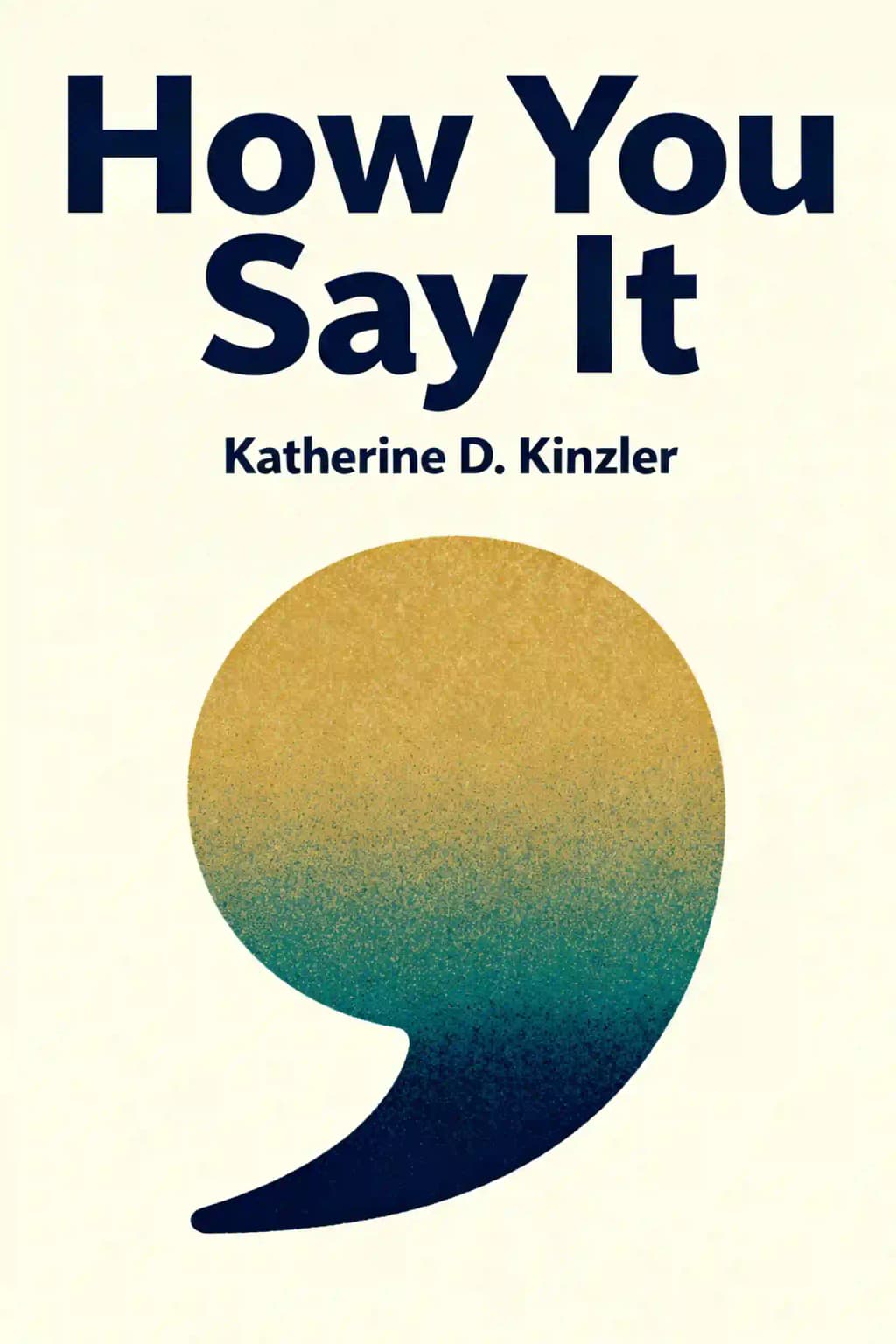
How You Say It
Why You Talk the Way You Do--And What It Says about You
Panoramica di How You Say It
Ever wonder why your accent triggers instant judgments? "How You Say It" reveals the hidden power of speech patterns in shaping our social world. Praised by linguists and psychologists alike, Kinzler's groundbreaking research shows how language bias silently influences everything from job interviews to classroom success.
Temi chiave in How You Say It
- linguistic bias
- accent discrimination
- social identity signaling
- native language psychology
- vocal alignment
Citazioni da How You Say It
Accents function as invisible badges.
Linguistic bias remains socially acceptable.
Language shapes not just how we communicate, but who we fundamentally are.
Speech patterns powerfully define our chosen social groups.
Our native linguistic identity remains largely fixed.
Personaggi di How You Say It
- Katherine D. KinzlerAuthor and psychologist researching language
- Bill LabovSociolinguist who studied Martha's Vineyard
- Penelope EckertSociolinguist who studied adolescent speech
- Ruth Bader GinsburgSupreme Court Justice whose accent evolved
- Queen Elizabeth IIMonarch whose speech patterns changed over time
Sull'autore
Sull'autore di How You Say It
Katherine D. Kinzler, author of How You Say It: Why You Talk the Way You Do—And What It Says About You, is a leading developmental psychologist and social cognition expert.
A professor and former chair of psychology at the University of Chicago, Kinzler holds a PhD from Harvard and a Fulbright Scholarship.
Her research, funded by the National Institutes of Health and the John Templeton Foundation, explores how language, accent, and cultural identity shape social biases—themes central to her critically acclaimed book.
Kinzler’s work has been featured in The New York Times and BBC analyses of linguistic prejudice, and she was named a “Young Scientist” by the World Economic Forum for her contributions to understanding intergroup dynamics.
Known for translating complex psychology into accessible insights, Kinzler reveals how speech patterns influence perception, power structures, and childhood social development. Her debut work has been praised by Publisher’s Weekly for its “revelatory” examination of linguistic diversity and its societal implications.
Scarica il riassunto di How You Say It
Ottieni il riassunto di How You Say It in formato PDF o EPUB gratuito. Stampalo o leggilo offline quando vuoi.
FAQ su questo libro
How You Say It explores how speech patterns—accents, word choices, and linguistic quirks—shape social identity, influence perceptions, and perpetuate bias. Katherine D. Kinzler, a University of Chicago psychologist, uses research on children and adults to show language’s role in forming in-groups/out-groups, arguing that linguistic discrimination is deeply rooted yet overlooked. The book urges embracing linguistic diversity to combat prejudice.
This book suits linguistics enthusiasts, social scientists, and anyone interested in communication’s societal impact. It’s particularly relevant for educators, policymakers, and bilingual/multilingual individuals seeking insights into how speech affects opportunities and relationships. Kinzler’s accessible writing also appeals to general readers curious about unconscious biases.
Yes—Kinzler combines rigorous research with engaging storytelling, offering fresh perspectives on linguistic bias. Kirkus Reviews praises it as an “articulate examination of an underrecognized aspect of human communication,” though some note it’s more introductory than groundbreaking. Its actionable insights on fostering inclusivity make it timely for today’s diverse societies.
Kinzler argues accents trigger subconscious judgments about competence and trustworthiness, rooted in evolutionary preferences for familiar speech. Babies as young as months old show accent-based social preferences, which solidify into biases affecting hiring, education, and legal outcomes. These biases often persist unchecked, even among progressive groups.
Speech acts as a “language identity” marker, often outweighing race or nationality in social categorization. Kinzler cites studies where children prioritized shared accents over skin color when defining groups. Adults similarly code-switch to fit in, revealing how deeply language ties to self-perception and belonging.
Kinzler suggests linguistic bias is more evolutionarily primal than racial bias. Infants distinguish accents before recognizing race, and experiments show kids assume accent alignment predicts shared traits. Unlike racial bias, linguistic prejudice remains socially acceptable, making it a critical but underaddressed justice issue.
The book encourages mindfulness of linguistic biases in hiring, education, and media. It advocates for accent-inclusive policies and “linguistic humility”—recognizing that no dialect is superior. Kinzler also suggests exposing children to diverse speech patterns early to reduce bias.
- “It’s not what you say, but how you say it”: Highlights speech’s social power over content.
- “The psychology of race isn’t about genetics but what people think is real”: Emphasizes perception’s role in discrimination.
- “Everyone has an accent”: Challenges readers to rethink linguistic norms.
Kinzler’s research shows infants prefer caregivers’ accents within months of birth. By kindergarten, children associate accents with social groups more strongly than race. The book advises parents and educators to model inclusive language attitudes to shape healthier linguistic identities.
Some reviewers note the book’s scope is broad but lacks depth in solutions for systemic linguistic bias. While praised for accessibility, scholars might find its academic rigor lighter compared to specialized texts. Nonetheless, it’s hailed as a vital primer for mainstream audiences.
In a globalized, digital world, Kinzler’s insights explain why remote teams might struggle with accent-based trust issues or why politicians adopt regional dialects. The book frames linguistic diversity as an asset for cross-cultural collaboration, urging societies to value it alongside other forms of diversity.
Unlike Because Internet (focused on digital communication) or The Language Hoax (debunking linguistic myths), Kinzler’s work links speech to social justice. It complements Blink by Malcolm Gladwell, exploring subconscious biases, but with a tighter focus on language’s role in inequality.