Capitolo 1
When Puppets Become Real: The Haunting Legacy of Childhood Trauma
Louise's world shatters with a phone call that changes everything. At 34, she's built a life in San Francisco with her daughter Poppy, thousands of miles from her Southern roots. Then her estranged brother Mark delivers the news: their parents died in a car accident two days ago. The siblings haven't spoken in years, their relationship fractured by childhood resentments and adult choices. Now they must return to Charleston to bury their parents and confront the house filled with memories-and something far more sinister lurking within its walls.
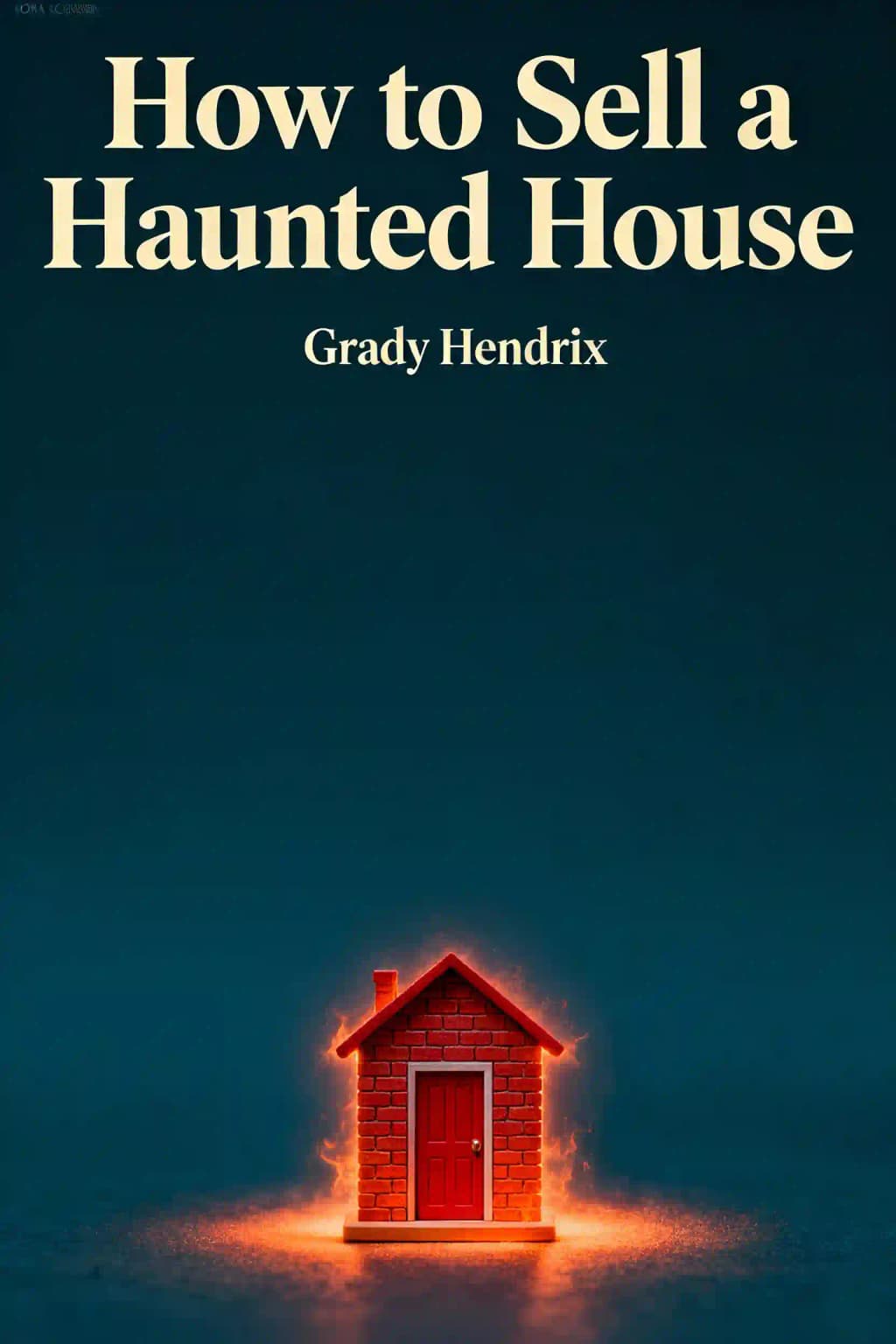
"How to Sell a Haunted House" has captivated readers since its 2023 release, becoming an instant New York Times bestseller. Author Grady Hendrix, known for blending horror with dark humor, draws on Southern Gothic traditions while exploring how childhood trauma haunts us into adulthood. The novel has been praised by Stephen King as "Scary as hell and wickedly funny," while Jordan Peele cited it as inspiration for elements in his horror filmmaking. The book's exploration of sibling relationships and inherited trauma has made it a book club favorite, with readers debating whether the supernatural elements represent actual hauntings or manifestations of psychological damage.
Capitolo 2
The House That Grief Built: Returning to Childhood Wounds
Louise arrives at her parents' house in Charleston, immediately confronted by an atmosphere of wrongness that transcends the typical emptiness of a vacant home. The disturbing details accumulate rapidly - a boarded-up attic hatch with its pull string deliberately cut off, a fallen vent grille that seems wrenched from the wall, scattered signs suggesting something terrible happened before her parents' final departure. The colonial-style house she grew up in, once a symbol of middle-class respectability, now feels charged with an inexplicable energy that makes her skin prickle.
Moving through the rooms, Louise finds herself creating detours to avoid certain spaces. Her mother's sewing room, once a bustling workshop filled with the sounds of Nancy's creative energy, now sits silent except for the blank stares of dozens of puppets from her Christian ministry. These hand-crafted characters, which once brought Bible stories to life for countless children, seem accusatory in their stillness. The master bedroom proves equally challenging - the empty bed still made with her mother's favorite quilt, her father's reading glasses on the nightstand, creating tableaus of interrupted life too painful to contemplate.
When she finally allows herself to embrace Buffalo Jones, her childhood stuffed animal companion, the grief she's been holding at bay crashes through her carefully maintained composure. The worn plush texture and familiar scent unlock a flood of memories - tea parties, bedtime stories, whispered secrets. But this moment of genuine emotional connection shatters when the television in the living room suddenly activates itself, screen flickering to life without human intervention. This inexplicable event plants the first seed of doubt: is something supernatural at work, or is Louise's overwhelming grief causing her to perceive normal occurrences as something more sinister?
The siblings' reunion quickly deteriorates into a bitter confrontation that reveals deep-seated resentments. Mark, displaying a shocking callousness, refers to the house as "Afghanistan" - a war zone better abandoned than saved. His casual cruelty peaks when he mentions "Flossy Bossypants," a puppet their mother allegedly crafted as a critical caricature of Louise's controlling nature. The situation escalates to physical violence when Louise discovers Mark has arranged cremation services, directly contradicting their parents' expressed wishes for traditional burial. Their struggle over the death certificates becomes literal as well as symbolic, ending only when Louise flees with the documents clutched to her chest.
This explosive confrontation lays bare the story's central conflict: Louise, who chose geographic distance but maintains emotional connection to family traditions, versus Mark, who remained physically close while seemingly desperate to obliterate their shared history. Their battle over the house and its contents becomes a proxy war for unresolved childhood traumas and competing versions of their family narrative. As Louise drives away, she finds herself repeating the mantra "We are not weird" - a desperate attempt to defend her family's normalcy that sounds increasingly hollow with each repetition. This reflexive denial foreshadows the darkness to come as the house gradually reveals its long-buried secrets.
Capitolo 3
Puppets With a Life of Their Own: The Horror Begins
The first truly inexplicable event occurs when Louise discovers her mother's puppet Pupkin - a weathered, cloth-faced doll with unnervingly realistic glass eyes - sitting in her father's worn leather chair watching TV. The puppet's head is tilted at precisely the angle her father used to maintain, its cloth hands gripping the armrests. She assumes Mark set this up to frighten her, but it's just the beginning of a series of increasingly disturbing incidents.
Later, she finds the Mark and Louise dolls - handmade puppets of the siblings as children, complete with period-accurate clothing and unsettlingly detailed facial features - mysteriously appearing in different rooms. The Louise doll wears the same yellow dress she wore in her fifth-grade photo, while Mark's puppet sports his favorite Cowboys t-shirt from 1982. These dolls seem to move on their own, appearing in places that would be impossible for someone to reach without a ladder, like the top of kitchen cabinets or balanced on ceiling fan blades.
The Squirrel Nativity, their mother's most controversial creation featuring taxidermied squirrels arranged in biblical scenes, comes alive during the night. Louise wakes to find scratch marks on her arms and pieces of preserved fur scattered across her bedroom floor. The baby Jesus squirrel, its glass eyes gleaming with an unnatural light, appears to track her movements across the room.
These incidents force Louise to question her sanity with increasing desperation. Are these grief-induced hallucinations, triggered by the stress of clearing out her childhood home? Is Mark orchestrating an elaborate psychological game? Or is something supernatural happening within these familiar walls? The horror escalates when a puppet - one of their mother's earlier works featuring a clown face - gets stuck in the garbage disposal, which mysteriously turns on when Mark flips the breaker, shredding the puppet's face into strips of fabric and porcelain.
In the master bathroom, both Louise and real estate agent Mercy hear three distinct knocks from inside the vanity, followed by what sounds like a child's voice pleading "let me out." The knocking follows a precise pattern - tap-tap-tap - that matches the way their mother used to summon them to dinner. When they finally work up the courage to open the cabinet, they find nothing inside except their mother's collection of puppet-making tools, arranged in perfect order.
Mercy, visibly shaken, refuses to list the house, declaring it haunted. Despite Louise's logical protests, Mercy recommends their mother's old spiritualist friend perform a cleansing before they can sell, claiming haunted properties can fetch higher prices after being properly blessed. Mark seems oddly receptive to the idea, wondering aloud if their parents' spirits might be present in the house, while Louise desperately struggles to maintain her rational stance.
The puppets represent more than just childhood toys - they embody the unresolved trauma and family secrets that have haunted Louise and Mark since childhood. Each puppet holds specific emotional significance: Pupkin was their mother's first and favorite creation, representing her artistic awakening and subsequent neglect of her family duties, while the Mark and Louise dolls embody the idealized versions of themselves their mother wanted them to be - perpetually young, obedient, and under her control. As these objects come to life, they force the siblings to confront the painful truths they've spent decades avoiding.
The horror elements work on multiple levels: as supernatural phenomena that defy explanation, as manifestations of grief and trauma bubbling to the surface, and as metaphors for the ways family dynamics can control us like puppets on strings. Louise's increasingly desperate attempts to maintain a rational explanation reflect her lifelong pattern of emotional avoidance - a defense mechanism that's about to fail catastrophically as the boundary between the animate and inanimate continues to blur within the house's walls.
Capitolo 4
The Buried Truth: Childhood Trauma Resurfaces
As tension builds between Louise and Mark, he confronts her about a buried childhood trauma. He claims she tried to kill him when they were children, an accusation Louise vehemently denies. Yet in her mind, a disturbing thought emerges-it wasn't her who tried to kill Mark, it was Pupkin.
The repressed memory finally surfaces: Louise and Mark visited the elderly Calvins' home as children, where their mother instructed Louise to hold Mark's hand in the "fairyland" of their frozen backyard. Under Pupkin's influence, Louise led Mark to a frozen pond, encouraging him to venture onto the ice. When it cracked and Mark plunged into the freezing water, Louise watched him struggle and disappear beneath the surface, then calmly returned to the house alone.
When asked about Mark's whereabouts, Pupkin instructed Louise to lie. Mr. Calvin eventually rescued Mark, who survived but fell ill. Overwhelmed with guilt, Louise took Pupkin to the backyard, dug a deep hole, and buried him despite his desperate pleas and threats. After this, her stuffed animals never spoke to her again-a child's way of processing her betrayal of innocence.
This revelation transforms our understanding of the siblings' relationship. Louise has spent decades avoiding this memory, creating a version of reality where puppets don't talk and she never tried to harm her brother. Mark, meanwhile, recovered this memory during a teenage ski trip, explaining his subsequent destructive behavior and their parents' protective stance toward Louise.
The buried trauma explains Louise's life choices-her preference for concrete realities like math and blueprints, her geographic distance from family, her emotional guardedness. It also explains why the supernatural events in the house affect her so profoundly-they threaten the rational worldview she's constructed to protect herself from her own past.
This section brilliantly blends psychological realism with supernatural horror. The childhood memory could be interpreted as a traumatized child's imagination giving voice to her darkest impulses through a puppet. Yet the present-day supernatural occurrences suggest something more is happening-that perhaps Pupkin always had a life of his own.
Capitolo 5
Mark's Dark Secret: The Puppet's Previous Victim
Mark finally reveals why he dropped out of Boston University-a story that parallels Louise's childhood trauma in disturbing ways. After becoming disillusioned with traditional theater, Mark discovered Boston's underground puppet scene and immersed himself in political puppet collectives. When their mother sent Pupkin to him, his colleague Clark became strangely attached to the puppet, rarely taking it off his hand.
The puppet collective's anti-war pageant went horribly wrong, and afterward, Clark revealed three life-sized Pupkin masks he'd created overnight. During increasingly long sessions wearing the masks, they trashed their house, created more Pupkin puppets, and lost track of time. Mark experienced being in "Tickytoo Woods" while masked-a fantasy world from his mother's bedtime stories.
As their behavior grew more destructive, they found animal bones and missing pet posters appeared in the neighborhood. They eventually broke into a neighbor's home and terrorized a woman and her son. Horrified by what they'd become, Mark set fire to the Pupkin masks in the basement, accidentally burning down the house with his friends inside.
Later, Mark was shocked to find Clark alive, wearing Pupkin and looking exactly as he did before the fire. Clark demanded Mark return to their collective, insisting Pupkin needed him. When Mark refused, Clark left with an ominous warning that Pupkin "doesn't like to be left behind."
This revelation creates a crucial connection between the siblings' experiences. Both were manipulated by Pupkin into violence. Both buried their trauma-Louise literally burying the puppet, Mark fleeing Boston. Both constructed lives designed to avoid confronting what happened. And now, both must face Pupkin again to break free of his influence.
Mark's story also introduces the central supernatural concept: Pupkin isn't just a puppet but a vessel for something malevolent that can possess people through physical contact. This entity can survive destruction of its host object and has followed the family for decades. Mark theorizes that their parents' fatal car accident might have been caused by Pupkin attacking their father when their mother became his caretaker.
With this shared understanding, the siblings reluctantly decide they must return to the house to properly destroy Pupkin's remains and deal with the other possessed objects-setting up the novel's climactic confrontation.
Capitolo 6
The Battle for Survival: Confronting the Puppet Master
When Louise and Mark return to the house to retrieve Pupkin's remains, they discover the puppet is gone, with only stuffing scattered throughout the house. Following fabric scraps to the air vent, they hear something moving in the attic. After removing the boards from the attic hatch, they find Pupkin in a makeshift bedroom their mother had created for him.
Mark suddenly begins talking to Pupkin as if hearing responses, warning Louise to leave. He reveals "Spider" is there-Mark's childhood imaginary dog that has now manifested as a terrifying six-legged creature with multiple rows of teeth. Spider attacks Louise, nearly taking her face off before chasing her down the hall.
Just as Spider is about to kill Louise, the creature suddenly releases her, terrified of something else in the hallway. It's Mark, but Pupkin is on his hand-and the puppet seems to be controlling him. "Pupkin here! Pupkin here!" it screeches in a high-pitched voice. When Louise tries to escape, Pupkin locks the front door and finds a hammer in the debris. As the puppet sings its deranged song, Mark brings the hammer down on Louise's skull.
In a desperate act of survival, Louise cuts off her brother's arm to free him from Pupkin's control. This shocking moment of violence represents the literal severing of the puppet's hold on Mark-but also severs part of the siblings' relationship. In the aftermath, Louise must fabricate stories about what happened: to paramedics, she claims it was an accident with a saw; to doctors, she says shelves collapsed on her.
The physical wounds mirror their psychological ones-Mark has literally lost a part of himself, while Louise bears the guilt of causing this permanent damage. When she visits him after surgery, Mark reveals he put on Pupkin because the puppet threatened to let Spider kill Louise. Despite his loss, Mark urges Louise to burn Pupkin as they planned.
Louise burns Pupkin in the backyard grill, hearing his desperate screams inside her head as he melts away. Afterward, the house feels empty of presences-no longer haunted. When she returns to the hospital, Mark blames her for his lost arm, which doctors couldn't reattach. Their brief moment of unity dissolves into the familiar pattern of blame and resentment.
This section represents the novel's most intense horror sequence, blending visceral body horror with psychological terror. The physical battle against Pupkin mirrors the siblings' internal struggle against their traumatic past. Louise's desperate act of cutting off Mark's arm symbolizes the painful sacrifices sometimes necessary to break free from destructive patterns-even when those sacrifices create new wounds.
Capitolo 7
The Horror Comes Home: Pupkin's Return
Louise's homecoming turns horrific when she discovers Poppy playing with a new Pupkin puppet that her grandmother made before dying. The puppet speaks through her daughter's voice: "Pupkin home! Pupkin home! Pupkin home forever!" When Louise tries to take Pupkin away, Poppy bites her hand hard enough to hit bone.
Desperate, Louise calls Mark, who immediately recognizes the danger, warning her to get rid of the puppet but not to try cutting it off. Later, Louise discovers Pupkin using a kitchen knife to cut Poppy's arm while the child insists "it doesn't hurt." After treating the wounds, Louise attempts to communicate with Pupkin, who demands to see "Nancy" and refuses to accept she's dead, insisting "Pupkin always Pupkin" and "Nancy promise! Never alone."
This terrifying development raises the stakes dramatically-now Louise's daughter is in danger. The horror has followed her across the country, proving she can't escape her past by physical distance alone. Pupkin's possession of Poppy represents how unresolved trauma can be passed down through generations, affecting even those who weren't present for the original events.
Mark suggests they return to Charleston where Aunt Gail, who understands hauntings and possessions, can help them. At the airport, Louise faces trouble when TSA demands Poppy remove the Pupkin puppet, triggering a screaming tantrum. On the plane, Pupkin disrupts the flight until Louise manipulates him by mentioning Nancy.
Back in Charleston, Louise finally confesses everything to Aunt Gail-the haunted house, the puppets' attacks, cutting off Mark's arm, and her desperation for help with the puppet possessing Poppy. Aunt Gail assembles everyone to hear Louise and Mark's story, then declares their home "infested with demonic forces" due to Nancy's puppet ministry "trivializing the church."
Aunt Gail's friend Barb, who collects and "spiritually deactivates" cursed dolls, offers to help break Pupkin's curse. During the ritual, Aunt Gail attempts to exorcise the demon by commanding it to reveal its name. When this approach fails, Barb tries a gentler method and discovers Pupkin is actually "Freddie," Nancy's five-year-old brother who died of lockjaw.
This revelation transforms their understanding-they're not dealing with a demon but with a ghost, specifically the spirit of their mother's brother who died tragically young. The entity they've been fighting is a child who never got to grow up, whose spirit attached itself to the puppet that became his only way of experiencing the world.
This twist adds emotional complexity to the horror. Pupkin/Freddie isn't purely malevolent but a traumatized child spirit desperately clinging to his connection with the living world through his sister Nancy. With Nancy gone, he's transferred his attachment to Poppy-creating a cycle of possession that threatens to continue indefinitely unless they can find Freddie's remains and properly put him to rest.
Capitolo 8
Finding Peace: Laying the Past to Rest
The final confrontation occurs when Louise and Mark return to their parents' house with Poppy, hoping to find Freddie's remains. As they follow Pupkin's taunting "warmer" calls through the house, they discover all the dolls have returned to their places. When they reach the end of the hallway, Pupkin offers Louise a deal through Poppy: stay forever in Tickytoo Woods. When Louise refuses, puppets flood from the bedrooms, overwhelming them.
They barricade themselves in the bathroom, but find the Mark and Louise dolls coming to life. Louise smashes through the window and escapes to find Freddie's remains, while Mark holds the door against the puppet onslaught. Guided by intuition, Louise begins digging near the cypress tree-the "Tick Tock Tree" from Pupkin's stories that Mark identified as Freddie's burial spot.
As she digs, Mark is thrown through the shattered patio doors. A monstrous figure emerges-a grotesque amalgamation of hundreds of puppets fused together into a hulking humanoid shape, their blind faces and open mouths pointed in all directions as they move as one terrifying entity.
Though the text doesn't explicitly describe how they defeat this puppet monster, we learn that Louise succeeds in finding Freddie's remains. The aftermath shows Louise creeping out of Poppy's hospital room, feeling terrible but determined. At her parents' house, she finds the yard strewn with her mother's destroyed puppets-torn to shreds, ground into mud, ruined beyond repair. Everything her mother built, her life's work, gone. Louise weeps as the finality of death hits her.
In October, they hold Uncle Freddie's funeral, finally laying his remains to rest beside his sister sixty-eight years after his death. This proper burial allows Freddie's spirit to find peace, breaking the cycle of possession and haunting that has plagued the family for decades.
The house is transformed with renovations-new fixtures, hardwood floors, and marble countertops. Louise can barely reconcile her memories with this modern space. When Poppy asks if everything's gone, including her grandparents, Louise confirms they are, and Poppy simply accepts it with an "Okay."
As they stand in the kitchen, they suddenly smell their father's stollen baking-though the oven is off. All three of them sense it, a final message or memory from their dad. Despite Mark's protest that this presence feels genuinely like their father, Louise insists it's time to go. They leave, closing the door behind them, and eventually the smell fades away.
This bittersweet ending suggests that while some hauntings can be malevolent, others represent the lingering connections between the living and the dead. The smell of their father's baking isn't threatening but comforting-a reminder that love persists even after death. By acknowledging this presence but choosing to leave it behind, Louise demonstrates her growth. She can now recognize the difference between harmful attachments to the past and meaningful memories that can be carried forward.
Capitolo 9
The Lasting Bond: Siblings United by Shared Trauma
Years later, Louise still has moments when grief hits her hard, especially after dreams where her parents are still alive. In those moments, when the pain feels like her ribcage is being split open with an axe, she calls the only other person who understands-her brother.
This final image powerfully completes the siblings' journey. Despite their conflicts and the permanent physical reminder of their ordeal in Mark's missing arm, they've forged a deeper connection through their shared experience. The traumatic events forced them to confront their childhood wounds, their different perceptions of their family, and the ways they've both used avoidance to cope with pain.
By facing Pupkin/Freddie together, they broke the cycle of possession that threatened to claim Poppy. More importantly, they broke the cycle of resentment and misunderstanding that had kept them estranged for years. Though their relationship remains complicated-marked by the physical and emotional scars of their ordeal-they now share an unbreakable bond as the only two people who truly understand what happened in that house.
The novel ultimately suggests that haunted houses aren't just buildings possessed by supernatural entities-they're also the emotional spaces we inhabit, filled with the ghosts of past traumas, family secrets, and unresolved grief. Sometimes the most terrifying hauntings come from within ourselves, from the parts of our history we've buried but never properly laid to rest.
Louise and Mark's journey reminds us that confronting these personal hauntings, however painful, is the only way to truly free ourselves from their power. By accepting the past rather than denying it, by acknowledging grief rather than running from it, we can transform our relationship with trauma-not erasing it, but incorporating it into our understanding of ourselves and our families.
In those inevitable moments when grief returns like a ghost, the novel suggests, what matters most is having someone who understands-someone who's walked through the haunted house with you and emerged on the other side, changed but still standing.