Capitolo 1
The Art of Being Human in a Divided World
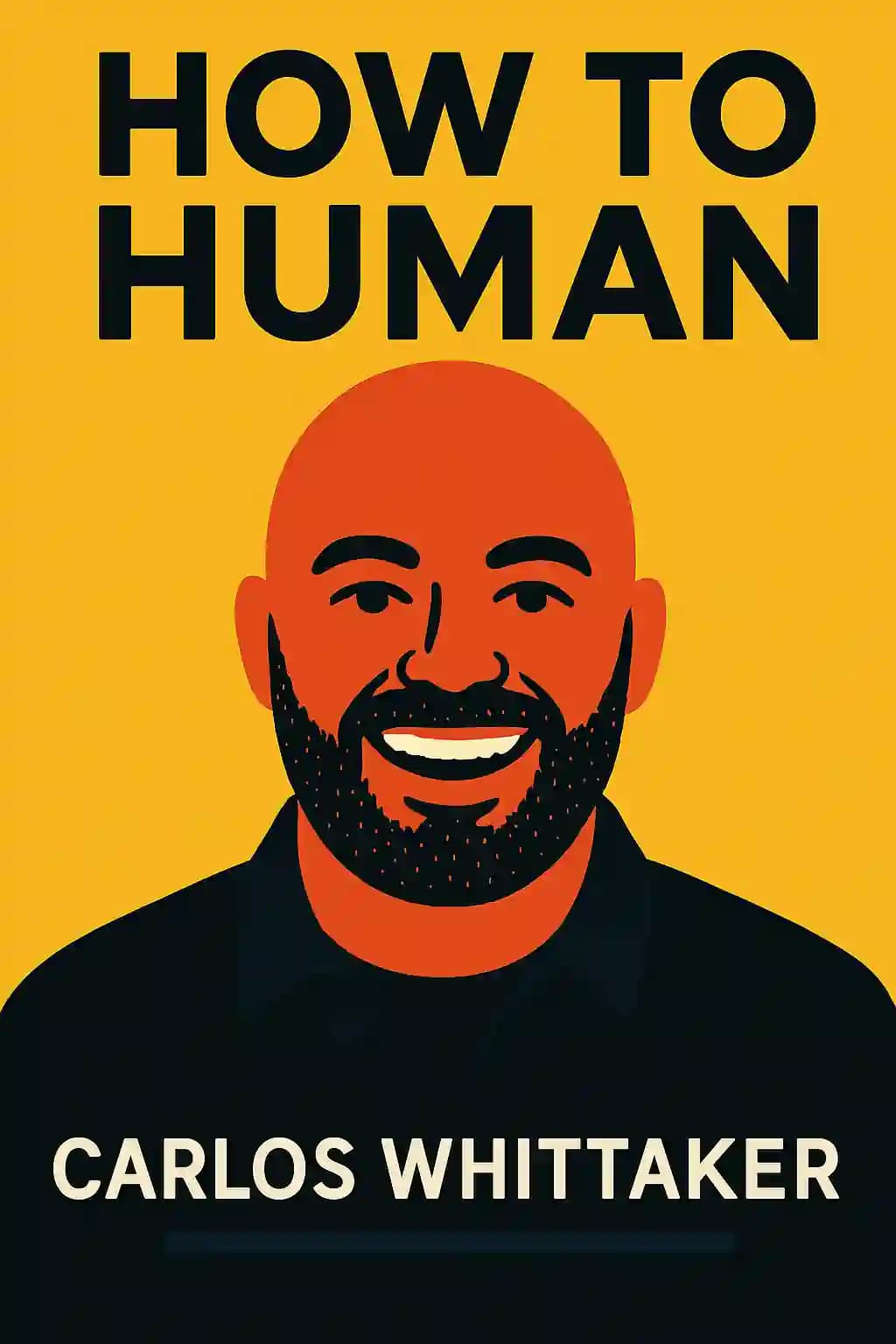
When Carlos Whittaker's "How to Human" hit shelves in 2022, it quickly became a cultural touchstone for those seeking connection in our fractured society. Endorsed by thought leaders like Jon Acuff and Lysa TerKeurst, the book arrived at a critical moment when many Americans were struggling to reconnect after years of pandemic isolation and political division. What makes this book particularly resonant is Whittaker's unique perspective as a social media influencer with over 200,000 followers who has mobilized his "Instafamilia" to raise nearly a million dollars for strangers in need. His philosophy-"Don't stand on issues. Walk with people"-has earned him speaking engagements at major conferences nationwide and a reputation as someone who builds bridges in an era of wall-building. Even celebrities like Kristen Bell have shared his content, recognizing the universal appeal of his message about authentic human connection.
Capitolo 2
Reclaiming Our Humanity After Crisis
The mere mention of "2020" triggers visceral negative reactions from most people. When Whittaker tested this with his own children, they responded with words like "ugh," "sucked," and expletives, while their memories of previous years were filled with pleasant associations of people and family trips. This stark contrast reveals how deeply that year affected even young minds. Beyond the pandemic itself, our "deeply inhuman response" to 2020's events left wounds that we still struggle to heal years later, manifesting in increased social anxiety, political polarization, and a lingering sense of disconnection from our communities.
Using his father's analogy about a ship that misses its destination by sixteen miles after deviating just one degree over a 960-mile journey, Whittaker poses a central question: How can humanity reset its path and return to being the kind of people who instinctively help strangers in need? This mathematical illustration demonstrates how small changes in course, whether positive or negative, can lead to dramatically different outcomes over time. The metaphor serves as both a warning about gradual social deterioration and a hopeful reminder that small corrections can guide us back to our better nature.
This question stems from a profound childhood memory. In 1985, while getting a haircut at Northlake Mall in Decatur, Georgia, young Carlos witnessed chaos erupting when a man ran by with a kidnapped child. His barber Curtis immediately dropped his clippers and joined other diverse men-two skinny white kids, a "rich guy" in an expensive suit, and a heavyset Black man-to chase down the kidnapper. Without hesitation or discussion about their differences, these strangers united in common cause. This spontaneous act of humanity across differences became a foundational lesson: humans instinctively band together for good, regardless of differences, though our current divisive culture makes us forget this truth. The incident serves as a powerful reminder of our natural inclination toward cooperation and altruism when artificial barriers are stripped away by crisis.
Whittaker argues that humanity doesn't need rebuilding but recalibration-like the "Control-Alt-Delete" function that resets computers. This technical metaphor suggests that our core programming remains intact, merely needing a restart to clear accumulated errors. Despite recent challenges, including political polarization, social media echo chambers, and widespread mistrust, he believes we can recover our innate human reflex to help others across dividing lines of politics, faith, and ideology by returning to our original design. This involves rediscovering our authentic selves beneath years of trauma, opinions, and influences that have clouded our natural instincts for connection and compassion. The process requires intentional effort to strip away acquired biases and reconnect with our fundamental human impulse to support one another, regardless of superficial differences.
Capitolo 3
Embracing Your Full Identity
"You are Mexican, not Black," Carlos's father repeatedly told him during childhood, despite Carlos having an Afro and his father looking Black himself. After experiencing racism in second grade, Carlos began investigating his heritage, asking about his grandparents from Providencia, a Caribbean island off Colombia's coast. His father firmly insisted, "You are not Black, Carlos," with unusual intensity that made young Carlos stop asking questions.
Years later in 2019, Carlos took an Ancestry.com DNA test that revealed he was 72% Nigerian. When confronting his father, he learned the truth: his father had hidden Carlos's Black identity to protect him from racism in 1980s Atlanta. This revelation illuminated a profound truth: knowing our full identity-including the parts we might hide-is essential to being human.
This lesson became even clearer when Carlos took his Korean-born adopted son Losiah to Beijing. As they approached their gate at the Detroit airport, the demographics shifted to predominantly Asian travelers, and Carlos noticed a unique grin on Losiah's face. He realized this was only the third time in thirteen years that his son had been surrounded by more people who looked like him than like the rest of their multicultural family.
In Beijing, Losiah walked with newfound confidence as locals addressed him in Mandarin. Though he couldn't respond, the experience of belonging visibly transformed him. Carlos contrasts this with a painful incident when a child had called Losiah "flat face" back home-a wound his son handled with surprising maturity but that affected him deeply.
The experience culminated in a touching moment when, unable to hail a cab, Losiah stepped forward saying, "Dad, it's okay to feel different here. I'll hold your hand, and then everyone will know you belong." Immediately, a cab stopped for them. Carlos realized that being seen isn't just about individual recognition but about belonging: "Sometimes being seen is more about simply belonging than anything else."
Capitolo 4
Simple Acts of Love in Complex Times
Love should be simple rather than complicated. Drawing on Jesus's example of loving people without conditions or obstacles, Whittaker illustrates this simplicity through everyday moments that transform lives. The essence lies not in grand gestures but in authentic, unplanned moments of human connection that cut through social barriers and touch hearts.
During the early pandemic days, when fear was palpable in everyone's eyes, Carlos set up a 14-foot Christmas Santa in March with a sign reading "Ho Ho Hope. We got this!" The absurd display brought unexpected joy to passersby in his neighborhood, creating moments of connection during isolation. Children would stop and point, elderly neighbors would smile through their windows, and even stressed healthcare workers would pause to take photos. This simple act created a ripple effect of joy throughout the community, proving that creativity and whimsy can be powerful tools for connection.
In another instance, Carlos noticed a hotel housekeeper singing beautifully while working. Rather than passing by, he complimented her talent and recorded her for his Instagram followers. This simple acknowledgment made her feel valued without any grand gesture-just human connection. The video went viral, leading to opportunities for her to perform at local events and inspiring others to recognize the hidden talents of people they encounter daily.
These examples demonstrate how love doesn't require elaborate plans or perfect circumstances. It happens in small moments when we choose to see others and acknowledge their humanity. Whether it's remembering a barista's name, helping a stranger with heavy groceries, or leaving an encouraging note for a delivery person, these small acts create lasting impact. As Whittaker puts it, "When you find simple ways to love strangers, not only will your faith in humanity increase, but so will theirs."
This approach becomes even more powerful when applied to those society often overlooks. Jesus particularly saw those others ignored: women (speaking to them, equalizing their status), the poor (humanizing them), and those across racial divides (like Samaritans). He ate with tax collectors, touched lepers, and defended the condemned - actions that were radical in their simplicity. By following this example, we can transform our communities through what Whittaker calls "simple love"-acts of kindness that require little effort but yield profound impact.
Modern examples of this approach include business owners hiring formerly incarcerated individuals, neighbors organizing meal trains for grieving families, or students befriending isolated classmates. These actions don't require special skills or resources - just the willingness to see people as Jesus did and respond with uncomplicated kindness. The power lies in their repeatability and accessibility to anyone willing to look beyond their comfort zone.
Capitolo 5
Beyond Sympathy: The Power of True Compassion
Compassion goes deeper than sympathy or empathy-it's "concern for the sufferings or misfortunes of others" that leads to concrete action. Whittaker laments how people often sing about compassion on Sundays but fail to demonstrate it in daily life, creating a stark disconnect between proclaimed values and lived reality. He recalls the early pandemic days when people briefly united in compassion, citing examples like Italians playing music from balconies, neighbors delivering groceries to elderly residents, and communities organizing support networks for healthcare workers, demonstrating how true humanity shines brightest in difficult circumstances.
Interestingly, those with fewer resources often demonstrate the purest form of humanity. Studies have shown that lower-income individuals typically give a higher percentage of their income to charity than wealthy donors. When his mother fell ill with COVID-19 in March 2020, Whittaker witnessed an outpouring of compassion from his online community, with strangers offering help regardless of political differences. People sent care packages, organized meal trains, and offered virtual support, showing how crisis can strip away artificial barriers. He contrasts this with today's tendency to limit compassion to those who share our beliefs, creating echo chambers of care that exclude those most in need.
Drawing from Jesus's parable of the lost sheep, Whittaker urges readers to "go after the one"-to extend compassion beyond our comfortable circles to those who are forgotten or overlooked. He emphasizes that true compassion isn't about bringing people back but showing them they're loved regardless of whether they return to our way of thinking. This includes reaching out to those who feel marginalized, isolated, or rejected by society, even when doing so challenges our own comfort zones.
This approach requires vulnerability and often means risking rejection or criticism. When wildfires threatened his in-laws' home in Prather, California, Carlos hesitated to ask for help on social media, fearing rejection from followers who had distanced themselves due to his racial justice advocacy. He was particularly concerned about conservative followers who had unfriended him, lamenting that the evangelical church-which should lead racial reconciliation efforts-was instead pulling away from his message while corporations and secular organizations actively embraced diversity discussions.
To his surprise, within five minutes of posting his request, a man who had previously disagreed with him politically offered assistance for his in-laws' evacuation, demonstrating that human connection often transcends ideological boundaries. This experience reinforced his belief that compassion transcends political divides when we allow ourselves to be vulnerable enough to ask for and offer help across ideological lines. It showed how crisis often reveals our shared humanity, stripping away the artificial barriers we construct in calmer times.
The author emphasizes that practicing true compassion requires both courage and humility - courage to reach across divides and humility to acknowledge our own need for help. Through various examples, he illustrates how moments of crisis often provide opportunities to demonstrate and experience genuine compassion, breaking down the walls that normally separate us from one another.
Capitolo 6
Rediscovering Wonder in an Information Age
The pandemic forced an unprecedented global slowdown that revealed something essential about our humanity. As people shifted from "a hundred miles per hour to three miles per hour," they reconnected with slower, more fundamental human activities like baking sourdough bread and gardening. While acknowledging the pandemic's tragic aspects, Whittaker suggests this forced deceleration was healing, allowing both humans and the planet to breathe-evidenced by dramatically improved air quality worldwide and wildlife returning to previously abandoned habitats.
He proposes that while our brains and bodies may evolve, our souls remain unchanged, created in God's image. He questions whether our modern pace and information overload are compatible with our fundamental nature, suggesting that constant access to infinite information has "ruined a part of who we were created to be" by eliminating wonder. For most of human history, people functioned within local scales-knowing their communities, focusing on nearby problems they could solve, and using their imaginations when information wasn't instantly available.
To reclaim this sense of wonder, Whittaker encourages practical steps: taking walks without phones to experience surroundings differently, and occasionally traveling without GPS. "Getting lost opens our senses in ways we have long since forgotten," he explains, noting that humanity regularly got lost until recent technological advances. He recommends writing down directions before leaving home like in 1992, which creates opportunities for human interaction when asking for directions.
Whittaker shares how his love for birds began in 2019 when he rescued a baby robin, which deepened during quarantine when he installed cameras to observe nesting birds. During a period of overwhelming anxiety, a robin landed near him, methodically finding food without worry. This moment reminded him of Jesus's teaching about birds neither sowing nor reaping yet being cared for by God. The experience taught him to be "more like a bird"-doing what he was created to do and then celebrating it, embracing wonder rather than worry.
Capitolo 7
Seeing Beyond Our Biases
Seeing people authentically isn't always comfortable. Whittaker contrasts this with the filtered "highlight reel" most prefer to see, noting Jesus wasn't afraid of discomfort and met people where they were. True seeing requires confronting our own biases-even when we think we're the enlightened ones.
Whittaker learned this lesson when he finally approached his elderly white neighbor about painting one bunny statue black in his collection. To his shock, James revealed he did it in solidarity with Black Lives Matter protests, saying "It's my way of saying that I believe your life matters." Carlos was stunned to discover the man he'd judged for years was actually an ally. James shared how he was raised partly by a Black woman who was "like another mother" to him.
Carlos apologized for his prejudgment, realizing he-who was teaching others about racial bias-needed the lesson himself. He recorded their conversation and shared it online, where it went viral. Though initially awkward explaining social media to James, they developed a genuine friendship.
This experience connects to a broader principle: seeing requires proximity. Using the biblical story of Philip and the Ethiopian eunuch, Whittaker illustrates how seeing past our opinions requires almost "superhuman strength." Philip was instructed to approach someone racially and sexually different from his society-the Ethiopian was castrated to serve the queen with singular focus. Though initially reluctant, Philip obeyed God's prompting to approach the chariot, then accepted the invitation to join the man inside.
Whittaker emphasizes this isn't merely about acknowledging others but truly engaging with them: "It's not going to be enough to simply walk up to the chariots that we are uncomfortable with... We have to suck it up, place our opinions and agendas and egos aside, and get in their chariot." We're called to see people even when we disagree with their "bumper stickers"-whether conservative, liberal, Blue Lives Matter, Black Lives Matter, LGBTQ, or pro-life chariots. True seeing means moving beyond concern about others' judgments to demonstrate that "in spite of your convictions, you see them while still holding to your convictions."
Capitolo 8
The Freedom of Connection
Freedom requires proximity-someone must come close enough to touch you to remove your chains. This physical connection is essential to human freedom. Whittaker emphasizes that humans need touch and community-not necessarily romantic or sexual touch, but the embrace and physical proximity of people who care about them.
He learned this lesson during seventeen days of isolation after contracting COVID-19 during a fly-fishing trip with friends. Quarantined in a friend's camper in his driveway, he experienced the longest period in his life without human touch. This deprivation affected him profoundly, bringing him to tears as he craved even the simplest physical contact.
This experience illuminated that everyone needs touch in some form, and it's often judgment-of others' suffering or of ourselves-that prevents us from getting close enough to touch someone's story. Whittaker highlights Jesus's example of being "unbothered" by social judgment, referencing the biblical story where Jesus, moved by compassion, physically touched and healed a leper despite religious laws forbidding such contact.
Freeing others isn't magical-touching someone doesn't instantly liberate them, but it creates the opportunity for freedom. This "touching" extends beyond physical contact to include being close enough to someone's story to take tangible action. When we work to free others, we often find unexpected freedom within ourselves-"something inside you will find freedom the more you give freedom."
This principle manifested dramatically when Whittaker's online community raised $60,000 for Tonee, an airport pianist he noticed being ignored. After learning Tonee had been on kidney dialysis for nine years, Carlos mobilized his followers to help-money Tonee largely gave away to others. "Empathy isn't just about us freeing other humans," Carlos explains. "It's about them in turn freeing humans because they have been given freedom." This empathy-driven generosity creates a "domino effect" that Whittaker calls revival-beginning with one person feeling with someone else.
Capitolo 9
Extravagant Generosity as Human Connection
Within twenty-four hours of sharing his family's struggles-including a flooded basement, a totaled car, and veterinary emergencies-Whittaker witnessed an astonishing outpouring of generosity that would fundamentally reshape his understanding of human kindness. Hour by hour, donations flooded in through various channels-social media, direct deposits, and even hand-delivered checks. The community response began with covering immediate veterinary bills for their beloved pets, then expanded to address the extensive basement flood damage that had devastated their home. Soon, supporters were paying off their cars, outstanding medical bills, and even clearing the substantial debt from their daughter's extended hospital stay in 2019. By sunset, they had experienced what seemed impossible that morning: complete freedom from debt, save for their mortgage.
This outpouring wasn't just ordinary kindness-it was what Whittaker calls "the good stuff," comparing it to premium wine rather than "cheap hooch." It manifested as a modern miracle, reminiscent of biblical transformations but performed through countless individual acts of human compassion. Despite facing ongoing challenges, including health issues and career uncertainties, Whittaker's faith in humanity underwent a profound restoration. The remarkable aspect was the unconditional nature of the giving-donors never questioned his political stance, his views on contemporary issues, or his personal beliefs. They simply responded to human need with human kindness, creating a pure exchange of generosity that liberated both parties from the constraints of cynicism and doubt.
Whittaker draws a compelling parallel to Jesus's first miracle at the wedding in Cana, where he transformed water into wine. Through careful calculation, Whittaker estimates Jesus produced approximately 908 bottles of premium wine-an amount that far exceeded the practical needs of a celebration that was already in its final hours. This deliberate excess, this "absurd generosity," serves as a powerful template for "how to human" by giving "above and beyond" what's merely necessary. The impact of such generosity extends far beyond the material value of the gift itself-it creates ripple effects of transformation, touching both the immediate recipients and inspiring others who witness such acts of extraordinary kindness.
The concept of extravagance, Whittaker emphasizes, is deeply personal and contextual. For some, it might mean giving thousands of dollars; for others, it could be sharing a meal or offering time when time is scarce. There's no universal formula or calculation to determine what constitutes extravagant giving, but the truth becomes evident in both the giving and receiving moments. The essential question that emerges isn't about the quantity or form of giving, but rather: what meaningful sacrifice are you willing to make today that could help liberate another person from their struggles? This question challenges us to move beyond comfortable giving to truly transformative generosity.
Capitolo 10
Building Bridges in a World of Demolitionists
The Capitol attack on January 6, 2021, shattered Whittaker's hope that America could "right the ship," taking him from "We've got this" to "They got us." While trying to salvage his family vacation, he received a three-word text from his friend Rob-whom he describes as his "middle-aged White conservative friend"-that simply said: "I see now."
Those three words broke Carlos, triggering an "ugly-cry" of relief. It felt like finally taking a full breath after unknowingly breathing at only 20% capacity. Their friendship had survived years of political division because they chose to "walk with people" rather than "stand on issues." Rob's message didn't mean he was abandoning his conservative values, but that he was "facing me and protecting mine." In that moment of being truly seen, Whittaker found unexpected freedom.
This experience crystallizes his approach to our divided world. Whittaker contrasts destruction with construction, noting how much easier it is to demolish than to build. While destruction offers quick satisfaction-like watching a building collapse-building requires patience, planning, and conversation. He challenges readers to be "builders" rather than "demolitionists," creating solutions rather than tearing down.
For non-Christians, Whittaker suggests that even without accepting Jesus's divinity, readers can benefit from His example as the ultimate "how to human" manual. For Christians, he delivers a gentle rebuke, noting how many believers have become "hateful and rage-filled" rather than embodying the fruit of the Spirit: "love, joy, peace, forbearance, kindness, goodness, faithfulness, gentleness and self-control."
Comment-section debates and "destroying" opposing viewpoints won't change hearts-only genuine love can. As followers of Jesus, we must love even those we disagree with, showing them they matter and are seen. Name-calling like "Woke Left," "Snowflake," or "Libtard" makes hearts close rather than open. Minds change when they feel respected, not small or "owned."
The secret is simple: love ferociously. We need each other-like harmony and melody in music, our differences create something beautiful together. We were designed for harmony, not in spite of our differences but because of them. Whittaker urges readers to go forward into whatever challenges they face with this mindset: see humans, free humans, and above all, be human.