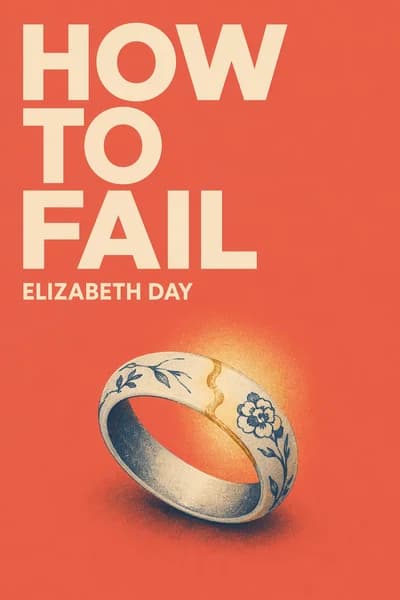
How to Fail
Panoramica di How to Fail
In "How to Fail," Elizabeth Day transforms personal setbacks into profound wisdom. This chart-topping manifesto, featuring insights from Phoebe Waller-Bridge and Lily Allen, redefines failure as our greatest teacher. What if your biggest disappointments hold the key to your ultimate success?
Temi chiave in How to Fail
- resilience through failure
- outsider perspective
- academic validation trap
- authentic identity
- social rejection
Citazioni da How to Fail
She realized she was the school joke-the weird, ugly English girl with bad clothes.
While condescending adults told her schooldays were "the best of my life," they categorically weren't.
Failure becomes almost mathematically inevitable at some point.
Everyone else seemed to be wildly experimenting while she felt pressure to conform to this non-conformity.
Personaggi di How to Fail
- Elizabeth DayAuthor and journalist who explores her failures
- Jessie BurtonNovelist who discussed academic success and identity
- Elizabeth Day's fatherA surgeon whose love of science influenced Day
Sull'autore
Sull'autore di How to Fail
Elizabeth Day, bestselling author of How to Fail: Everything I’ve Ever Learned From Things Going Wrong, is an award-winning English journalist, novelist, and podcast host renowned for her incisive explorations of vulnerability and resilience. Blending memoir and self-help, her work dissects societal perceptions of failure, a theme shaped by her 15-year journalism career at The Observer, The Sunday Telegraph, and You magazine.
She earned a British Press Award for Young Journalist of the Year. Day amplifies this mission through her globally popular podcast How to Fail with Elizabeth Day, which won the 2019 Rising Star Award and features candid conversations with icons like Phoebe Waller-Bridge and Gloria Steinem.
Her expertise in humanizing success stories extends to novels like The Party (a Richard and Judy Book Club pick) and Magpie, which explore psychological complexity and societal expectations. A columnist for The Mail on Sunday and contributor to Vogue and Harper’s Bazaar, Day’s cross-genre authority bridges literary fiction and personal growth. How to Fail became a Sunday Times top 5 bestseller, solidifying its status as a modern manifesto for embracing imperfection.
Scarica il riassunto di How to Fail
Ottieni il riassunto di How to Fail in formato PDF o EPUB gratuito. Stampalo o leggilo offline quando vuoi.
FAQ su questo libro
How to Fail explores failure as a catalyst for growth through Elizabeth Day’s personal stories, including her divorce, fertility struggles, and career setbacks. Blending memoir and self-help, it reframes failure as essential to resilience, offering insights on relationships, identity, and societal expectations. The book emphasizes self-compassion and learning from mistakes, with chapters on dating, work, and family.
This book suits readers seeking personal growth, resilience strategies, or validation during life transitions. It resonates with those navigating career changes, relationship challenges, or self-doubt. Fans of candid memoirs or podcasts like Day’s How To Fail will appreciate its conversational tone and actionable takeaways.
Yes, for its relatable storytelling and actionable advice. Reviewers praise Day’s vulnerability in discussing taboo topics like infertility and her analysis of gendered perceptions of failure. Its mix of humor and depth makes it accessible for self-help skeptics.
- Failure builds resilience when approached with self-reflection.
- Detaching self-worth from external validation (e.g., exam results or relationships).
- Embracing vulnerability as strength, not weakness.
- Recognizing societal pressures that stigmatize failure differently for men and women.
Day critiques her past tendency to prioritize partners’ needs over her own, linking this to eroded self-worth. She examines gendered expectations in modern dating, advocating for boundaries and self-respect. Her failed marriage becomes a case study in redefining success.
- “Learning how to fail is actually learning how to succeed better.”
- “Failure is not what defines us; it’s how we respond that shapes us.”
Both highlight the book’s core thesis: reframing setbacks as growth opportunities.
Day argues that professional setbacks often reveal mismatched values or hidden strengths. She encourages readers to analyze workplace failures objectively, separating personal identity from job roles. This aligns with her broader theme of detachment from outcomes.
Some may find Day’s focus on personal anecdotes over structured frameworks limiting. The book prioritizes storytelling over step-by-step guides, which could frustrate readers seeking actionable plans rather than philosophical reflections.
The book expands on her podcast’s themes, diving deeper into her own failures rather than guest stories. It complements the show by providing a memoir-style backdrop to the podcast’s interview format, enriching both mediums.
Yes. Day dissects pressures to achieve in careers, relationships, and motherhood, offering strategies to combat comparison culture. Her analysis of “failure shaming” provides tools to redefine success on personal terms.
Day argues women often internalize failure as self-defining, while men view it as situational. This disparity stems from societal narratives, and the book advocates confronting these biases to build equitable self-compassion.
Its blend of raw memoir and analytical commentary sets it apart. Unlike purely prescriptive guides, Day’s vulnerability creates emotional resonance, while her journalistic rigor provides sociological context to failure.