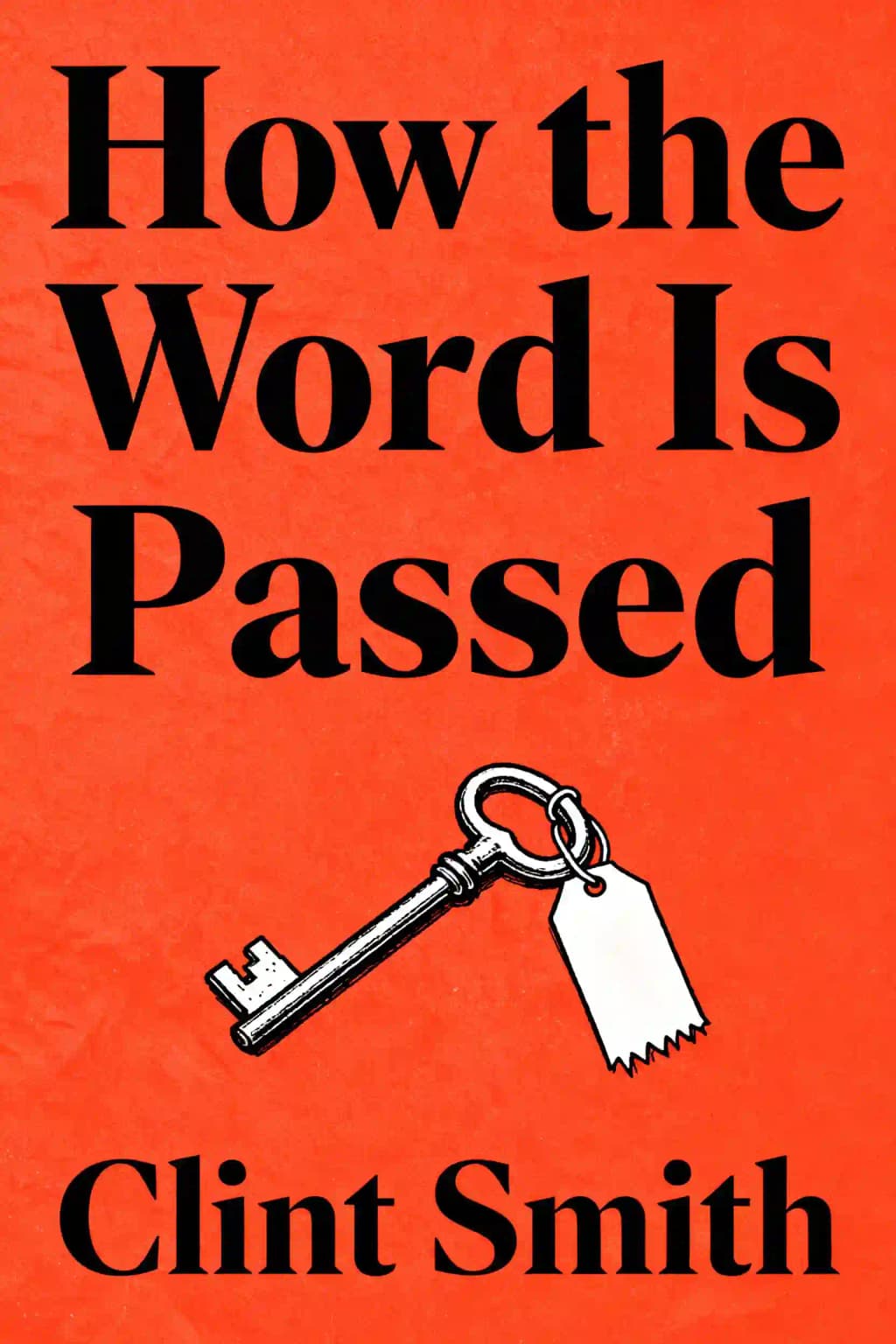
Clint Smith's #1 NYT bestseller journeys through America's slavery sites, revealing hidden histories that shape our present. John Green praised its "piercingly alive" prose while it earned the National Book Critics Circle Award by confronting truths most Americans never learned.
Clint Smith is the #1 New York Times bestselling author of How the Word Is Passed: A Reckoning With the History of Slavery Across America and Above Ground. He is also a celebrated poet, educator, and staff writer at The Atlantic.
His award-winning nonfiction work, How the Word Is Passed, won the National Book Critics Circle Award and was named one of the New York Times’ 10 Best Books of 2021. It explores the legacy of slavery through historical sites and their impact on collective memory. Born and raised in New Orleans, where Confederate monuments shaped his early understanding of racial narratives, Smith holds a Ph.D. in Education from Harvard University. He previously taught high school English, earning Maryland’s Christine D. Sarbanes Teacher of the Year award.
A National Poetry Slam champion, Smith is also the author of the poetry collection Counting Descent, a finalist for an NAACP Image Award. His writing has appeared in The New Yorker, The New York Times Magazine, and Poetry Magazine. He hosts the educational YouTube series Crash Course Black American History. How the Word Is Passed has sold over a million copies worldwide and is translated into 15 languages, cementing its role as a pivotal work in contemporary historical discourse.
How the Word Is Passed examines how America memorializes slavery through visits to historical sites like plantations, prisons, and monuments. Clint Smith, a poet and scholar, blends firsthand accounts, historical analysis, and personal reflection to reveal how systemic racism persists in cultural memory. The book challenges narratives that sanitize slavery’s legacy, urging honest reckoning with its enduring impact on racial and economic inequality.
This book is essential for readers interested in U.S. history, social justice, and antiracism education. Educators, students, and advocates will find its exploration of public memory and historical accountability particularly valuable. Smith’s lyrical prose also appeals to fans of narrative nonfiction and poetic storytelling.
Yes—it won widespread acclaim for its unflinching examination of slavery’s legacy, including a National Book Award nomination. Reviewers praise its blend of rigorous research, emotional depth, and accessible storytelling. The Christian Science Monitor calls it “a harrowing journey” that balances challenge with hope.
Smith links slavery to contemporary racial inequality, mass incarceration, and cultural erasure. For example, he analyzes Angola Prison’s origins as a plantation to show how systems of Black subjugation evolved post-emancipation. These connections underscore how systemic racism remains embedded in America’s institutions.
Key locations include:
Smith interweaves interviews with descendants, tour guides, and his own family to humanize slavery’s legacy. His grandmother’s refrain, “I lived it,” anchors abstract historical truths in lived reality. This approach fosters empathy and bridges past injustices to present-day disparities.
Some critics note Smith occasionally overreaches in drawing parallels between past and present. However, most agree his methodology—grounding analysis in specific sites—strengthens the narrative. The Christian Science Monitor praises the book’s balance of rigor and accessibility despite these minor flaws.
Smith argues memory shapes national identity: sites like Confederate monuments perpetuate false narratives, while honest storytelling (e.g., Whitney Plantation) fosters accountability. He posits that confronting “uncomfortable truths” is vital for societal progress.
These lines reflect Smith’s poetic precision and thematic depth.
Unlike purely academic texts, Smith combines travelogue, memoir, and reportage. This hybrid style echoes Isabel Wilkerson’s Caste but focuses on spatial memory. It offers a more visceral, place-based approach to understanding systemic racism.
As debates over critical race theory and monument removal persist, Smith’s work provides a framework for discussing historical accountability. Its insights into cultural erasure remain urgent amid ongoing struggles for racial equity.
The book’s site-specific chapters facilitate discussions on public history and narrative bias. Educators use group activities (e.g., “cross-chapter analyses”) to explore how location shapes historical understanding. Resources like the Zinn Education Project offer lesson plans.
Senti il libro attraverso la voce dell'autore
Trasforma la conoscenza in spunti coinvolgenti e ricchi di esempi
Cattura le idee chiave in un lampo per un apprendimento veloce
Goditi il libro in modo divertente e coinvolgente
It lives in the soil beneath our feet.
That's reality.
Lineage is a strand of smoke making its way into the sky.
How do you tell a story that has been told the wrong way for so long?
When pulled, the bell's chime reverberates like a heavy heart.
Scomponi le idee chiave di How the Word Is Passed in punti facili da capire per comprendere come i team innovativi creano, collaborano e crescono.
Distilla How the Word Is Passed in rapidi promemoria che evidenziano i principi chiave di franchezza, lavoro di squadra e resilienza creativa.

Vivi How the Word Is Passed attraverso narrazioni vivide che trasformano le lezioni di innovazione in momenti che ricorderai e applicherai.
Chiedi qualsiasi cosa, scegli la voce e co-crea spunti che risuonino davvero con te.

Creato da alumni della Columbia University a San Francisco
"Instead of endless scrolling, I just hit play on BeFreed. It saves me so much time."
"I never knew where to start with nonfiction—BeFreed’s book lists turned into podcasts gave me a clear path."
"Perfect balance between learning and entertainment. Finished ‘Thinking, Fast and Slow’ on my commute this week."
"Crazy how much I learned while walking the dog. BeFreed = small habits → big gains."
"Reading used to feel like a chore. Now it’s just part of my lifestyle."
"Feels effortless compared to reading. I’ve finished 6 books this month already."
"BeFreed turned my guilty doomscrolling into something that feels productive and inspiring."
"BeFreed turned my commute into learning time. 20-min podcasts are perfect for finishing books I never had time for."
"BeFreed replaced my podcast queue. Imagine Spotify for books — that’s it. 🙌"
"It is great for me to learn something from the book without reading it."
"The themed book list podcasts help me connect ideas across authors—like a guided audio journey."
"Makes me feel smarter every time before going to work"
Creato da alumni della Columbia University a San Francisco

Ottieni il riassunto di How the Word Is Passed in formato PDF o EPUB gratuito. Stampalo o leggilo offline quando vuoi.
What if the distance between slavery and today could be measured not in centuries, but in a single human lifetime? Ruth Odom Bonner, who stood beside the Obamas at the opening of the National Museum of African American History and Culture, was the daughter of a man born enslaved. This isn't ancient history buried in dusty archives-it's breathing, walking, living memory. The same Mississippi River that flows past New Orleans today once carried over one hundred thousand enslaved people after 1808, yet most tourist brochures remain silent. This silence isn't accidental. It's a choice we make about which stories to tell and which to bury. The question isn't whether this history exists, but whether we're brave enough to look it in the eye.