Capitolo 1
Emotions: Made, Not Found
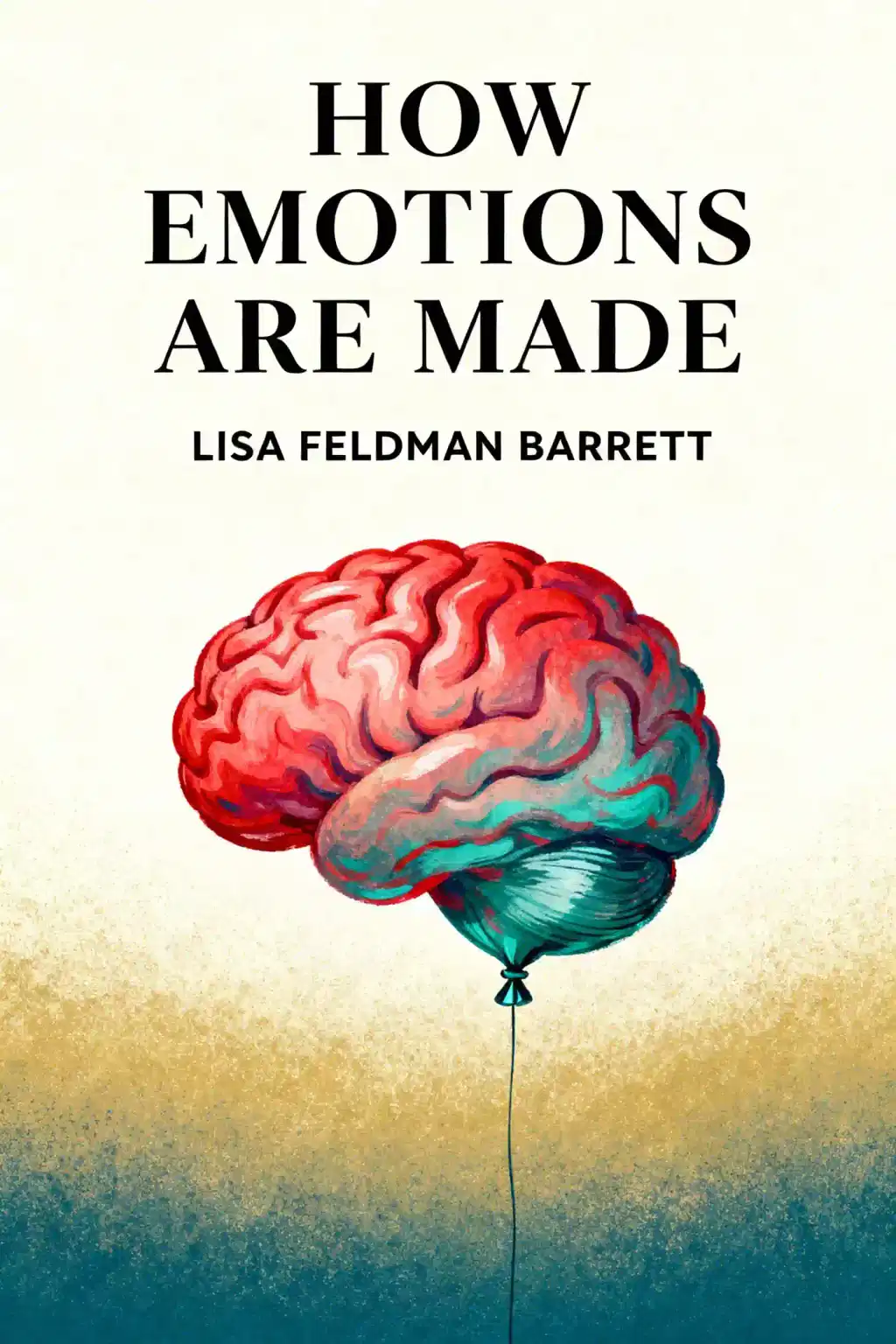
Have you ever watched someone's voice catch with emotion and felt your own stomach knot instantly? When Connecticut Governor Dannel Malloy addressed the Sandy Hook massacre in 2012, his tiny vocal waver triggered immediate tears in millions of viewers. For over 2,000 years, we've believed such emotional responses are hardwired, universal circuits in our brains that trigger automatic reactions. This view appears everywhere from textbooks to courtrooms-yet it's fundamentally wrong. Lisa Feldman Barrett's groundbreaking work has become a favorite among neuroscientists, psychologists, and cultural icons like Brene Brown precisely because it challenges this deeply entrenched belief. Named one of the most influential living psychologists, Barrett presents compelling evidence that emotions aren't built-in reactions we discover but sophisticated constructions we create. This paradigm shift is as significant as physics moving from Newton to Einstein or biology embracing Darwinian evolution. Understanding how emotions are made rather than triggered doesn't just satisfy intellectual curiosity-it transforms our approach to everything from mental health treatment to international diplomacy.
Capitolo 2
The Myth of Emotion Fingerprints
For decades, scientists have searched for distinct "fingerprints" that would identify each emotion uniquely-specific facial expressions, bodily responses, or brain activation patterns that reliably indicate anger, fear, or sadness. This classical view suggests that when you feel afraid, your amygdala activates, your heart races, and your face displays widened eyes and raised eyebrows in a universal expression recognizable across cultures.
Despite billions of research dollars and thousands of studies, these fingerprints have never materialized. When researchers place electrodes on subjects' faces during emotional experiences, the resulting muscle movements don't reliably indicate specific emotions like anger or fear-at best, they distinguish only pleasant versus unpleasant feeling. Even more damning, these measurements rarely match the posed photos used in traditional emotion recognition studies.
The evidence against bodily fingerprints is equally compelling. Four major meta-analyses covering over 220 physiology studies and nearly 22,000 subjects found no consistent, specific emotion patterns in the body. When people get angry, some fume silently, others cry, some become calculating, while others withdraw-each behavior supported by entirely different physiological patterns.
Brain imaging tells the same story. The amygdala, once considered the fear center, actually responds primarily to novelty and direct eye gaze rather than fear itself. My lab's comprehensive meta-analysis of nearly 100 neuroimaging studies spanning two decades found no neural fingerprints for any emotion. The amygdala showed increased activity in only 25% of fear experience studies-and similar activation occurred during anger, disgust, happiness, and even non-emotional states like pain or learning.
This variation isn't error or noise-it's the norm. Emotions aren't things with fingerprints but categories of diverse instances. Anger varies tremendously-you might scowl, frown, shout, laugh, or remain eerily calm depending on what serves you best in a given situation. Your heart rate might increase, decrease, or stay the same. There is no single "Anger" or "Fear" but populations of diverse instances constructed for specific circumstances.
Capitolo 3
How Emotions Are Constructed
If emotions aren't triggered by dedicated circuits, how do they arise? The theory of constructed emotion explains that in every waking moment, your brain uses past experience, organized as concepts, to guide actions and give sensations meaning. When the concepts involved are emotion concepts, your brain constructs instances of emotion through a sophisticated interplay of memory, context, and bodily sensations.
This construction process begins with your brain's constant predictions about your body's needs. Your brain doesn't passively wait for sensory input but actively simulates what it expects to encounter based on past experience. These simulations are so powerful they can cause tangible changes in your body-imagining a bee on a flower might increase your heart rate if you like bees or activate sweat glands if you've been stung before. Even reading about spicy food can trigger salivation, or thinking about an upcoming presentation might tighten your stomach muscles.
Your brain applies this same predictive process to sensations from inside your body, interpreting them through the lens of context and past experience. An ache in your stomach might be experienced as hunger at a dinner table, nausea during flu season, or mistrust in a courtroom. With emotion concepts active, that same ache might become disgust when smelling something unpleasant, longing when seeing a lover, or anxiety in a doctor's office. The physical sensation remains the same, but its emotional meaning shifts dramatically based on context.
This explains why the same bodily sensations can create different emotions in different contexts-pounding heart with buzzing bees might construct fear, but with an exciting film could construct excitement. A racing pulse during exercise is interpreted as exhilaration, while the same sensation during a job interview becomes anxiety. When I mistook flu symptoms for attraction on a first date, it wasn't an error but my brain making meaning from bodily sensations in that particular context, demonstrating how our emotional experiences are deeply influenced by situational factors.
Emotions aren't simple reactions to the world-you actively construct them through a complex process involving prediction, memory, and contextual understanding. Without concepts representing past experience, sensory inputs would just be meaningless noise. With concepts, your brain makes meaning of sensation, sometimes as emotion, drawing on a rich repository of previous experiences and learned associations. This constructionist view challenges our intuitive understanding that events trigger emotional reactions inside us, suggesting instead that emotions are mental constructions shaped by our personal history, cultural background, and current circumstances.
This understanding has profound implications for emotional intelligence and regulation. If emotions are constructed rather than triggered, we have more agency in shaping our emotional experiences than previously thought. Through understanding this construction process, we can better recognize how our predictions and concepts influence our emotional experiences, potentially allowing us to modify these constructions for better emotional outcomes.
Capitolo 4
The Brain's Prediction Machine
The brain doesn't lie dormant until stimulated-its 86 billion neurons engage in continuous intrinsic activity, structured through networks that operate like sports teams with different neurons firing in synchrony to perform the same functions. These neural networks function like well-coordinated units, with specialized groups handling specific tasks from visual processing to emotional regulation. This intrinsic activity produces dreams, imagination, mind wandering, and all sensations we experience, creating a constant stream of mental activity even when we're not actively engaged with the external world.
Trapped within the skull with only past experiences as a guide, the brain operates primarily through prediction. It constantly generates millions of predictions to anticipate everything we see, hear, taste, smell, and touch. For instance, when you reach for a coffee cup, your brain predicts its weight, temperature, and the muscle movements needed to grasp it before your hand makes contact. These predictions occur before conscious awareness, creating what scientists call "the illusion of free will." This predictive approach is far more efficient than a reactive brain, which would be too slow and metabolically expensive to keep us alive. Consider how a baseball player catches a ball - they don't calculate trajectories consciously; their brain predicts where the ball will be and moves accordingly.
Through prediction and correction, the brain creates a mental model of the world-a massive simulation constructing everything we perceive. When predictions don't match sensory input, the brain makes adjustments through prediction errors. Like a scientist, the brain makes hypotheses, tests them against data, and either revises its theories or selectively interprets evidence to maintain existing beliefs. This process is evident in optical illusions, where the brain's predictions about what it expects to see can override actual visual input. Similarly, when learning a new skill like playing piano, the brain constantly adjusts its predictions about finger movements based on feedback from mistakes.
The brain's most crucial predictions concern the body's energy needs. Any movement creates internal changes-increased heart rate, deeper breathing, changes in blood pressure. Your brain represents these internal sensations through interoception, which operates continuously even when you're resting. For example, when you're about to give a public speech, your brain predicts increased energy demands, triggering anticipatory changes in heart rate and breathing. Usually, you experience interoception only as general feelings of pleasure, displeasure, arousal, or calmness. However, sometimes intense interoceptive sensations are experienced as emotions-a key element of the theory of constructed emotion. This explains why anxiety can feel like a racing heart, or why happiness often includes a sensation of lightness in the chest.
The predictive nature of the brain also explains phenomena like placebo effects, where the mere expectation of relief can trigger real physiological changes, demonstrating how powerful these neural predictions can be in shaping our physical and emotional experiences.
Capitolo 5
The Power of Concepts and Words
When you look at a rainbow, you see discrete color bands, though in nature it's a continuous spectrum of light. Similarly, human speech is continuous, yet you hear discrete words. This remarkable process happens because your brain uses concepts to categorize continuous sensory input into meaningful units. Without concepts, you'd experience a world of ever-fluctuating noise where everything would be unlike everything else.
Concepts aren't fixed definitions or prototypes but are goal-based and context-dependent. Your brain imposes similarities between diverse instances according to your goal in a given situation. A car can be transportation, a status symbol, or even a murder weapon depending on context.
The human brain bootstraps a conceptual system through statistical learning from infancy. Babies detect patterns across sensory inputs, learning which sounds, sights, and sensations frequently occur together. Even at 10-14 months, babies act like little statisticians, forming hypotheses and making probability-based choices.
However, statistical learning alone cannot build purely mental concepts like emotions that lack consistent physical patterns. The crucial ingredient is words. Even before understanding their meaning, words introduce statistical regularities that accelerate concept learning. Words invite infants to create mental similarities among physically diverse instances, forming goal-based concepts that transcend perceptual differences.
For emotion concepts specifically, children learn through words that group diverse instances together. When parents say "angry" across various situations, the word invites the child to search for commonalities despite different physical manifestations. Evidence suggests children don't develop adult-like emotion concepts until around age three. While infants feel pleasure and distress from birth, adult-like emotion concepts develop later.
People vary dramatically in emotional granularity-the specificity of their emotion concepts. Those with high granularity possess hundreds of distinct emotion concepts, each serving multiple goals. They distinguish between related states like aggravation, irritation, frustration, hostility, rage, and disgruntlement. Those with low granularity might know emotion words but apply them all to the same general concept of "feeling unpleasant"-they navigate emotional life with just a hammer and Swiss Army knife.
Capitolo 6
The Myth of Universal Emotions
Emotions aren't built-in waiting to be revealed-they are made by us. Though emotions seem to emerge like little bombs disrupting our thoughts, or appear obvious in others' faces, these compelling personal experiences don't reveal how the brain actually creates emotion. Just as watching the sun move across the sky doesn't mean it revolves around Earth, our intuitive understanding of emotions can be deeply misleading.
A photograph showing Serena Williams's face after winning the 2008 U.S. Open appears to display terror when viewed without context. Yet once we learn she had just beaten her sister Venus in the finals, the same facial configuration takes on new meaning as triumph or exultation. This transformation occurs because emotion concepts shape perception-the word "terror" causes your brain to simulate past facial configurations associated with fear, while knowledge about tennis victories prompts simulations of exultation.
The basic emotion method asks subjects to match posed facial expressions with emotion words from a small list. While subjects from Western cultures match at about 85% accuracy and those from non-Western cultures at about 72%, this apparent universality breaks down when the method changes. When the list of emotion words is removed, forcing subjects to freely label faces, accuracy plummets to 58% or lower. This happens because the word list serves as an unintentional cheat sheet, priming subjects with emotion concepts.
To further test the role of emotion concepts, researchers visited the Himba tribe in remote Namibia. When shown facial expressions and asked to sort them, the Himba diverged significantly from Westerners-they placed smiling faces in one pile and wide-eyed faces in another, but mixed the remaining faces differently. They labeled smiles as "laughing" rather than "happy" and wide-eyed faces as "looking" rather than "fearful," categorizing facial movements as behaviors rather than emotional states.
Different cultures conceptualize emotions in fundamentally different ways. The Himba and Hadza focus on actions rather than internal states. Some Japanese emotion concepts similarly emphasize behaviors. The Ifaluk of Micronesia view emotions as transactions between people rather than internal feelings. The "six basic facial expressions" weren't scientific discoveries but stipulations by Western researchers, with actors posing them.
Capitolo 7
Emotions as Social Reality
If a tree falls in the forest with no one to hear it, does it make a sound? The scientific answer is no-a falling tree creates only vibrations that become sound when special machinery (an ear connected to a brain) receives and translates them. Similarly, an apple isn't inherently "red"-color is an experience involving reflected light, a human eye with specific photoreceptors, and a brain to make meaning of electrical signals.
These examples illustrate a fundamental distinction: between physical reality and constructed reality. We humans are architects of our own experiences, actively constructing them through prediction rather than passively detecting them. Emotions are real, but real in the same way as sounds, colors, and the distinction between flowers and weeds-they are constructed in the perceiver's brain.
Facial movements, heartbeats, and hormonal changes exist objectively, but they become emotions only when we categorize them that way. Emotions are social reality-concepts that exist because humans collectively agree they do. Like money, governments, or social status, emotions are created through collective intentionality combined with language-uniquely human capabilities that allow us to impose new functions on physical reality and communicate these concepts efficiently.
No other animals possess both collective intentionality and language like humans do. While elephants communicate through low-frequency rumblings and some great apes use limited sign language, only humans combine these abilities to bootstrap conceptual systems into developing brains.
Which comes first-concepts or words? While some concepts with statistical regularities (like faces) form before knowing their words, emotion concepts require words because they lack consistent physical fingerprints. Words create the statistical regularity needed to anchor these concepts. From childhood, hearing words like "fear" and "surprise" in specific contexts helps us develop these concepts and infer their goals.
This leads to a challenging idea: you need an emotion concept to experience or perceive that emotion. Without a concept for "Fear," you cannot experience fear. Just as you cannot see a flower without the concept "Flower," only a plant, emotions require conceptual knowledge to be experienced.
Capitolo 8
Mastering Your Emotions
Every scientific journey tells a story. Our journey reveals how emotions are made, wrapped in a larger story about human nature. For two thousand years, people have clung to beliefs about emotions despite contrary evidence, as our brains mistake perceptions for reality. This new understanding offers innovative ideas for living a fulfilling life-if your brain operates by prediction and construction and rewires through experience, then changing today's experiences can change who you become tomorrow.
The most fundamental approach to mastering emotions is maintaining a balanced body budget. Modern culture disrupts this balance through processed foods, sleep deprivation, constant connectivity, and social pressures. When body-budgeting predictions become chronically misaligned with bodily needs, people feel miserable and often self-medicate-30% of U.S. medications are taken to manage distress.
The foundation for emotional health includes eating nutritiously, exercising regularly, and getting adequate sleep. Physical comfort through massage helps your body budget via the interoceptive network, reducing inflammation. Yoga combines physical activity with slow breathing to calm you more effectively. Even your surroundings matter-less noise, more greenery, and natural light support your body budget.
Beyond body budgeting, emotional intelligence comes from developing richer emotion concepts. Rather than "detecting" emotions accurately, true emotional intelligence means constructing the most useful instance of the most useful emotion concept in a given situation.
Emotional intelligence is better understood through emotional granularity-the ability to construct fine-grained emotional experiences. To increase emotional granularity, collect new experiences through travel, reading, watching movies, and trying new foods. Learn new emotion words, especially from other languages like Dutch "gezellig" (togetherness) or Greek "enohi" (major guilt). Studies show people with higher emotional granularity visit doctors less frequently, use less medication, and spend fewer days hospitalized.
When lifestyle changes and conceptual enrichment aren't enough, you need tools to master emotions in the moment. First, simply move your body to regulate your body budget. Second, change your location to alter your predictions. Third, recategorize your feelings by distinguishing between physical discomfort and personal suffering. Learn to deconstruct emotions into mere sensations-transform anxiety into "just" a fast-beating heart. Meditation achieves something similar by teaching you to observe sensations non-judgmentally, like alert newborn babies experiencing sensations without anxiety.
Capitolo 9
Emotions and Health
Our new view of human nature dissolves boundaries between mental and physical illness. A construction approach to understanding illness explains why many disorders share symptoms, why anxiety and depression often co-occur, and why heart disease patients frequently develop depression. These seemingly distinct illnesses may be human-made ways of carving up the same biological pie, all related to a chronically imbalanced body budget and inflammation.
Your body budget fluctuates normally throughout the day as your brain shifts resources like oxygen and glucose. Short-term imbalances are normal, but prolonged budget deficits devastate health by activating your immune system's "debt collectors." Proinflammatory cytokines, normally helpful for healing injuries, become harmful when chronically present due to persistent stress. This creates a vicious cycle: inflammation causes fatigue, reduced movement, poor eating and sleeping habits, and social withdrawal-all worsening the budget imbalance.
The classical view that each mental illness has a distinct biological fingerprint is evaporating. People with the same diagnosis show diverse symptoms, while different disorders share symptoms, affect the same brain regions, and respond to the same medications. Rather than distinct essences, researchers now focus on common ingredients that create vulnerability to various disorders-genetic factors, insomnia, and damage to interoceptive networks and key brain hubs.
Stress isn't something that happens to you from outside-you construct it, just like emotion. Whether positive, negative but tolerable, or toxic and chronic, stress is a concept applied to experiences stemming from an imbalanced body budget. Chronic stress is particularly dangerous, causing atrophy in these networks and remodeling the very brain circuitry that regulates your body budget.
Pain, like stress and emotion, describes diverse experiences constructed by the brain. Your brain predicts pain based on context and prior experience, explaining phenomena like feeling pain before a needle touches your skin (nocebo effect), or the placebo effect where expecting less pain actually reduces it through chemical changes in pain-processing brain regions.
Depression isn't just one thing but a population of diverse instances often beginning with an imbalanced body budget. Rather than negative thoughts causing negative feelings, I suggest the reverse-a depressed brain makes constant withdrawals from the body budget based on past withdrawals, creating a cycle of uncorrected predictions. Your brain ignores prediction error, effectively locking you into misery like chronic pain but on a larger scale.
Capitolo 10
A New View of Human Nature
The theory of constructed emotion represents a radical reconception of human nature. Rather than being reactive animals wired to respond to external events, we are architects of our experiences. Our brains predict, construct, and act through simulation, making us active creators rather than passive responders.
The dividing line between brain and world is permeable or nonexistent. Our brains issue predictions, simulate consequences, and check against sensory input. Interoception enables us to construct the environment we experience-without it, we wouldn't notice or care about our surroundings. Simultaneously, the outside world helps wire our brains, especially in infancy when we're awash in sensory input.
The theory of constructed emotion transforms our understanding of personal responsibility. Where the classical view might partially absolve someone of responsibility for angry outbursts by blaming an "anger circuit," construction extends responsibility beyond the moment. Our predictive brains act based on all past experiences that created our concepts.
Though we can't choose the concepts put into our heads as babies, as adults we have choices about what we expose ourselves to and learn, which creates the concepts driving our actions. Responsibility means making deliberate choices to change our concepts.
We are not the pinnacle of evolution, just another species with particular adaptations. Natural selection didn't aim toward humans-we're simply creatures with specific talents for things like building rockets and creating laws. These abilities don't require dedicated brain circuitry passed down from ancestors.
One of our most notable adaptations is that we don't need to carry all genetic material to create our brain wiring. Instead, our genes allow our brains to develop in context with other brains through culture. Evolution improves its efficiency through human culture, which we pass to offspring by wiring their brains.
Construction comes in different flavors. Social construction examines how social values influence emotional perception, focusing on external circumstances without addressing brain mechanisms. Psychological construction looks inward, proposing that emotions are built from more basic parts. Unlike the classical view where emotions have dedicated brain mechanisms, construction theories assert that emotions are made, not triggered, and vary considerably across individuals and cultures.