Capitolo 1
The Power of Perseverance: How Ordinary People Achieve Extraordinary Results
Ever wonder why some people seem to achieve the impossible while others with seemingly more talent fall short? The answer isn't what you might expect. Steve Jobs had a mediocre GPA. Michael Jordan was cut from his high school basketball team. Colin Powell was an average student with little self-confidence. Yet all achieved greatness not through natural gifts but through something far more accessible to all of us: grit.
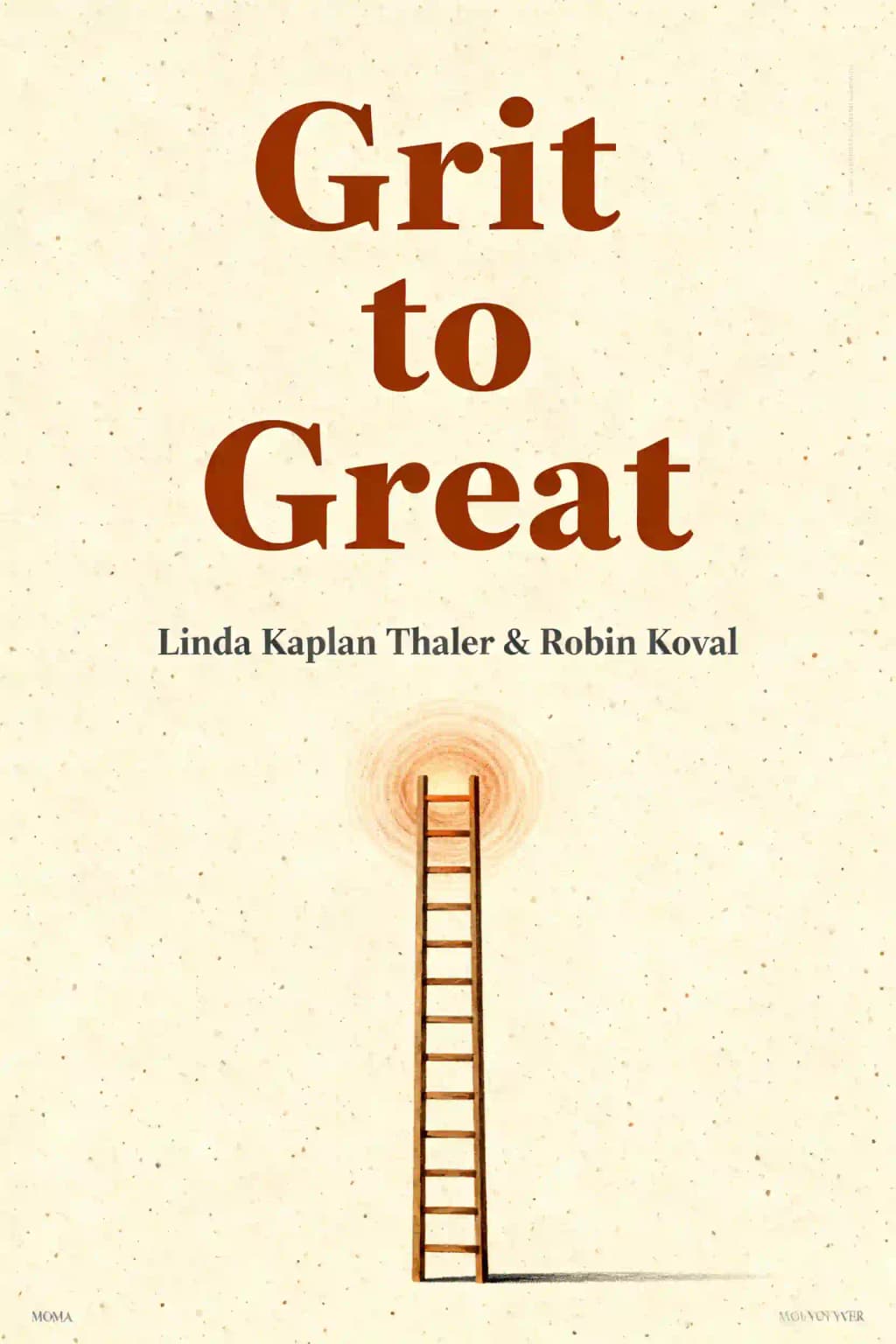
"Grit to Great" has become a cultural phenomenon since its 2015 publication, with business leaders from Silicon Valley to Wall Street citing it as essential reading. The book has been translated into 22 languages and remains on recommended reading lists at top business schools worldwide. Authors Linda Kaplan Thaler and Robin Koval bring their advertising expertise (creators of the iconic Aflac Duck campaigns) to this compelling exploration of why perseverance trumps talent. Celebrities from Oprah Winfrey to Bill Gates have praised its practical wisdom about the power of persistence in achieving meaningful success.
Capitolo 2
The Myth of Natural Talent
We've been fed a dangerous lie: that success comes primarily from innate talent. The truth? Those seemingly effortless 30-second Aflac Duck commercials that made advertising history actually required a year of production with thirty full-time team members working through endless rounds of rejection, rewrites, budget cuts, and setbacks.
Success isn't about having special gifts-it's about stamina and resilience. Without consistent application and hard work, talent remains merely potential-"a masterpiece unpainted." Psychological studies of gifted children have consistently debunked the myth that innate talent alone leads to achievement.
Angela Duckworth, a MacArthur "Genius Grant" recipient, developed a simple twelve-point scale to measure grit after noticing as a math teacher that her smartest students weren't always the highest achievers. Her test, which measures passion and perseverance for long-term goals, proved remarkably accurate at predicting success across diverse fields-from military cadets completing grueling training to National Spelling Bee champions to top-earning salespeople.
Surprisingly, Duckworth found sometimes negative correlation between high IQ and grit. Those with higher intelligence often gave up more quickly when faced with difficult tasks, while those with comparatively lower IQs had developed grittier problem-solving approaches through necessity.
Some of history's most accomplished people never even finished grade school. Thomas Edison was homeschooled after being labeled "addle-brained." When Thomas Stanley surveyed over 1,000 millionaires, their average SAT score was just 1190-above average but far below elite college requirements. Even Google stopped asking for transcripts and GPAs, finding they "don't predict anything." Instead, companies now seek "results intelligence"-the ability to deliver under pressure and bounce back from difficulties.
Lewis Terman's famous study of child geniuses showed that while "Termites" generally succeeded professionally, none achieved the extraordinary contributions he predicted, and two students he rejected won Nobel Prizes. Character, unlike talent, can be developed regardless of circumstances.
Capitolo 3
The Self-Esteem Trap
Since the 1960s, the self-esteem movement has dominated parenting and education, with psychologists insisting that praise builds confidence and success. This approach has backfired spectacularly. Children now receive trophies for losing, grades are inflated, and millennials expect swift promotions in their first jobs. Despite American students ranking low on actual skills, they rank highest in believing they're good at subjects like math.
The backlash against this movement is growing. English teacher David McCullough Jr.'s viral commencement speech told graduates, "You're not special," warning that Americans "have come to love accolades more than genuine achievement." Research shows that high self-esteem doesn't improve grades or behavior, and telling kids they're smart can be counterproductive-many don't put effort into their work or become fixated on mistakes.
Educators like Meghan Dunn are now teaching grit by pushing students out of comfort zones, encouraging problem-solving, and insisting they finish what they start. As cognitive neuroscientist Bob Deutsch notes, grit isn't all-or-nothing-it's a trait that can be developed through proper training and practice.
Growing up in the Bronx taught both authors the value of grit. Robin's parents pushed her to excel, and when her fine arts degree didn't land her a dream job, she typed her way into an ad agency, later earning an MBA to reach the corner office she craved. Linda honed her comedic skills competing for attention with her brilliant brother, then spent seventeen years in advertising where bouncing back from rejections proved more valuable than natural talent.
Sometimes the best parenting means stepping back and allowing children to fail so they can learn. Linda shares how difficult it was to teach her daughter Emily to ride a bike. For two years, Linda and her husband kept holding onto the bike, afraid to let Emily fall. When Emily was seven, a stranger in his seventies offered help. His advice was simple: Linda needed to put her hands in her pockets. Though Emily fell twice, on her third attempt, she kept riding.
Capitolo 4
The Four Ingredients of Grit
Failure is essential to developing grit, which has four key components that work together to create lasting success and achievement:
1. Guts - the courage to take on tough challenges without faltering, even when faced with uncertainty or fear. This means volunteering for difficult assignments, speaking up when others stay silent, and willingly stepping outside your comfort zone. Like Sara Blakely, who spent two years being rejected by hosiery mills before finally creating Spanx, or Howard Schultz, who was rejected by 242 investors before getting funding for Starbucks.
2. Resilience - the ability to bounce back from setbacks and use failures as learning opportunities. Jerry Seinfeld was once booed offstage and heckled mercilessly early in his career, yet returned to the same club the next night. George Foreman reclaimed the heavyweight title at age 45, twenty years after losing it. Walt Disney was fired from a newspaper for "lacking imagination." Thomas Edison famously failed 1,000 times before successfully creating the light bulb, saying he'd found 1,000 ways that didn't work.
3. Initiative - being a self-starter who finds creative solutions without waiting for direction. Richard Branson started his first business at age 16. A 13-year-old Kenyan boy named Richard Turere invented "lions light" - a system of flashing LED lights that protected his family's cattle from lions - using spare parts and self-taught electronics skills. Madam C.J. Walker saw a need for African American hair care products and built a business empire by developing solutions herself.
4. Tenacity - maintaining relentless focus on goals despite obstacles and distractions. Pablo Casals practiced cello three hours daily at age 93, saying he was still improving. Colonel Sanders was rejected 1,009 times before finding a restaurant to accept his chicken recipe. James Dyson created 5,126 failed prototypes over 15 years before perfecting his bagless vacuum cleaner.
While we can't control our circumstances, we can control how hard and passionately we work, making grit attainable for everyone regardless of natural talent. Research shows that perseverance often matters more than innate ability in achieving long-term success.
The Wendy's agency pitch exemplifies how these four components work together. When Wendy's sought a new advertising agency in 2009, the authors' relatively young agency faced 75 established competitors for the $275 million account. They showed guts by taking on industry giants, initiative through their immersive research approach, resilience through grueling critique sessions, and tenacity in their relentless pursuit of excellence.
They ordered copies of Dave Thomas's autobiography for everyone and adopted his underdog mentality, recognizing their shared business DNA with his philosophy of never cutting corners. Their team demonstrated initiative by donning aprons in Wendy's restaurants nationwide, learning firsthand about making chili and "the build of each hamburger." Back in New York, they showed tenacity through seventy-hour weeks, eating through the entire menu daily, videotaping meetings to capture every insight, and holding brutal critique sessions.
Despite canceling vacations and working through holidays, they were still struggling a week before the presentation. Their resilience showed in a creative frenzy that produced 25 TV ads, 40 radio spots, 70 billboards, website redesigns, and more in just four sleepless nights. When Wendy's ultimately chose them, saying they were convinced no one would work harder on their business, it validated that grit - the combination of guts, resilience, initiative, and tenacity - often trumps experience and resources.
Capitolo 5
Dreams Require Action
Dreams without action are just fantasies. While dreamers sleep, doers take victory laps because they wake up and get to work. The Yiddish proverb says it best: "If you want your dreams to become reality, wake up already." Setting attainable goals, formulating plans, and steadily working forward produces results that mere dreaming never will.
Linda's colleague Jim at J. Walter Thompson demonstrated the power of action over dreams. Despite his demanding executive job as chief creative officer and CEO, Jim woke before dawn daily to write for four hours before work. He published books that found small audiences but no major success, yet he persisted.
During a business trip to Rochester while Linda sat terrified of flying beside him, Jim had an epiphany about writing bestsellers: compelling characters with short chapters and twists at the end of each one. This insight led him to write "Along Came a Spider" in longhand-the first of James Patterson's 110 New York Times bestsellers, making him the top-selling writer of all time with 305 million readers worldwide.
Living in the fantasy world of "if, if, if" is a costly mistake. Research shows that visualization can actually hinder goal achievement when we focus only on the end result rather than the process. Unlike elite athletes who visualize both training and success, most people skip to the victory moment, creating a feel-good buzz that actually reduces motivation to do the real work.
NYU professor Gabriele Oettingen found that graduates who spent more time dreaming about ideal jobs fared worse than peers who avoided such fantasies-the dreamers applied for fewer positions, received fewer offers, and earned lower salaries two years later. Effective positive thinking should focus on overcoming obstacles, not just imagining success.
Capitolo 6
Embracing Calculated Risk
Fear can either control us or be overcome through preparation and mindfulness. Nik Wallenda, who walked a tightrope across the Grand Canyon without a safety net, demonstrates how becoming your own first responder-identifying worst-case scenarios and training for them-allows you to calmly respond rather than hastily react when challenges arise.
When properly trained, we can perform extraordinarily under pressure. Flight attendant Lee Yoon-Hye demonstrated this during the Asiana Flight 214 crash in San Francisco, carrying passengers to safety on her back despite having a fractured tailbone. "We followed our training," she said. "I wasn't really thinking, but my body just started carrying out the steps needed for an evacuation."
Too often in daily life, we rig ourselves with unnecessary safety nets, remaining frozen at the starting line rather than taking risks. We default to fearing disaster instead of planning for it-the true catastrophe.
Rejection can be transformed from a source of pain into a catalyst for growth. When entrepreneur Jia Jiang faced devastating rejection from an investor, he chose to embrace rejection rather than retreat. Inspired by "Rejection Therapy," he challenged himself to be rejected once daily for 100 days, recording each attempt.
While many requests were indeed rejected-Costco wouldn't let him use their intercom, strangers wouldn't loan him money-he began getting surprising yeses. A Krispy Kreme employee created Olympic-ring doughnuts for him at no charge, making his video go viral. Through this experiment, Jiang discovered rejection isn't "this monster bag of hurt" but merely someone's opinion. The experience transformed him into "a better communicator, a better negotiator" and ultimately led to a book deal about the power of rejection.
In Silicon Valley's hypercompetitive environment, Google manager Sabrina Farmer battled "impostor syndrome"-dismissing her abilities as luck while anticipating failure. After reflexively claiming she "could never" run a triathlon, she questioned this self-limitation, trained, and completed not just a triathlon but a marathon. Though she didn't enjoy running, she gained crucial insight: her habit of self-doubt served as emotional protection but ultimately held her back.
Capitolo 7
The Power of Patience
Achievement requires patience and delayed gratification. Between effort and accomplishment lies the tedious waiting period filled with endless practice and repetition. Whether training for a marathon or pursuing a degree, the initial excitement fades as the finish line remains distant, making it tempting to abandon our goals for immediate comfort.
Humans naturally prefer instant gratification (what psychologists call "temporal discounting"), explaining why we choose immediate rewards over greater future benefits. Yet we can manage our impulses through simple techniques. Linda uses a treadmill trick-starting at maximum incline and decreasing it every three minutes, making her workout literally go "downhill" so she's motivated to finish. Robin walks two blocks before considering a cab, by which time she's usually enjoying the walk.
History shows the power of perseverance-Susan B. Anthony never saw women gain voting rights despite fifty years of advocacy; Van Gogh sold only one painting in his lifetime; the Washington Monument stood unfinished for decades. Yet their grit-that combination of passion and perseverance-ultimately transformed our world.
Mike Moore's battle against Big Tobacco exemplifies how passion fuels perseverance against overwhelming odds. As Mississippi's attorney general, Moore pursued a radical legal strategy: suing tobacco companies to recover state Medicaid costs for treating smoking-related illnesses. Despite being ridiculed by Mississippi's governor, denied federal support, prohibited from using state resources, and facing sixty-three tobacco industry lawyers with his three-person team, Moore persisted.
He gradually built alliances with other state attorneys general while tobacco lobbyists orchestrated hate mail campaigns that threatened his career. After four exhausting years, Moore triumphed with the Master Settlement Agreement, securing hundreds of billions from Big Tobacco. "Determination is going to keep you going a lot longer than money or adoration," Moore explained, demonstrating how passionate belief can sustain you through years of waiting for results.
Long-term projects require celebrating smaller milestones to maintain motivation. In advertising pharmaceutical campaigns, which can take years before FDA approval, the team celebrates good meetings and favorable test scores to sustain morale. At the Truth Initiative, Robin sends weekly emails highlighting small achievements like increased YouTube views or website sign-ups while waiting for long-term research results.
Capitolo 8
Flexibility: Bending Without Breaking
Like bamboo that bends rather than breaks in strong winds, resilience and flexibility are essential components of grit. In our rapidly changing world, the ability to adapt to shifting landscapes-from work challenges to personal crises-determines our success.
When faced with extreme adversity, human adaptability becomes crucial for survival. Linda's cousin Edith Weill demonstrated this during WWII when her family was sent to a Nazi internment camp. About to be transported to Auschwitz, she fabricated an elaborate story claiming Christian heritage when a sympathetic French policeman suggested this might save them. Despite months of interrogation by a camp official known as "the Butcher," she maintained every detail of her fabrication for three years, keeping her family alive until liberation.
Arthur, an electrician who lost three fingers in a lawn mower accident, demonstrates how optimism transforms challenges. Initially devastated and fearing the end of his career, Arthur was encouraged by his doctor's perspective that he'd lost the fingers he could best afford to lose. This reframing helped Arthur recover, return to work, and eventually become a respected foreman known for his positive attitude and self-deprecating humor. When asked if he needs a hand, he quips, "No, but I could use three fingers!"
Optimism is essential for resilience, but failure can be equally powerful in driving us to work harder. In Silicon Valley, failure has become a badge of honor among entrepreneurs, with business schools studying it intensely. Successful people like Oprah Winfrey (demoted from her first anchor job), Dr. Seuss (rejected by 27 publishers), and James Dyson (failed 5,000+ times before creating his vacuum) all used failure as fuel. Dyson claims, "You never learn from success, but you do learn from failure," demonstrating how each setback reshaped his invention into something groundbreaking.
Changing perspective transforms challenges into opportunities. Danny Flamberg exemplifies the growth mindset through his remarkable career transitions-from rabbi to economist, media producer, marketing executive, and digital advertising expert. His "long series of zigs and zags" demonstrates how curiosity and optimism enable adaptation.
Stanford psychologist Carol Dweck contrasts this growth mindset with a fixed mindset: those believing intelligence is unchangeable give up when challenged, while those seeing abilities as developable through dedication persevere. Jim Abbott, who pitched a no-hitter despite being born without a right hand, and Haskell Wexler, the color-blind cinematographer who won two Oscars, both refused to be limited by their disabilities. Instead, they developed unique approaches that turned potential disadvantages into distinctive strengths.
Capitolo 9
Grit Has No Age Limit
Like bamboo that continually reaches for the sky despite harsh conditions, human grit knows no age limit. James Henry's story exemplifies this truth-at 96, after hiding his illiteracy his entire life, he not only learned to read but wrote a bestselling memoir. His determination demonstrates that cognitive limits we associate with aging are largely self-imposed.
Science confirms that our brains remain plastic throughout life, strengthening with new challenges regardless of age. Ruth Hamilton blogged until 109, George Weiss created an award-winning game at 84, and Chris Moon completed marathons after losing an arm and leg. Diana Nyad's remarkable Cuba-to-Florida swim at 64 proves that determination can sometimes outweigh youthful physical advantages. Her mantra-"Don't ever give up. You can chase your dreams at any age"-challenges conventional wisdom about achievement timelines.
Our culture's obsession with youth and overnight success creates unrealistic pressure, particularly on millennials. With endless "thirty under thirty" lists, 63% of global consumers believe our youth fixation has gone too far. This impatience robs us of appreciating the tenacity required for long-term achievement. Creative success spans all ages-Picasso produced daring work in his eighties, yet we fixate on prodigies. The authors themselves founded their advertising agency in their forties, defying the industry's youth bias.
Genevieve Damaschi's story perfectly illustrates age-defying grit. Unable to afford ice skates as an orphan during the Depression, she finally pursued her skating dream in her forties after raising three daughters. Rising at 5 a.m. to train alongside Olympic hopefuls, she eventually won a national gold medal for mixed-pairs ice dancing at age 52, with a sixteen-year-old partner. Her triumph on Olympic ice in Lake Placid during the 1980 Olympic year proved that determination could overcome decades of delay.
Our beliefs about age can physically limit us. In Ellen Langer's groundbreaking study (later replicated on the BBC show "The Young Ones"), elderly participants lived for a week in an environment designed to look like 1975, when they were in their twenties. The results were remarkable-one participant who arrived in a wheelchair could walk with a cane by week's end, while others regained manual dexterity, experienced improved eyesight and decreased blood pressure. Simply changing their perception of time reversed physical limitations, suggesting that how we think about aging significantly impacts our capabilities.
Capitolo 10
Grit for the Greater Good
Our brains are hardwired for altruism-not as an end in itself but as an evolutionary survival strategy. Early humans learned that cooperation and sharing resources ensured group survival, creating behavioral patterns that evolved into our "group-minded" psychology.
Scientific research shows that helping others triggers brain activity in pleasure and reward regions, making altruism intrinsically satisfying. This explains why people run toward danger to help strangers during crises like the Boston Marathon bombing or why healthcare workers risk their lives fighting Ebola. Interestingly, the harder the problem, the more satisfaction we feel trying to solve it-what researchers call the "Ikea effect," where people value something more when they've worked hard to create it.
Navyn Salem, a stay-at-home mom with a communications degree and marketing experience, transformed her desire to help into meaningful action. After seeing a factory in Tanzania employing local women to make mosquito nets and watching a "60 Minutes" segment about Plumpy'Nut, she persistently pursued the French inventors until they agreed to partner with her.
Despite enormous challenges-government red tape, staffing issues, legal complications, and balancing family responsibilities with her mission-Salem established Edesia in Rhode Island as a nonprofit factory. Working without compensation, she has helped treat malnutrition for over 2.5 million children in more than 44 countries, demonstrating how determination can overcome seemingly insurmountable obstacles.
Character building forms the foundation for making positive change in the world. The KIPP school network's motto "Work hard. Be nice" exemplifies this approach, as does Leticia Van de Putte's family ethos. Growing up in a Mexican-American family in Texas, Van de Putte learned from her pharmacist grandfather that passionate work helping others isn't really work at all. Despite facing discrimination and personal tragedies, she maintained her commitment to public service as a Texas legislator and later mayoral candidate. Her "ganas" (Spanish for grit) drove her to persevere through personal loss while fighting for her community.
The "happiness paradox" suggests that true happiness comes not from pursuing it directly but as a side effect of dedicating oneself to something greater. Trevor Houser's journey exemplifies this principle. From high school dropout facing prison time to international climate negotiator, Houser transformed his life through determination and service. After getting treatment instead of prison, he worked humble jobs as a busboy and butcher's assistant while voraciously reading the New York Times. Despite setbacks including a brain tumor, he persevered through education at CCNY, an internship in Beijing, and eventually joined the Obama administration negotiating climate agreements.
Brian Bob, who overcame reading difficulties himself, has dedicated 25 years to helping homeless youth at Covenant House. His tough-love approach with a meth-addicted teen named Ray exemplifies how grit can be transmitted to others. After numerous failed attempts to help Ray, Bob took him to Skid Row to show him his likely future. Ten years later, Ray returned-not as an addict, but as a successful construction company owner donating $10,000 to Covenant House. Ray credited that pivotal moment on Skid Row as his motivation to get clean.
Whether addressing world hunger like Salem, serving underrepresented communities like Van de Putte, tackling climate change like Houser, or fighting homelessness like Bob, these individuals demonstrate how grit enables ordinary people to make extraordinary differences. As the authors conclude, "Grit is the great equalizer in life, because anyone, at any time, whatever their background or resources, can lay claim to it."