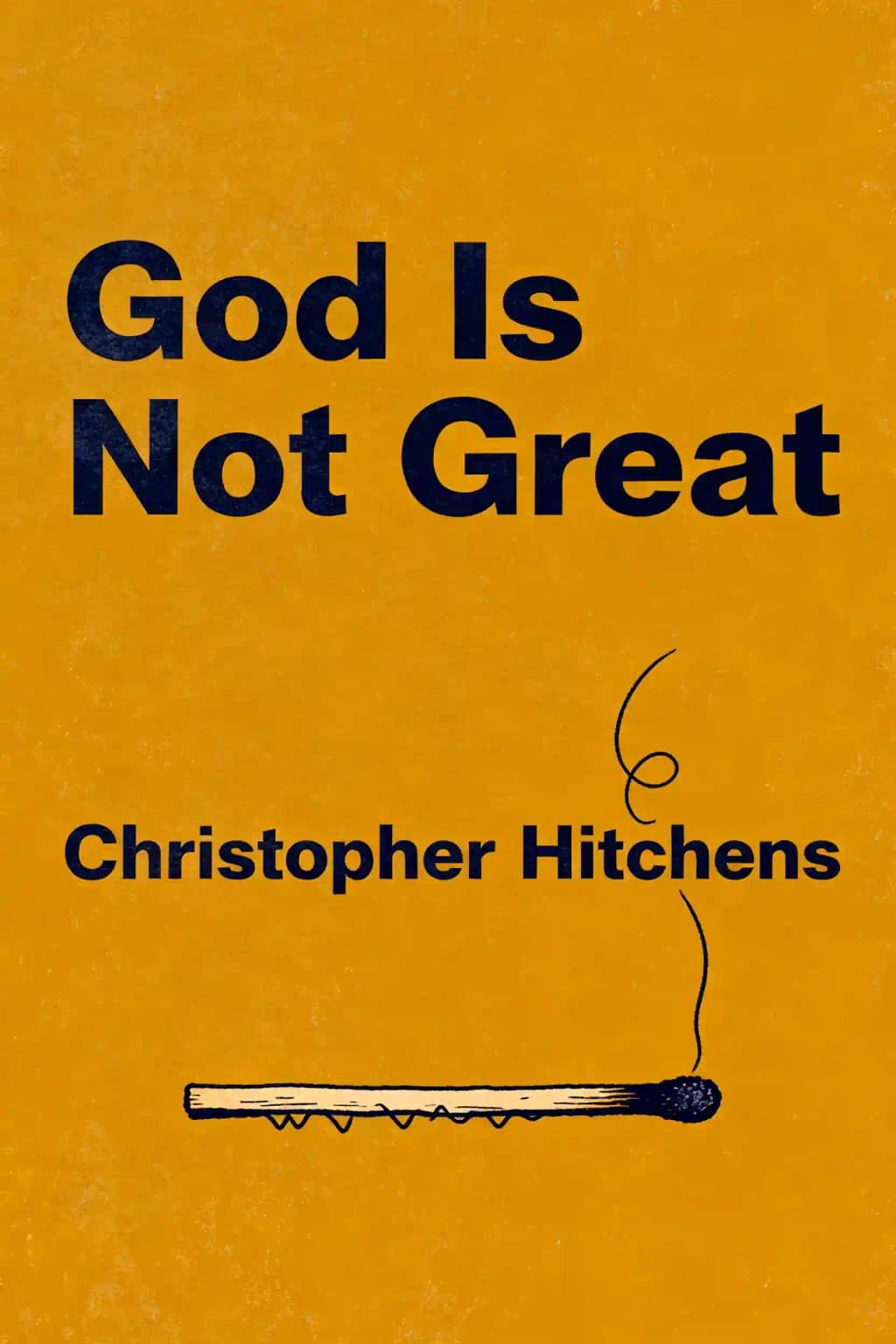
Hitchens' controversial masterpiece dismantles religion with razor-sharp wit. Nominated for a National Book Award, it sparked "The Four Horsemen" discussion with Dawkins and Harris. Debated worldwide, it asks: What if humanity's greatest moral progress comes from abandoning faith entirely?
Senti il libro attraverso la voce dell'autore
Trasforma la conoscenza in spunti coinvolgenti e ricchi di esempi
Cattura le idee chiave in un lampo per un apprendimento veloce
Goditi il libro in modo divertente e coinvolgente
Have you ever wondered why religious conflicts seem so intractable? Christopher Hitchens argues that religion itself is the problem-not just bad religion or extremism, but faith at its core. Religion represents humanity's first and worst attempt to make sense of reality, a primitive framework we've desperately outgrown. When Mrs. Jean Watts, my childhood teacher, claimed God made vegetation green specifically to soothe human eyes, the logical flaw was obvious even to a child: why wouldn't an all-powerful creator simply design our eyes to appreciate whatever colors existed naturally? This simple question reveals how religious explanations consistently crumble under scrutiny. Religious conflicts-from Belfast to Baghdad-demonstrate faith's unique capacity to make compromise impossible. When you believe you're acting on divine commands, negotiation becomes blasphemy. The Rushdie affair perfectly illustrated this dynamic. After Khomeini's fatwa against Salman Rushdie, many Western religious leaders, while not endorsing the death sentence, nevertheless criticized Rushdie for "offending" religious sensibilities. The message was clear: religious feelings deserve special protection from criticism, even at the cost of free expression. Religion's peculiar obsessions-from dietary restrictions to sexual repression-reveal its arbitrary nature. Consider the widespread prohibition against pork, which serves primarily as a religious boundary marker rather than addressing any genuine moral concern. In medieval Spain, eating pork became a test of Christian conversion for Jews, while today some religious conservatives demand censorship of even fictional pigs in children's stories.
Scomponi le idee chiave di God Is Not Great in punti facili da capire per comprendere come i team innovativi creano, collaborano e crescono.
Distilla God Is Not Great in rapidi promemoria che evidenziano i principi chiave di franchezza, lavoro di squadra e resilienza creativa.

Vivi God Is Not Great attraverso narrazioni vivide che trasformano le lezioni di innovazione in momenti che ricorderai e applicherai.
Chiedi qualsiasi cosa, scegli la voce e co-crea spunti che risuonino davvero con te.

Creato da alumni della Columbia University a San Francisco
"Instead of endless scrolling, I just hit play on BeFreed. It saves me so much time."
"I never knew where to start with nonfiction—BeFreed’s book lists turned into podcasts gave me a clear path."
"Perfect balance between learning and entertainment. Finished ‘Thinking, Fast and Slow’ on my commute this week."
"Crazy how much I learned while walking the dog. BeFreed = small habits → big gains."
"Reading used to feel like a chore. Now it’s just part of my lifestyle."
"Feels effortless compared to reading. I’ve finished 6 books this month already."
"BeFreed turned my guilty doomscrolling into something that feels productive and inspiring."
"BeFreed turned my commute into learning time. 20-min podcasts are perfect for finishing books I never had time for."
"BeFreed replaced my podcast queue. Imagine Spotify for books — that’s it. 🙌"
"It is great for me to learn something from the book without reading it."
"The themed book list podcasts help me connect ideas across authors—like a guided audio journey."
"Makes me feel smarter every time before going to work"
Creato da alumni della Columbia University a San Francisco

Ottieni il riassunto di God Is Not Great in formato PDF o EPUB gratuito. Stampalo o leggilo offline quando vuoi.