Doesn't Hurt to Ask
Using the Power of Questions to Communicate, Connect, and Persuade
Panoramica di Doesn't Hurt to Ask
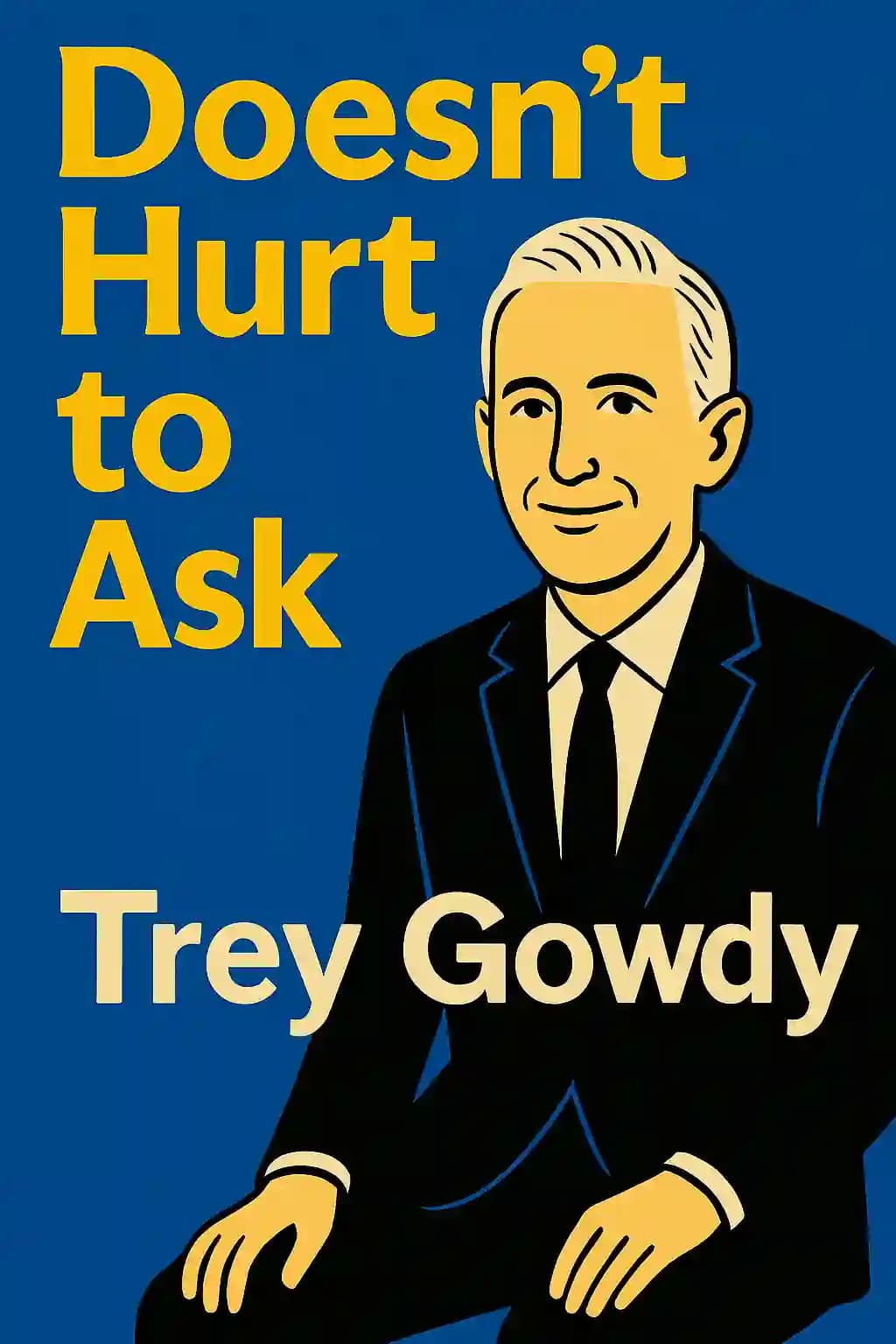
In "Doesn't Hurt to Ask," #1 NYT bestselling author Trey Gowdy reveals how masterful questioning transforms communication. Endorsed by Fox's Dana Perino as "a must-read for success," this former prosecutor's techniques work everywhere from boardrooms to bedrooms. Ready to persuade like a pro?

Temi chiave in Doesn't Hurt to Ask
- persuasive questioning
- courtroom logic
- strategic inquiry
- truth seeking
- argumentative advocacy
Citazioni da Doesn't Hurt to Ask
Asking questions is the best way to learn.
What works in court works in real life.
There absolutely are stupid questions.
To be truly persuasive, you must first be persuadable yourself.
While debating is science, persuasion is art.
Personaggi di Doesn't Hurt to Ask
- Trey GowdyAuthor, former federal prosecutor and congressman
- Judge Randy BellSouth Carolina Court of Appeals judge and mentor
- David MahaffeyChildhood friend whose passing sparked questions
- Trey Gowdy's motherVictim advocate who shaped his legal commitment
Sull'autore
Sull'autore di Doesn't Hurt to Ask
Trey Gowdy is the #1 New York Times bestselling author of Doesn’t Hurt to Ask and a former federal prosecutor, four-term U.S. Congressman, and Fox News host renowned for his expertise in legal strategy, persuasion, and decision-making.
A Spartanburg, South Carolina native, Gowdy’s career spans high-profile roles as a U.S. Attorney prosecuting complex federal cases, 7th Circuit Solicitor championing criminal justice reforms, and chairman of the House Oversight Committee. His book blends political memoir with practical guidance on communication, reflecting his decades of courtroom and congressional experience interrogating witnesses and navigating bipartisan negotiations.
Gowdy amplifies his insights as host of Sunday Night in America with Trey Gowdy on Fox News and The Trey Gowdy Podcast, where he analyzes legal and cultural issues. He co-authored Unified with Senator Tim Scott and penned Start, Stay, or Leave, a framework for life-altering decisions. Doesn’t Hurt to Ask has cemented its status as a modern leadership classic, praised for bridging legal rigor with accessible storytelling.
Scarica il riassunto di Doesn't Hurt to Ask
Ottieni il riassunto di Doesn't Hurt to Ask in formato PDF o EPUB gratuito. Stampalo o leggilo offline quando vuoi.
FAQ su questo libro
Doesn't Hurt to Ask teaches persuasion through strategic questioning, blending courtroom and congressional case studies with practical communication frameworks. Trey Gowdy explains how to identify objectives, understand audiences ("personal juries"), and craft questions that drive connection and change in workplaces, homes, and public settings.
Professionals, leaders, and anyone seeking to improve persuasive communication will benefit. The book suits lawyers, managers, parents, and advocates navigating negotiations, presentations, or difficult conversations. Gowdy’s advanced examples cater to readers familiar with formal argumentation.
Yes, for its actionable advice on persuasion via questioning. While some find Gowdy’s courtroom/political examples niche, reviewers praise its humility, humor, and applicability to everyday scenarios like job interviews or family discussions.
Key frameworks include:
- Objective Identification: Clarify your goal before engaging.
- Personal Jury Analysis: Tailor messaging to your audience’s biases.
- Question-Driven Persuasion: Use inquiries to guide others toward self-realization.
Gowdy dissects high-stakes scenarios like his Hillary Clinton and James Comey interrogations, his first murder trial missteps, and debates on criminal justice reform. These illustrate how questioning techniques succeed (or fail) under pressure.
Some readers find Gowdy’s legal/political examples overly complex for casual learners. One reviewer noted the need to simplify anecdotes for broader accessibility, though others appreciated the advanced perspective.
The book offers tactics for job interviews, salary negotiations, and team leadership. Gowdy’s “question-first” approach helps reframe self-promotion as collaborative problem-solving, aligning personal goals with organizational needs.
Your “personal jury” is any decision-maker you need to persuade. Gowdy advises profiling their values, biases, and communication preferences to tailor arguments effectively—whether addressing CEOs, spouses, or community groups.
Yes, Gowdy warns against unprepared assertions, closed-ended questions, and ignoring audience cues. He shares his “blue bag” trial blunder—asking redundant questions that undermined credibility—to highlight the cost of poor phrasing.
Unlike generic self-help guides, Gowdy’s book merges legal rigor with political storytelling. It’s more tactical than How to Win Friends and less academic than Influence, focusing on structured questioning over broad theory.
Gowdy argues that empathetic questioning resolves conflicts by uncovering shared goals. Examples include diffusing family tensions and rebuilding trust, emphasizing listening over lecturing.
Notable lines:
- “Movement requires persuasion.”
- “A stupid question is better than a stupid assertion.”
- “Your jury isn’t listening until they feel heard.”
These encapsulate the book’s focus on humility and strategic dialogue.