Capitolo 1
When Wolves Choose Their Warriors
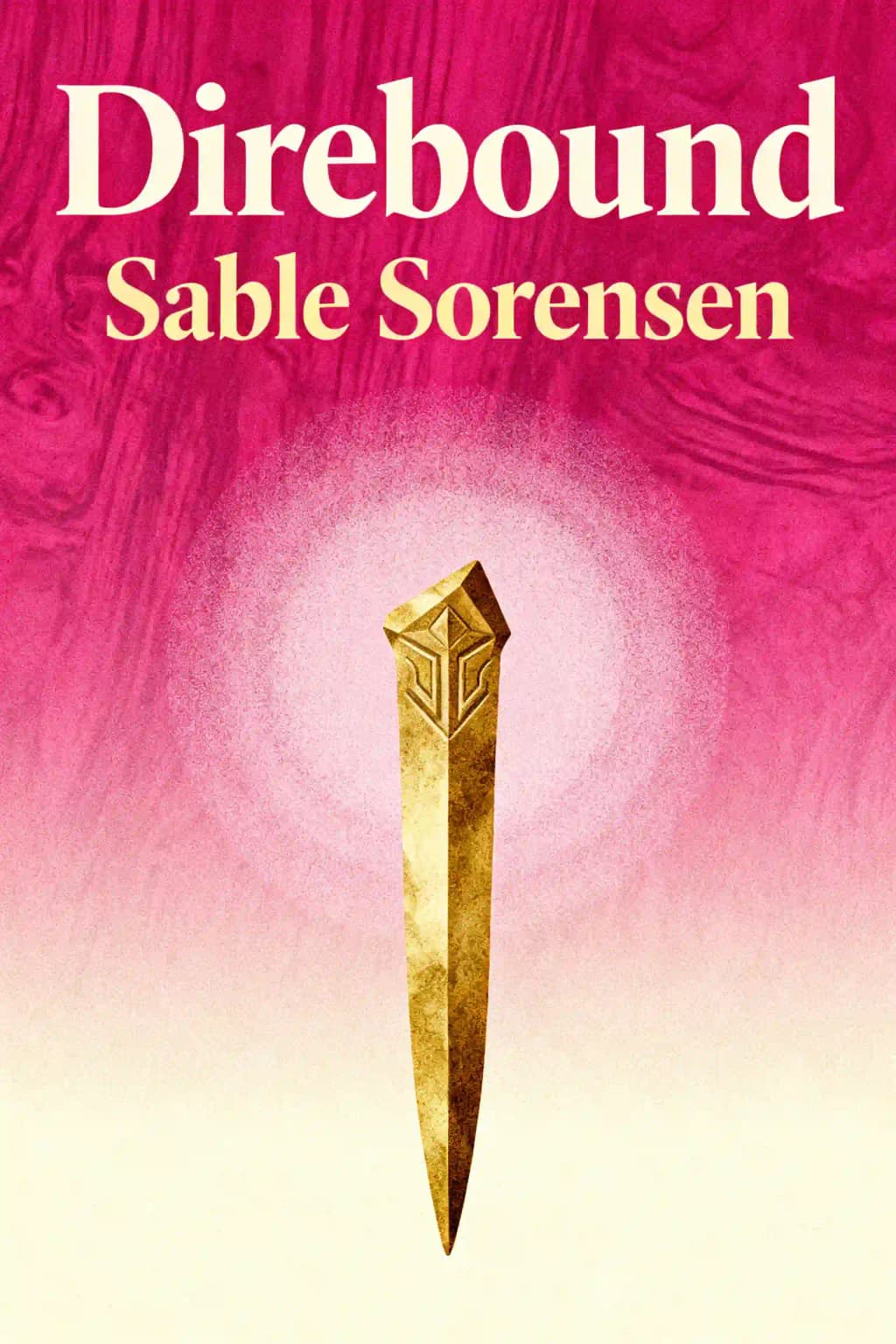
In the heart of a divided kingdom, where direwolves choose their human partners through brutal trials, one woman's desperate search for her missing sister would uncover secrets that could topple a dynasty. "Direbound" has captivated readers worldwide with its perfect blend of fantasy, romance, and political intrigue. This debut novel from writing duo Sable Sorensen has earned praise from BookTok influencers and fantasy enthusiasts alike, with #DirewolfRomance trending across social platforms. The book's exploration of class division and female empowerment resonates particularly with young adult readers, while its spicy romance scenes have made it a favorite recommendation among romance readers looking for fantasy crossovers. Even "Game of Thrones" author George R.R. Martin reportedly praised its fresh take on human-animal bonds in fantasy settings.
Capitolo 2
From Street Fighter to Reluctant Hero
Meryn Cooper navigates a world sharply divided by wealth and status, where the gleaming towers of the Western Quarter cast long shadows over the crumbling tenements of the East. As an undefeated street fighter in the notorious fighting pits of the Eastern Quarter, she channels her rage into survival, winning brutal matches that leave her scarred but ensure food on the table. Every morning, she divides her meager winnings between medicine for her mother's increasingly erratic episodes and school fees for her brilliant younger sister Saela, supplementing their income by taking in washing from wealthy households.
Her carefully balanced life finds unexpected grace through Lee, a compassionate royal servant who becomes more than just her sister's savior. Their relationship blooms in stolen moments - shared meals in hidden courtyards, quiet conversations in the pre-dawn hours before Lee's palace duties begin. For the first time, Meryn glimpses a future beyond day-to-day survival.
This fragile peace shatters when the Nabbers emerge from the shadows. These mysterious kidnappers strike without warning, leaving only empty beds and broken families in their wake. Parents whisper of children vanishing from locked rooms, of strange marks found on doorways, of shadows that move against the light. When Saela disappears - her bed still warm, her latest engineering project half-finished on her desk - Meryn's world implodes.
Desperate for answers, she makes the radical decision to enlist in the army, knowing they patrol the borderlands where rumored slave markets operate. Instead, she's blindsided by selection for the Bonding Trials - a brutal tradition she's only heard about in tavern tales. The trials force recruits to scale Mount Wolfsbane, a treacherous peak where ancient direwolves den in caves of black ice. Many recruits die on the climb, their bodies lost to bottomless crevasses or frozen forever in the mountain's unforgiving embrace.
During the ascent, Meryn forms an unlikely alliance with the twins Izabel and Venna - aristocratic daughters of a disgraced house seeking redemption. Together they navigate not just the physical dangers but the savage politics of the climb, where privileged recruits think nothing of cutting ropes or triggering avalanches to eliminate competition.
The bond with Anassa - the legendary silver direwolf known for rejecting every potential partner for centuries - transforms Meryn both physically and mentally. Beyond her signature silver hair, she gains enhanced strength and speed, along with a mental link that connects her to both wolf and mountain. This unwanted bond forces her into the elite Strategos pack, tactical masterminds who coordinate between the other specialized direwolf units: the Swift pack's scouts, the Shadow pack's assassins, and the Storm pack's front-line warriors.
Meryn's resistance to her new status provides a scathing lens on Nocturna's social hierarchy. While Bonded warriors feast in marble halls and train with enchanted weapons, she can't forget the sight of children fighting over scraps in Eastern Quarter alleys. Her street-fighting background - considered crude by traditional warriors - proves invaluable in the political arena of the Bonded, where formal duels mask assassination attempts and alliances shift like mountain winds. Yet every moment spent mastering her new abilities feels like a betrayal of Saela, lost somewhere in the darkness beyond the city walls.
Capitolo 3
A World Where Bonds Mean Life or Death
The world of Nocturna is built upon the mystical connection between direwolves and their human riders. This bond goes far beyond simple companionship-it's a magical fusion that transforms both parties, granting enhanced abilities while creating a dangerous dependency. If a wolf dies, its rider follows; if they're separated too far, excruciating pain ensues. The newly formed bond is particularly fragile, making the training period a dangerous time for Rawbonds like Meryn.
The four direwolf packs form the backbone of Nocturna's military and social structure. The Strategos are the tacticians with silver wolves and foresight abilities; Daemos are the warriors with black wolves and enhanced strength; Kryptos are the spies with gray wolves and concealment magic; and Phylax are the guardians with brown wolves and protective abilities. Each pack has distinct training methods and cultural traditions, with fierce loyalty within packs and complex rivalries between them.
What makes this magical system particularly fascinating is how the bond affects both parties. When Meryn finally opens herself to Anassa, she experiences the world through enhanced wolf senses-smelling emotions, seeing in darkness, hearing distant conversations. Simultaneously, the wolves gain human strategic thinking and emotional complexity. This creates a symbiotic relationship where neither is complete without the other.
The bond also creates a hierarchy that mirrors real-world power structures. Those born to Bonded families receive superior training, equipment, and social standing, while common-born recruits like Meryn face constant discrimination. The system is maintained through brutal "trials" that eliminate those deemed unworthy-the Purge Trial forces wolves to kill their weakest packmates, while the Voice Trial tests communication between wolf and rider through deadly obstacle courses.
This magical system serves as a perfect metaphor for how power structures perpetuate themselves through violence disguised as tradition. As Meryn questions why they must kill each other when they need every warrior against their common enemy, she's told simply, "These Trials are created by and for the direwolves." The unquestioning acceptance of this brutality by those who benefit from it reflects how real-world inequalities are often justified through appeals to nature or tradition.
Capitolo 4
A Forbidden Romance with Royal Consequences
The heart of Direbound's emotional journey is Meryn's complex relationship with Lee, who is revealed to be Crown Prince Killian Valtiere in disguise. Their year-long romance before the story begins established genuine trust and intimacy, making his deception all the more devastating when revealed. During a formal Presentation ceremony where nobles evaluate new Rawbonds, Meryn is shocked to discover her beloved Lee is actually the crown prince of Nocturna.
Their relationship evolves through several phases-initial betrayal and fury, reluctant reconciliation, passionate reunion, and ultimately a horrifying revelation that transforms their love story into something far darker. What makes their dynamic so compelling is how it intertwines personal feelings with political consequences. When Killian proposes marriage, Meryn's acceptance would make her queen, potentially giving her the power to reform the system from within.
The romance features several memorably steamy scenes that reveal character through intimacy. When Meryn returns traumatized from interrogating a prisoner, Killian binds her wrists to his headboard, providing the control and safety she needs to surrender her emotional burdens. These moments of vulnerability contrast sharply with her public persona as a fierce warrior, showing how trust and power exchange function differently in their private world.
What elevates this beyond a typical fantasy romance is how it explores consent and agency. Meryn's initial bonding with Anassa happens against her will, violating her bodily autonomy. Similarly, her relationship with Killian becomes increasingly problematic as his true nature is revealed. The parallel between these two bonds-one with her wolf and one with her lover-raises questions about the nature of consent when power dynamics are unequal.
The romance takes a shocking turn when Meryn discovers Killian's true identity as a Siphon-a vampiric creature using blood magic to possess bodies through generations. This transforms their love story into a tale of manipulation and betrayal, with the engagement bracelet he gave her revealed as a magical binding device. The emotional whiplash of discovering her beloved is actually her greatest enemy creates a devastating conclusion that sets up the sequel's revenge plot.
Capitolo 5
The Burden of Leadership in a Broken System
Meryn's unexpected elevation to Alpha of the Strategos pack creates a compelling exploration of leadership under pressure. As a common-born outsider thrust into command of elite warriors who've trained their entire lives for this role, she faces resentment, sabotage, and her own self-doubt. Her journey from reluctant recruit to capable leader forms the emotional core of her character development.
What makes this leadership arc particularly effective is how it builds on Meryn's existing strengths while forcing her to develop new ones. Her street fighting experience gives her combat skills, but she must learn strategy, diplomacy, and how to inspire loyalty rather than fear. The brutal training sessions with Stark Therion, Alpha of the Daemos pack, push her beyond her physical and mental limits, transforming her from a scrappy fighter into a disciplined warrior.
The novel doesn't shy away from the moral compromises leadership demands. During the Purge Trial, Meryn must participate in culling "weaker" packmates to maintain her position. Later, she mercy-kills her friend Henrey when his wolf turns on him, making the difficult decision that spares him a more painful death. These moments force her to balance pragmatism against her moral code, showing how power corrupts even those with good intentions.
Meryn's leadership style evolves throughout the novel. Initially, she tries to maintain emotional distance from her packmates, seeing them as privileged enemies. Gradually, she builds genuine connections with Izabel, Venna, and Tomison, learning to trust others after a lifetime of self-reliance. By the novel's climax, she's able to break the king's mental control over her pack through their unity bond, showing how true leadership comes from mutual respect rather than domination.
This leadership journey serves as a microcosm for larger questions about reforming corrupt systems. Can Meryn change the brutal traditions of the Bonded from within, or is the entire structure too rotten to salvage? Her eventual discovery that she's the rightful queen of Nocturna transforms her personal struggle into a political revolution, suggesting that sometimes systems must be overthrown rather than reformed.
Capitolo 6
The Price of Power: Magic, Sacrifice and Control
The magic systems in Direbound operate on principles of sacrifice and exchange, creating moral dilemmas that drive the plot. The bond between direwolves and humans offers tremendous power-enhanced senses, magical abilities, extended lifespans-but at the cost of independence. If one dies, both perish; if separated, they suffer excruciating pain. This symbiotic relationship raises questions about whether any power is worth such vulnerability.
More sinister is the Siphons' blood magic, which literally consumes life to fuel power. The revelation that King Cyril has been kidnapping children to drain their blood for magical rituals creates a stark contrast between power gained through mutual exchange (the direwolf bond) and power stolen through exploitation (blood magic). This dichotomy reflects real-world power structures where privilege often comes at the expense of the vulnerable.
What makes the magic particularly compelling is how it manifests differently based on character. The four direwolf packs each channel magic uniquely-Strategos through foresight and communication, Daemos through combat enhancement, Kryptos through concealment, and Phylax through protection. These specializations create natural interdependence between packs while allowing for distinct cultural identities.
The novel explores how magic becomes a tool of control through the king's wolf-pommel sword, the Diren Bld. This artifact can compel direwolves and their riders to obey, overriding their free will. When Meryn seizes this weapon during her assassination attempt, she briefly holds this terrible power before realizing its corrupting influence. The parallel to real-world weapons of mass destruction is clear-power that controls others ultimately corrupts its wielder.
Perhaps most disturbing is the transference magic revealed in the novel's climax. Killian explains that the original Siphon, Alistair Brightbane, has been transferring his consciousness through generations of kings, essentially possessing their bodies. This immortality through consumption of others represents the ultimate corruption of power-maintaining control by literally consuming others' lives and identities.
The novel leaves readers questioning whether any power is worth its price. Meryn's discovery of her true identity as the rightful queen presents her with a terrible choice-embrace the power needed to save her kingdom, knowing it may corrupt her, or reject it and allow others to suffer. This moral dilemma elevates the story beyond typical fantasy tropes, asking whether the ends ever justify such terrible means.
Capitolo 7
The Shadows of the Past: Hidden History and Forgotten Queens
The mystery of Nocturna's true history forms a compelling subplot that gradually takes center stage. Throughout the novel, Meryn experiences disturbing visions-blood seeping down walls, whispers no one else hears, shadows moving with purpose. Initially dismissed as signs of madness like her mother's, these experiences are revealed to be fragments of suppressed memories from her royal bloodline.
The official history taught to all citizens claims Nocturna began five hundred years ago when King Cyril's ancestor received the Diren Bld from the Faceless Goddess to control wolves and fight Siphons. However, Meryn discovers ancient texts revealing a different truth-Nocturna was originally ruled by a matrilineal line of Bonded warrior queens called the Sturmfrost Queens, who partnered with direwolves through mutual respect rather than domination.
This revelation transforms the novel from a coming-of-age story into a political revolution. Meryn's "madness" is actually her suppressed heritage crying out, and her mother's seemingly delusional drawings of a crown with two wolves were ancestral memories. The discovery that Meryn is the rightful queen of Nocturna, descendant of Queen Chiara who was murdered by the Siphon Alistair Brightbane, recontextualizes the entire power structure of their world.
What makes this historical mystery particularly effective is how it's revealed through physical artifacts. Meryn finds a carved image of the Sturmfrost crown behind a tapestry, glimpses something metallic beneath the arena drain, and discovers her mother's journals filled with drawings matching ancient texts. These tangible connections to the past make the revelation feel earned rather than convenient.
The suppression of this history through a Siphon blood curse that prevents the Bonded from speaking about the Sturmfrost royals serves as a powerful metaphor for how dominant powers erase inconvenient histories. Just as real-world colonizers have rewritten the histories of conquered peoples, the Brightbane dynasty has literally cursed people to forget the truth of Nocturna's past.
This historical revelation sets up the novel's climactic twist-Meryn's discovery that she is the rightful queen, and her decision to reclaim her throne by assassinating the false king. When she places the ancient crown on her head, her dormant magic awakens, connecting her to centuries of queens before her. This moment transforms her personal quest to save her sister into a revolution that could restore Nocturna's true heritage.
Capitolo 8
The Monster Within: Violence and Its Consequences
One of Direbound's most nuanced themes is how violence transforms those who wield it. Meryn begins as a street fighter who uses violence defensively to protect herself and earn money. Her skills come from necessity rather than cruelty, and she takes no particular pleasure in hurting others. However, as she progresses through Bonded training, her relationship with violence evolves in disturbing ways.
The kill tattoos that mark Bonded warriors' bodies serve as physical manifestations of this transformation. Each time Meryn takes a life-whether an attacker in the corridors, an enemy Siphon, or a packmate during the Purge Trial-Stark adds another tattoo to her neck. These marks form a collar that visually represents how violence binds and changes her. By the novel's end, she's begun to take pride in these marks, seeing them as proof of her strength rather than reminders of lives taken.
Particularly disturbing is Meryn's interrogation of the captured Siphon. When torture fails to produce information about the missing children, she decapitates him with a bone saw while he's still alive, feeling "Anassa's pride in my brutality while I feel nothing but hollowness." This moment shows how the direwolf bond amplifies her capacity for cruelty, blurring the line between necessary violence and sadism.
The novel doesn't shy away from showing how institutional violence corrupts everyone involved. The Bonding Trials themselves are revealed to be unnecessary bloodsport-not actually required by the direwolves as claimed, but instituted by the king to control their population. The casual acceptance of this brutality by the Bonded elite shows how privilege blinds people to the suffering that maintains their status.
What elevates this exploration of violence beyond typical fantasy fare is how it acknowledges the psychological toll. After killing the Siphon prisoner, Meryn feels "nothing but hollowness"-violence has emptied her of emotion rather than satisfying her rage. Similarly, when she mercy-kills Henrey during the Unity Trial, she can't join the celebration afterward, haunted by blood "still trapped beneath my fingernails." These moments show violence as traumatic rather than cathartic, even when necessary.
By the novel's climax, Meryn has become capable of the ultimate violence-regicide. Her assassination of King Cyril is presented as justified given his crimes, yet the ease with which she takes this step shows how far she's traveled from the street fighter who fought only when necessary. The question remains whether she can reclaim her throne without becoming the monster she's fighting against.
Capitolo 9
The True Nature of Monsters: Enemies Hidden in Plain Sight
The novel's most shocking revelation transforms its central romance into its darkest horror. Throughout most of the story, the Siphons are presented as distant enemies-vampiric creatures from Astreona who use blood magic and mind control. They're the reason for Nocturna's military preparations and the justification for the brutal Bonding Trials. Yet the true monster is revealed to be hiding in plain sight-Crown Prince Killian himself.
This twist works brilliantly because it's carefully foreshadowed. Killian's secrecy about his royal identity establishes his capacity for long-term deception. His father's disturbing interest in the children's prison hints at a family legacy of exploitation. Even Anassa's consistent warnings against trusting him suggest something sinister beneath his charming exterior. When Killian is revealed as not just a Siphon but the vessel for Alistair Brightbane-the original Siphon who killed Queen Chiara five hundred years ago-it recontextualizes the entire romantic arc.
What makes this revelation particularly devastating is how it exploits Meryn's vulnerability. After losing her mother and failing to find Saela at the Siphon temple, Killian's support becomes her emotional anchor. His proposal offers not just love but legitimacy in a world that has marginalized her. The discovery that this comfort was manipulation-that he sought her out specifically because of her Sturmfrost bloodline-transforms their love story into a predator-prey relationship.
The novel subverts expectations by revealing that Stark-the brutal, tattooed warrior Meryn feared-has actually been her family's sworn protector all along. His apparent cruelty during training was preparation for the battles ahead, and his mate bond with Anassa explains their secret communications. This reversal challenges assumptions about who deserves trust based on appearance or social position.
This theme extends to the direwolves themselves. Initially presented as dangerous beasts who choose riders based on mysterious criteria, they're revealed to be victims of the king's control through the Diren Bld sword. The Bonding Trials that cull their numbers weren't created by wolves but imposed by humans to limit their population. This revelation transforms them from willing participants in a brutal system to oppressed beings fighting for freedom alongside their human partners.
By the novel's end, traditional categories of monster and hero have been thoroughly dismantled. The handsome prince is the true monster; the brutal warrior is the loyal protector; the "madwoman" was seeing truth all along. These reversals leave readers questioning their own assumptions about power, appearance, and who deserves trust in systems built on deception.
Capitolo 10
A Legacy of Blood: Family, Fate, and Freedom
At its heart, Direbound is about the tension between inherited destiny and personal choice. Meryn's journey begins with a simple motivation-finding her kidnapped sister Saela-but evolves into a discovery of her royal bloodline and the responsibilities it entails. The revelation that she is the rightful queen of Nocturna transforms her understanding of her mother's "madness" and her own disturbing visions. What seemed like mental illness was actually suppressed heritage struggling to surface.
This theme manifests physically through blood imagery throughout the novel. The arena floor is soaked with generations of blood; the Diren Bld sword's name literally means "blood"; Siphons use blood magic for power; and the Sturmfrost bloodline carries magical abilities that activate when Meryn claims her crown. Blood represents both inheritance and sacrifice-what we're born into and what we're willing to die for.
Family bonds form the emotional core of Meryn's motivation. Her fierce protection of Saela drives her initial enlistment, and her mother's death deepens her determination. When she discovers Saela has been transformed into a Siphon-Killian's "parting gift"-it creates the novel's final moral dilemma: can she save her sister from this monstrous transformation, or must she kill what Saela has become?
The direwolf packs create alternative family structures that both complement and compete with blood ties. As Meryn bonds with Izabel, Venna, and Tomison, she finds a chosen family that supports her in ways her blood family couldn't. The pack unity bond-where minds connect during battle-creates intimacy beyond what's possible in human relationships. Yet these bonds also demand terrible sacrifices, as shown when wolves turn on their riders during the Purge Trial.
What elevates this exploration of family beyond typical fantasy tropes is how it acknowledges the complexity of inheritance. Meryn's Sturmfrost bloodline gives her claim to the throne, but also burdens her with centuries of oppression and violence. The crown that represents her birthright also represents the system that has caused so much suffering. Can she reclaim her heritage without perpetuating its worst aspects?
By the novel's end, Meryn stands at a crossroads between inherited destiny and chosen path. She has claimed her crown and acknowledged her bloodline, but must decide what kind of queen she will become. Will she perpetuate the cycle of violence that has defined Nocturna for centuries, or forge a new relationship between humans, direwolves, and power itself? The novel leaves this question unresolved, setting up the sequel's exploration of how to break cycles of violence that seem written in blood.