Discover how Marie Antoinette weaponized fashion as political rebellion. Weber's groundbreaking analysis reveals why the queen's wardrobe choices sparked revolution - a cultural phenomenon that continues influencing designers and challenging our understanding of history's most misunderstood royal.
Caroline Elizabeth Weber, author of Queen of Fashion: What Marie Antoinette Wore to the Revolution, is a Pulitzer Prize-finalist historian and professor of French literature at Barnard College, Columbia University. A Yale-trained scholar of 18th-century France, Weber combines rigorous academic expertise with accessible storytelling, specializing in the intersection of politics, culture, and self-expression through fashion.
Her groundbreaking analysis of Marie Antoinette’s sartorial strategies—which reframed clothing as a tool of rebellion—emerges from decades studying revolutionary-era texts and material culture.
Weber’s acclaimed works include Terror and Its Discontents (2003), examining revolutionary rhetoric, and Proust’s Duchess (2018), a Pulitzer-finalist biography exploring fin-de-siècle aristocracy. A Guggenheim Fellow and French Heritage Society Award winner, she contributes to The New York Times, Vogue, and co-hosts a literary podcast dissecting Proust’s worldview.
Queen of Fashion, recognized as a New York Times Notable Book and Washington Post Best Book of the Year, has become essential reading for historians and fashion enthusiasts alike. Weber is currently completing a study of Victorian-era royalty’s decline, further cementing her reputation as a preeminent voice in cultural history.
Bedtime Biography: Queen of Fashion by Caroline Weber explores how Coco Chanel and Marie Antoinette used fashion as a tool for political influence and personal reinvention. The book traces Chanel’s rise from poverty to revolutionizing women’s clothing with practical designs, while also examining Marie Antoinette’s strategic use of opulent styles to navigate court politics before the French Revolution.
This book is ideal for fashion enthusiasts, history buffs, and readers interested in women’s empowerment. Weber’s dual focus on Chanel’s minimalist innovations and Marie Antoinette’s extravagant self-expression offers insights into how clothing shapes identity and societal roles across different eras.
Yes—Weber’s engaging storytelling and meticulous research make it a compelling read. The book bridges fashion, biography, and social history, revealing how two iconic women defied norms to leave enduring legacies. Critical acclaim highlights its accessibility for both casual readers and academics.
Weber argues that Chanel and Marie Antoinette wielded fashion as a form of agency. Chanel’s rejection of corsets symbolized women’s liberation, while Marie Antoinette’s bold styles challenged royal austerity, inadvertently fueling public resentment before the Revolution.
Chanel popularized practical designs like jersey fabric and the little black dress, prioritizing comfort over restrictive Victorian trends. Her minimalist aesthetic redefined women’s wardrobes, emphasizing versatility and understated elegance.
Marie Antoinette’s lavish gowns and daring hairstyles, though innovative, alienated the French public during economic crises. Weber shows how her sartorial rebellion became a political liability, contributing to her downfall.
Weber draws from letters, diaries, and archival materials, including rare essays by Marcel Proust discovered during her work on Proust’s Duchess. This rigorous approach lends depth to her analysis of 18th- and 20th-century fashion.
Both women used fashion to assert autonomy in male-dominated societies: Chanel through democratizing style, and Marie Antoinette through theatrical self-presentation. Weber contrasts their strategies to highlight fashion’s dual role as empowerment and provocation.
Some scholars argue Weber overstates fashion’s role in historical events, noting broader socioeconomic factors behind Marie Antoinette’s fate. However, most praise the book for its original lens on gender and culture.
The book underscores fashion’s enduring link to identity and resistance. Chanel’s legacy in contemporary “quiet luxury” trends and Marie Antoinette’s influence on gender performativity remain widely studied.
Yes—Blinkist offers a 15-minute summary, while platforms like Audible feature narrated editions. Weber’s vivid prose translates well to audio, enhancing accessibility.
Like Queen of Fashion and Proust’s Duchess, it blends biography with cultural analysis, focusing on women who shaped history through creativity. Weber’s expertise in French aristocracy and literature ties these projects together.
Senti il libro attraverso la voce dell'autore
Trasforma la conoscenza in spunti coinvolgenti e ricchi di esempi
Cattura le idee chiave in un lampo per un apprendimento veloce
Goditi il libro in modo divertente e coinvolgente
Versailles was no ordinary palace but a magnificent political machine.
Her body, as her mother had warned, was decidedly not her own.
Everything depends on the wife.
Courtiers in France were even more the slaves of fashion than of the prince.
Oh this is odious! What an inconvenience!
Scomponi le idee chiave di Bedtime Biography in punti facili da capire per comprendere come i team innovativi creano, collaborano e crescono.
Vivi Bedtime Biography attraverso narrazioni vivide che trasformano le lezioni di innovazione in momenti che ricorderai e applicherai.
Chiedi qualsiasi cosa, scegli il tuo stile di apprendimento e co-crea intuizioni che risuonano davvero con te.

Creato da alumni della Columbia University a San Francisco
"Instead of endless scrolling, I just hit play on BeFreed. It saves me so much time."
"I never knew where to start with nonfiction—BeFreed’s book lists turned into podcasts gave me a clear path."
"Perfect balance between learning and entertainment. Finished ‘Thinking, Fast and Slow’ on my commute this week."
"Crazy how much I learned while walking the dog. BeFreed = small habits → big gains."
"Reading used to feel like a chore. Now it’s just part of my lifestyle."
"Feels effortless compared to reading. I’ve finished 6 books this month already."
"BeFreed turned my guilty doomscrolling into something that feels productive and inspiring."
"BeFreed turned my commute into learning time. 20-min podcasts are perfect for finishing books I never had time for."
"BeFreed replaced my podcast queue. Imagine Spotify for books — that’s it. 🙌"
"It is great for me to learn something from the book without reading it."
"The themed book list podcasts help me connect ideas across authors—like a guided audio journey."
"Makes me feel smarter every time before going to work"
Creato da alumni della Columbia University a San Francisco

Ottieni il riassunto di Bedtime Biography in formato PDF o EPUB gratuito. Stampalo o leggilo offline quando vuoi.
In May 1770, a fourteen-year-old girl stood on a small island between two kingdoms, weeping as strangers stripped away everything she owned-her gowns, her jewels, even her beloved pug. This wasn't a kidnapping. It was a wedding ritual. Marie Antoinette was being transformed from an Austrian archduchess into French property, and the message was unmistakable: her body, her image, her very identity now belonged to France. Yet over the next twenty-three years, this displaced teenager would turn the very tool of her oppression-fashion-into a weapon of political defiance. Her story reveals how clothing became a battlefield where a powerless queen fought for autonomy in a world that demanded her total submission.
Versailles was a glittering prison where aristocrats competed to watch royalty perform mundane tasks. Marie Antoinette discovered that even bathing required an audience of hundreds, despite wearing a long cotton gown. The morning dressing ritual proved worse: protocol forbade her from dressing herself, and if a higher-ranking princess arrived mid-ceremony, the entire process restarted by rank, leaving her shivering naked while servants juggled her chemise. One freezing morning, she erupted: "Oh this is odious! What an inconvenience!" Her outburst ricocheted through the palace, damaging her precarious position. Meanwhile, her marriage remained unconsummated for seven years. Maria Theresa's letters from Vienna offered only relentless pressure: "Everything depends on the wife." But how could Marie Antoinette succeed in a role demanding she be simultaneously visible and invisible, worshipped yet powerless?
Three days before her fifteenth birthday, Marie Antoinette mounted a horse wearing men's breeches-and the court gasped. In French court culture, equestrian dress carried profound political meaning. Since medieval times, the ideal monarch was a warrior-king on horseback, a strategy Louis XIV perfected through hunting to showcase authority. Catherine the Great understood this. After overthrowing her husband, she appeared at her first military review astride a horse in a male officer's uniform and feathered tricorn hat-the message was clear: she could do a man's job. Unable to assert authority through pregnancy, Marie Antoinette followed suit. She commissioned portraits showing herself in masculine riding garb-blue habit, breeches, high yellow boots-sitting confidently astride a rearing horse in poses deliberately echoing Louis XIV. Maria Theresa was horrified, warning that riding "like a man, dressed as a man" was "dangerous as well as bad for bearing children-and that is what you have been called upon to do." Yet this was precisely the point. Marie Antoinette rejected the "womanly" measure of success through procreation, claiming instead a masculine imperial lineage. Her cross-dressing wasn't frivolous fashion but calculated political theater-a desperate bid for relevance in a court where she possessed neither her husband's affection nor any official power.
At Louis XVI's June 1775 coronation, twelve princes in ermine surrounded him as he received Charlemagne's symbols of power. Yet beneath the jubilation, he gasped: "The crown is hurting me." Meanwhile, nineteen-year-old Marie Antoinette watched from her grandstand, her face merely the midpoint between her towering powdered hairstyle topped with white feathers and her sapphire-laden gown. Her hair had become a three-foot-tall political billboard. The pouf-a revolutionary headdress built on wire, cloth, gauze, horsehair, and teased hair-transformed women's appearance into personalized mobile advertisements. Created by Rose Bertin and Monsieur Leonard, these elaborate constructions featured miniature still-lifes expressing feelings or commemorating events. Marie Antoinette wielded them brilliantly. Her coiffure a l'Iphigenie featured black mourning ribbons and a crescent moon, celebrating Gluck's opera-a tribute to her childhood music tutor and a reminder of her successful cultural intervention against Madame Du Barry's opposition. Even more audacious was the pouf a l'inoculation, unveiled after she convinced Louis XVI to undergo smallpox inoculation-common in Austria but controversial in France. The gigantic pouf featured Aesculapius's serpent twined around an olive tree, with a golden sun representing Louis XIV's glory. The deliberate ambiguity: was this glory returning through Louis XVI or through his consort? As she told her brother: "I allow the public to believe I have more credit with the King than I do in reality, because if people didn't believe me on this point, I would have less power still." Her strategy worked-courtiers commented on her apparent dominion, and ministers showed increased deference.
When Louis XVI gifted Marie Antoinette the Petit Trianon in 1774, she transformed it into a locked sanctuary requiring personal invitation-unlike Versailles where rank determined access. By withdrawing from scrutiny, she seized control of her image and power. Her fashion was revolutionary. She abandoned restrictive panniers for the robe a la polonaise with ankle-exposing swags. Most radical was the gaulle: a white muslin shift from Caribbean colonial wear, worn over flexible cloth instead of stays, accessorized with ribbon sashes and unpowdered, loose hair. She rejected ostentatious fabrics and jewel tones for "bourgeois" greys, beiges, and subtle pastels. Between 1783 and 1787, she constructed the Hameau-a picturesque village where royals frolicked among perfumed sheep and drank milk from Sevres porcelain cups reportedly molded on her own breasts. The irony was exquisite: by playing peasant, she asserted supreme privilege. All Trianon regulations were issued "By Order of the Queen"-an unprecedented feminization of monarchical decree that symbolically transformed even Louis XVI into just another subject.
In August 1784, Cardinal de Rohan met a woman in Versailles' moonlit Grove of Venus whom he believed was Marie Antoinette. Dressed in the Queen's signature white gaulle, she gave him a rose before vanishing. This encounter, orchestrated by his lover Comtesse de La Motte, convinced Rohan the Queen favored him. La Motte then claimed Marie Antoinette desperately wanted a 2,800-carat diamond necklace but couldn't purchase it openly. Rohan bought it for 1.6 million livres and gave it to La Motte. When the scheme unraveled in August 1785, Rohan produced a letter signed "Marie Antoinette of France"-the monarchs immediately identified the forgery, as royal protocol required only Christian names. At trial, France confronted a devastating question: Was Rohan guilty of "criminal presumption," or was such behavior plausible from their Queen? On May 31, 1786, the Parlement narrowly acquitted Rohan, citing the Queen's "reputation for frivolity and indiscretion" as making his mistake "entirely plausible." Her white gaulle-the same style that had caused portrait scandals-became evidence against her character. Fashion had become her prosecutor. As one observer noted: "The Revolution was already present in the minds of those who could contemplate such an insult to the King."
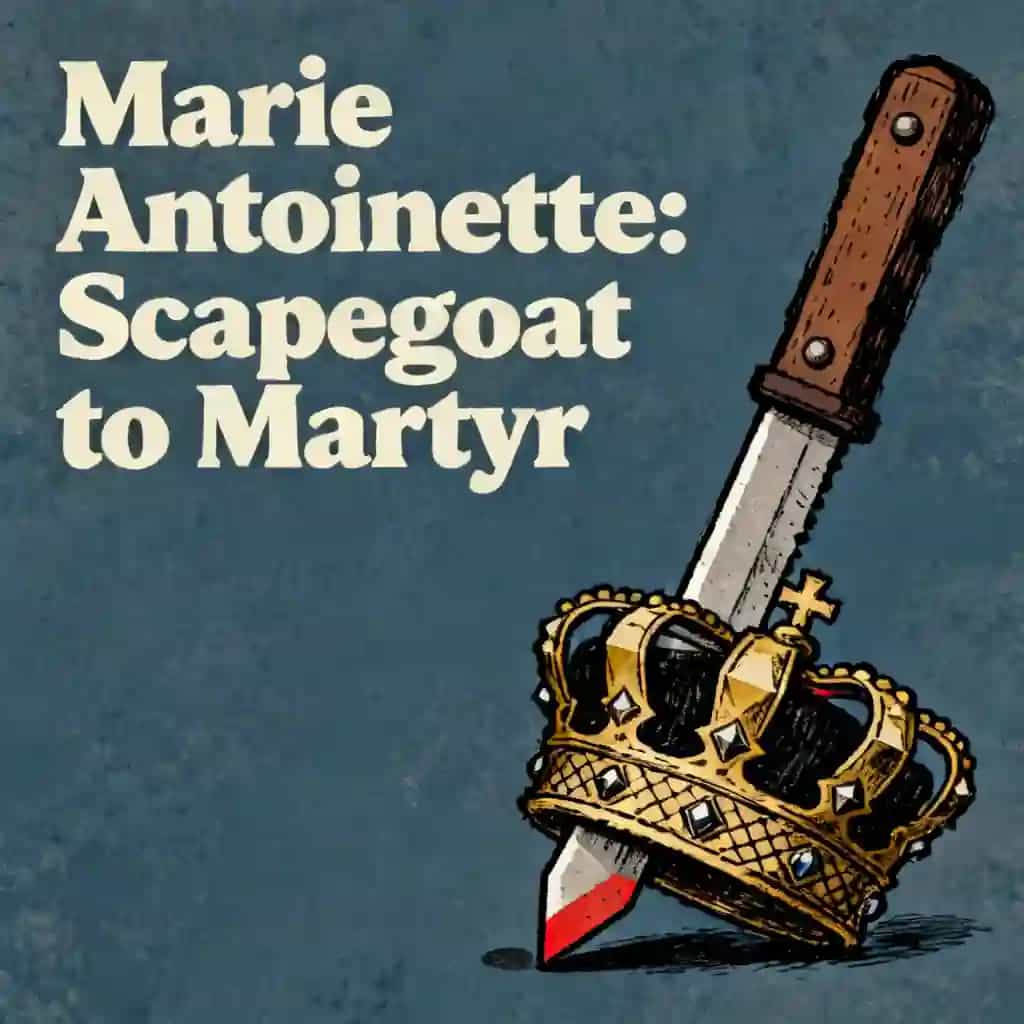
On October 16, 1793, republican officials forbade Marie Antoinette from wearing her black mourning gown to the scaffold, fearing it might inspire sympathy. She transformed this indignity into her most brilliant fashion statement. After drafting a farewell letter, she shed her ragged black dress and clothed herself in pristine white: plum-black shoes, fresh white underskirt, clean white chemise, the white deshabille dress from the Temple, and her prettiest muslin fichu. She removed even the black ribbons from her widow's coif, creating a simple ruffled linen bonnet as colorless as her hair. Pale from blood loss, she became a figure of pure, radiant white-stunning the crowds into silence as she traveled to the guillotine in an open cart. This final ensemble condensed her entire fashionable past into one devastating image: the color of the fleur-de-lys, of bridal complexions, of powdered heads, of the gaulle, of diamonds and feathers, of the monarchist cockade, of martyrdom and eternal life. White-the color of the pages on which her story would be written again and again. She had spent twenty-three years using fashion to claim autonomy in a world determined to own her. Even her executioners couldn't control her final appearance. The displaced girl who once wept on an island between kingdoms had the last word-spoken in the universal language she had mastered: the silent, devastating eloquence of what we choose to wear when everything else has been taken away.