Capitolo 1
The Divine Odyssey: Finding God Through Self-Realization
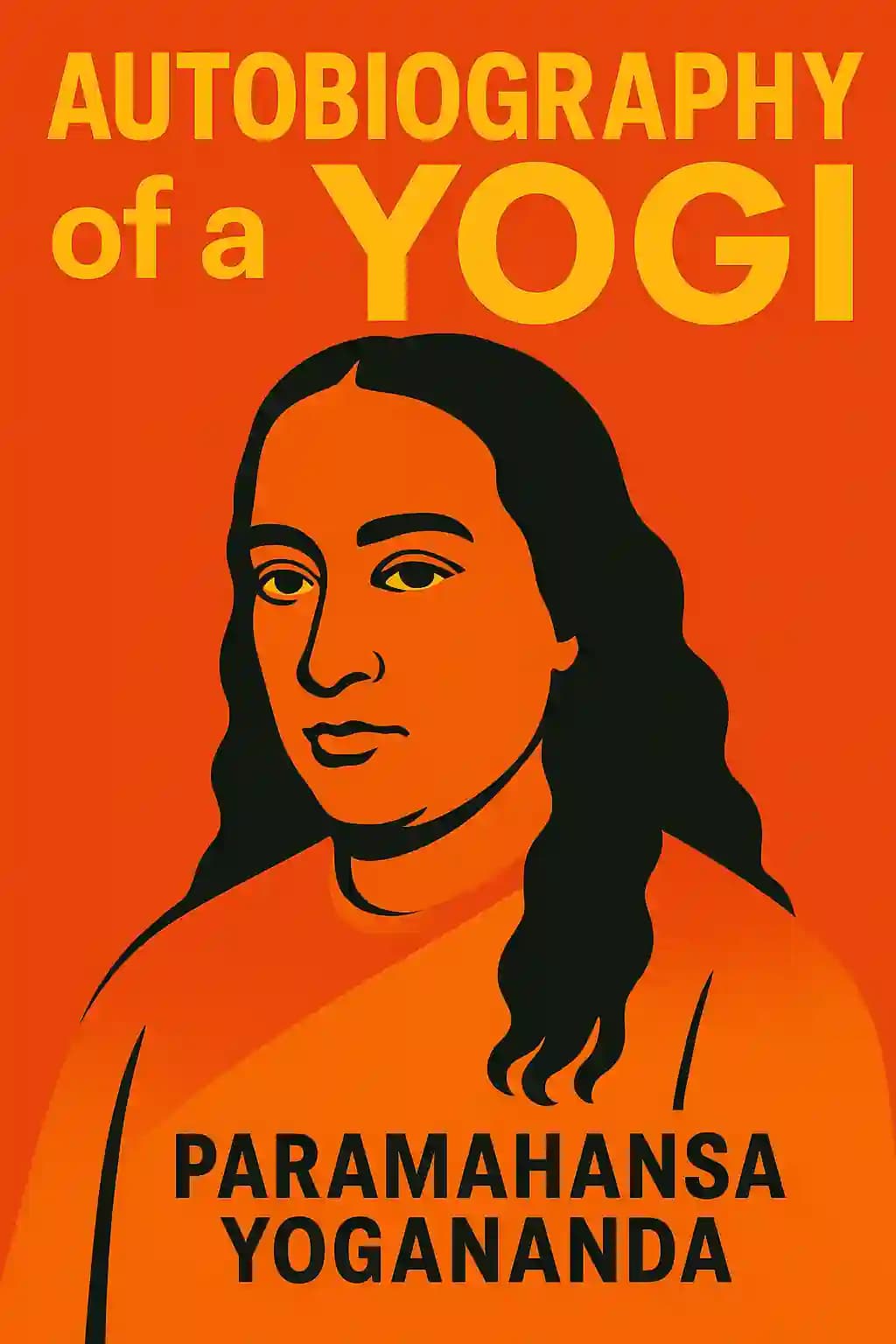
Paramahansa Yogananda's "Autobiography of a Yogi" has become one of the most influential spiritual classics of the modern era, captivating readers from all walks of life since its publication in 1946. Steve Jobs famously had only one book on his iPad-this autobiography-and arranged for copies to be distributed to everyone attending his funeral. George Harrison called it "the book that changed my life," while countless spiritual seekers have discovered their path through its pages. The book's enduring appeal lies in its remarkable blend of profound spiritual wisdom and extraordinary accounts of yogic powers, presented through the authentic voice of someone who lived these experiences rather than merely theorizing about them. What makes this autobiography uniquely powerful is how it bridges Eastern mysticism with Western pragmatism, inviting readers on a journey that feels both exotic and strangely familiar-a homecoming to spiritual truths that resonate across cultural boundaries.
Capitolo 2
The Seeker's Path: Early Spiritual Awakening
Young Mukunda Lal Ghosh (later Paramahansa Yogananda) was born with an insatiable spiritual hunger. From his earliest years, he displayed an unusual connection to the divine that manifested in profound visions and experiences. His childhood home in Gorakhpur, India, became the first training ground for his spiritual development, with his parents serving as his initial guides. His mother, a loving devotee of Lord Shiva, instilled in him deep devotional tendencies, while his father-though outwardly strict-demonstrated the balanced life of a "householder yogi" who fulfilled worldly responsibilities while maintaining spiritual discipline.
The family's spiritual education centered around scriptural tales from the Mahabharata and Ramayana, where instruction and moral discipline were inseparably interwoven. This approach created a foundation where spirituality wasn't an abstract concept but a living reality expressed through daily choices and actions. Yogananda's parents weren't merely religious in a conventional sense-they were disciples of the great master Lahiri Mahasaya, practicing Kriya Yoga and observing spiritual disciplines that included living as husband and wife only once yearly to have children.
One pivotal childhood experience shaped Yogananda's spiritual trajectory forever. At eight years old, he contracted deadly Asiatic cholera. When doctors pronounced his case hopeless, his mother urged him to pray to Lahiri Mahasaya's photograph on their family altar. As young Mukunda gazed at the image, a blinding light suddenly enveloped him, instantly curing his disease. This miraculous healing established his unshakable faith in spiritual realities beyond the material world.
Perhaps most revealing was his early vision of Himalayan yogis and divine light that left him with what he described as an "unquenchable yearning for God." Unlike many children who drift through childhood in playful oblivion, Yogananda's consciousness seemed perpetually drawn toward the eternal, as if remembering rather than discovering spiritual truths. This orientation toward the divine would define his entire life's journey-a quest not for worldly achievement but for direct experience of ultimate reality.
Capitolo 3
Divine Interventions: The Hand of Providence
Throughout Yogananda's narrative, we witness a remarkable pattern of divine orchestration-moments when seemingly random events reveal themselves as carefully arranged stepping stones on his spiritual path. When his mother died, he experienced overwhelming grief, finding solace only years later through divine communion. This loss, however painful, accelerated his spiritual seeking. Shortly after her passing, he learned she had taken him as a baby to her guru, Lahiri Mahasaya, who had prophesied that Mukunda would become a yogi carrying many souls to God.
The mysterious appearance of a sadhu (holy man) who gave his mother an amulet specifically meant for Yogananda when he was ready to begin his spiritual search further confirmed the divine plan unfolding in his life. This silver amulet, revealed to him fourteen months after his mother's death, became a tangible symbol of his predestined spiritual journey.
His early attempts to run away to the Himalayas in search of enlightenment were repeatedly thwarted-not as failures but as divine redirections. When his brother Ananta discovered and stopped his plan, it seemed like an obstacle. In retrospect, however, these "failures" were protective interventions, preparing him for the path that would eventually lead him to his true guru and his unique mission in the world.
Perhaps most striking was his encounter with Swami Pranabananda, known as "the saint with two bodies." Upon arriving at the swami's residence to deliver a letter from his father, Yogananda was astonished when the holy man greeted him by name before he could introduce himself. More incredibly, the swami demonstrated bilocation-appearing simultaneously in two places-by materializing at the Ganges to inform Kedar Nath Babu that Yogananda awaited him, then reappearing in his room with the young seeker.
This pattern of divine intervention continued throughout his life, revealing a cosmic orchestration beyond human planning. From miraculous healings to precisely timed meetings with saints, Yogananda's journey unfolded not through random chance but through what appeared to be an intelligent design guiding him toward his spiritual destiny. As he wrote, "God's plan for mortals is seemingly to convince them that they are born only to suffer and to die. But whoever seeks the divine path is shown that this earth is truly a playground of God."
Capitolo 4
The Master-Disciple Relationship: Finding Sri Yukteswar
The heart of Yogananda's spiritual autobiography centers on his relationship with his guru, Sri Yukteswar Giri-a connection that transcended ordinary human bonds to exemplify the sacred guru-disciple tradition central to yoga philosophy. Their first meeting reads like cosmic recognition rather than introduction. After years of searching and prayer, Yogananda encountered Sri Yukteswar in a Benares marketplace and instantly recognized "the face of my thousand visions." The guru's first words-"O my own, you have come to me!"-acknowledged their connection across lifetimes.
Their relationship embodied both profound love and rigorous discipline. Sri Yukteswar was not an easy master who offered shallow praise or quick spiritual fixes. Instead, he subjected Yogananda to intense training designed to eliminate ego and purify consciousness. When Yogananda complained about mosquitoes tormenting him at night, Sri Yukteswar didn't simply solve the problem but created a teaching moment, advising him to buy curtains for both of them, humorously noting that if Yogananda bought only one, "all mosquitoes will concentrate on me!"
The guru's methods often appeared harsh to outsiders. He readily pointed out Yogananda's flaws and challenged his spiritual immaturity. Yet beneath this stern exterior lay boundless compassion. As Yogananda eventually realized, "I had discovered that he was unbendable toward all who sought his counsel, never setting forth practical wisdom until he had first received an adequate demonstration of the disciple's eagerness to throw aside every material temptation."
Sri Yukteswar's training was comprehensive-combining scriptural study, meditation techniques, philosophical discussions, and practical life lessons. He demonstrated remarkable healing powers, curing Yogananda's lifelong dyspepsia with a simple statement: "Believe that: you shall be well and strong." This healing occurred not through elaborate rituals but through awakening Yogananda's own conviction and connection to divine healing energy.
Perhaps most significantly, Sri Yukteswar fulfilled his promise to reveal God to Yogananda. One morning, touching his disciple's chest above the heart, he bestowed a profound cosmic vision. Yogananda's consciousness expanded beyond bodily limitations-he could simultaneously perceive distant streets, view objects from all angles, and witness the entire cosmos vibrating within his being. This experience of cosmic consciousness transformed his understanding permanently, revealing that "the root of all matter is light."
Their relationship exemplified the paradox at the heart of true spiritual mentorship-the master both demands complete surrender while simultaneously preparing the disciple for complete freedom. Sri Yukteswar shaped Yogananda not into a dependent follower but into a spiritual teacher capable of carrying yogic wisdom to the West. Their bond transcended even death, as we'll see in one of the autobiography's most extraordinary chapters.
Capitolo 5
The Science of Kriya Yoga: Ancient Wisdom Meets Modern Understanding
At the core of Yogananda's spiritual teachings lies Kriya Yoga-a specific meditation technique that he describes as "the airplane route" to God compared to the slower "bullock cart" theological path. Far from presenting yoga as merely physical exercise or relaxation, Yogananda reveals it as a precise science for accelerating spiritual evolution. The Sanskrit root kri means "to do, to act and react," similar to karma, the principle of cause and effect. Kriya Yoga is thus "union with the Infinite through a certain action"-a systematic method for transcending the normal limitations of human consciousness.
What distinguishes Yogananda's presentation of Kriya is how he bridges ancient mystical practice with scientific understanding. He explains that the technique works by decarbonizing human blood and recharging it with oxygen. These extra oxygen atoms transmute into life current that rejuvenates the brain and spinal centers. By preventing venous blood accumulation, the yogi lessens tissue decay and gradually transforms cells into pure energy. This physiological explanation makes the practice comprehensible to the Western scientific mind while preserving its profound spiritual dimensions.
The mathematics of spiritual evolution through Kriya is particularly striking. Yogananda states that one thousand Kriya practiced in eight hours gives the yogi the equivalent of one thousand years of natural evolution-365,000 years of evolution in one year. In three years, a Kriya Yogi can accomplish what nature brings to pass in a million years. This acceleration isn't presented as magical but as the natural result of working directly with the subtle energies that govern consciousness.
Yogananda carefully distinguishes Kriya from unscientific breathing exercises that forcibly hold breath in the lungs. Instead, Kriya converts breath into mind-stuff, offering direct control of life force (prana). This control allows practitioners to withdraw consciousness from the five senses and physical awareness, redirecting that energy toward perception of subtler spiritual realities. The ultimate goal is to free oneself from the million-year evolutionary cycle required by ordinary humans.
While honoring ancient yogic injunctions against full public disclosure of the technique, Yogananda explains that beginners practice only fourteen to twenty-eight times twice daily. Some achieve emancipation in six, twelve, twenty-four, or forty-eight years. Importantly, unfinished Kriya effort carries forward into the next life, ensuring that spiritual progress is never lost.
This systematic approach to spiritual development represents one of Yogananda's most significant contributions to modern spirituality. By presenting meditation not as vague contemplation but as a specific technology for consciousness transformation, he made mystical experience accessible to the pragmatic Western mind while preserving the depth of India's ancient wisdom tradition.
Capitolo 6
The Reality of Miracles: Yogic Powers Demystified
Throughout his autobiography, Yogananda documents numerous encounters with saints and yogis who demonstrated extraordinary abilities-from bilocation and levitation to materializing objects and surviving without food. Rather than presenting these as supernatural violations of natural law, he explains them as manifestations of higher laws not yet fully understood by conventional science.
One remarkable account involves the "Tiger Swami," who in his pre-monastic life had fought tigers with his bare hands. When asked how he subdued ferocious beasts, the swami explained, "You look upon tigers as tigers; I know them as pussycats." He demonstrated that physical power alone isn't enough-one needs mental fortitude to overcome terror. "Mind is the wielder of muscles," he taught, revealing that his body had once been feeble but through "indomitable persistency in thoughts of health and strength," he transformed himself.
Yogananda's encounter with the "Perfume Saint" (Gandha Baba) provides another example of yogic powers. This adept could produce any fragrance at will-causing the scent of roses to emanate from Yogananda's palm without touching it and infusing a scentless flower with jasmine fragrance. Rather than dismissing this as trickery, Yogananda explains that the saint could manipulate "lifetrons" to rearrange vibratory structures and produce sensory phenomena.
Perhaps most astonishing is his account of Giri Bala, "the woman yogi who never eats." This modest saint had lived without food or water for over fifty-six years, sustaining herself through a specific kriya technique taught by her guru. When Yogananda asked the purpose of her unusual ability, she answered with wisdom: "To prove that man is Spirit. To demonstrate that by divine advancement he can gradually learn to live by the Eternal Light and not by food."
Yogananda's scientific explanation for these phenomena centers on Einstein's equation proving mass-energy equivalence. While ordinary material bodies cannot attain light-velocity because their mass would become infinite, yogis who have transcended body-consciousness fulfill this Einsteinian condition-their consciousness is identified with the infinite. Free from matter-consciousness and dimensional limitations, they can materialize objects, dematerialize their bodies, and move with light-speed.
The divine command "Fiat lux!" established light as the fundamental atomic reality through which all manifestations occur. A perfected yogi perceives the universe as undifferentiated light, manipulating these light atoms through divine will and visualization. This explains how masters perform miracles-they've mastered maya, the cosmic motion picture mechanism.
Rather than encouraging fascination with paranormal powers, however, Yogananda consistently emphasizes that these abilities are merely byproducts of spiritual development, not its goal. The true purpose of yoga is union with divine consciousness, not the acquisition of siddhis (powers). As his guru Sri Yukteswar warned, "No one should attempt to fly the kite of spiritual advancement without a firm anchor line of humble virtue."
Capitolo 7
Beyond Death: The Cosmic Afterlife
One of the most extraordinary sections of Yogananda's autobiography comes near its conclusion, where he describes the resurrection of his guru Sri Yukteswar. Approximately three months after his master's physical death, Yogananda experienced a miraculous vision in his hotel room in Bombay. The entire room transformed before his astonished eyes, sunlight transmuting into supernal splendor, and Sri Yukteswar appeared in flesh and blood form.
This wasn't a ghostly apparition but a tangible presence-Yogananda could embrace his guru and detect his familiar fragrance. Sri Yukteswar explained he had been resurrected not on earth but on Hiranyaloka, an astral planet where he now served as a spiritual savior helping advanced beings rid themselves of astral karma.
What follows is perhaps the most detailed account of the afterlife realms ever recorded, as Sri Yukteswar systematically describes the structure and nature of the cosmos beyond physical death. He explains that humans possess three bodies-physical, astral, and causal-each corresponding to different levels of cosmic reality. After physical death, one becomes conscious in the astral world; after astral death, one cycles to the causal realm or back to physical incarnation, depending on one's spiritual development.
The astral cosmos, Sri Yukteswar reveals, is hundreds of times larger than the physical universe, composed of subtle vibrations of light and color. Its inhabitants travel between worlds on planes of light faster than electricity, perceiving through intuition rather than five separate senses. Their all-inclusive sixth sense allows them to see through ears, hear through eyes, or taste through skin. Their bodies, exact counterparts of their last physical youth, can be cut or bruised but heal instantly through willing.
Even more subtle is the causal world-the borderline between mind and matter where all created things are perceived as forms of consciousness. Causal beings possess freedom beyond imagination, effortlessly manifesting thoughts into instant objectivity without material or astral obstruction. They feast solely on the ambrosia of eternal knowledge and swim in bliss-oceans.
This cosmic structure explains the cycle of reincarnation. Physical karma must be completely worked out before permanent residence in astral worlds becomes possible. Those with unredeemed earthly karma shuttle between physical and astral worlds. Only when a being has no further desire for astral experiences does it remain in the causal world, ultimately thrusting out the final cork of ignorance to merge with the Eternal.
Sri Yukteswar concludes this extraordinary revelation by urging Yogananda to differentiate between dreams and Reality. Even his resurrection was nothing more than a relativity of divine ideas in the cosmic dream. The ultimate truth transcends all three worlds-physical, astral, and causal-in the ineffable unity of Spirit.
This detailed cosmology provides a rational framework for understanding life beyond death, demystifying the afterlife while preserving its profound spiritual significance. Rather than vague promises of heaven or threats of hell, Yogananda presents a systematic understanding of consciousness evolution that continues beyond physical existence.
Capitolo 8
East Meets West: Yogananda's Universal Mission
Yogananda's life embodied a historic bridging of Eastern and Western spiritual traditions. His mission to bring yoga to the West wasn't merely personal ambition but the fulfillment of a prophecy made by his paramguru (guru's guru) Babaji, who told Sri Yukteswar: "East and West must establish a golden middle path of activity and spirituality combined." Babaji foresaw that India could learn material efficiency from the West, while teaching yogic science to provide unshakable foundations for Western religious beliefs.
This cross-cultural exchange began dramatically when Yogananda received an invitation to represent India at an International Congress of Religious Liberals in Boston. Despite initial language difficulties, divine intervention enabled him to deliver successful lectures that resonated deeply with American audiences. He established his American headquarters on Mount Washington Estates in Los Angeles-remarkably, the very building he had seen years before in a vision while visiting Kashmir.
What distinguished Yogananda's approach was his ability to present India's ancient wisdom in terms accessible to the Western mind without diluting its essence. He emphasized the scientific basis of yoga, describing meditation as a technology for consciousness transformation rather than exotic mysticism. His teachings on Kriya Yoga highlighted its practical benefits-increased concentration, improved health, emotional balance-alongside its ultimate spiritual purpose.
In America, Yogananda found fertile ground for his universal message. He established Self-Realization Fellowship churches in major cities including Washington D.C., Boston, and Hollywood, each beautifully designed with gardens and statues honoring various spiritual traditions. His "churches of all religions" physically embodied his conviction that "Truth is one, paths are many"-a revolutionary concept in the religiously segregated America of the 1920s-40s.
His friendship with scientific innovators like Luther Burbank further exemplified this East-West synthesis. Burbank, the famed horticulturist, embraced Kriya Yoga and acknowledged that "the East possesses immense hoards of knowledge which the West has scarcely begun to explore." Their relationship symbolized the potential harmony between scientific inquiry and spiritual wisdom.
Yogananda's vision extended beyond individual transformation to social renewal. In 1945, he began developing a "world colony" at Encinitas-a miniature global community demonstrating brotherhood through example rather than precept. This practical application of spiritual principles to communal living anticipated later intentional communities by decades.
As World War II ended and the Atomic Age began, Yogananda recognized humanity's desperate need for spiritual wisdom to balance technological power. His autobiography, published in 1946, arrived at precisely the moment when Western civilization was questioning the limits of material progress. His message that true security comes not from external achievements but from inner realization resonated powerfully in this historical context.
Yogananda's lasting legacy is this harmonization of Eastern spirituality with Western pragmatism-creating not a diluted hybrid but a revitalized understanding that honors both traditions. His life demonstrated that the ancient science of yoga could flourish in modern soil, offering timeless solutions to contemporary problems through the direct experience of divine consciousness.
Capitolo 9
The Living Presence: Yogananda's Enduring Impact
Paramahansa Yogananda's autobiography concludes with his establishment of Self-Realization Fellowship centers across America, but his influence has only expanded in the decades since his passing in 1952. What began as a modest mission has blossomed into a global spiritual movement that continues to transform countless lives through his teachings on Kriya Yoga, meditation, and self-realization.
The extraordinary preservation of Yogananda's physical form after death-documented in a notarized statement by the director of Forest Lawn Memorial-Park, who observed "no physical disintegration" in his body twenty days after his passing-seemed a final confirmation of his yogic mastery. This phenomenon, unprecedented in Western funeral practice, symbolized the incorruptible nature of his spiritual legacy.
Today, Self-Realization Fellowship/Yogoda Satsanga Society of India operates in over sixty countries, with hundreds of temples, centers, and meditation groups worldwide. The organization continues publishing Yogananda's writings and recordings, making his teachings accessible to new generations. His core message-that direct experience of God is possible through scientific meditation techniques-has influenced spiritual seekers far beyond those formally affiliated with his organization.
Yogananda's impact extends well beyond religious circles. His emphasis on the scientific basis of meditation anticipated the modern mindfulness movement by decades. Today, meditation practices derived from yoga traditions are taught in hospitals, corporations, schools, and military settings-stripped of explicit religious language but preserving the essential techniques. Scientific research now confirms many benefits Yogananda described, with hundreds of studies documenting meditation's effects on stress reduction, cognitive function, emotional regulation, and physical health.
His influence on popular culture is equally significant. The Beatles' interest in Indian spirituality, sparked partly by Yogananda's teachings, helped introduce meditation to Western youth culture in the 1960s. Steve Jobs' lifelong fascination with Autobiography of a Yogi influenced Apple's innovative approach to technology design. Contemporary spiritual teachers from Deepak Chopra to Eckhart Tolle acknowledge Yogananda's pioneering role in translating Eastern wisdom for Western audiences.
Perhaps most importantly, Yogananda's life embodied the possibility of maintaining spiritual focus amid worldly engagement-what he called "the balanced life." Unlike ascetics who renounced society, he demonstrated how divine awareness could infuse every aspect of modern living. His teachings on "how-to-live" principles-balancing work and meditation, cultivating positive habits, developing will power-offer practical guidance for spiritual growth within ordinary circumstances.
As humanity faces unprecedented global challenges-environmental crisis, technological disruption, social fragmentation-Yogananda's vision of "a golden middle path of activity and spirituality combined" seems increasingly prophetic. His integration of ancient wisdom with modern understanding provides a template for addressing these challenges with both scientific rigor and spiritual depth.
The enduring appeal of Autobiography of a Yogi lies not merely in its accounts of miraculous events but in its invitation to personal transformation. Yogananda's journey from a spiritually precocious child in India to a world-renowned spiritual teacher in America traces a path that readers are implicitly invited to follow-not by imitating his external circumstances but by awakening to the same divine consciousness he discovered within himself.
As he wrote in the closing pages of his autobiography: "Man's conscious state is an awareness of body and breath. His subconscious state, active in sleep, reveals his mental and emotional past. His superconscious state is awareness of his soul and its universality." Through Kriya Yoga and the science of self-realization, Yogananda offered a systematic method for expanding consciousness from the limited personal self to the infinite divine Self-a journey that continues to inspire seekers of truth across cultures, generations, and religious traditions.




![[PDF] Means to Liberation by Four Yogas and the Uniqueness of Swami ...](/_next/image?url=https%3A%2F%2Fd1y2du6z1jfm9e.cloudfront.net%2Fassets%2Fpodcast%2Fblue.png&w=1024&q=50)