Capitolo 1
Ancient Wisdom for Modern Minds: The Path to Inner Peace
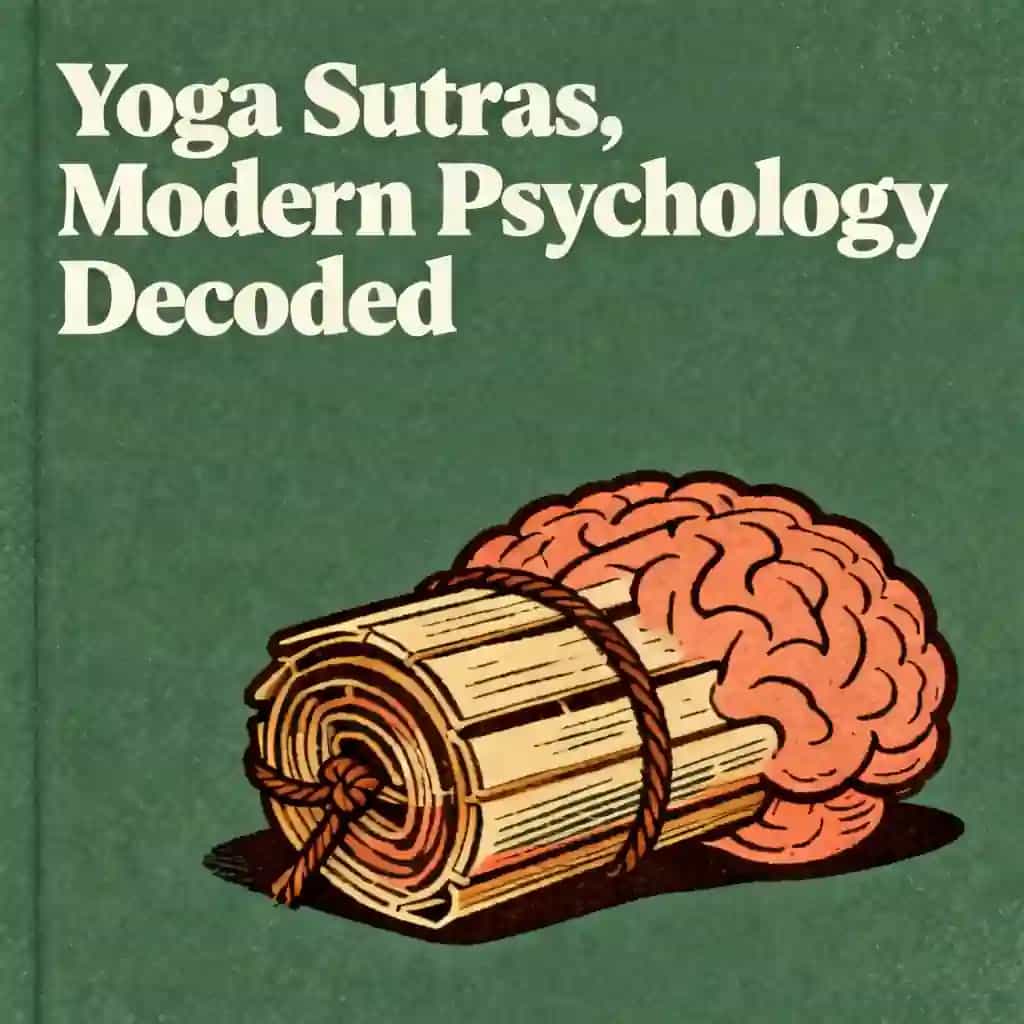
The Yoga Sutras of Patanjali stands as one of the most influential texts in Eastern philosophy, offering a systematic approach to achieving mental clarity and spiritual liberation. While many Westerners associate yoga primarily with physical postures, this ancient text reveals yoga's true essence as a comprehensive science of mind control. Sri Swami Satchidananda's translation and commentary has become particularly beloved for making these profound teachings accessible to modern practitioners. His interpretation has influenced countless spiritual seekers, including celebrities like Madonna and Sting, who have publicly credited the text with transforming their approach to life. The book's enduring popularity speaks to its universal appeal-it offers practical wisdom that transcends cultural and religious boundaries, providing a roadmap for anyone seeking to understand the nature of consciousness and achieve lasting peace.
Capitolo 2
The Essence of Yoga: Stilling the Mind's Ripples
At its core, Patanjali's definition of yoga is elegantly simple yet profound: "Yogas citta vrtti nirodhah" - the restraint of the modifications of the mind-stuff is Yoga. This single sutra contains the essence of yoga's goal and practice. The mind, or citta, consists of different levels: ahamkara (ego), buddhi (intellect), and manas (the desiring faculty). In its natural state, the mind is peaceful, but it becomes disturbed by various modifications or thought-waves that create ripples, much like stones thrown into a still lake.
These mental modifications disturb our natural state of peace and create wants that drive our actions. We mistakenly believe that external objects and experiences will bring us happiness, but Patanjali reveals a profound truth: the entire outside world is our own projection, based on mental attitude rather than external reality. When we say "This is a beautiful flower," we're actually describing our mental reaction to the flower, not an inherent quality of the flower itself.
The goal of yoga is to still these mental modifications so that the true Self can be revealed. As Patanjali states: "Tada drastuh svarupe'vasthanam" - then the Seer (Self) abides in Its own nature. We are not the body or mind but the Knower or Seer. Like a face reflected in a mirror, our true Self reflects in the mind. When the mind is disturbed, colored, or muddy, we see a distorted reflection of our Self. Only when the mind ceases creating thought forms can we see our true nature clearly.
Patanjali identifies five types of mental modifications: right knowledge, misconception, verbal delusion, sleep, and memory. These can be either painful or painless-or more accurately, selfish or selfless. Selfish thoughts ultimately bring pain, even if initially pleasurable. Selfless thoughts, even if initially causing discomfort, ultimately bring peace. Even love, if based on selfishness, will eventually end in pain. Our duty is to analyze our motives and cultivate selfless thoughts.
To control these mental modifications, Patanjali prescribes two essential approaches: abhyasa (continuous practice) and vairagya (non-attachment). Practice must be well-attended to for a long time, without break, and in all earnestness. Non-attachment means freedom from craving for objects seen or heard about. Without non-attachment, even years of meditation bear little fruit, as the mind remains scattered by worldly concerns.
Capitolo 3
The Path of Kriya Yoga: Practical Steps for Daily Life
While Book One presents the theoretical aim of controlling thought forms, Book Two provides the foundation and practical steps for reaching those higher states. Patanjali begins with Kriya Yoga, consisting of three essential elements: tapas (accepting pain as purification), svadhyaya (study of spiritual texts), and Isvara pranidhana (surrender to the Supreme Being). These three practices work together synergistically to transform the practitioner's consciousness.
Tapas isn't mere mortification but creating purifying heat-like gold becoming purer through fire. True tapas means accepting life's pains for their purifying effects and practicing self-discipline over the senses. This might involve fasting on specific days, maintaining silence periods, or practicing challenging asanas with steady awareness. As Krishna teaches, austerities can be physical (worship, purity, straightforwardness, celibacy, maintaining specific postures), verbal (tranquil, truthful, pleasant speech, avoiding harsh words), and mental (serenity, goodheartedness, self-control, maintaining inner silence). Each form of tapas burns away different impurities in our nature.
Svadhyaya involves deep study of spiritual texts that elevate the mind. This isn't casual reading but contemplative study that transforms our understanding. It includes practices like memorizing verses, reflecting on their meaning, and applying teachings to daily life. Traditional texts recommend studying at the same time each day, maintaining a study journal, and discussing insights with fellow practitioners. The practice might also include mantra repetition and self-observation.
Isvara pranidhana means dedicating all actions to God-being a trustee rather than an owner. This involves performing actions without attachment to their fruits, maintaining constant awareness of the divine, and serving others selflessly. With this practice of "dedication, dedication, giving, giving, loving, loving," the mind remains free from disturbances. This might manifest as volunteering, offering prayers before meals, or dedicating work outcomes to a higher purpose.
Patanjali explains that Kriya Yoga should be practiced to minimize obstacles (klesas) and to attain samadhi. The five obstacles are ignorance (avidya), egoism (asmita), attachment (raga), hatred (dvesa), and clinging to bodily life (abhinivesa). Their sequence is significant: ignorance of the Self leads to egoism, which creates attachment to things for selfish pleasure. When desired objects are unavailable, hatred arises. Finally, attachment to things creates fear of death. Each obstacle reinforces the others in a self-perpetuating cycle.
Ignorance means mistaking the impermanent for permanent, the impure for pure, the painful for pleasant, and most fundamentally, the non-Self for the Self. This isn't mere lack of knowledge but a fundamental misidentification that colors all experience. When we say "I am sick" instead of "My body is sick," we've fallen into this basic ignorance. Understanding we are not the body or mind's modifications is key to remaining undisturbed by worldly conditions. This understanding must be cultivated through consistent practice and discrimination.
Egoism occurs when we mistakenly identify the power of the Seer with the instrument of seeing. The ego is merely a reflection of the true Self on the mind, like a little "i" versus the capital "I"-differing only by a small dot, a blemish of ego. All Yoga practices aim simply to remove that dot. This requires constant vigilance and self-observation to catch moments of ego-identification and redirect awareness to the true Self. Regular meditation and self-inquiry help dissolve this fundamental misidentification.
Capitolo 4
The Eight Limbs of Yoga: A Comprehensive System
To systematically overcome life's obstacles and achieve spiritual evolution, Patanjali presents the eight limbs of Yoga: Yama (abstinence), Niyama (observance), Asana (posture practice), Pranayama (breath control), Pratyahara (sense withdrawal), Dharana (concentration), Dhyana (meditation), and Samadhi (contemplation). These limbs form an integrated system where each component supports and enhances the others, creating a holistic approach to spiritual development.
Yama consists of five fundamental principles: ahimsa (non-violence), satya (truthfulness), asteya (non-stealing), brahmacarya (continence), and aparigraha (non-hoarding). For dedicated Yogis, Patanjali permits no exceptions to these principles, though practitioners at different stages may adapt them according to their life circumstances. These principles extend beyond mere physical actions to encompass thoughts, words, and intentions.
When firmly established in ahimsa, all hostilities cease in one's presence. The practitioner emits harmonious vibrations that cause even enemies to temporarily forget their differences. Historical examples demonstrate this principle: Gandhi's non-violent resistance transformed political struggles, while Saint Francis of Assisi's legendary gentleness tamed the wolf of Gubbio. Even wild animals become peaceful around those established in non-violence, as demonstrated by many Indian yogis living harmoniously among jungle creatures. Though few reach perfection-Gandhi himself admitted he was still trying-even partial practice elevates our consciousness and behavior.
To one established in truthfulness, actions and their results become subservient-things manifest naturally without pursuit. When no lie passes from your mouth, your words gain power and manifest reality. Ancient texts speak of accomplished yogis whose mere words could materialize their intentions. Absolute honesty brings fearlessness and an open life, though wisdom teaches that when truth might harm others, silence is preferable. This principle extends to self-truthfulness, requiring constant self-examination and integrity.
By establishing continence (brahmacarya), one gains vital energy and strength. When sexual energy is preserved, it transforms into ojas (subtle energy) that strengthens the entire system physically, mentally, and spiritually. This energy builds the power necessary for deeper spiritual practices. Modern interpretations emphasize responsible relationship rather than total abstinence, focusing on the mindful use of vital energy.
Niyama consists of five observances: sauca (purity), samtosa (contentment), tapas (accepting but not causing pain), svadhyaya (study), and Isvara pranidhana (worship of God). Through purification of body, speech, and mind, one develops natural detachment from physical limitations. External cleanliness supports mental clarity, while internal purification through proper diet and positive thoughts creates emotional balance. When the heart is pure, we remain consistently joyful despite external circumstances.
True contentment (samtosa) transcends mere satisfaction with possessions. It means finding peace in our present state while maintaining aspirations for growth. This paradoxical attitude allows for both acceptance and progress. Ancient texts describe content yogis living in caves with the same happiness as kings in palaces, demonstrating that joy comes from within rather than external circumstances.
Through dedicated practice of these principles, the yogi develops the foundation necessary for the higher limbs of yoga, ultimately leading to profound spiritual realization. Each principle reinforces the others, creating a comprehensive system for human development and enlightenment.
Capitolo 5
The Physical Practices: Asana and Pranayama
Asana is defined as a steady, comfortable posture that forms the foundation of yogic practice. Any pose that brings genuine comfort and steadiness qualifies as an asana, though this extends far beyond mere physical positioning. The body should cultivate a supple quality, much like a weed that gracefully bends with floodwaters rather than remaining rigid like a tree that breaks in strong winds. This metaphor emphasizes adaptability over forceful strength. Hatha Yoga was specifically developed to create this suppleness, systematically removing toxins through various postures that squeeze and manipulate the body in different directions, much like wringing water from a cloth.
The mastery of posture comes through two primary means: relaxing the natural tendency for restlessness and meditating on the infinite. When physical stillness is achieved, the mind naturally follows this state of calm. Through the body's steadiness, we gain progressive control over the mind, which must ultimately yield to our direction since it requires the body's cooperation to fulfill its desires. This creates a feedback loop where physical stability enhances mental clarity, and mental clarity further deepens physical awareness.
As posture becomes increasingly firm and comfortable, one develops immunity to life's dualities. External conditions cease to create internal disturbance - neither extreme heat nor bitter cold, lavish praise nor harsh censure, financial profit nor devastating loss will affect your inner equilibrium. This neutrality to experience isn't indifference, but rather a state of elevated awareness where you maintain perspective regardless of circumstances. The mind gradually comes under your conscious control, eventually seeking permission even to express emotional reactions.
Pranayama, the science of breath control, naturally follows asana mastery. This practice involves precise control over the movements of inhalation and exhalation, where breathing becomes gentle, slow, and fully conscious. Prana represents the cosmic life force that powers everything from mechanical engines to human thoughts and emotions. The practice encompasses three distinct types: bahya vrtti (focused inhalation), abhyantara vrtti (controlled exhalation), and stambha vrtti (mindful retention). Through systematic regulation of prana, we automatically bring the mind under greater control, as breath and consciousness are intimately connected.
The consistent practice of pranayama gradually destroys the veil covering our inner light of awareness. This veil is the mind itself, intricately woven from thoughts that have no independent substance, much like a cloud that appears solid but dissipates when approached. By methodically removing thoughts one by one, similar to carefully removing individual grains of sugar from a heap, the mind-veil gradually dissolves. This dissolution reveals our true Self - the unchanging consciousness that exists beyond mental fluctuations. This process requires patience and persistence, as each breath consciously taken brings us closer to this ultimate realization.
Capitolo 6
The Inner Journey: From Sense Control to Meditation
Pratyahara marks the pivotal transition from external to internal yoga practices. When the senses withdraw from external objects, they naturally begin to imitate the mind's contemplative nature. Like perfectly polished mirrors, senses turned outward reflect the manifold world of appearances; when turned inward, they reflect pure consciousness. This process can be understood through the metaphor of a turtle withdrawing its limbs - just as the turtle instinctively pulls in its extremities for protection, the yogi learns to withdraw sensory awareness from external stimuli. Through dedicated practice of pratyahara, practitioners achieve supreme mastery over the senses. The once-wild senses become like well-trained horses, responding instantly to the lightest touch of the reins, carrying us precisely where we intend to go.
Dharana represents the first concrete steps into meditation proper, where we bind the mind to a single point of focus - be it an object, location, or concept. For beginners especially, tangible objects prove invaluable as anchor points for the wandering mind. A candle flame, a flower, or a sacred symbol provides the mind something concrete to hold onto. The practice of trataka (steady gazing) serves as a powerful tool in this stage, where one fixes the gaze unwavering on a single point. Through consistent practice, the physical object gradually gives way to its mental impression, allowing deeper concentration to unfold naturally.
Dhyana emerges when concentration deepens into meditation proper. This state is often described as the continuous flow of cognition toward an object, like pouring oil from one vessel to another in an unbroken stream. Unlike dharana, where gaps and interruptions still occur, dhyana establishes an unwavering connection between the meditator and the object of meditation. In this state, time seems to flow differently - practitioners often emerge from meditation to find hours have passed like minutes. The usual awareness of body sensations fades into the background as consciousness becomes fully absorbed in meditation.
Samadhi represents the pinnacle of meditative practice, where the traditional boundaries between observer, observation, and observed dissolve completely. This is not a state that can be forcefully achieved - it occurs spontaneously when meditation deepens beyond all effort and striving. The process resembles a chemical transformation, like gradually adding alkali to acid until the solution becomes purely alkaline - the individual consciousness merges completely with the universal consciousness. In samadhi, all conceptual frameworks fall away, leaving only pure, undifferentiated awareness. This state transcends ordinary experience, bringing direct knowledge of reality beyond the limitations of thought and perception.
Capitolo 7
The Powers and Pitfalls of Advanced Practice
Through samyama-the combined practice of dharana (concentration), dhyana (meditation), and samadhi (absorption) upon a single object-various siddhis (supernatural powers) can be attained. Patanjali systematically outlines these extraordinary abilities that emerge when consciousness becomes highly refined. These powers include knowledge of past lives, mind-reading, invisibility, and control over the elements. By performing samyama on the relationship between ear and ether, supernormal hearing becomes possible, allowing one to perceive sounds at vast distances. By samyama on the relationship between body and ether, one attains the lightness of cotton fiber, enabling levitation. Other powers include the ability to see distant objects, knowledge of the movements of stars, understanding of bodily systems, and control over hunger and thirst.
However, Patanjali emphatically warns that these powers can become serious obstacles to spiritual progress if pursued for their own sake. The appearance of supernatural abilities often inflates the ego and creates attachment to special status. The Yogi should neither accept nor smile with pride at admiration from others, as there is the constant possibility of getting caught again in the undesirable cycles of ego gratification. These powers act as golden chains - while seemingly desirable, they ultimately bind us when pursued, as they feed the fundamental delusion of identifying with limited phenomena rather than pure consciousness. Ancient texts tell stories of advanced practitioners who fell from their spiritual height due to attachment to siddhis.
The correct relationship to siddhis is to allow them to emerge naturally as signs of progress without becoming fascinated by them. When siddhis come to serve you rather than you chasing them, they become beneficial markers on the path rather than obstacles. They should be seen as side effects of spiritual evolution, not goals in themselves. Some traditions recommend completely ignoring these powers when they arise.
The highest goal remains kaivalya (absolute freedom), which manifests when the gunas (the three fundamental qualities of nature - sattva, rajas and tamas) withdraw, having served their purpose in the evolution of consciousness. At this stage, the power of pure consciousness settles into its own true nature, free from all colorings and limitations. The liberated one becomes a witness, not responsible for actions, as the body-mind continues functioning due to prarabda karma (actions allotted for this lifetime) until its momentum is exhausted. This state represents complete freedom from all bondage and the fulfillment of the yogic journey.
Capitolo 8
Liberation While Living: The Jivanmukta
The ultimate achievement in Patanjali's system is becoming a jivanmukta-a liberated being who continues to live and act in the world while remaining completely unattached. Such beings serve humanity without personal involvement or ego-driven motivations, maintaining perfect equanimity in all situations. Nothing excites or disturbs such a person, who recognizes all phenomena as natural expressions of Prakriti (Nature), whether pleasant or unpleasant, success or failure, praise or blame.
When all coverings and impurities of knowledge are removed through sustained practice and discrimination, infinite knowledge emerges spontaneously. The jivanmukta's mind becomes like an uncoated, crystal-clear mica sheet-images and experiences pass through but nothing gets recorded or leaves residual impressions. There are no "fixations" or psychological complexes-the mind functions with perfect clarity, without attachments, aversions, or karmic impressions (samskaras). This state is compared to a lotus leaf, which remains dry even while floating on water.
The path to jivanmukti doesn't require renouncing the world or escaping to isolation. Instead, one must deeply understand the nature of Prakriti, learn to handle life's circumstances with wisdom and detachment, and gradually transcend identification with temporal phenomena to realize oneself as the pure, unchanging Self (Purusha). This process is like learning to swim-first understanding the water's nature, then developing proper technique, and finally moving through it effortlessly without fear or struggle.
Like attending a king's grand celebration where numerous entertainments and distractions are present, the spiritual aspirant must maintain focus on the highest goal without getting sidetracked by temporary pleasures or supernatural powers (siddhis) that may manifest along the path. The jivanmukta demonstrates that complete freedom is possible while fully participating in worldly life.
The Yoga Sutras consistently remind us that our natural, original state is one of peace, joy, and unlimited consciousness-all spiritual practice simply removes the accumulated obstacles and conditioning that prevent us from experiencing this inherent reality. The jivanmukta has completed this clearing process, living in constant awareness of their true nature while compassionately serving others. As Sri Swami Satchidananda writes, "May we all attain the highest samadhi, living liberation in the midst of the world," showing that enlightenment need not wait for some future state but can be realized here and now.
Capitolo 9
The Timeless Wisdom of the Yoga Sutras
The enduring power of Patanjali's Yoga Sutras lies in their universal applicability. Though composed thousands of years ago, these teachings address the fundamental human condition that remains unchanged across time and cultures. The sutras present a comprehensive system of 196 aphorisms that systematically outline the science of mind and consciousness. From managing everyday emotions to achieving the highest states of enlightenment, these teachings offer both profound philosophy and practical techniques that can be applied by anyone seeking greater mental clarity and inner peace.
Sri Swami Satchidananda's commentary makes these ancient teachings particularly accessible to modern readers. As a pioneer in the interfaith movement, he emphasized the principle that "Truth is One, Paths are Many." His interpretation highlights the universal aspects of Patanjali's system without limiting instructions to any particular religion or philosophy. Through clear examples and modern analogies, he bridges the gap between ancient wisdom and contemporary life, showing how these teachings apply to relationships, work, health, and personal growth.
The Yoga Sutras teach us that true happiness comes not from external achievements or possessions but from mastery of our own minds. By learning to still the mental modifications (vrittis) that create suffering, we discover the peace and joy that have always been our birthright. Patanjali identifies five primary types of mental modifications: correct knowledge, incorrect knowledge, imagination, sleep, and memory. Understanding and working with these modifications forms the foundation of yoga psychology. This message resonates perhaps even more strongly today, in our age of constant digital distraction, social media comparison, and external stimulation, than it did when first articulated.
As we face the challenges of modern life-chronic stress, anxiety, information overload, environmental concerns, relationship difficulties-the systematic approach of the Yoga Sutras offers a time-tested method for finding balance and clarity. The eight limbs (ashtanga) provide a comprehensive framework that addresses every aspect of human existence: yama (ethical restraints), niyama (observances), asana (posture), pranayama (breath control), pratyahara (sense withdrawal), dharana (concentration), dhyana (meditation), and samadhi (complete absorption). Each limb builds upon the previous one, creating a holistic path to self-transformation.
In the end, Patanjali's message is one of profound hope and empowerment. We are not victims of circumstance but creators of our own experience. The sutras teach specific methods for overcoming the five primary obstacles (kleshas): ignorance, ego, attachment, aversion, and fear of death. Through dedicated practice (abhyasa) and non-attachment (vairagya), we can overcome these obstacles that prevent us from experiencing our true nature as beings of peace, wisdom, and unlimited potential. The text provides practical tools for this journey, including meditation techniques, ethical guidelines, and methods for purifying the mind and body.