Chapitre 1
The Extraordinary Journey of Muhammad: From Orphan to Prophet
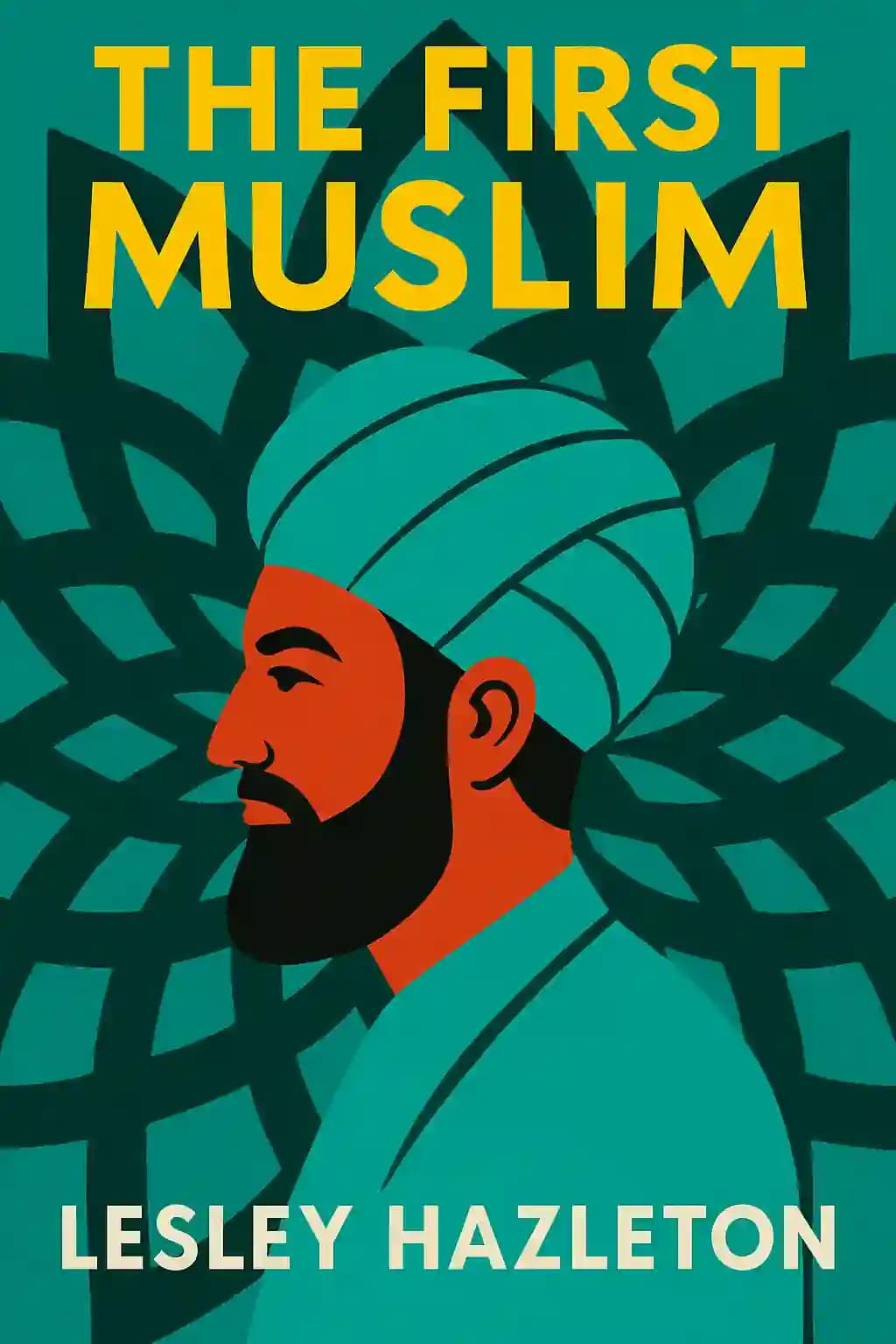
In the heart of seventh-century Arabia, a man stood alone on Mount Hira, physically unremarkable yet destined to change the course of human history. "The First Muslim" by Lesley Hazleton strips away centuries of idealization and demonization to reveal Muhammad as profoundly human - a man whose journey from marginalized orphan to spiritual leader continues to shape our world today. The book has gained recognition for its nuanced portrayal, earning praise from religious scholars and secular historians alike. What makes this biography particularly compelling is how it resonates in our polarized times; celebrities like Mahershala Ali and Kareem Abdul-Jabbar have cited it as offering crucial context for understanding Islam beyond headlines. Unlike conventional religious narratives, Hazleton's approach illuminates the psychological and sociological dimensions of Muhammad's life, inviting readers to witness the birth of a faith through the experiences of a man wrestling with divine calling amidst human doubt. How might understanding the very human origins of Islam transform our perspective on one of history's most misunderstood figures?
Chapitre 2
The Burden of Orphanhood in Ancient Arabia
Muhammad's birth as an orphan in sixth-century Mecca marked him with a profound disadvantage in a society where lineage determined one's place. Born without a father and deprived of inheritance, he carried the psychological weight of orphanhood - a condition with deep historical implications in tribal Arabia. The legendary accounts surrounding his birth highlight a startling narrative: his father Abdullah had been offered in sacrifice by Muhammad's grandfather Abd al-Muttalib, only to be spared through divine intervention. This story, while mythologized, established Muhammad's precarious status - noble in ancestry yet vulnerable in position.
The harsh realities of survival in drought-stricken Mecca led to Muhammad being sent to a Bedouin foster mother, a common practice for noble children but tinged with necessity rather than privilege. A young Bedouin woman named Halima, driven by desperation, chose to nurse the orphaned infant - a decision that would place Muhammad between worlds from his earliest days. Despite being undervalued by Meccans due to his orphan status, this phase of life marked by survival against odds laid the foundations for his unique perspective.
The experience of being raised in the desert, away from Meccan society, gave Muhammad insights into both worlds - the raw simplicity of Bedouin life and the complex social hierarchies of urban Mecca. This dual perspective would later inform his revolutionary message, allowing him to speak to the hearts of both desert nomads and city merchants. His early marginalization, rather than destroying him, provided the very vantage point from which he would eventually challenge the inequities of his society.
What happens when a child raised between worlds grows to question the very foundations of the society that marginalized him? Muhammad's orphanhood wasn't merely a biographical detail - it was the crucible that forged his sensitivity to injustice and his ability to envision a different social order.
Chapitre 3
Desert Mysticism and Childhood Transformation
In the vast Arabian desert, recognition of powers beyond human comprehension permeated daily existence. This environment formed the backdrop for Muhammad's mystical childhood experiences, particularly the story of his heart being cleansed by angels - a narrative that grew symbolically richer through generations of telling. Drawing on motifs found in global mythologies, this account serves both as a touching human anecdote and a foundation for later spiritual narratives. Though potentially embellished by followers eager for miraculous accounts, it speaks to a transformative moment that set Muhammad apart.
At age five, Muhammad returned to Mecca as a desert-hardened Bedouin child, bearing the raw toughness of nomadic life yet vulnerable to the unfamiliar social dynamics of city existence. This period of his upbringing, marked by cultural dissonance and social adjustment, became a crucible where values of simplicity and adaptability formed his introspective nature. Amidst the vibrant but stratified city life, young Muhammad learned to navigate between worlds, developing the social intelligence and philosophical perspective that would later define his teachings.
The Kaaba stood at Mecca's heart - not merely a religious shrine but a testament to humanity's yearning for protection and belonging. Despite its humble location, it drew tens of thousands during the hajj, transforming Mecca into a sanctuary city where the sacred and commercial intertwined. The Quraysh tribe's control over pilgrimage economics exposed Muhammad to the complex relationship between spiritual practice and worldly power. The Kaaba, wrapped in stories both modest and extravagant, became for him a symbol of mystery and monotheistic potential amid countless tribal deities.
As a camel boy working the desert trade routes, Muhammad witnessed firsthand the harsh realities of commerce and danger. Dromedaries, essential to Mecca's economy, symbolized survival in unforgiving landscapes. Many traders, including Muhammad's ancestors, met their fates far from home. These experiences deepened his understanding of human vulnerability and interdependence, qualities that would later inform his social and spiritual vision.
Imagine walking in Muhammad's sandals - a child straddling two worlds, absorbing the raw spirituality of the desert while learning the complex social codes of urban life. How might such a divided upbringing shape one's view of human connection and divine presence?
Chapitre 4
Finding Purpose Through Disquiet
In his thirties, Muhammad found personal stability and happiness with Khadija, yet their life together was marked by a shared unease regarding the inequities of Meccan society. Living modestly despite their means, they adhered to values centered on simplicity and generosity. Significantly, they were influenced by the hanifs - Meccan thinkers searching for a purer monotheism untainted by sectarianism. Though Muhammad may not have formally identified with this group, he felt kinship with their quest for universal divine truth beyond tribal divisions.
His solitary vigils on Mount Hira reflected a deep personal yearning for clarity amid social contradictions. These retreats weren't merely religious exercises but expressions of profound existential questioning. Through ascetic practices and meditation, Muhammad cultivated an awareness that transcended everyday concerns, preparing him - though he couldn't have known it - for the monumental role that awaited him.
The significance of the number forty resonates across Middle Eastern traditions, often heralding renewal and transformation. In 610 CE, during Ramadan, Muhammad climbed Mount Hira seeking solitude. As tranquility enveloped him, he experienced what would become the defining moment of his life. Accounts describe the overwhelming encounter with the angel Gabriel, who commanded him to recite words that became engraved in his heart. This night marked him as the messenger of God - a designation he initially rejected with terror rather than embraced with joy.
The authenticity of Muhammad's experience is underscored by his initial reaction - not triumphant acceptance but profound fear and doubt. He questioned whether the divine words were truly from God or merely manifestations of his own mind. The absence of the voice tormented him, his fear equaling his yearning. This struggle with identity and purpose drove him into deeper reflection, with resolution remaining elusive until further divine confirmation.
What does it mean when a spiritual leader's first response to divine calling is terror rather than ecstasy? Muhammad's genuine doubt and resistance suggest an encounter too powerful to be dismissed as mere invention - a transformative experience that shattered his understanding of himself and his world.
Chapitre 5
Divine Revelation and Social Revolution
Amidst his despair over the silence following his initial encounter, Muhammad received the Sura of the Morning, affirming God's continued presence and guidance. These verses stressed divine protection and acknowledged past blessings, rejuvenating his sense of mission. This revelation led to successive divine messages that lyrically celebrated nature and divine manifestations, forming the Quran's early mystical foundation.
When Muhammad finally shared his revelations with his community, he faced both familial support and societal tension. The initial gathering incited hostility, particularly from his uncle Abu-Lahab, disrupting the harmony of his message. The Quran's verses directly challenged Mecca's inequitable social structures, attacking the worship of wealth and power that had replaced genuine spiritual values. Despite widespread skepticism, younger relatives like Ali embraced Muhammad's vision, marking the beginning of a movement that would transform Arabian society.
Contrary to modern expectations that Meccans would eagerly embrace Muhammad's revolutionary message, many hesitated, clinging to the entrenched status quo. Initially, Muhammad gathered only a small following of marginalized individuals - slaves, women, and young men without established positions in Meccan hierarchy. However, it was the Quraysh elite's vehement opposition that ultimately solidified Islam's future. Their hostility, rooted in fear of losing power and wealth, transformed Muhammad's teachings from divine inspiration into an assertive social movement challenging the very foundations of tribal authority.
As the revelations contrasted starkly with tribal traditions, offering fiery warnings about Judgment Day alongside exhilarating visions of a society founded on justice, resistance only intensified the emergent faith's identity. Out of this worldly battle for social and economic values, Islam took meaningful shape, challenging familial and social norms with potent calls for justice, eloquently recounted in the people's own Arabic tongue.
Have you ever considered how the most transformative ideas often face the fiercest resistance? Muhammad's message gained strength precisely because it threatened powerful interests, suggesting that opposition can be the crucible in which revolutionary ideas are refined and strengthened.
Chapitre 6
Boycott and Exile: Testing Faith Through Adversity
Tensions escalated as Muhammad's message gained followers, leading Mecca's leading clans to proclaim a boycott of the Hashim clan, Muhammad's extended family. Led by abu-Jahl and abu-Sufyan, this collective punishment aimed to pressure Muhammad or force his uncle abu-Talib to yield to their demands. The boycott isolated the Hashims, barring them from trade and social connections, creating immense strain as they struggled to procure basic necessities.
Despite abu-Lahab's support for the boycott against his own clan, others secretly opposed it, subverting the decree by smuggling food and maintaining clandestine support. Abu-Talib, despite his age and failing health, intensified his defiance, crafting scathing poetic critiques that condemned the leaders of Quraysh for their cowardice and betrayal of tribal ethics. His words fortified resolve among some to resist what they saw as social and ethical crimes, appealing to tribal solidarity with warnings of mutual destruction if unity failed.
Fleeing escalating persecution, a group of early believers sought refuge in Ethiopia, led by Muhammad's daughter and her husband. Their migration served as a powerful testament to early Islamic hardship and, surprisingly, Christian empathy, with the Negus reportedly offering protection. This episode illustrated the depth of the believers' plight but also the unexpected support they received across faith boundaries.
With the withdrawal of protection following abu-Talib's death, attacks on Muhammad intensified, reflecting deepening hostility toward his message of reform. Despite being perceived as a threat, he truly saw himself as aiming to reform, not subvert, Meccan society. Facing harsh treatment, including physical assaults and public humiliation, he sought protection from various clan leaders, ultimately finding limited shelter with al-Mutim.
Amidst these tensions, powerful warriors like Hamza and Omar embraced Islam in dramatic fashion. Hamza's allegiance, manifested through his physical defense of Muhammad, and Omar's surprising acceptance following his encounter with Quranic verses both signaled formidable support, challenging the Meccan leaders' strategy and energizing the Muslim community.
New revelations offered Muhammad personal solace during this period, presenting a recurring theme of patience and fortitude. The Quranic voice, likened to a protective presence, reassured Muhammad that the scorn he faced was not new but part of a prophetic tradition. Encouragement to ignore derision fostered a radical non-violence approach, unintentionally influencing future Muslim sensitivities to perceived insults.
Think about this: How often do attempts to silence a message end up amplifying it instead? The boycott intended to crush Muhammad's movement instead strengthened it, transforming a spiritual awakening into a social identity forged through shared hardship.
Chapitre 7
Personal Loss and Spiritual Ascension
The annulment of the boycott brought brief respite, but was soon overshadowed by profound personal tragedy as Khadija, Muhammad's unwavering partner for twenty-five years, passed unexpectedly. Her death, closely followed by the loss of his uncle Abu-Talib, left Muhammad bereft of his two greatest sources of support - one of unconditional love, the other of clan protection. These twin pillars - one emotional, one social - had sustained him through decades of struggle, and their absence irrevocably altered his standing.
Personal mourning intertwined with rising vulnerability as Abu-Lahab replaced Abu-Talib as clan head, removing Muhammad's protective haven and exposing him to increased hostility. The societal rift widened as internal dissent heightened, forcing Muhammad to contemplate previously unimaginable options, including leaving his beloved Mecca.
In this darkest hour came the Night Journey, or isra - a pivotal transformative experience. After falling asleep during prayer, Muhammad was transported by Gabriel on a winged horse to Jerusalem, where he was greeted by angels and prophets from Abraham to Jesus. This miraculous event symbolized Muhammad's transition from messenger to leader, affirming his divine mission and spiritual heritage. His choice of milk over wine, representing the middle path, and his ascent through seven heavens to ultimately meet Abraham marked a profound spiritual elevation, confirming his role within the prophetic tradition.
The controversial episode known as the "Satanic Verses" illuminates Muhammad's vulnerability and desire for unity among his people. Initially hailed for mentioning lesser deities alongside Allah, he later retracted these verses following Gabriel's admonishment, reinforcing the strictly monotheistic stance that would define Islam. This incident, though contentious in later Islamic discourse, underscores Muhammad's profound human struggle with fallibility and his ultimate commitment to what he perceived as divine truth.
For seventh-century Arabians, identity was inextricably bound to geographical location and tribal affiliation. Muhammad faced a profound challenge as he contemplated leaving his Meccan origins - not merely changing location but fundamentally redefining his identity. The metaphysical journey he experienced heralded a transformation that would stretch beyond Mecca's boundaries, setting the stage for a new conception of community based on shared faith rather than blood ties.
Consider how our greatest spiritual insights often come after our deepest personal losses. Could it be that Muhammad's mystical experiences weren't separate from his grief but emerged precisely because loss had stripped away his worldly securities, opening him to new dimensions of understanding?
Chapitre 8
From Exile to Triumph: The Hijra and Beyond
The Hijra - the emigration from Mecca to Medina in 622 CE - marked not just a physical journey but an emotional severance from homeland and identity. Believers left quietly to avoid opposition, creating severe familial rifts. Stories like that of Umm Salama highlighted the emotional toll as fathers, mothers, and children were torn apart, their absence felt like death by those left behind. By September, hundreds had departed, leaving Mecca in mourning and turning anger toward Muhammad.
As his followers settled in Medina, the Quraysh feared Muhammad might use Medinan support to threaten Mecca. Abu-Jahl devised a cunning plan to have representatives from each clan kill Muhammad simultaneously to diffuse blame. However, the plot was leaked - possibly through divine intervention - allowing Muhammad to flee with Abu Bakr, hiding in a cave on Mount Thaur where, according to Islamic tradition, spiders wove protective webs across the entrance.
Muhammad's arrival in Medina was met with excitement and hope. His she-camel, believed divinely guided, chose the site for the new Muslim community - a seemingly mundane yet symbolically significant location. The structure built there would embody Islamic simplicity, a gathering place for building a society based on egalitarian principles. In unity and hard labor, the emigrants and Medinans, convinced of their historical mission, strived toward a societal ideal that transcended tribal divisions.
In Medina, the sense of exile persisted among the muhajirun (emigrants), who distinguished themselves from the Medinan ansar (helpers). Muhammad, now fifty-three with gray streaks in his beard, guided his community through revelations that addressed everything from prayer times to social disputes. The groundbreaking arbitration agreement he devised united Medina's tribes into a single entity, the umma, inclusive of both Muslims and Jews. This document, often called the "constitution of Medina," established a novel identity transcending tribal divisions, outlining mutual defense and cooperation.
Following the unexpected victory at Badr, Muhammad's influence expanded as Bedouin tribes, valuing pragmatism over tradition, began aligning with Medina. The aura of divine support fueled Muhammad's growing authority, prompting tribes to form treaties that reduced Mecca's regional influence. His strategic alliances expanded his reach, establishing economic gains through tribute and raids, intertwining his spiritual leadership with emergent political authority.
What does it mean to build a community based on shared beliefs rather than blood ties? The Hijra represents one of history's most successful examples of creating a new social identity that transcended traditional boundaries - a revolutionary concept in tribal Arabia that would eventually transform much of the world.
Chapitre 9
Political Mastery and Personal Challenges
Muhammad's political acumen became increasingly evident as he navigated the complex landscape of Medinan politics. Despite initial cooperation, Medina's Jewish tribes resisted accepting his prophetic claims, highlighting tensions amid burgeoning Muslim influence. The resistance of the Qaynuga tribe led to their expulsion, demonstrating Muhammad's increasingly assertive response to dissent and his consolidating power.
The poets of the era wielded substantial influence through satire, which could incite real dangers. Muhammad's strategic responses to critics like Asma and ibn-Ashraf underlined the precarious mixture of words and politics in nascent Islam. The assassination of ibn-Ashraf marked a turning point, showcasing that perceived threats to the community's stability would meet with decisive action.
After the setback at the Battle of Uhud, Muhammad faced criticism from ibn-Ubayy in Medina. Despite this challenge, Muhammad's resilience shone as he transformed apparent defeat into strength. The emergence of the Quranic term "munafiqun" - often translated as hypocrites but suggesting deeper political dissonance - revealed fractures within Medinan power structures. Muhammad's subsequent expulsion of the Banu Nadir amplified his authority, showcasing his unapologetic stance against perceived internal threats.
As his public influence grew, Muhammad's private life became subject to scrutiny. His marriages, strategic alliances rather than purely personal unions, bound key figures like abu-Bakr and Omar closer to him through family ties. This web of relationships, though politically astute, brought challenges, particularly from Aisha, whose strong-willed personality posed an internal challenge to Muhammad's authority.
Aisha, known for her wit and assertiveness, refused to conform as just another wife. Quick to tease and sometimes willful, her personality occasionally tested boundaries, such as when she tricked a bride into unknowingly annulling a marriage to Muhammad. Her influence was dramatically tested during the "Affair of the Necklace," when a missing piece of jewelry led to whispers of impropriety after she was escorted back to Medina by a young warrior named Safwan. The scandal was resolved through divine revelation declaring her innocence, but established a precedent requiring four male witnesses in future adultery cases - a ruling with profound implications for women in Islamic societies.
Every leader faces the challenge of balancing public authority with private relationships. How did Muhammad's handling of personal conflicts within his household influence the development of Islamic social norms? The tensions between his roles as husband, prophet, and political leader created precedents that would shape centuries of Islamic jurisprudence.
Chapitre 10
The Return to Mecca and Final Triumph
Muhammad's return to Mecca came not through military conquest but through incremental, diplomatic maneuvering. By announcing his intention to perform the umra (lesser pilgrimage) in 628 CE, he placed the Meccans in a double bind - either allow their exiled enemy to return or violate the sacred tradition of pilgrimage. Through poised resistance and strategic negotiations, the Truce of Hudaibiya emerged, recognizing Muhammad's equal standing with Mecca and subtly paving the way for future diplomatic victories.
What seemed like humiliating terms - agreeing to return to Medina without completing the pilgrimage - proved a masterstroke, securing peace while allowing for open debate and conversion to Islam. This enhanced Muhammad's influence among both Meccans and Bedouins, with Quranic revelation confirming divine satisfaction with the arrangement.
Muhammad skillfully secured the Jewish settlements of Khaybar and Tayma, transforming his methods from conflict to calculated diplomacy. With generous terms, he won loyalty and resources, establishing authority while setting the stage for his advance toward Mecca. His marriage to Safiya, a Jewish woman from Khaybar, further sealed alliances across religious boundaries.
The decisive and peaceful takeover of Mecca in 630 CE represented the pinnacle of Muhammad's diplomatic strategy. Each term had been pre-negotiated with key leaders like Abu-Sufyan, ensuring a bloodless transition. Highlighting justice and equality, Muhammad abolished hereditary privilege, marking a transformative moment for Meccan society. His entrance into the city emphasized the dawn of a new era - the end of jahiliya (ignorance) and the beginning of an inclusive order.
Now facing the reality of his lifelong dream fulfilled, Muhammad exhibited solemnity rather than triumph. Like others who achieve long-sought goals, he seemed to sense the complex responsibilities ahead. Against expectation, he exercised restraint, entering the Kaaba in a private moment rather than with destructive symbolism. This marked his transformation from rebel to statesman, understanding that leadership demanded a different energy than resistance.
Every moment of Muhammad's life now held intense public focus as he returned to Medina, forming a quasi-royal court around him. Despite efforts to maintain simplicity, advisors and confidants vied for his attention, creating political intrigue and personal rivalry. Among his wives, tension simmered concerning his apparent favoritism towards Mariya, a Christian slave girl who bore him a son. Muhammad's temporary retreat to solitude sparked panic, shaking the delicate power structure until a Quranic revelation offered his wives the choice to divorce or remain as "Mothers of the Faithful" - a status that would shape Islam's future familial structure.
What does it mean to achieve your life's purpose? Muhammad's conquest of Mecca represents one of history's most complete personal vindications - returning triumphant to the city that had rejected and exiled him. Yet his response was not vengeful but measured, suggesting a leader who understood that building is harder than destroying.
Chapitre 11
Legacy Beyond Death: The First Muslim's Enduring Impact
On his final pilgrimage, Muhammad integrated pre-Islamic rites into Islam's spiritual framework, demonstrating both respect for tradition and the authority to transform it. With mounting fatigue and illness, likely bacterial meningitis, he returned to Medina aware of his impending mortality. His final days were marked by increasing weakness but continued attention to the community he had built.
In the wake of Muhammad's death, the question of succession became crucial. Ali, his cousin and son-in-law, stayed with Muhammad's body despite the urgency of burial in the Arabian heat. His refusal to join the shura (consultation) where Abu-Bakr was selected as the first caliph spoke to his devotion and principles. Muhammad was buried in Aisha's room according to the tradition that prophets should be buried where they die, covered with a simple slab - a poignant contrast to his life's public significance.
The legacy Muhammad left behind transcended the religious movement he founded. He had transformed a fragmented tribal society into a united community with a shared ethical framework. From a marginalized orphan to the most influential figure in Arabia, his journey embodied the very principles he preached - that divine favor might rest with the unlikely, that justice should prevail over privilege, and that faith could unite beyond blood ties.
The Quran, compiled shortly after his death, preserved the revelations he had received over twenty-three years. These verses, addressing everything from metaphysical questions to practical social concerns, would guide not just religious practice but legal, political, and cultural development across vast regions. The hadith - accounts of Muhammad's sayings and actions - would further shape Islamic practice, offering examples of how divine principles might be applied in daily life.
Muhammad's revolutionary social vision - emphasizing charity, justice, and the equality of believers before God - challenged entrenched hierarchies and continues to inspire reform movements within and beyond Islamic contexts. His insistence on the dignity of all believers, regardless of wealth or lineage, established a spiritual democracy that contrasted sharply with the tribal elitism of his era.
Perhaps most significantly, Muhammad left a model of leadership that combined spiritual authority with practical governance, mystical experience with social reform. His ability to transform personal revelation into communal action created a template for integrating religious conviction with political engagement that continues to influence global movements for justice and human dignity.
What makes a life truly consequential? Muhammad's journey from orphaned outsider to spiritual and political leader offers a compelling case study in how personal transformation can catalyze social revolution. His legacy reminds us that history's most influential figures often emerge not from centers of privilege but from margins where necessity breeds both vision and determination.