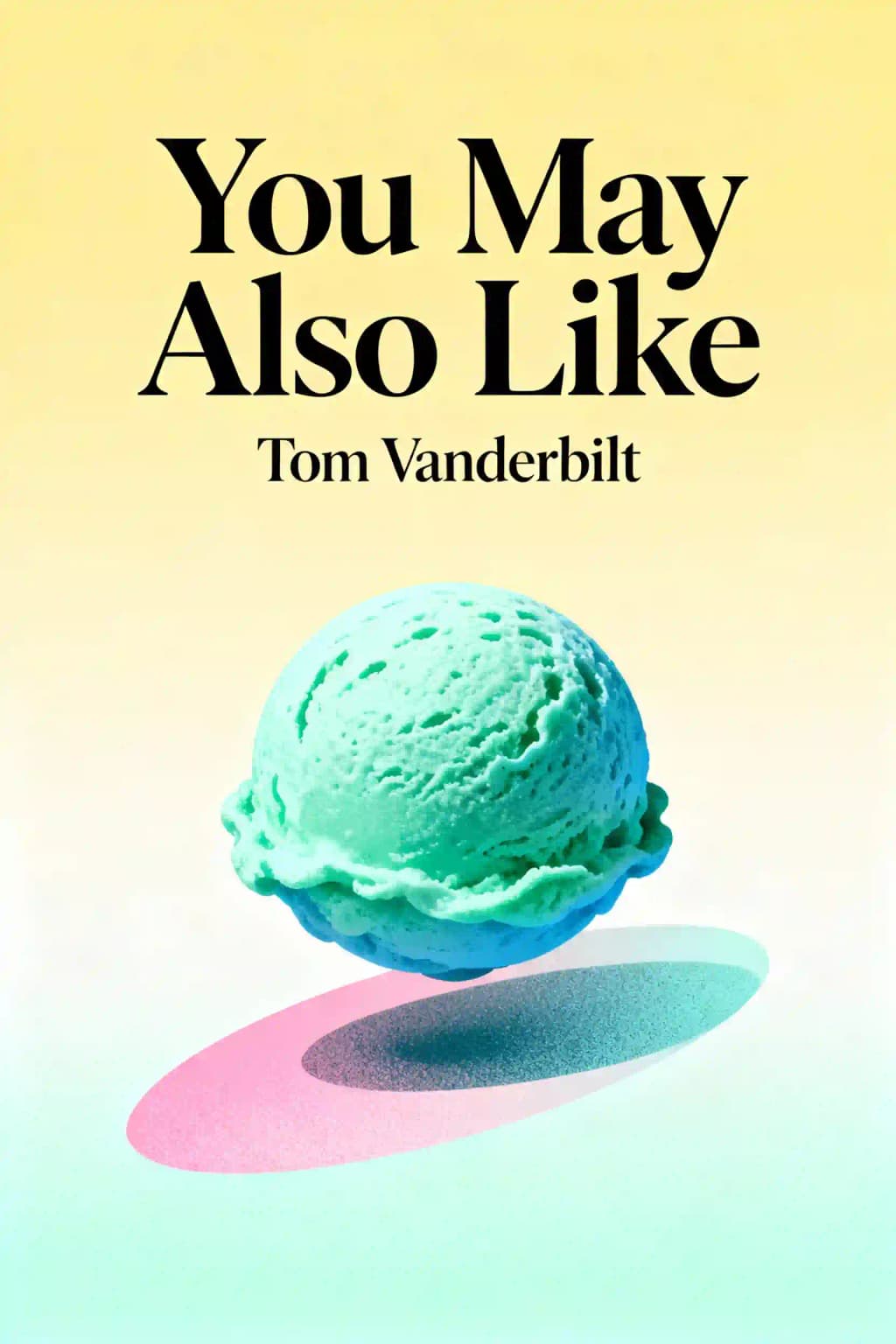
Why do you like what you like? Vanderbilt's New York Times bestseller explores the hidden psychology behind our preferences in this Kirkus Best Book of 2016. Discover the "hipster effect" and why algorithms know your taste better than you do.
Ressentez le livre à travers la voix de l'auteur
Transformez les connaissances en idées captivantes et riches en exemples
Capturez les idées clés en un éclair pour un apprentissage rapide
Profitez du livre de manière ludique et engageante
A man with frontotemporal dementia suddenly falls in love with Italian pop music-the same "mere noise" he'd dismissed his entire life. His neurological condition rewired his aesthetic preferences overnight. If brain chemistry can transform our tastes so dramatically, how much do any of us truly understand about what we like and why? This question haunts our age of algorithmic recommendations, where Netflix suggests your next binge and Spotify curates your soundtrack. We've become accustomed to machines predicting our desires, yet the machinery of preference formation remains far more mysterious than the algorithms designed to exploit it. Our tastes appear deceptively straightforward but prove maddeningly complex upon examination. They're categorical (loving blue everywhere except on cars), contextual (red pants acceptable in Madrid but mortifying in Manhattan), and constructed (we invent reasons after choosing). Rarely are they truly inherited-children seldom share parental preferences despite identical genetics. Bottle-fed Germans unconsciously prefer ketchup containing vanillin found in infant formula, while breast-fed Germans favor regular ketchup. Neither group has any idea why. We labor under an illusion of authenticity, convinced we understand our preferences when we're often strangers to our own desires. Expert violinists, tested blindly, typically prefer new instruments to supposedly superior Stradivarius violins. Much of our preference behavior occurs in what psychologist Timothy Wilson calls the "adaptive unconscious"-yet we construct elaborate post-hoc explanations for feelings that seem authentically ours. Like Woody Allen's character strategically arranging intellectual books before a date, we perform our tastes as much for ourselves as for others.
Décomposez les idées clés de You May Also Like en points faciles à comprendre pour découvrir comment les équipes innovantes créent, collaborent et grandissent.
Condensez You May Also Like en indices de mémoire rapides mettant en évidence les principes clés de franchise, de travail d'équipe et de résilience créative.

Découvrez You May Also Like à travers des récits vivants qui transforment les leçons d'innovation en moments mémorables et applicables.
Posez n'importe quelle question, choisissez la voix et co-créez des idées qui résonnent vraiment avec vous.

Cree par des anciens de Columbia University a San Francisco
"Instead of endless scrolling, I just hit play on BeFreed. It saves me so much time."
"I never knew where to start with nonfiction—BeFreed’s book lists turned into podcasts gave me a clear path."
"Perfect balance between learning and entertainment. Finished ‘Thinking, Fast and Slow’ on my commute this week."
"Crazy how much I learned while walking the dog. BeFreed = small habits → big gains."
"Reading used to feel like a chore. Now it’s just part of my lifestyle."
"Feels effortless compared to reading. I’ve finished 6 books this month already."
"BeFreed turned my guilty doomscrolling into something that feels productive and inspiring."
"BeFreed turned my commute into learning time. 20-min podcasts are perfect for finishing books I never had time for."
"BeFreed replaced my podcast queue. Imagine Spotify for books — that’s it. 🙌"
"It is great for me to learn something from the book without reading it."
"The themed book list podcasts help me connect ideas across authors—like a guided audio journey."
"Makes me feel smarter every time before going to work"
Cree par des anciens de Columbia University a San Francisco

Obtenez le resume de You May Also Like en PDF ou EPUB gratuit. Imprimez-le ou lisez-le hors ligne a tout moment.