Chapitre 1
The Digital Identity Crisis: How Technology Shapes Our Humanity
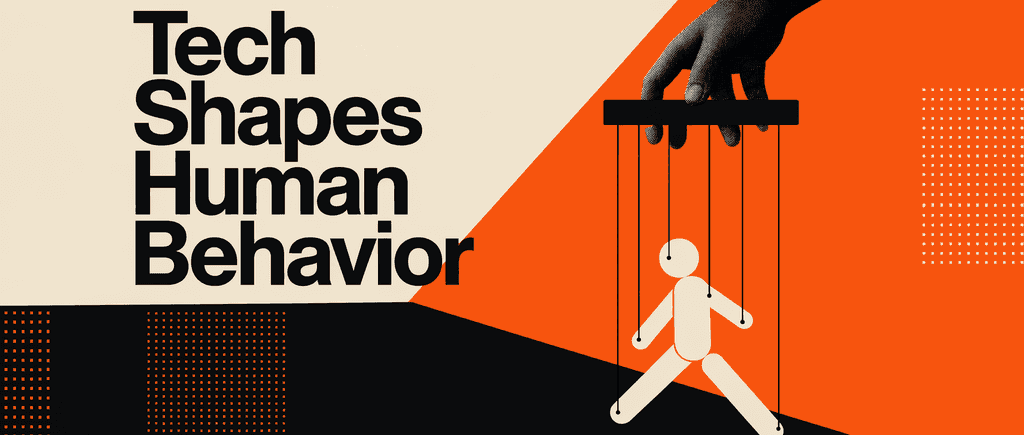
In an era where algorithms predict our preferences, social media platforms define our relationships, and artificial intelligence threatens to surpass human capabilities, Jaron Lanier's "You Are Not a Gadget" arrives as a powerful counterpoint to Silicon Valley's techno-utopianism. This manifesto from one of virtual reality's founding fathers has become required reading for tech luminaries from Mark Zuckerberg to Elon Musk, who cite it as a crucial warning about technology's potential to diminish rather than enhance our humanity. Lanier's work stands as a rare voice of caution amid the relentless technological optimism of the digital age-a philosopher-scientist asking not just what we can build, but what we might lose in the process. "I want to say: You have to be somebody before you can share yourself," Lanier writes, addressing not the algorithms that will scan his words but the human beings he hopes to reach.
Chapitre 2
The Perilous Path of Digital Lock-In
The digital revolution has taken a troubling turn. What began as a promise of unlimited creative freedom has morphed into rigid systems that constrain human expression. At the heart of this transformation lies what Lanier calls "lock-in"-the process by which early software design decisions become permanent, unchangeable fixtures in our digital landscape, often made by a small group of engineers working under time pressure and limited resources.
Consider MIDI, a casual creation from the early 1980s meant to connect synthesizers. Despite representing only keyboard events and missing the expressive nuances of singing or wind instruments, MIDI became the universal standard for digital music. Decades later, billions of devices still use this limited framework, structuring most music we hear. The rich vibrato of a violin, the breathy texture of a flute, or the subtle pitch variations in human voice - all must be approximated within MIDI's rigid framework. What was once a bottomless, transcendent musical note became defined by MIDI's parameters, reducing infinite musical possibility to a discrete set of values.
This pattern repeats throughout our digital infrastructure. The UNIX operating system's command-line interface imposed a brittle philosophy where discrete events trump continuous, embodied experience. Its influence extends far beyond technical circles - from the way smartphones handle notifications to how web browsers process user input. Despite computers becoming millions of times faster, this philosophy haunts modern devices with unpredictable delays and interruptions. Users experience micro-frustrations: the lag when typing, the stutter in video playback, the delayed response to touch - all echoes of UNIX's fundamental architecture refusing to accommodate human rhythms.
Even the concept of a "file" has become so deeply embedded that we teach it as natural law rather than recognizing it as a philosophical choice. This abstraction - organizing human expression as leaves on an abstract tree - shapes how we think about information itself. Early alternatives existed: Ted Nelson's Xanadu conceived one giant global file where all information was interconnected, and the first Macintosh had no files at all, using a document-centric approach. Now files are eternal flesh of philosophical ideas, so universal we cannot conceive alternatives. Their structure influences everything from how we organize our work to how we conceptualize digital ownership.
The stakes of lock-in have never been higher as we enter the era of artificial intelligence and virtual reality. Today's design choices about privacy, identity, and social interaction may become permanently embedded in our tools for understanding each other and the world. Decisions about how AI systems represent human values, how virtual spaces handle presence and embodiment, and how digital platforms mediate human relationships could become as unchangeable as MIDI or UNIX. Once locked in, these philosophies become invisible through ubiquity, making alternatives unimaginable. As Lanier warns, "What happened to trains, files, and musical notes could happen soon to the definition of a human being" - a sobering reminder that today's expedient technical choices may shape humanity's future in ways we cannot easily undo.
Chapitre 3
The Hive Mind's Hollow Promise
The internet's early days revealed unexpected human potential-millions cooperating without commercial motives, punishment, charismatic leaders, or fear. People created beautiful things simply because they were good ideas. Even digital optimists were shocked when their idealistic philosophy, embedded in software, actually worked.
Yet this promise has soured in perverse ways. Our early faith in human nature-that empowering individuals would produce more good than harm-has been superseded by faith in the internet as a superhuman creature. This puts people back in shadows. Anonymous online culture has degraded ordinary people while empowering trolls. When businesses rushed in, they created products addressing no actual lack, while voluntary creativity became commoditized to maintain the pretense that computers do everything and people nothing.
A particular technologist subculture has become dominant-"cybernetic totalists" or "digital Maoists" headquartered in Silicon Valley with global power bases. Their central mistake is chopping a network of individuals so finely you get mush, caring more about the abstraction of the network than the only truly meaningful element: the people themselves.
The consequences are severe: online mobs with empowered trolls, financial systems manipulated through computing clouds, scientific understanding diminished, pop culture trapped in nostalgic mashups, and spirituality committing suicide as consciousness tries to will itself out of existence. These aren't separate problems but aspects of one mistake: reducing personhood through "illusions of bits."
This ideology manifests in designs like Wikipedia, which erases point of view entirely, and social networks that reduce people to multiple-choice identities. When technologists impose this flattening, we call it innovation rather than authoritarianism. Using computers to reduce individual expression is primitive and retrograde, no matter how sophisticated the tools.
Some believe the fragments of human effort flooding the internet form a "hive mind" or "noosphere"-a new superintelligence emerging globally. A fashionable idea in technical circles is that quantity transforms into quality at extreme scale. But as Lanier argues, even networking quadrillions of alien contributors wouldn't replicate the achievements of one mediocre physicist. Garbage in, garbage out.
Chapitre 4
The Turing Test Cuts Both Ways
Alan Turing, the founding father of computer science and WWII hero who cracked the Nazi Enigma code, articulated a profound mistake before his tragic suicide. Persecuted for his homosexuality and subjected to female hormone treatments by British authorities, Turing presented the world with his famous test-a genuinely new spiritual idea asking whether a judge can distinguish between texts from a hidden human and a computer.
Generations of technologists have misinterpreted the Turing test as supporting machine consciousness. What it really reveals is that machine intelligence can only be known relatively, through human perception. The AI mindset suggests the computing cloud will become a superior consciousness to individual persons. But the test cuts both ways: you can't determine if a machine has gotten smarter or if you've lowered your standards to make it seem intelligent.
People constantly degrade themselves to make machines look smart-bankers trusting algorithms for credit risks, teachers instructing to standardized tests, users accommodating search engines. Every instance of machine intelligence is ambiguous. After repeated failures in natural language understanding, many AI enthusiasts found consolation in the hive mind, which works better because real people are behind it.
Chess demonstrates how the Turing test has already reduced personhood. When Deep Blue defeated Kasparov in 1997, the public reaction revealed deep anxiety about human uniqueness. But this framing was unfortunate-what actually happened was that computer scientists built a fast machine with elegant software. The achievement belonged to people, not machines. The irony is that Kasparov lost partly because he was spooked by the computer's imagined psychology-he detected a "sinister stone face where there was absolutely nothing." The contest became an unintended Turing test, and Kasparov was fooled.
When we attribute intelligence to machines, people defer to computers rather than demanding better design, standing engineering on its head. We technologists are obsessed with rituals pretending people are obsolete, when we should be celebrating human achievement.
Chapitre 5
The Devaluation of Everything Digital
The digital orthodoxy of "open" or "free" culture threatens to ruin a historic opportunity to benefit all humanity through technological advancement. While relative poverty is decreasing globally, wealth inequality is accelerating. Soon, medical advances might create unprecedented disparities in life expectancy between rich and poor-the kind of morning realization that could turn anyone into a Marxist.
What saved us from previous economic upheavals was that new technologies created better jobs than those they replaced. But we're approaching an endgame as robots improve-performing surgery, combat missions, and fabricating products. Affordable hobbyist robots can already create household items on demand. Without reformulated digital ideals, we'll usher in a dark age where everything human is devalued.
Unfortunately, only one product maintains value as everything else is devalued under the banner of the noosphere: advertising. Once elevated from an accelerant to the center of human universe by open culture, advertising becomes sacrosanct while all other expression is remashed and decontextualized. The irony is stark-Silicon Valley once despised advertising as a sin of old media, yet now it's the only form of expression meriting commercial protection. Google's massive earnings from ads reveal the fundamental contradiction: if crowds are truly wise, why do they need paid persuasion?
When money flows to advertising instead of musicians, journalists, and artists, society values manipulation over truth and beauty. The new social contract encourages creators to give their work freely to the hive mind in exchange for self-promotion. Culture becomes nothing but advertising. While a few exceptional success stories exist during this transitional period, they're unlikely to continue as digital technology evolves.
We digital revolutionaries blamed the "dinosaurs" of old media for failing to adapt, claiming their decline was due to stubbornness or stupidity. Yet none of us offered constructive advice on how they might survive. This blame-shifting masks a troubling reality: during the Bush years, with fewer professional journalists but more bloggers, America made catastrophic military and economic decisions without proper scrutiny.
In the winner-take-all digital economy, the brightest students no longer pursue intellectually profound aspects of computer science but instead aim to join the new royalty at the center of the cloud. Meanwhile, creative people-the new peasants-converge on shrinking oases of old media. The "free" ideology forces anyone wanting to survive through intellectual work to either seek protection in stodgy institutions or become pets of wealthy patrons.
Chapitre 6
The Missing Musical Revolution
The internet era has failed to deliver the musical revolution many anticipated. For the first time in recording history, we've experienced a decade without distinct stylistic evolution. Young listeners struggle to distinguish between tracks from 1998 and 2008, whereas previous generations could easily identify the signature sounds of the 50s, 60s, 70s, and 80s. While technically "new" electronic genres like dubstep, future bass, and tropical house exist, they're more taxonomical exercises than true innovations - minor variations on established formulas rather than groundbreaking developments.
This stagnation is particularly baffling given technology's historical role in driving musical innovation. Stravinsky's Rite of Spring required more advanced brass and woodwind instruments than existed decades earlier, fundamentally changing orchestral possibilities. Rock and roll emerged from amplification experiments, with pioneers like Les Paul pushing guitar technology to create entirely new sounds. The Beatles transformed music through multitrack recording and revolutionary audio effects, while synthesizer advances enabled entirely new genres like electronic music and hip-hop. The internet promised super-Gershwins and radically new musical forms for virtual worlds, yet instead delivered an endless recycling of familiar sounds.
What emerged instead is cultural "pattern exhaustion" that became permanent rather than transitional. Modern music production software offers thousands of presets and samples, but this abundance paradoxically leads to homogenization. Artists can easily access any sound imaginable, yet this very accessibility has created a musical landscape where everything sounds vaguely familiar.
Even supposedly radical online culture amounts to mashups of pre-web content. Cultural blogs and YouTube streams mine the past like salvagers at a garbage dump, endlessly repackaging and recombining existing elements. Music aggregator sites and streaming platforms encourage this recycling by promoting algorithmic playlists and similar-sounding tracks. The most beloved digital successes-iPhones, Pixar movies, major video games-all involve personal vision directing salaried teams, not the promised democratization of creativity through hive creation.
This stagnation connects deeply to flat information networks that prioritize global contexts over local ones. Hip-hop stands as a notable exception by weaponizing digital limitations, turning software's inherent rigidity into a powerful metaphor for alienated modern life. The regular beat and repeated samples express stuckness and frustration-a digital sample in angry rap doesn't correspond to graffiti but to the wall itself, representing the constraints of modern digital existence.
The hive ideology fundamentally robs musicians of control over their work's context. The whole point of making music is connecting with others through shared experience and emotion, yet systems like Creative Commons and streaming platforms don't support this human interaction. They prioritize remoteness and free content over meaningful exchange and artistic intent. When music becomes just digital fragments used by anonymous third parties, it's reduced to one dot in a pointillist spew, losing its power to create genuine human connection. The numerical popularity metrics in the cloud - streams, likes, shares - don't correlate with intensity of connection or cultural impact, creating an illusion of success while masking the deeper crisis in musical innovation.
Chapitre 7
Humanizing Our Digital Future
Could there be alternatives beyond old media and open culture? Ted Nelson, who invented digital media links in the 1960s and pioneered the concept of hypertext, proposed a profound economic vision: instead of copying digital media, we'd keep one copy of each cultural expression and pay authors small amounts whenever their work is accessed. This would allow anyone to potentially get rich from creative work-both viral sensations and obscure scholars over time. Nelson's "Xanadu" system envisioned a world where every quote could be traced to its source, and every author compensated for their contributions.
In Nelson's system, there would be no copies, just services, eliminating the troubled concept of digital rights management. Instead of focusing on restricting access, the system would track usage and ensure fair compensation. Creative expression could become the most valuable resource in a future of material abundance, where automation and efficient production methods make physical goods plentiful, but human creativity remains in short supply. This model would recognize the unique value of human ingenuity, artistic expression, and intellectual contribution.
How could we transition from open copying to paid access? Your Internet Service Provider could offer an attractive option: stop paying monthly access charges in exchange for signing up for the new social contract where you pay for bits consumed. If you accessed no paid bits in a month, you'd pay nothing. You'd earn money when others visited your content and pay when visiting others' content. This creates a dynamic ecosystem where value flows directly between creators and consumers. More people would transition over time, attracted by the opportunity to monetize their content, from blog posts to videos to academic papers.
The open culture crowd believes human behavior can only be modified through involuntary means, consistent with their skepticism about free will and personhood. They claim that without perfect copy-protection technology, copy prohibitions are pointless. But this is unrealistically pessimistic and ignores centuries of social contracts that work without perfect enforcement. Few people break into cars and houses despite how easy it is-locks are merely symbols reminding us of a social contract we benefit from. Similarly, most people pay for music streaming services despite knowing how to pirate songs, because the convenience and fairness make it worthwhile. Human choice makes our world function; technology can motivate choice but not replace it. The success of platforms like Patreon and Substack shows people will voluntarily pay for content they value when given convenient ways to do so.
This vision suggests a future where creativity is properly valued, artists and thinkers can make sustainable livings, and the internet becomes a marketplace of ideas rather than a copy machine. It's a model that respects both creator rights and consumer convenience, building on human nature rather than fighting against it.
Chapitre 8
Neoteny and Post-Symbolic Communication
Digital culture is overwhelmingly juvenile, a phenomenon that manifests across the entire technology sector. Massive investments flow to Silicon Valley startups with childish names like Google, Yahoo, and Twitter, while brilliant engineers dedicate their talents to creating seemingly trivial applications - from sending digital teddy bears between adults to designing cartoon avatars for corporate communications. Even serious business tools often feature playful interfaces with bright colors and gamified elements. This technological infantilism isn't necessarily bad - it's part of humanity's grand neotenic trend - but it's important to recognize both its creative potential and its darker aspects.
Neoteny - the evolutionary strategy of extending early developmental traits into adulthood - fundamentally distinguishes humans from other species. Human babies are essentially "fetuses in air," born remarkably underdeveloped compared to other primates, without basic skills that must be learned during an extended childhood. This extended development period enables complex cultural learning and adaptation. Throughout human history, neoteny has expanded dramatically - childhood lengthened significantly with literacy's rise, requiring protected classroom time and creating entirely new life stages like adolescence. With increasing affluence comes fewer siblings and more intensive parental investment, extending childhood even further into what sociologists now call "emerging adulthood." Technology increasingly addresses infantile needs - social networks satisfy our fundamental desire for attention and validation, while constant connection through services like Twitter and instant messaging assuages separation anxiety and fear of missing out.
Digital culture's neoteny manifests in both beautiful and troubling ways. The positive side - what Lanier terms Bachelardian neoteny - embodies imagination, hope, creativity, and tenderness. This appears in collaborative art projects, supportive online communities, and innovative educational platforms. The dark side - Goldingesque neoteny - manifests as trolling, cyberbullying, and mob behavior, revealing how digital anonymity can unleash primitive impulses. Both aspects coexist in our digital playground, often within the same platforms and communities.
In 1980s Palo Alto, Lanier and colleagues built pioneering VR systems that created transformative experiences where users' brains would accept virtual worlds as real. Through extensive experimentation, they discovered "homuncular flexibility" - people could quickly learn to control virtual bodies with extra limbs, unusual proportions, or even non-humanoid forms. Users could operate octopus-like appendages or navigate as flying creatures, demonstrating the brain's remarkable plasticity. The most profound revelation was that VR dissolved the conventional boundary between body and reality, leaving only consciousness at the center of experience - making VR essentially a "consciousness-noticing machine."
This breakthrough points toward what Lanier calls "postsymbolic communication" - the potential to directly create shared experience without symbolic language as intermediary. Inspired by cephalopods' remarkable ability to morph both skin color and physical shape for communication, this fluid concreteness might prove more expressive than traditional abstraction. Instead of describing experiences through words or symbols, future technologies might enable direct sharing of sensory experiences, emotions, and mental states. This could offer a radical new form of communication that transcends current limitations of language and could deepen human connection and meaning beyond any technological singularity. Early experiments with haptic feedback, emotional AI, and brain-computer interfaces are already exploring these possibilities.
Chapitre 9
Preserving Human Dignity in a Digital World
Lanier's vision for technology is fundamentally humanistic rather than mechanistic, emphasizing the preservation of individual identity and creative expression in our digital interactions. He offers detailed, practical suggestions for maintaining our humanity in the digital age: avoid anonymous posting which can lead to dehumanized behavior; invest personal effort in creating original content outside of collaborative platforms like wikis; develop distinctive personal websites that go beyond standardized social media templates; produce thoughtful videos that require significant creative investment and planning; craft reflective blog posts that showcase individual perspective; and use social media to share meaningful internal experiences rather than superficial status updates.
These recommendations stem from Lanier's observation that digital platforms often reduce human complexity to simplified data points. He argues that when we limit ourselves to preset formats and templates, we inadvertently participate in our own reduction to machine-readable fragments. Instead, he advocates for digital expression that preserves the nuance, creativity, and unpredictability that make us human.
The fundamental question isn't whether technology will continue to advance-that's inevitable-but whether that advancement will enhance or diminish our essential human qualities. Will we design systems that recognize and celebrate individual consciousness, creativity, and genuine connection? Or will we surrender to designs that reduce us to statistical fragments in a hive mind? Lanier points to specific examples where technology has already begun to flatten human experience: automated content recommendation systems that narrow rather than expand our horizons, social media algorithms that reward inflammatory content over nuanced discussion, and digital payment systems that undervalue creative work.
Lanier's message remains fundamentally hopeful, grounded in the belief that we still possess agency in shaping our technological future. We can actively reject the false promise of the noosphere-the idea of a collective consciousness that subsumes individual identity-and instead create technologies that amplify rather than replace human capabilities. We can build economic systems that properly value creative work and intellectual property rather than solely serving advertising interests. We can design interfaces that honor the embodied, continuous nature of human experience rather than forcing us into rigid, discrete categories.
The digital revolution remains unfinished, its trajectory still malleable. Its outcome depends not on technological determinism but on the philosophical and practical choices we make about what aspects of humanity we choose to preserve and enhance. Lanier emphasizes that these choices must be made consciously and deliberately, with full awareness of their implications for human dignity and autonomy. You are not a gadget-and the technologies we build should reflect and enhance that profound truth, rather than diminishing or denying it.