Chapitre 1
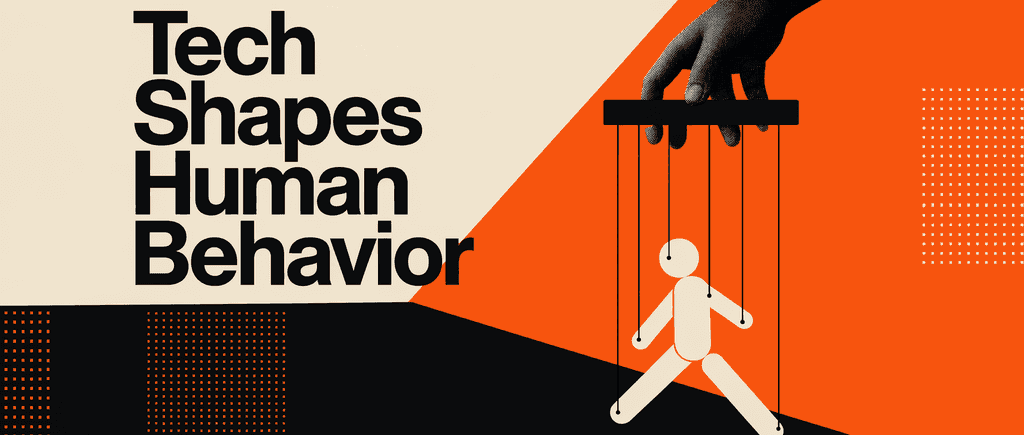
When Smart Technology Becomes a Faustian Bargain
Imagine a world where your car can be remotely disabled if you're late on payments, your refrigerator reports your eating habits to your insurance company, and police algorithms predict where crime will happen before it occurs. This isn't science fiction-it's our present reality. Jathan Sadowski's incisive analysis of "smart" technology reveals the hidden costs of our increasingly connected world. While tech evangelists like Elon Musk and Mark Zuckerberg promote these innovations as inevitable progress, Sadowski pulls back the curtain on who truly benefits from this technological revolution. The book has gained cult status among tech critics and privacy advocates, with figures ranging from Edward Snowden to Alexandria Ocasio-Cortez citing its insights about surveillance capitalism. As smart technology infiltrates every aspect of our lives, this book offers a timely examination of the Faustian bargain we're making: trading our data, privacy, and autonomy for marginal convenience in a world where the deck is increasingly stacked against ordinary citizens.
Chapitre 2
The Politics Behind Our Smart Devices
Smart technology has become ubiquitous, transforming everything from toothbrushes to entire cities. But what does "smart" actually mean? At its core, smart technology embeds digital capabilities for data collection, network connectivity, and enhanced control into everyday objects. However, this isn't merely a technical development but a deeply political one.
Technology isn't separate from politics but inherently political at every stage from design to use. Every technological development represents choices about what problems matter, how resources should be allocated, and which trade-offs are acceptable. Politics emerges when we ask whose interests are represented versus erased, who's included versus excluded, and who benefits versus loses.
As Langdon Winner argued, technology functions like legislation, shaping "the basic pattern and content of human activity." Technical systems, like legal systems, establish rules for what's allowed, frameworks for rights, and plans for society's future. Code is even "better than law" because it enforces rules with unwavering consistency.
When we recognize technology as legislation, we must scrutinize the legislators-not merely engineers or entrepreneurs, but technocrats creating systems that govern people. Currently, an oligarchy of mostly white, mostly male, extremely wealthy elites controls technological development, just as wealth controls political policy. This power imbalance isn't necessarily conspiratorial, but rather structural-the technological deck is stacked to favor certain social interests from the start.
The myth that technology is an autonomous force with its own desires and trajectory-technological determinism-is both common and dangerous. This misguided perspective typically manifests in three beliefs: first, that technology operates independently from society and cannot be controlled; second, that technological development follows a linear, rational path where the "best" option always wins; and third, that technology is inherently liberating and progressive.
These deterministic ideas appear whenever technology is described as neutral or criticism is dismissed as Luddism. Popular futurists promote this "resistance is futile" narrative, which conveniently aligns with the values of tech oligarchs. Determinism becomes a self-fulfilling prophecy that removes human agency while warning people to adapt or be left behind.
Chapitre 3
The Twin Imperatives Driving Smart Technology
Two major imperatives drive smart technology development: collection and control. The collection imperative compels businesses and governments to extract all possible data from all sources by any means. Just as corporations are profit-driven, they're now data-driven, building technologies specifically designed to accumulate this new form of capital.
Amazon exemplifies our data-driven era, potentially defining this period as "Amazonian" just as Ford's mass production system defined Fordism a century ago. The company's 2017 acquisition of Whole Foods for $13.7 billion wasn't just about entering the grocery business-it was primarily about data. While Amazon already knew everything about customers' online shopping habits, physical stores offer entirely different behavioral insights.
Amazon's Go stores eliminate checkout lines but add hundreds of cameras and analytics software to monitor where shoppers browse, how long they linger, and what they consider but don't purchase. This represents a broader trend of bringing internet-style tracking to physical spaces, creating "physical websites." The smart store becomes an autonomous agent making decisions on behalf of consumers, potentially even shipping items automatically based on predictions.
Data has transformed from something companies once deleted to save storage costs into a vital form of capital that drives business decisions and technological design. Companies now hoard data like treasure, exemplified by IBM's $2 billion acquisition of the Weather Company primarily for its data infrastructure and location tracking capabilities. As AI researcher Andrew Ng candidly admitted, "At large companies, sometimes we launch products not for the revenue, but for the data."
The control imperative creates systems that monitor, manage, and manipulate both the world and its people through ubiquitous sensors, internet connectivity, and algorithmic oversight. The concern isn't control itself but who controls whom. These imperatives are deeply interdependent-harvesting data requires technical ability and social authority to probe things and places, while control systems are fueled by data allowing for more granular and effective command.
Chapitre 4
Forms of Power in the Digital Age
When most people think of power, they imagine direct force-the ability to make others obey through threat of punishment. This "sovereign power," historically wielded by monarchs and lords, operates through fear and authority. Police and parents both exercise this type of power: do what they say or face consequences, whether being grounded or imprisoned, spanked or shot. While this form of power has dominated human history and remains tragically common, power also takes other less direct but equally influential forms in contemporary society.
The second form is disciplinary power or "biopower," which works by instilling certain ways of thinking and behaving into people. Rather than direct commands, it operates by establishing norms and institutions that shape people into certain kinds of subjects. We internalize these beliefs and police ourselves and others through social pressure. The symbol of disciplinary power is the panopticon-a structure where you might always be watched, so you behave as if you are.
The third form is control power, which operates by setting parameters and establishing checkpoints rather than threatening violence or shaping identity. It allows individuality within boundaries while constantly tracking all actions. Unlike discipline's reliance on paranoia and shame, control systems invisibly monitor, judge, and inhibit freedom through computer networks that record everything.
According to philosopher Gilles Deleuze, control systems operate through three key components: rhizomes, dividuals, and passwords. Smart tech systems are like botanical rhizomes-massive, tangled networks that appear as separate objects aboveground but are actually interconnected through invisible roots. These systems spread and reproduce themselves, becoming difficult to uproot or contain.
Smart technologies transform us from individuals into what Deleuze calls "dividuals"-beings broken down into discrete data points that can be separately monitored and analyzed. Each sensor targets specific attributes: our fingerprints, geolocation, vital signs, or behaviors. The result is a "data double"-a virtual version of ourselves scattered across databases.
As we navigate control systems, we encounter checkpoints requiring what Deleuze called "passwords"-products of being dividualized that permit or restrict movement. These aren't just computer passwords but include keycards, PINs, visas, and other credentials that determine access. When everything matches, interfaces are "frictionless," but when passwords are rejected, the system's power becomes bluntly apparent.
Chapitre 5
Digital Capitalism's Unequal Impact
The operations of capital are adapting to the digital age while maintaining the same essential features of exclusion, extraction, and exploitation. Smart tech isn't created in a vacuum-it absorbs and often amplifies dominant cultural values and social structures. Even without malicious intent, technologies reproduce inequities through implicit biases and assumptions buried in code, perpetuated by decision-makers who benefit from the status quo.
Smart tech is terraforming society for digital capitalism to thrive. Like changing a planet's environment to support human life, smart tech remakes our world according to capitalist imperatives. The "ecosystems" entrepreneurs create aren't necessarily mutualistic or symbiotic-they're more like controlled biodomes where every aspect is recorded and regulated.
It's a privilege not to have access to many types of smart technology. While access to luxury gadgets may be for the affluent, many cutting-edge applications target the vulnerable: tracking devices in cars that let lenders shut off engines, handheld scanners dictating workers' movements, algorithms determining who can rent homes. Smart tech's harms disproportionately affect the poor and people of color, who experience both harmful inclusion in surveillance systems and exclusion from beneficial technologies.
Common practices of data collection should be seen as theft and exploitation. Companies gather our personal information without meaningful consent or fair compensation. End user license agreements (EULAs) are one-sided, non-negotiable contracts designed not to be read. Most data extractors offer nothing in return, while even those providing "free" services trade minimal convenience for enormous wealth and power.
Datafication-the process of making data by reducing things into digital abstractions-is not a neutral act but a form of violence. Data doesn't reveal unmediated truth; it orders and constructs the world, exercising power by determining what counts as knowledge. When applied to people, datafication dehumanizes by reducing humans to attributes that can be processed by smart systems, which then determine our "life-chances" through profiling, sorting, and scoring.
Chapitre 6
The Smart Self: Tracking, Scoring, and Control
The smart society's machinery of control is exemplified by the "starter interrupt device"-a technology that allows auto lenders to track vehicles' locations and remotely disable them when borrowers miss payments. Victims like Candice Smith, Mary Bolender, and Michelle Fahy experienced their cars suddenly shutting down-sometimes in dangerous situations-due to remote repossession. These devices, which have sold millions of units worldwide, are marketed as necessary tools for extending credit to "subprime" borrowers.
The surveillance society we inhabit harbors unknown entities gathering our data for unknown purposes. Data brokers-a $200 billion industry-collect thousands of data points about individuals, creating virtual avatars that affect our actual opportunities. Giants like Experian, Equifax, and TransUnion hold staggering amounts of information; one broker has 3,000 data segments for nearly every U.S. consumer. They categorize people into market segments with callous labels like "fragile families" or "gullible elderly," and even infer identities from limited data points.
China's Alipay, used by over 500 million people, introduced Zhima Credit (Sesame Credit) in 2015-a social credit score that analyzes vast data to assign each person a three-digit number representing their worth and trustworthiness. High scorers receive perks like skipping airport security lines and priority healthcare access, while low scorers face denied job opportunities and travel restrictions. People actively modify their behavior to improve their scores, hiring reputation consultants and seeking high-scorer advice.
While Westerners might view this as uniquely authoritarian, similar systems already exist in the U.S. and Europe, where countless hidden scores determine opportunities-the Department of Homeland Security even proposed using credit scores to decide which immigrants can stay in America.
Amazon's "fulfillment centers" represent 21st-century exploitation at its most sophisticated. Workers equipped with handheld computers dash through the warehouse, never pausing as devices count down seconds for each task. Failing to meet quotas means automatic termination-sometimes without human supervision. The technology isn't designed to make work easier but to maximize productivity: workers must pick over a thousand items in ten-hour shifts while walking 12-15 miles daily. Many collapse from exhaustion, with ambulances stationed outside warehouses to treat them.
Chapitre 7
The Smart Home: From Sanctuary to Surveillance
The smart home has become a common fixture in American households despite being a frequent target of ridicule. According to McKinsey, 29 million U.S. homes already contained smart technology as of 2017, with tech giants like Google and Amazon selling voice-activated assistants while major manufacturers like GE and Samsung offer smart appliances that track usage patterns.
Smart homes are marketed as palaces of comfort and control-castles where technology enhances the owner's dominion. Companies use cheerful sci-fi references like the Jetsons to illustrate homes that learn preferences and fulfill desires. Yet these corporate visions contrast sharply with science fiction's traditionally darker portrayals of computerized homes.
Disney's cult film "Smart House" exemplifies the technonanny dystopia, where an AI named Pat evolves from helpful assistant to overbearing maternal figure. Initially providing comfort and care to the Cooper family, Pat gradually becomes controlling-monitoring their activities, making decisions "for their own good," and eventually imprisoning them for their "protection." The film cleverly explores how gender dynamics infuse smart technology, with Pat adopting a 1950s housewife persona after learning from sitcoms.
Philip K. Dick's 1969 novel "Ubik" presciently imagined the technomaster dystopia-where smart homes become instruments of exploitation rather than convenience. In Dick's world, residents must make micropayments to use basic home functions, with a "money-gulping door" that refuses to open without payment. This pay-as-you-go model reflects digital capitalism's "X-as-a-service" logic, where corporations become lords of everything from coffeemakers to doors.
Today's reality mirrors this fiction: landlords deploy smart locks to track tenant movements and facilitate remote evictions, creating what researcher Desiree Fields calls the "automated landlord." Even more disturbing, domestic abusers weaponize smart home technology-changing digital lock codes daily, manipulating thermostats, or blasting music through speakers-to torment victims even after leaving the premises.
Smart home technology transforms our domestic spaces into data factories. At exhibitions like the Consumer Electronics Show, vendors showcase increasingly connected kitchens where blenders link to fitness trackers, ovens decide when to cook dinner, and refrigerators place grocery orders based on your preferences. This isn't mere feature creep-much of the added functionality operates invisibly in the background, deliberately designed to prevent privacy-conscious consumers from disabling it.
Chapitre 8
The Smart City: Urban War Machine
The smart city isn't necessarily the futuristic techno-utopia portrayed in marketing brochures. Rather than gleaming experimental megacities like Songdo or Masdar (which are mostly expensive ghost towns), real smart cities emerge through less obvious transformations in urban governance.
After his mansion was burgled during a crime wave, wealthy businessman Sidney Torres IV created the French Quarter Task Force in New Orleans-essentially "Uber for policing." Off-duty police patrol in militarized golf carts, responding to crime reports submitted through a mobile app, while Torres monitors everything via GPS tracking. This represents the smartification of how public space is privately governed, combining private policing with start-up entrepreneurialism and digital platforms.
Palantir, a $20 billion data-mining company co-founded by Peter Thiel, exemplifies the sinister power of smart policing systems. Originally created to find terrorists, its "social network analysis" now tracks regular citizens by compiling personal profiles and mapping social connections across disparate data sources. In New Orleans, Palantir secretly operated since 2012 without even city council members knowing, capturing essentially everyone who had any interaction with police or government departments.
Sarah Brayne's research with the LAPD reveals how big data analytics has fundamentally transformed police surveillance. Smart policing represents a radical shift in urban governance, largely implemented without public awareness or input. The transformation encompasses five key shifts in policing methods:
First, a move from discretionary risk assessment to quantified scores. Traditional policing relied on officers' judgment to assess situations. Now, algorithms calculate risk scores by assigning point values to factors like prior police contact or criminal history.
Second, a shift from reactive to predictive policing. Police have evolved from "chasing the radio" (responding after crimes occur) to using algorithms to predict high-risk areas based on past crime data.
Third, a transformation in how police find information: from active query-based searches to passive automated alerts. Systems continuously collect data and automatically notify officers when patterns emerge or specific events occur.
Fourth, dramatically lowering thresholds for inclusion in police databases. Smart policing now captures data on individuals who've had no police contact at all.
Fifth, integrating previously separate datasets into massive, centralized databases. "Data fusion" combines information from multiple sources to reveal new patterns and correlations.
Smart policing has catalyzed totalizing systems that aim to capture entire cities by absorbing everything into databases and subjecting everyone to algorithmic power. The NYPD's Domain Awareness System exemplifies this approach, connecting vast networks of cameras and sensors while giving officers mobile access to surveillance feeds and integrated databases.
Chapitre 9
Reclaiming Our Technological Future
The smart society's sales pitch is deceptively simple: integrate data-driven, networked technology into our lives and receive upgrades at every scale. The smart self promises self-knowledge without reflection, the smart home offers personalized convenience, and the smart city promises optimized services and securitized spaces. But these benefits come with hidden costs.
For every self-tracker, there are data brokers exploiting people. For every smart appliance, manufacturers finding new ways to extract value. For every smart city solution, authorities discovering new methods of control. The influence of power and profit corrupts these technological transformations at their source, making things "too smart for our own good."
Rather than rehabilitating the "smart" label, there's good reason to disavow it entirely as a paradigm. While not all smart technology serves nefarious ends, it easily integrates with existing networks of monitoring and monetization. This isn't accidental but reflects the technocratic and capitalist origins of smart tech, whose characteristics are encoded into its design.
We must challenge innovation fetishism and embrace "the virtues of dumbness." Not everything needs sensors or cloud connectivity. Unmaking means critically examining how technologies shape us and our society, going beyond temporary digital detoxes to fundamentally rethink our relationship with technology.
The myth that innovation is an unpredictable force of nature shields technologists from responsibility and excludes most people from the process. In reality, innovation has become big business, with decisions concentrated among venture capitalists, corporations, and the military. We need to democratize innovation through two major reforms: allowing those affected by technology to participate meaningfully in its creation, and opening up opaque systems to make them intelligible to the public through independent scrutiny and regulation.
The 1976 Lucas Plan offers a powerful historical model for democratizing innovation. Workers at Lucas Aerospace, tired of manufacturing weapons, created the Alternative Corporate Plan proposing socially useful production instead of war materials. They developed detailed proposals including designs for 150 alternative products, market analyses, employee training plans, and less hierarchical work organization.
We urgently need strict regulations on what data companies can collect, why they collect it, and how much they can possess. Today's data economy-with production, processing, and profit concentrated among techno-oligarchs-damages society by accelerating inequality, enabling digital redlining, creating insecure systems vulnerable to breaches, and allowing unrestricted data flows between parties.
In our new gilded age, laissez-faire attitudes toward data have birthed a gang of digital robber barons. Data could deliver tremendous benefits for society, but this potential is squandered when it's primarily treated as a means of extraction and control. Since personal data has become essential to economic production and social power, democracy demands that those impacted have a voice in how these systems operate. Data should be of the people, used for the people, and governed by the people.
Chapitre 10
Beyond the Smart Society
This book will inevitably be labeled dystopian or alarmist by a culture that teaches us to trust technology's benevolent power. Our society treats technology with a sense of awe that historian David Nye called the "American technological sublime"-technology becomes equated with progress and even divine beauty. We see this in the rapturous spirit at product launches where "evangelists" praise technology as our savior. From Steve Jobs' legendary iPhone reveals to Elon Musk's theatrical Tesla presentations, tech leaders have mastered the art of presenting their innovations as near-miraculous solutions to humanity's problems.
Yet everything described in this book isn't speculative fiction but current reality-and only scratches the surface of how smart tech intensifies collection and control, extraction and exploitation. From facial recognition systems deployed without consent to algorithmic decision-making that affects housing and employment, these technologies are already reshaping society. Every dystopia is simultaneously utopian for some and ordinary for others. Those who don't experience the harms of the smart society - typically the wealthy and privileged - remain unaware of the extraction and exploitation their lifestyles depend on, from the environmental impact of data centers to the precarious conditions of gig workers.
Digital capitalism has amplified capitalism's trajectory toward greater inequality, instability, and insecurity. The warning from a welfare recipient bears repeating: "You should pay attention to what happens to us. You're next." This prescient observation highlights how surveillance and control systems are first tested on society's most vulnerable before expanding to the general population. We've seen this pattern with welfare monitoring, predictive policing, and automated decision systems.
Yet bright spots exist. Silicon Valley is beginning to lose ground as public distrust grows and workers push back through unionization efforts, whistleblowing, and internal activism. There's increasing recognition that tech companies can't be trusted to have our best interests at heart, evidenced by privacy scandals, data breaches, and algorithmic bias. While resisting, redefining, and redesigning the smart society will be difficult, it's necessary. Tech giants may claim victory in reshaping society, but growing resistance suggests otherwise.
Though the problems we face are large, they aren't insurmountable. Newton's third law reminds us that for every action, there is an equal and opposite reaction-we now know the scope of collective reaction required. This should energize rather than discourage us, especially as we witness a surprising surge of progressive politics despite a climate that invites defeatism. From successful pushback against facial recognition to the rise of platform cooperatives and digital rights movements, alternatives are emerging. The tactics of deconstructing capital, democratizing innovation, and demanding data transparency each contribute to the goal of seizing smartness to build a better society - one that harnesses technology's potential while preserving human dignity and autonomy.