Chapitre 1
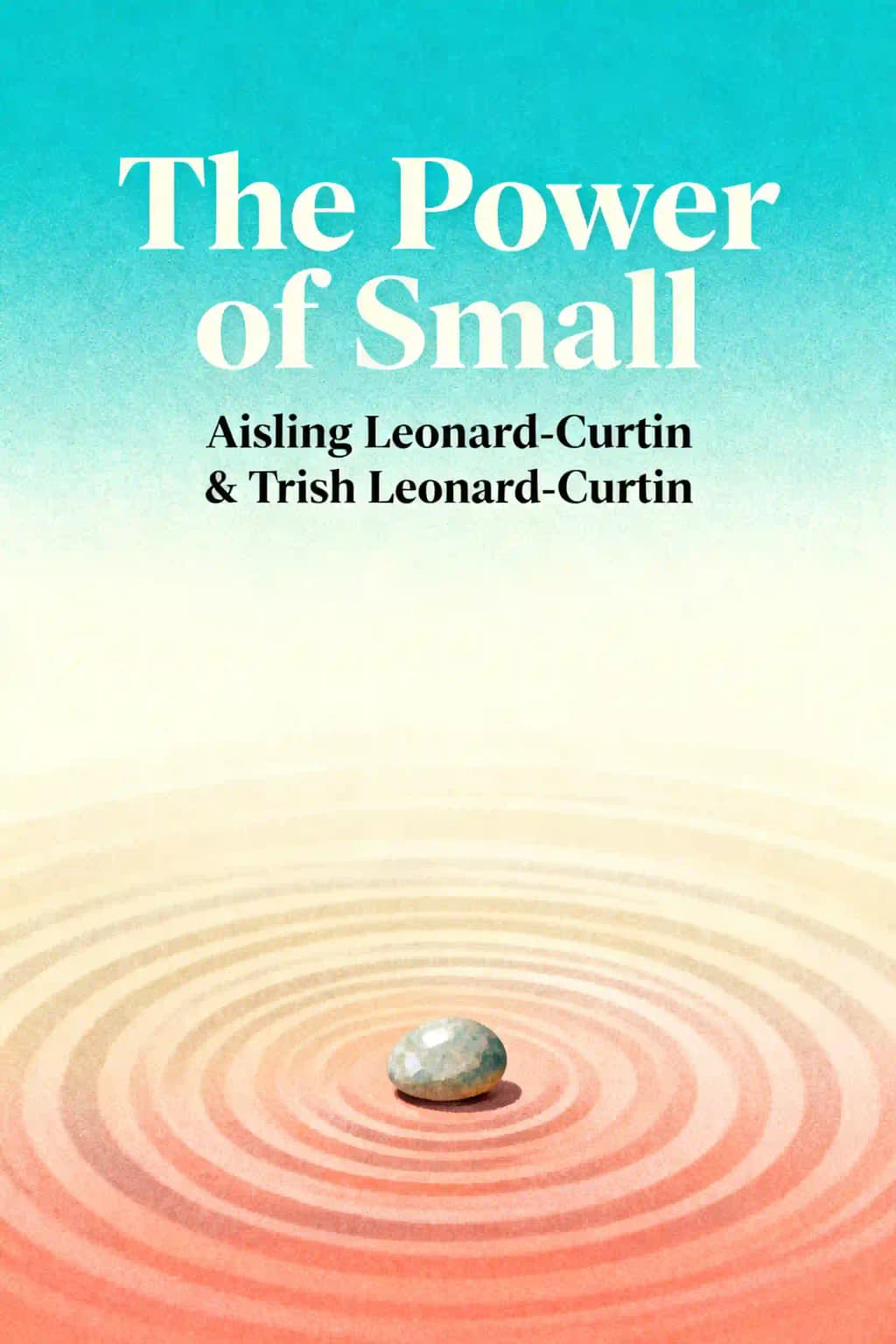
The Power of Small: Breaking Free from Life's Overwhelming Moments
When was the last time you felt completely overwhelmed? Perhaps it was facing a mountain of work deadlines, navigating a difficult relationship, or simply trying to balance the countless demands of modern life. "The Power of Small" offers a revolutionary approach to these universal struggles-not through dramatic transformations or quick fixes, but through tiny, manageable steps that accumulate into profound change. This book has become a favorite among celebrities like Emma Watson and Brene Brown, who praise its practical wisdom. Since its publication, it has sparked a movement of "small steps" workshops worldwide, with thousands reporting that these techniques helped them break free from paralysis when traditional approaches failed. The authors, married psychologists who have faced their own mental health challenges, distilled decades of clinical experience into this accessible guide that shows how even the smallest actions can create ripples of meaningful change in our lives.
Chapitre 2
The Comfort Trap: Why We Get Stuck in Patterns That Limit Our Growth
We all experience overwhelm differently based on our unique circumstances and histories. Some people excel in crisis situations by going into "do-do go-go" mode, while others experience complete shutdown. Regardless of how it manifests, overwhelm occurs when problems seem beyond our capacity or emotions feel unmanageable.
While staying comfortable feels safe, it prevents meaningful change. Many of us tend toward all-or-nothing approaches-either procrastinating endlessly or running our lives at an unsustainable pace. The Power of Small offers a middle path: gradually expanding your comfort zone through incremental steps.
This approach recognizes that while growth requires venturing outside our comfort zone, moving too far too quickly can push us beyond our "self-care zone," undermining sustainable change. For example, someone struggling with assertiveness shouldn't suddenly start confronting everyone. Instead, they might begin by choosing one empathetic person to practice with. Similarly, someone prone to angry reactions shouldn't expect to immediately give perfectly measured feedback, but could start by writing thoughts down and waiting ten minutes before responding.
The "5-Minute Breakout" is a powerful tool that involves taking just five minutes to do something outside your comfort zone but within your self-care zone. This breaks the cycle of overwhelm through small, deliberate actions. For instance, someone overwhelmed by bills might open just one bill during a 5-minute session. Someone struggling with caregiving responsibilities might take 30 seconds to check if a request aligns with their priority list before responding.
The goal isn't to eliminate uncomfortable feelings but to respond differently despite them. Even tiny actions like a five-minute walk or two minutes of mindful breathing can be powerful first steps toward addressing overwhelm and beginning necessary change, even if uncomfortable feelings remain.
Chapitre 3
Values: Building a Life Worth Fighting For
Our values connect us with what truly matters in our lives and should guide any journey of change. Change that doesn't connect with our values will inevitably be short-lived or unfulfilling. Values transcend logical processing-they're like the air we breathe, always present whether we're aware of them or not. They identify what is meaningful and purposeful in our lives, forming the small blocks that build the life we truly want.
When disconnected from our values, we create an unfulfilling life lacking purpose and direction. True values must be freely chosen rather than inherited from others or based on what we think we "should" value. Those who struggle to identify core values often spend much time trying to outrun their fears.
Five questions can help establish your core values:
1. How do you want to be remembered?
2. How would loved ones describe you?
3. What were your childhood dreams?
4. What are your three most important qualities?
5. What brings you the most joy?
These questions help align your actions with your deeper purpose rather than being directed by external pressures.
Values aren't rigid rules insensitive to context. Seeing them as inflexible "shoulds" or "musts" breeds disappointment and anxiety. Values don't depend on outcomes or results, which challenges our achievement-driven mindset. The key difference is between being mindlessly nudged through life by external expectations versus living through conscious, freely chosen actions.
Knowing your values is only the first step-you must also act in accordance with them to avoid suffering. Values aren't one-time achievements but more like a regular diet requiring daily attention. The Power of Small approach involves repeatedly checking your assumptions to ensure alignment with who you want to be, which can change over time.
Chapitre 4
Small Actions, Big Impact: The Power of Everyday Choices
Every small action or inaction impacts how we live. In any situation, we can take actions that bring us closer to or further from our valued life. Though we often focus only on major life events, research shows that small everyday stressors can have equally significant impacts when they accumulate over time. How we respond to these seemingly minor interactions profoundly influences our life satisfaction and direction.
Rather than labeling actions as good or bad, the Power of Small approach uses "toward and away moves" to avoid shame cycles. Toward moves bring us closer to our values, often involving short-term discomfort for long-term fulfillment. Away moves take us from our values to avoid uncomfortable experiences-like eating chips for anxiety relief or avoiding potential rejection.
Consider Michelle's story: rather than restrictive dieting that always failed, she made small changes like buying single chocolate bars instead of multipacks, and used "choice time" breakouts to consider consequences before acting, gradually making more toward moves for her health.
The key is choosing toward moves that are significant enough to impact your life yet small enough to be manageable-if you're less than 80% confident you'll follow through, the move is likely too big. The exercise emphasizes honesty and gentleness, recognizing we all engage in both toward and away moves for valid reasons, and that small, sustainable changes lead to massive improvements in quality of life.
Chapitre 5
The Bigger, Better, Faster Conflict: Our Internal Struggle
Humans are complex creatures who seek change while fearing it, crave spontaneity yet need structure. Despite our evolution, we remain hardwired by survival instincts from our hunter-gatherer past, but have developed a desire to thrive rather than merely survive. This creates an internal conflict as we strive to be "bigger, better, faster" while coping through two opposing modes: "do-do, go-go" (overextending ourselves) and "back away, not today" (avoidance).
In do-do, go-go mode, we relentlessly drive ourselves toward unrealistic ideals, packing our schedules and constantly pushing beyond our physical and mental limits until burnout. When we inevitably fail to meet these impossible standards, we judge ourselves harshly, creating a cycle of overextension and self-criticism.
In back away, not today mode, we avoid the pressure of our own too-high expectations, becoming paralyzed as our must-do list grows. We retreat from others and continuously postpone difficult tasks, creating a never-ending cycle of despair and inaction.
Most people engage in both modes simultaneously in different life areas, creating an imbalance where overextension in one area leads to underextension in another. For example, Alex works 60+ hours weekly but avoids relationships after a heartbreak, while Jamie avoids career advancement but maintains an active social life with frequent dating after breakups.
Beyond evolutionary hardwiring, cultural messages constantly tell us to strive for more, creating the impression that unless we're special-better than others-we're somehow flawed. These ubiquitous messages, learned from childhood, plant the self-defeating belief that we can never be good enough. Left unquestioned, this belief drives us to either hide parts we fear others will reject or desperately strive to be bigger and better, both leading to overwhelm.
David's story illustrates this dynamic. He wanted a loving relationship but struggled with severe social anxiety that prevented him from connecting with women in person. After awkward dates that went nowhere, he retreated into avoidance-deleting dating apps and avoiding social situations. This attempt to increase comfort actually decreased it, shrinking his comfort zone until he felt paralyzed.
Chapitre 6
The Why Behind Our Actions: Finding Meaningful Motivation
We're all natural goal-setters, whether pursuing career advancement or planning weekend getaways. Most goals aim to either achieve happiness or avoid unwanted emotions. Many form subconsciously through media influence and social comparison, as we constantly measure ourselves against others and feel inadequate when we believe we fall short.
Large goals often remain unfulfilled, becoming painful reminders of our shortcomings. Yet even small unachieved goals gradually erode our confidence. What drives our goals-whether intrinsic values or external comparisons-significantly impacts our likelihood of following through.
Even simple daily goals like getting up for work can stem from either toward motivation (connecting with others, doing meaningful work, supporting family) or away motivation (avoiding trouble, preventing job loss). While both might prompt the same action, toward motivation substantially increases your chances of following through consistently. If you struggle with goals, reconnect with your deeper "why"-the toward motivation behind your desired actions.
Alice's story illustrates this principle. Deeply depressed after her children had grown, she felt trapped in others' expectations. She believed she must always be kind and generous at her own expense, creating a "Groundhog Day" cycle where she'd sacrifice herself until burnout, then withdraw into depression, avoiding calls and canceling plans.
Alice initially couldn't identify her own values because she'd always prioritized others' needs. Through reflection, she discovered she genuinely valued loving relationships and nurturing intimacy with her family. Her 5-Minute Breakout involved consciously reconnecting with her toward motivation each morning, visualizing how daily activities aligned with her core values.
This practice transformed her experience-she began choosing family time from genuine desire rather than obligation, balanced with intentional alone time for self-care. While she still experiences sad moments, they now pass in minutes rather than lasting for weeks.
Chapitre 7
The Power Struggle: Accepting What We Cannot Control
We all struggle with the division between what we can and cannot control in our lives. Many mental health conditions stem from trying to control areas where we're actually powerless. While we're powerless over others' thoughts and actions, our past, and even our own automatic thoughts and feelings, we do have power over our values, attitudes, and actions in this moment.
When we acknowledge what we don't control and focus instead on small toward moves in areas where we do have power, we reclaim our agency. The paradox is that accepting our powerlessness in certain domains actually helps us regain power through intentional responses rather than reactive away moves.
Jack's story demonstrates this principle. After his ex-girlfriend evicted him from her apartment, forcing him back to his parents' home, Jack felt completely powerless. Having become a father young, he had avoided responsibility through partying and behaving like he was single. His power struggle centered on avoiding the discomfort of parental responsibility through away moves-playing computer games, going out with friends, and avoiding his daughter.
Though appearing not to care, Jack was actually terrified of failing as a father. His 5-Minute Breakout involved recognizing what he had power over and making small toward moves to improve relationships with his ex and daughter. The simplest move-texting his ex every other day about his daughter's welfare-became the catalyst for transformation. Though they didn't reunite, Jack now has his daughter every second weekend in his new apartment and maintains a good co-parenting relationship with his ex.
Everyone has areas where they feel disempowered and try to control through away moves. Mary, who doesn't earn enough for luxuries, uses credit cards for short-term power but creates long-term financial disempowerment. John, struggling with asthma, smokes 20 cigarettes daily to comfort himself despite worsening his health. Small toward moves might be Mary limiting herself to one $20 luxury purchase weekly, or John practicing three minutes of mindfulness before each cigarette.
Chapitre 8
D.O.T.S.: Our Strategies for Avoiding Pain
The D.O.T.S. framework identifies four strategies we use to avoid pain: distraction, opting out, thinking traps, and self-defeating actions. These strategies feel good short-term but make us feel worse long-term.
Distraction involves activities we engage in to escape unwanted mental experiences. While effective short-term, distraction never addresses core issues and requires constant effort to maintain. Common examples include browsing the internet, checking smartphones, keeping busy, cleaning, drinking alcohol, and consuming junk foods.
Opting out means avoiding people, activities or situations to minimize discomfort. It provides temporary relief but prevents us from doing things beneficial for long-term health and well-being. Common strategies include avoiding exercise, healthy eating, paying bills, returning calls, attending social events, expressing emotions, asking for help, confrontation, and pursuing career advancement.
Thinking traps are how we respond to thoughts that appear in our minds. These include "washing machine thinking" (repetitive thought cycles), catastrophizing, blinkered thinking, thought suppression, positive thinking, and challenging thoughts. Media constantly reinforces messages about "thinking right" that often cause more harm than good.
Self-defeating actions cause more pain in the long term while providing short-term relief. Some are driven by avoiding emotions (like suppressing feelings until explosion), while others involve avoiding specific behaviors (like avoiding exercise despite heart problems). Common examples include overindulging in unhealthy foods, staying up too late, missing deadlines, procrastinating, canceling on friends, lashing out at loved ones, not asserting needs, pushing yourself too hard, overworking, ending relationships to avoid vulnerability, isolating yourself, self-harm behaviors, avoiding medical help, and unsafe lifestyle choices.
Facing our demons head-on feels painful in the short term, but recognizing our coping strategies brings empowerment. We must examine how we control, minimize or manipulate our internal experiences. Three crucial questions to ask yourself: Have your D.O.T.S. strategies permanently eliminated unwanted internal experiences? Do these strategies make unwanted experiences better or worse when used rigidly? Do they move you closer to or further from who you want to be?
The universal answer is that no strategy permanently eliminates unwanted experiences, most make things worse long-term, and they typically move us further from our authentic selves. Acknowledging this reality builds compassion for ourselves.
Chapitre 9
Breaking Free from Mental and Emotional Traps
We often treat our mind's thoughts as gospel truth, using them to justify avoiding actions that might bring us closer to our goals. Our survival-focused minds try to keep us safe, but following this "safe mind" can lead to an unfulfilling life or an unmanageably overscheduled one.
Common advice like "just don't think about it" or "think positive" isn't always possible, as unwanted thoughts persist. Left unchecked, our minds lead us into away moves that keep us in our comfort zone rather than toward a rich, meaningful life.
Four common thinking traps keep us stuck:
1. The Pink Elephant Trap: The more we try to suppress thoughts, the bigger they become
2. The Blinkered Trap: When blinkered by a thought like "I'm overwhelmed," all decisions are filtered through this belief
3. The Washing Machine Trap: Rumination keeps unwanted thoughts cycling endlessly
4. The Deep-End Trap: Facing overwhelming thoughts head-on can be too much
A powerful technique to break free from thinking traps is to preface thoughts with "I'm having the thought that..." For example, changing "I'm overwhelmed" to "I'm having the thought that I'm overwhelmed." This small shift creates distance between yourself and the thought, transforming you from subject to observer.
Similarly, we can get trapped in emotional patterns that limit our lives. Just as we can build psychological muscles by responding to unwanted thoughts, we can do the same with unwanted emotions. How big and meaningful your life becomes directly relates to your willingness to make room for unwanted emotions. Paradoxically, it's only through feeling your emotions that you can free yourself from being limited by them.
Common emotional traps include:
1. The Quicksand Trap: The more we struggle against unwanted emotions, the further we get pulled into them
2. The Under-the-Carpet Trap: Ignoring emotions prevents us from learning what they teach us
3. The Over-identification Trap: Describing ourselves as "anxious" rather than experiencing anxiety
The AIR system (Attend, Investigate, Release) helps connect with the body when emotions feel overwhelming. First, pause to connect with the challenging emotion present in the moment. Next, describe how the emotion manifests physically in your body. Finally, after acknowledging your emotions and listening to their signals, thank them for alerting you to your needs and release them through focused breathing.
Chapitre 10
Living a Life of Minimal Regrets Through Small, Intentional Actions
When stuck in threat mode, life becomes constant fire-fighting without time for anything but urgent issues. Setting conscious small intentions guided by your values helps you respond from a grounded place rather than reacting emotionally when life throws unexpected challenges your way.
Bronnie Ware, an Australian palliative care nurse, shared the top five regrets she heard most often from dying patients:
1. Wishing they'd lived true to themselves rather than meeting others' expectations
2. Wishing they hadn't worked so hard
3. Wishing they'd expressed their feelings
4. Wishing they'd stayed in touch with friends
5. Wishing they'd allowed themselves more happiness
The Power of Small offers five approaches to prevent these common regrets:
1. Be courageous and live authentically by taking daily steps outside your comfort zone
2. Reflect on why you work rather than blindly working long hours
3. Express your feelings appropriately rather than suppressing them
4. Connect meaningfully with others since isolation harms health as much as smoking
5. Identify small actions that significantly improve your life, from brief walks to ten-minute self-care moments
To fully live an authentic life means expanding beyond our comfort zone. Our minds constantly try to protect us from harm through a "red alert threat system" that evolved for survival but often holds us back. When we avoid discomfort, we limit growth. A rich, meaningful life isn't pain-free-it requires making room for everything: good, bad and ugly.
The only way to maintain complete stability is to never take a step. If you want change, you must allow things to get messy. A rich life isn't pain-free-that's just a safe life where nothing happens. To build an authentic life worth fighting for, you need openness to learn from new experiences and willingness to accept the discomfort of doing difficult, unfamiliar things. This means developing the courage to make mistakes and learn when things don't work out.
Chapitre 11
The Power of Small Toolkit: Practical Skills for Daily Life
While major life issues may hit unexpectedly, how we respond to daily small events depends on how connected and present we are. By practicing mindfulness skills daily, we can better respond to both minor irritations and major unwanted events. When we live on autopilot-taking the same routes, performing the same tasks without awareness-we may find ourselves disconnected from our lives, relationships and ourselves.
The solution is stepping out of our heads and plugging fully into life through all our senses. Mindfulness helps people overwhelmed by life's demands by fostering meaningful relationships, decreasing burnout risk, increasing productivity and well-being, and reducing depression relapse. These skills involve connecting with your five senses rather than getting lost in mental commentary.
Simple everyday mindfulness techniques include:
1. During conversations, notice when your mind plans ahead and deliberately return to listening
2. Before eating, examine your food as if seeing it for the first time
3. While eating, pay attention to tastes and textures and notice when you become full
4. When outside, deliberately tune in to your senses: notice five things you can see, four things you can hear, and three things you can feel
5. On your usual route, travel without headphones or calls, and notice three things you've never seen before
6. Listen to music with eyes closed, paying attention only to the sounds and spaces between sounds
Writing is another transformative small skill that can significantly enhance our health, vitality, creativity, purpose and sense of contribution. Even dedicating just a few minutes daily to writing-whether about our struggles, gratitudes, our lives or fictional worlds-can help integrate the Power of Small into our daily existence. In today's distraction-filled world, writing provides a rare space to decipher our own thoughts amid the constant noise of others' opinions.
Setting aside five minutes daily to review your toward and away moves from the past 24 hours and plan for the next 24 hours can be transformative. This small practice helps sharpen your perception of patterns and identify tiny changes that could make the biggest impact.
Chapitre 12
FUEL Yourself: A Framework for Sustainable Change
Living a fulfilling life isn't reserved for extraordinary people with special skills-you already have the tools at your fingertips. The key to longevity lies in sustaining and nourishing your life daily and consistently. When feeling overwhelmed or adrift, return to the FUEL process:
• Find the most important values in the present moment
• Unblinker from self-limiting thoughts and stories
• Expand to make room for uncomfortable emotions
• Look after yourself with compassion
This four-step process helps you stay within your limits while honoring your needs. Take responsibility for your life by recognizing where you're under-responsible (blaming others) or over-responsible (trying to control what's beyond your control).
Engage in three ongoing actions:
1. Take risks aligned with your values
2. Be compassionate with yourself and others
3. Remember that true compassion means doing something that benefits your future self
The Power of Small way of living isn't a neat before-and-after process, but rather a conscious response pattern you'll need to return to repeatedly. Many clients initially embrace these skills but later neglect them, believing they're no longer necessary. This is natural human behavior-none of us perfectly maintain helpful practices.
Remember that struggling is a natural part of human life, and that even with the best intentions and "toward moves," life will still throw curveballs. When overwhelmed, anchor in your values by asking what words you'd like to describe yourself and how you'd like to be remembered. These characteristics will guide your "toward moves" in present challenges.
The small skills learned throughout this journey remain within you-they can't be deleted, just temporarily covered with dust. By stopping to anchor in your breath and values, you begin dusting them off. There's always one small thing you can do in the present moment to help yourself, whether it's making tea when you can't leave bed or reaching out when you feel like isolating. After taking action, assess whether it brings you closer to or further from who you want to be, then determine your next small step.