Chapitre 1
The Art of Decisive Clarity: Finding Your Next Right Step
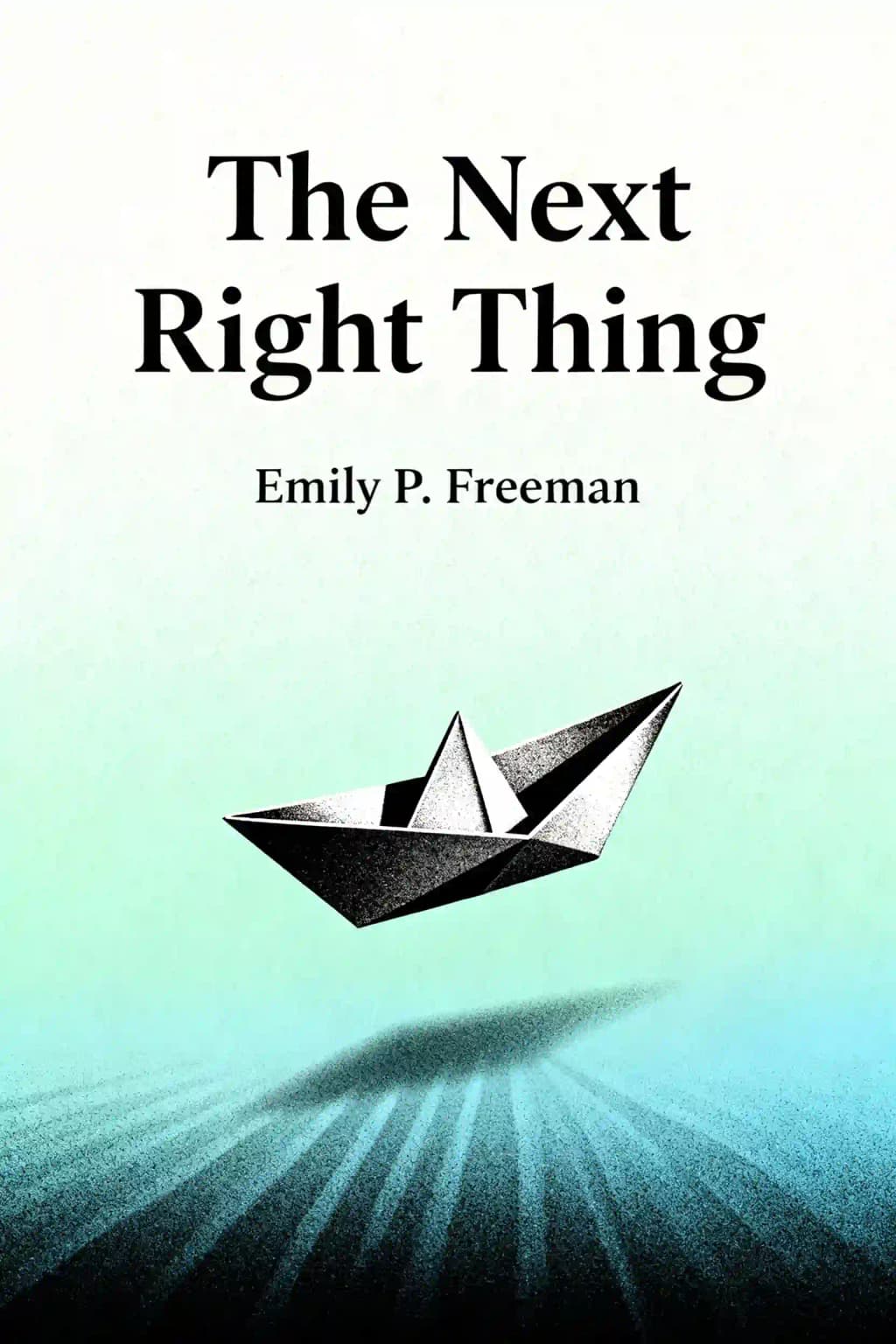
Have you ever found yourself staring at the ceiling at 3 AM, making mental pro/con lists for a decision that's been haunting you for weeks? You're not alone. Emily P. Freeman's "The Next Right Thing" has become a lifeline for the chronically indecisive, earning praise from figures like Candace Cameron Bure who calls it a toolbox for missing decision-making skills. This Wall Street Journal bestseller resonates deeply with our modern paralysis of choice, where adults make approximately 35,000 decisions daily. Freeman's gentle wisdom has created a movement, spawning a top-rated podcast and transforming how thousands approach life's crossroads-from major career shifts to everyday choices that collectively shape our character. In a culture obsessed with five-year plans, Freeman offers something radically different: permission to simply do the next right thing in love.
Chapitre 2
When Unmade Decisions Haunt Your Sleep
Unmade decisions follow us like demanding toddlers, interrupting our peace and poking us awake at night. They transform us into strange versions of ourselves until we face them directly. We become obsessive sign-seekers, looking for guidance in everything from sermons to Dove chocolate wrappers.
What these sleepless nights reveal isn't just indecision-they expose what we're truly addicted to. Perhaps it's clarity and certainty, wanting to know all details before moving forward. Or maybe it's approval, decision avoidance, or constant activity that prevents reflection. With adults making 35,000 decisions daily (over 200 on food alone), most choices happen mindlessly, yet the important ones paralyze us.
Freeman reminds us that Jesus often gave simple next steps after performing miracles-telling the leper to show himself to the priest, the paralytic to pick up his mat, or parents to feed their resurrected daughter. He offered clear next steps rather than grand life plans. This pattern reveals something profound: the way we make decisions is as important as the decisions themselves, as they both reveal and create our character.
When we're stuck in indecision, the problem isn't just the choice before us-it's the noise within us. Our souls have received constant input with infrequent clearing, creating a whispered chaos that makes hearing our own wisdom impossible. The solution begins not with more information, but with creating space for stillness.
Chapitre 3
Creating Space: The Soul Minimalist's Path
In our overstimulated world-where TVs, phones, and endless distractions compete for attention-we must intentionally create space for stillness. Becoming a "soul minimalist" means ensuring nothing has a hold on you, allowing your mind to function as a colander that helps discern what to keep and what to release.
This practice requires practical steps like turning off notifications and declaring boundaries with technology: "Facebook, you do not get to interrupt me." The sacred space of our creative mind needs protection from constant digital intrusion. As Andy Crouch suggests in "The Tech-Wise Family," consider practicing "an hour a day, a week a year" without technology.
Good decisions require creativity, and creativity requires space-space necessary for addressing injustice, solving problems, and creating beauty. By embracing silence in natural pockets throughout your day, you create room to hear what your heart (and perhaps God) might have to say.
This stillness serves another crucial purpose: it allows us to name what's happening beneath the surface. Fear thrives in non-specificity and vague anxiety. When things remain unnamed within us, decision-making becomes nearly impossible. The story of Nancy Writebol, who survived Ebola in West Africa, illustrates this principle. When CNN described the Writebols' testimony as "not a narrative of trauma but a narrative of joy," it revealed how naming our story's framework transforms our experience.
Naming isn't just important for our experiences and emotions, but for our beliefs about ourselves and about God. What we believe about God fundamentally shapes our decision-making process, yet there's often a gap between what we profess to believe and what our actions reveal we actually believe. If we picture God as angry, distant, or manipulative, we'll approach decisions with fear, detachment, or attempts to control.
Chapitre 4
Following Arrows Instead of Demanding Answers
When making decisions, we often think we should just know what to do, forgetting that decision-making, like any skill, requires practice. Unfortunately, unlike other skills, decision-making offers no rehearsals-every decision feels like a final exam on the first day of class.
Freeman shares her family's personal journey through uncertainty after her husband John's father passed away in 2011. John's grief manifested physically, leading to panic attacks and sleepless nights while working as a youth pastor. His church granted him a three-month leave, during which he disconnected completely from work demands.
During this time, they followed "arrows" rather than clear answers-first the arrow of grief, then the arrow of desire as they explored what truly brought John fulfillment in ministry. A spiritual direction course in Colorado brought unexpected clarity-not about John's vocation, but about their relationship. After eventually leaving youth ministry without knowing what was next, they spent nearly a year in uncertainty before John found his calling as director of a nonprofit offering soul care.
This story illustrates a crucial principle: when facing uncertainty, look for arrows rather than demanding clear answers. Arrows might appear as gentle nudges, recurring themes, or moments of unexpected clarity about something seemingly unrelated to your decision. The key is remaining open and attentive, trusting that if you continue to place yourself before God, you won't miss important guidance.
Chapitre 5
Embracing the Beginner's Mind
While we welcome new beginnings, we often resist the vulnerability of being new at something. In transitions-whether joyful like a new job or painful like divorce-we're all beginners, lacking experience with our particular circumstances. Our culture celebrates expertise and mastery, making us rush through the awkward beginner phase rather than embracing its unique gifts. This discomfort with being a novice can lead us to avoid valuable opportunities for growth or to fake competence when we would benefit more from admitting our inexperience.
The beginner's mind comes with powerful advantages: curiosity, openness, and freedom from rigid expectations. When we acknowledge "I don't know (yet)," we create space for learning and growth rather than pretending to have answers we don't possess. This humble posture allows us to approach decisions with genuine curiosity rather than fear of looking foolish. Beginners often notice details that experts overlook, ask fundamental questions that challenge assumptions, and bring fresh perspectives to old problems.
The concept of beginner's mind, derived from Zen Buddhism's "shoshin," teaches us that true learning happens when we empty our mental cup of preconceptions. This state of mind allows us to see possibilities that experience might blind us to. For instance, new employees often identify inefficient processes that long-time workers have simply accepted, and first-time parents sometimes develop innovative solutions precisely because they haven't learned "the way things are done."
Freeman encourages us to identify areas where we're beginners-whether parenting a new teenager, adapting to bodily changes, learning new technology, or navigating relationship dynamics. When encountering something unfamiliar, admitting "I don't know" either to another person or privately creates space for growth and authentic decision-making. This vulnerability can actually strengthen relationships and lead to deeper connections, as it invites others to share their knowledge and experiences.
Practical applications of the beginner's mind include approaching familiar tasks as if doing them for the first time, deliberately seeking out new experiences that put us in the learner's position, and journaling about our observations when we're in unfamiliar territory. Even experts can benefit from periodically returning to a beginner's mindset to refresh their perspective and challenge their assumptions.
The key is not to rush through the beginner phase but to appreciate its unique value. Each new beginning-whether chosen or thrust upon us-offers an opportunity to practice this approach, leading to richer experiences and more authentic growth.
Chapitre 6
The One Question That Changes Everything
Fear influences our decisions in two directions-keeping us from things we want and pushing us toward things we don't want. Freeman shares a personal story about being invited to the Philippines, where her hesitation stemmed from two embarrassing fears: fear of flying and fear of getting sick in a foreign country.
After much indecision, her trip leader Shaun Groves offered the pivotal question she now asks before every hard decision: "Don't let fear be one of them." This helped her recognize she was making decisions based on imaginary storms, and that naming her fear diminished its power.
The transformative question becomes: "Am I being led by love or pushed by fear?" This simple inquiry cuts through confusion, revealing our true motivations. There might be many good reasons to act or not to act, but don't let fear be one of them. This doesn't mean ignoring legitimate concerns, but rather distinguishing between rational consideration and irrational fear.
When we make decisions from love rather than fear, we operate from our best selves-connected, open, and aligned with our deepest values. Fear-based decisions, by contrast, come from our smaller, reactive selves-disconnected, closed, and aligned with our insecurities.
Chapitre 7
Knowing What You Want More
The author shares her appreciation for the show "A Chef's Life" following chef Vivian Howard, using Howard's career journey as an example of knowing what you want more. As Howard's popularity grew, she had to choose between being in her restaurant and pursuing other opportunities like writing a cookbook.
Knowing what you want is important, but knowing what you want more helps determine your next right step. This requires honest self-examination about our desires-something many of us struggle with. We often deny our desires, believing they're selfish or unspiritual, or we become so disconnected from ourselves that we genuinely don't know what we want.
Freeman examines the Gospel story of blind Bartimaeus, noting how Jesus asked him directly, "What do you want me to do for you?" Bartimaeus didn't deflect or minimize his needs but answered directly: "I want to regain my sight." This directness was honored as an act of faith.
Stating our desires might itself be an act of faith-acknowledging what we truly want without shame or hesitation. Desire becomes toxic only when we demand satisfaction on our terms and timing. Otherwise, knowing what we want serves as a compass for decision-making, helping us discern which path aligns with our deepest values and aspirations.
Chapitre 8
The Life Energy List: Your Decision-Making Compass
One of the most practical tools Freeman offers is the Life Energy List-a comprehensive exercise that helps individuals identify and catalog which activities drain their energy and which give them life. This tool goes beyond simple likes and dislikes, diving deeper into how different activities affect our overall wellbeing and vitality. While we can't always eliminate life-draining activities, this intentional reflection helps us avoid doing things merely out of habit, obligation, or misplaced sense of duty.
The process involves creating two columns and spending several weeks noting your genuine responses to daily activities. For instance, someone might discover that while they love their book club, the late evening timing leaves them exhausted the next day. Or they might realize that although grocery shopping seems mundane, doing it early morning brings unexpected joy and energy.
Some activities occupy a complex middle ground-they might feel draining initially but yield life-giving results. For example, introverts might find hosting gatherings emotionally taxing, yet experience deep satisfaction from meaningful connections afterward. Exercise might feel challenging during the moment but provide energy and clarity for hours afterward. The list helps identify these nuanced patterns and their long-term impacts.
The Life Energy List serves as a practical tool to pay attention to your actual lived experience, helping discern future decisions based on past experiences rather than frantic speculation or others' expectations. It becomes particularly valuable during major life transitions or when feeling overwhelmed by choices.
Freeman challenges the prevalent outcomes-based culture where a decision's correctness is judged solely by its success or failure. She reminds readers that most daily decisions aren't morally black and white but rather choices between different goods. Instead, she encourages considering the "life choice"-trusting that moving toward what brings genuine vitality (even through occasionally draining activities) will lead to greater wholeness and authentic living.
This practice involves maintaining a posture of curiosity and active listening to one's own experiences. Freeman emphasizes that while core principles remain constant, specific guidance might change with seasons of life, circumstances, and personal growth. As she beautifully puts it, "This is a relationship, not a spreadsheet; a rhythm, not a rule." The Life Energy List becomes a living document, evolving as we gain clarity about what truly gives us life and what depletes us.
Chapitre 9
Quitting as a Spiritual Practice
The author shares her personal journey as a sign language interpreter spanning from 2001 to 2005, illustrating how letting go can become a sacred act of growth. Her path began with intense dedication to achieving national certification-a goal she accomplished after two challenging attempts and countless hours of practice. The certification represented not just professional achievement but personal validation of her skills and commitment. However, life had other plans when her pregnancy with twins forced her to make the difficult decision to step away from her established career.
Her experience highlights the complex emotions that accompany professional transitions. Initially, the decision to quit felt like a compromise rather than a choice, colored by societal expectations and her own attachment to her professional identity. Years later, after establishing herself as a published author, she receives an official letter revoking her interpreter certification due to unfulfilled continuing education requirements-a moment that could have felt like failure but instead became an opportunity for deeper reflection.
The formal end to her interpreting career, while initially triggering feelings of loss and nostalgia, revealed an important truth: her gradual withdrawal from interpreting had created the necessary space for her writing career to flourish. This realization led to two profound insights that challenge conventional wisdom about career paths: "Just because things change doesn't mean you chose wrong in the first place" and "Just because you're good at something doesn't mean you have to do it forever."
These insights directly confront our culture's deeply ingrained belief that quitting equals failure or weakness. The author argues that quitting can be a thoughtful, strategic choice-even a spiritual practice-that creates space for new growth and opportunities. Like pruning a plant, sometimes we must cut away healthy branches to allow for new growth in different directions. This perspective reframes quitting as an act of wisdom rather than weakness, acknowledging that personal evolution often requires letting go of what once served us well.
The practice invites readers to examine their own lives with gentle curiosity through reflection questions: Are you working hard toward something that no longer aligns with your values or desires? Has your heart already moved in a new direction while your mind clings to old commitments? Do you feel energized by your current path, or are you running on momentum and obligation? These questions serve as guideposts for those contemplating significant changes in their lives.
The author emphasizes that quitting mindfully requires both courage and discernment-the wisdom to recognize when a season has ended and the bravery to act on that knowledge. This approach transforms quitting from a last resort into a conscious choice that honors both our past commitments and our future growth.
Chapitre 10
Staying Present: The Discipline of Today
The author recounts a morning in California where she anxiously moves between a beach and a coffee shop, unable to settle as she waits for the sunrise. This experience becomes a metaphor for how she approaches life-constantly in motion, looking around corners, wondering what she's missing rather than being present.
She realizes she has "a settling-in problem" that mirrors how she moves between past and future, trying to avoid regret while predicting outcomes. This constant mental time travel prevents us from being fully present, where our best decisions are made.
Freeman offers a simple practice for staying present: take something overwhelming, turn it into a question, and add "today" at the end (e.g., "Is my trip happening today?"). This helps determine whether immediate action is needed or if worry can be set aside.
Similarly, she explores how staying present requires acknowledging our current reality. She shares her personal realization that despite working from home as a writer, she had been operating under the illusion she was still a stay-at-home mom. This disconnect between her reality and self-perception left her constantly feeling behind and overwhelmed.
When our circumstances change gradually, our expectations often don't shift accordingly, creating internal tension. Being where we are-fully acknowledging our current reality without judgment-creates the clarity needed for wise decisions.
Chapitre 11
The Patience of Clarity and the Power of Co-Listeners
While clarity cannot be rushed, paradoxically, it often "comes from engagement, not thought." Sometimes we must act before we feel ready, walking slowly with our candle flame still lit, trusting the voice within. The vision will grow as the work is done-we'll begin to see it even though we can't yet see it.
In times of uncertainty, we need more than gurus-we need co-listeners who will hear us without rushing to provide answers. Freeman shares how she and her husband gathered trusted friends in their living room not for advice but for presence during a vocational transition. They wanted people who would hear their words, see if they were missing something obvious, and simply be with them in their uncertainty.
This gathering eventually led to clarity, but the decision itself wasn't the point. The point was becoming more fully themselves in God's presence, connecting with Him and with others. Sometimes the greatest gift we can give ourselves in decision-making is surrounding ourselves with people who listen well and ask thoughtful questions rather than immediately offering solutions.
Chapitre 12
Coming Home to Yourself
The only person guaranteed to be with you every day is you-it doesn't get more "home" than that. Coming home to yourself isn't always easy, as Freeman learned from her childhood fear of a neighbor's house with its No Trespassing signs. For years, she stood at the edge of her own soul's driveway, unaware of the life waiting inside.
If you arrive at a house where the hostess shouts criticisms at you, you won't want to enter. What if we stopped bullying ourselves at the threshold of our own souls? God gives us hints about who we are through the words of other people-like when Freeman's friend said she felt "pastored" by her, something caught within her, a light both foreign and familiar.
Coming home to yourself will feel safe, settled, and free-not like you have something to prove. This self-connection becomes the foundation for authentic decision-making, allowing you to choose from your true center rather than from fear, obligation, or others' expectations.
This journey home involves quirky, personal spiritual practices that help you remember who you are-whether it's wearing comfortable pants (Freeman's favorite spiritual discipline), taking walks alone, or creating intentional pauses in your day. These practices aren't about perfection but about remembering your true self in God's presence.
Chapitre 13
Embracing Surprise and Hope in the Waiting
We can be so busy trying to control our circumstances that we miss what's happening right outside the window. Freeman shares a story about a sunrise takeoff, while she was busy clenching her fists to "keep the plane in the air," they turned and suddenly the window revealed a breathtaking scene of pink and gold clouds she'd never seen before.
This is how life works-we grip tightly in uncertainty, only to be surprised by unexpected glory: a timely call, a warm smile, a kind word from a stranger. These moments remind us we're not invisible, that God hasn't forgotten us, and that glory is everywhere if we're willing to look.
In seasons of waiting-whether becoming an adult, adjusting to a new home, managing children, grieving a loss, or discovering that something you believed isn't true anymore-we often feel like we're burying seeds and waiting anxiously for them to grow. We peer at the ground daily, doubt growing as nothing sprouts.
Yet darkness has its purpose-it's where new life forms before emerging in its time. Our unmade decisions hang around us like tiny dares, but it's rarely either/or-we can be called to a job AND addicted to validation, want to marry someone AND desire love in unhealthy ways. Discovering mixed motives doesn't mean we chose wrong; it means we're human.
Often, our next right thing is simply to wait-allowing clutter to clear, creating space for our souls to breathe. Wait. Listen. Repeat. Decisions are rarely black and white; what matters is that we're not alone in them. Perhaps the process moves slowly because we need time for our rigid categories to soften into gradients of gray.
The invitation is to trust ourselves as we walk with Jesus, embracing courage to choose what's best and faith to return when we choose poorly. We can refuse to carry shame for lack of clarity, allowing questions to linger as seeds grow. Though we may have to wait and see, we never have to wait to be. We can bring our unknowing into God's kind presence and continue creating space for our souls, naming the unnamed things within us, and doing our next right thing in love.