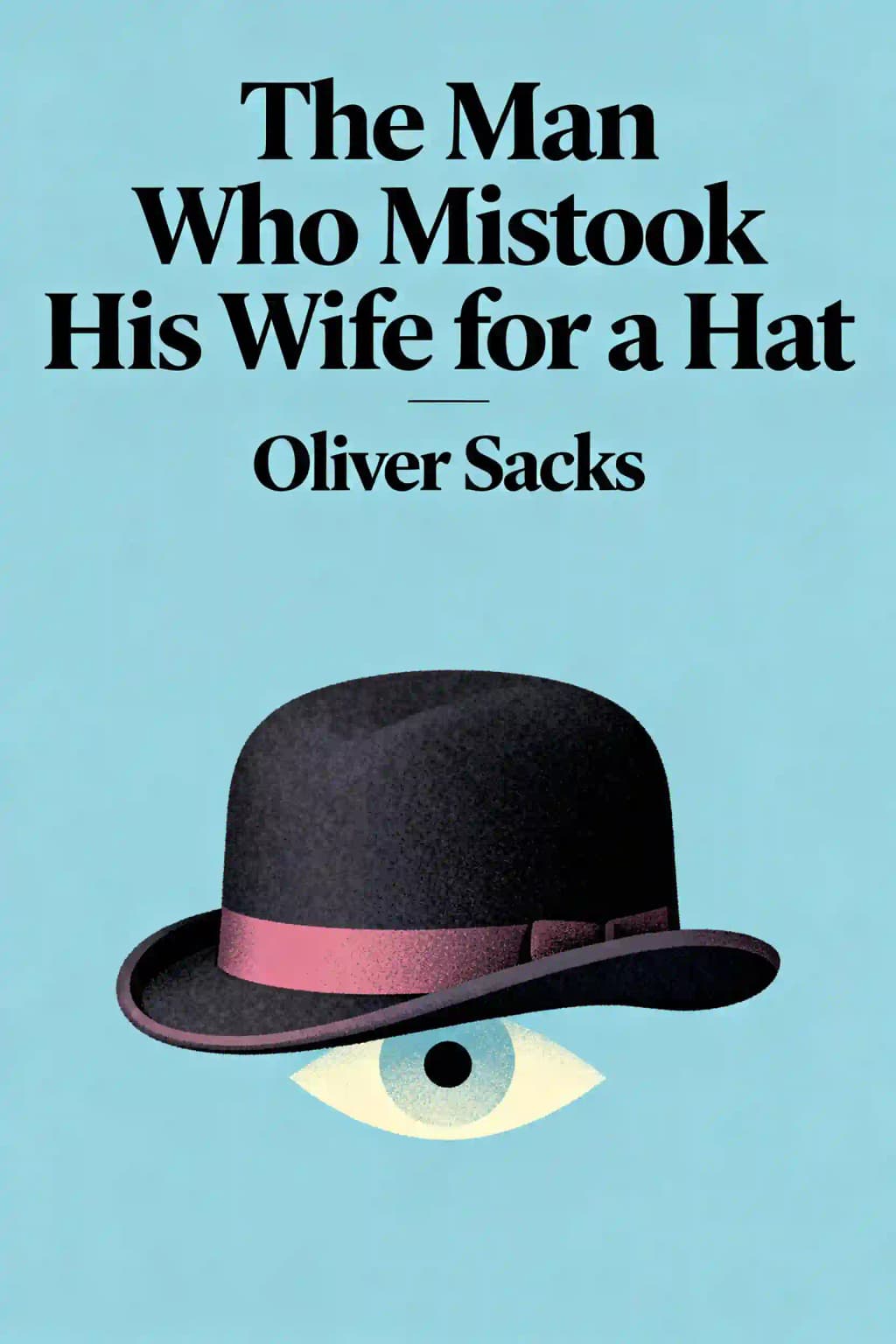
Step into the mind-bending world where a professor mistakes his wife for a hat. Hailed as "the poet laureate of medicine" by The New York Times, Sacks's 4.05-rated masterpiece reveals what happens when our brains betray us - and what remains of our humanity.
Ressentez le livre à travers la voix de l'auteur
Transformez les connaissances en idées captivantes et riches en exemples
Capturez les idées clés en un éclair pour un apprentissage rapide
Profitez du livre de manière ludique et engageante
A music teacher reaches for his hat and instead grasps his wife's head, attempting to lift her onto his own. A cheerful man believes it's 1945, though decades have passed. A woman wakes to find her body has become a stranger, no longer responding to her will. These aren't scenes from science fiction - they're real cases from the neurological wards where Oliver Sacks practiced medicine. What makes these stories so compelling isn't their strangeness but what they reveal about the fragile architecture of human consciousness. Every day, our brains perform invisible miracles: recognizing faces, remembering yesterday, knowing where our limbs are without looking. We take these abilities for granted until they vanish. Through Sacks' compassionate lens, we discover that neurological disorders aren't just medical curiosities - they're windows into the fundamental mystery of how we become ourselves. Traditional medicine reduces patients to symptoms, but Sacks rejected this dehumanizing approach, insisting that understanding neurological disease requires understanding the whole person experiencing it. He drew inspiration from 19th-century neurologists and Alexander Luria, yet went further, recognizing that neurological disease never represents pure loss. The brain fights back, adapting and reorganizing in ways both ingenious and strange, transforming neurology from cataloging deficits into witnessing the human spirit's refusal to surrender.
Décomposez les idées clés de The Man Who Mistook His Wife for a Hat en points faciles à comprendre pour découvrir comment les équipes innovantes créent, collaborent et grandissent.
Condensez The Man Who Mistook His Wife for a Hat en indices de mémoire rapides mettant en évidence les principes clés de franchise, de travail d'équipe et de résilience créative.

Découvrez The Man Who Mistook His Wife for a Hat à travers des récits vivants qui transforment les leçons d'innovation en moments mémorables et applicables.
Posez n'importe quelle question, choisissez la voix et co-créez des idées qui résonnent vraiment avec vous.

Cree par des anciens de Columbia University a San Francisco
"Instead of endless scrolling, I just hit play on BeFreed. It saves me so much time."
"I never knew where to start with nonfiction—BeFreed’s book lists turned into podcasts gave me a clear path."
"Perfect balance between learning and entertainment. Finished ‘Thinking, Fast and Slow’ on my commute this week."
"Crazy how much I learned while walking the dog. BeFreed = small habits → big gains."
"Reading used to feel like a chore. Now it’s just part of my lifestyle."
"Feels effortless compared to reading. I’ve finished 6 books this month already."
"BeFreed turned my guilty doomscrolling into something that feels productive and inspiring."
"BeFreed turned my commute into learning time. 20-min podcasts are perfect for finishing books I never had time for."
"BeFreed replaced my podcast queue. Imagine Spotify for books — that’s it. 🙌"
"It is great for me to learn something from the book without reading it."
"The themed book list podcasts help me connect ideas across authors—like a guided audio journey."
"Makes me feel smarter every time before going to work"
Cree par des anciens de Columbia University a San Francisco

Obtenez le resume de The Man Who Mistook His Wife for a Hat en PDF ou EPUB gratuit. Imprimez-le ou lisez-le hors ligne a tout moment.