Chapitre 1
When Music Seizes the Brain: The Extraordinary Power of Our Musical Minds
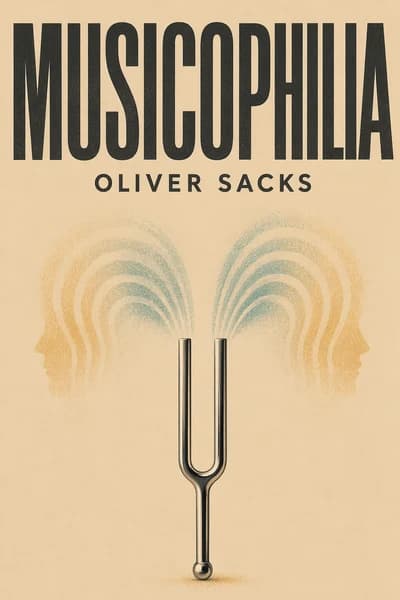
Oliver Sacks' "Musicophilia" explores the fascinating relationship between music and the human brain, revealing how deeply intertwined our neural circuitry is with melody, rhythm, and harmony. This bestseller has captivated millions since its 2007 publication, including notable fans like neurologist and author Robert Sapolsky and musician David Byrne of Talking Heads. The book's cultural impact has been profound, inspiring the award-winning documentary "The Music Instinct" and influencing music therapy programs worldwide. Sacks, a neurologist with a lifelong passion for music, invites us into a world where music can trigger seizures, heal the injured brain, or suddenly awaken dormant musical talents. What if a lightning strike could transform you into a passionate pianist overnight? Or what if the music you love became an unbearable torment? Through compelling case studies and scientific exploration, Sacks reveals how music isn't just entertainment-it's a fundamental aspect of being human.
Chapitre 2
The Sudden Onset of Musical Obsession
What happens when music hijacks the brain? Dr. Sacks introduces us to Tony Cicoria, a surgeon who was struck by lightning and subsequently developed an insatiable hunger for piano music. Before the accident, Cicoria had little interest in music, but afterward, he became consumed by Chopin and eventually began composing his own pieces. This dramatic transformation suggests that lightning somehow activated dormant musical circuitry in his brain.
Such cases of "musicophilia" can emerge from various triggers. A 42-year-old builder suddenly developed an unquenchable passion for classical piano after being hit on the head. An elderly woman with no musical background began hearing Irish songs from her childhood playing continuously in her mind after a seizure. These musical awakenings often follow some form of neurological disturbance-seizures, strokes, accidents, or diseases.
The phenomenon of "musical seizures" particularly fascinated Sacks. Unlike typical epileptic seizures, these episodes specifically trigger musical experiences-patients report hearing orchestras, choirs, or familiar songs during their seizures. One patient experienced seizures that always began with the same musical phrase from a specific childhood song. Another would hear a full orchestra playing a piece she couldn't identify but could hum perfectly during her seizures.
These cases reveal that our brains contain extensive neural networks dedicated to music processing. When normal inhibitory mechanisms are disrupted by neurological events, these networks can become hyperactive, resulting in musical hallucinations or obsessions. What's remarkable is how organized these musical experiences are-they aren't random noise but complete, coherent musical compositions.
The brain's relationship with music isn't simply about pleasure or entertainment; it's deeply wired into our neural architecture. Music can activate brain regions involved in emotion, memory, motor control, and language processing simultaneously. When these systems are disturbed, music can emerge as a dominant force in consciousness, sometimes to the point of taking over one's life. These cases suggest that musical capacities may lie dormant in all of us, waiting for the right-or wrong-neural circumstances to emerge.
Chapitre 3
Earworms and Musical Hallucinations: When Melodies Won't Stop
Have you ever had a song stuck in your head that played on repeat for hours or even days? This common phenomenon, known as an earworm, offers a glimpse into what some people experience constantly. While most of us can eventually shake off an annoying tune, for others, musical hallucinations become a permanent, often distressing companion.
Mrs. O'C, an 88-year-old resident at a nursing home, suddenly began hearing Irish songs from her childhood playing loudly and clearly. Initially, she thought someone had left a radio on, but soon realized the music was coming from inside her head. Brain scans revealed she had experienced a small stroke in her right temporal lobe-the brain region crucial for processing music. Unlike fleeting earworms, her hallucinations were vivid, uncontrollable, and persistent.
Musical hallucinations differ from earworms in several key ways. They're typically experienced as coming from the external world rather than "inside the head." They're often elaborate and complete musical pieces rather than fragments. And most importantly, they can't be voluntarily stopped. One patient described it as "like a radio that's been left on, or rather, like someone switching the radio on and off at random."
These hallucinations particularly affect older people with hearing loss. As external auditory input diminishes, the brain sometimes compensates by generating its own musical content-a phenomenon called "release hallucinations." The music typically comes from the person's past, often from their youth or childhood. A woman who had grown up in a religious household heard hymns continuously. A former orchestral musician heard the exact pieces he had performed decades earlier.
What makes these hallucinations so remarkable is their musical accuracy. Patients can hear full orchestrations, multiple voices, and complex harmonies-all generated entirely by their brains. One patient could hear all four parts of a Bach fugue simultaneously. This suggests that our brains store music with extraordinary fidelity, preserving details we might not consciously remember.
For some, these hallucinations become torturous. One elderly woman heard "Glory, Glory, Hallelujah" playing incessantly for months. Another patient described how Christmas carols played relentlessly in her head, even in July. Unlike voluntary musical imagery or memory, these patients cannot control what they hear or when they hear it. The music imposes itself, often drowning out real conversations and sounds.
Treatment options remain limited. Some patients find relief through anti-epileptic or antipsychotic medications. Others learn to live with their internal soundtracks, sometimes even developing a grudging appreciation for their constant musical companions.
Chapitre 4
The Remarkable Musical Brain of the Amnesiac
How can someone who can't remember what happened five minutes ago perfectly recall and perform complex musical pieces? This paradox illuminates the special relationship between music and memory. Clive Wearing, a distinguished musicologist and conductor, contracted a severe brain infection that destroyed his hippocampus-the brain structure essential for forming new memories. The damage left him with an amnesia so profound that he experienced life in disconnected 30-second fragments, constantly feeling as if he had just awakened from unconsciousness.
Despite this devastating memory loss, when seated at a piano, Wearing could play Chopin preludes flawlessly. He could conduct a choir with his former professional skill. His musical abilities-his knowledge of notation, keyboard techniques, expressive capabilities-remained intact even as his autobiographical memory was obliterated. When his wife entered the room, he greeted her with overwhelming joy each time, never remembering that he had just seen her moments before. Yet he could remember and perform entire musical pieces without hesitation.
This preservation of musical memory amid catastrophic amnesia isn't unique to Wearing. Dr. Sacks describes numerous patients with various forms of dementia who retained their musical abilities long after other cognitive functions had deteriorated. An accomplished pianist with Alzheimer's disease who couldn't recognize her own children could still play her entire repertoire from memory. A former professional violinist who couldn't remember how to dress himself could still play Bach sonatas.
These cases reveal that musical memory operates through neural systems separate from those governing episodic and semantic memory. Music appears to be processed and stored through distributed networks throughout the brain rather than in a single location. When playing an instrument, procedural memory (how to perform physical actions) combines with emotional memory and auditory processing in a unique synthesis that can remain accessible even when other memory systems fail.
The emotional component seems particularly important. Music encoded with strong emotional associations appears especially resistant to memory disorders. Patients who cannot recall the names of their children might still sing lullabies they learned decades earlier. The emotional resonance of these songs seems to strengthen their neural representation, making them more resistant to the ravages of disease.
For many patients with severe memory disorders, music provides a rare thread of continuity in an otherwise fragmented existence. It can temporarily restore a sense of identity and coherence. When Clive Wearing played the piano, his wife observed, he seemed to become whole again-fully present and connected to his former self. In those musical moments, the amnesia that dominated his life receded, allowing glimpses of the person he once was.
Chapitre 5
Synesthesia: When Music Has Color and Taste
Imagine seeing cascades of blue and gold when listening to Bach, or tasting cinnamon when hearing a specific chord. For people with synesthesia-a neurological condition where stimulation of one sensory pathway leads to automatic, involuntary experiences in another-music isn't just heard; it's seen, felt, or even tasted. This extraordinary perceptual blending offers a window into how our brains process and integrate sensory information.
The most common form of music-related synesthesia involves seeing colors in response to musical tones, chords, or keys. For the Russian composer Alexander Scriabin, each musical key evoked a specific color: C major was red, D major yellow, and F-sharp major bright blue. He wasn't alone-approximately one in 2,000 people experiences some form of synesthesia, with musicians being particularly overrepresented among synesthetes.
One of Sacks' patients, Michael, perceived each musical interval as having not only a distinct color but also a texture and shape. A perfect fifth appeared as "shards of glass, blue against a yellow background," while a minor third was "dark brown, like chocolate syrup." For Michael, these associations were completely consistent-the same musical element always produced the same visual experience-and had been present since childhood.
Beyond color associations, some synesthetes experience even more elaborate cross-sensory connections. A professional violinist described how different musical keys had distinct tastes: D minor tasted like cream, B-flat minor like metal. Another musician perceived musical tones as having physical locations in space around her body. Low notes appeared below her feet, while high notes floated above her head.
What makes synesthesia particularly fascinating is that these associations aren't metaphorical or poetic-they're genuine perceptual experiences. Brain imaging studies show that when synesthetes hear music and "see" colors, both their auditory and visual cortices activate simultaneously. Their brains are literally processing sound and color together.
This condition often runs in families, suggesting a genetic component. Many synesthetes discover their condition accidentally, assuming everyone experiences music this way until a chance conversation reveals otherwise. For most, these cross-sensory experiences are present from early childhood and remain remarkably consistent throughout life.
Far from being a disadvantage, musical synesthesia often enhances musical ability. The additional sensory layer provides a rich mnemonic system-many synesthetes have perfect pitch because each note has a unique color signature. Composers with synesthesia, including Scriabin, Messiaen, and Duke Ellington, often incorporated their color perceptions into their compositions, creating works designed to evoke specific visual experiences.
Synesthesia reminds us that perception is not a passive recording of sensory data but an active construction by the brain. For synesthetes, the normal boundaries between senses are more permeable, allowing for a richer, more integrated experience of music. Their experiences challenge our conventional understanding of how perception works and suggest that our sensory systems may be more interconnected than we typically realize.
Chapitre 6
Absolute Pitch and Musical Savants: The Extremes of Musical Ability
Why can some people instantly identify any musical note they hear while others struggle to distinguish between similar tunes? The phenomenon of absolute pitch-often called "perfect pitch"-represents one extreme of musical ability. People with this rare gift can identify or produce any musical note without reference to another note. For them, each note has a distinct quality as recognizable as a color.
Only about one in 10,000 people in Western populations possesses true absolute pitch. Interestingly, the rate is much higher among musicians who began training before age six and in speakers of tonal languages like Mandarin Chinese. This suggests that absolute pitch may be a potential capacity in many people that requires early exposure to develop fully-a classic case of the interaction between genetic potential and environmental influence.
For those with absolute pitch, music is experienced fundamentally differently. They don't need to work out intervals between notes; each note has its own identity. One musician with absolute pitch described hearing music as similar to seeing a painting where each color is immediately recognizable without comparison to other colors. This ability extends beyond conventional instruments-people with absolute pitch can identify the notes in car horns, bird songs, or even the hum of electrical appliances.
At the far extreme of musical ability lie musical savants-individuals who, despite significant cognitive or developmental disabilities, possess extraordinary musical talents. Sacks describes several remarkable cases, including a man with an IQ of 65 who could play perfectly any piece of music after hearing it just once, and a blind autistic boy who could reproduce entire piano concertos despite never having formal training.
Perhaps the most famous musical savant was Leslie Lemke, who was born blind, brain-damaged, and with cerebral palsy. Unable to stand until age 15, he nevertheless could play thousands of pieces flawlessly after a single hearing. When he was 14, his adoptive mother found him playing Tchaikovsky's Piano Concerto No. 1 in the middle of the night-after he had heard it just once on television earlier that evening.
What makes savant abilities so puzzling is their specificity. These individuals often cannot perform simple daily tasks yet display virtuosic musical talents that would take normally developing musicians decades to acquire. Their abilities typically emerge spontaneously without formal training and focus on reproduction rather than original composition.
Neuroimaging studies suggest that savants may process music differently than typical musicians. Their brains often show unusual development in the right hemisphere-traditionally associated with holistic processing-and reduced connectivity between brain regions. This altered neural architecture may allow for extraordinary memory and perceptual abilities at the expense of higher-level abstract thinking.
The existence of musical savants challenges conventional notions about musical ability and learning. Their abilities suggest that extraordinary musical capacities may lie dormant in the human brain, accessible under certain unusual neurological conditions. They also raise profound questions about the nature of musical talent itself-whether it represents a separate form of intelligence that can exist independently of general cognitive abilities.
Chapitre 7
Music Therapy: Healing Through Harmony
How can a person with advanced Parkinson's disease who can barely move suddenly dance fluidly when music plays? Why might someone with severe aphasia who cannot speak a single coherent sentence sing lyrics perfectly? The therapeutic power of music reveals itself in these remarkable transformations, demonstrating how melody and rhythm can access neural pathways that remain intact when others are damaged.
For people with movement disorders, rhythm provides a crucial external timekeeper. Dr. Sacks describes patients with Parkinson's disease who were virtually frozen in place but could walk normally when marching music played. The regular beat seems to substitute for the brain's impaired internal timing mechanisms, allowing patients to initiate and coordinate movements that are otherwise impossible. This phenomenon, called "kinetic melody," suggests that music engages motor systems through pathways different from those used in voluntary movement.
The technique known as Rhythmic Auditory Stimulation has been formalized into an effective therapy for stroke patients and those with Parkinson's disease. Patients synchronize their movements to a metronome or musical beat, gradually increasing tempo as they improve. Studies show significant improvements in gait, balance, and coordination that often persist even after the music stops.
For those with language impairments, music offers an alternative route to communication. Patients with severe aphasia following left-hemisphere strokes often retain the ability to sing familiar songs with perfect lyrics, even when they cannot speak the same words. This preservation occurs because singing engages right-hemisphere neural networks that remain intact when left-hemisphere language areas are damaged. Through a technique called Melodic Intonation Therapy, patients can gradually transition from singing words to speaking them, essentially rebuilding language skills through musical pathways.
Music therapy has shown particular promise for people with dementia. Even in advanced Alzheimer's disease, musical memory often remains when other memories have vanished. Patients who cannot recognize family members might still sing songs from their youth with perfect recall of lyrics and melody. Beyond mere entertainment, music can temporarily restore aspects of identity and cognitive function. After listening to personally meaningful music, patients often become more communicative, oriented, and emotionally present-sometimes for hours after the music ends.
For children with autism spectrum disorders, music therapy offers a non-verbal means of connection and expression. Many autistic children who struggle with conventional social interaction respond powerfully to music. The predictable patterns and emotional content of music seem to provide a framework for engagement that spoken language lacks. Through improvisational music-making, these children often develop turn-taking skills, emotional reciprocity, and joint attention that transfer to other contexts.
The neurological basis for music therapy's effectiveness lies in music's unique ability to engage multiple brain systems simultaneously. A single musical experience activates auditory processing areas, motor planning regions, emotional centers, and memory networks, creating a rich matrix of neural activity. This distributed processing means that when disease damages some neural pathways, music can often access preserved functions through alternate routes.
Chapitre 8
Music and Identity: How Rhythm Shapes Who We Are
What does it mean when an elderly man with dementia who doesn't recognize his own children lights up and becomes fully present when hearing songs from his youth? Or when a teenager with Tourette's syndrome finds his tics disappear completely while playing the drums? These transformations reveal how deeply music is woven into our sense of self and identity.
Music's relationship with identity begins in infancy. Babies recognize and prefer music they heard in the womb, showing that musical imprinting starts before birth. Throughout childhood, music becomes increasingly tied to emotional experiences and social contexts. The songs that surround us as we grow become part of our autobiographical soundtrack-markers of time, place, and significant life events.
This musical-autobiographical connection explains why music can trigger such powerful emotional responses and memories. Hearing a song from adolescence can instantly transport someone back to that period with remarkable vividness. For many people, music from ages 15-25 remains especially significant throughout life-a phenomenon psychologists call the "reminiscence bump." These songs become reference points for our life narrative, helping to anchor our sense of who we are and where we've been.
For professional musicians, this identity connection becomes even more profound. Their musical abilities become inseparable from their sense of self. Dr. Sacks describes several musicians who suffered neurological injuries affecting their playing abilities. A pianist who lost fine motor control in his right hand after a stroke described feeling "amputated" and "no longer whole." The threat to his musical abilities represented an existential crisis-a loss not just of function but of identity itself.
Yet music's relationship with identity can also be healing. For people with neurological conditions that affect personality and behavior, music often preserves a connection to their authentic selves. Sacks describes a man with frontotemporal dementia whose personality changed dramatically-except when he played the piano. While playing, his former sensitivity, expressiveness, and emotional depth returned completely. The music temporarily restored access to aspects of his identity that disease had obscured.
This identity-preserving function of music proves especially valuable in conditions like Alzheimer's disease, where autobiographical memory progressively deteriorates. When personal history becomes inaccessible through conventional memory, music can serve as an alternative pathway to the self. Familiar songs evoke not just emotions but a sense of continuity and personhood. As one music therapist observed, "With Alzheimer's patients, music is often the last thing to go-after they've forgotten their own names, they can still recognize and respond to songs they learned in childhood."
For those with autism or other developmental conditions, music can help construct aspects of identity that might otherwise remain undeveloped. Through musical engagement, individuals who struggle with conventional social interaction can experience emotional connection, self-expression, and community belonging. Music provides an alternative language through which identity can be explored and communicated when other avenues are limited.
Chapitre 9
The Evolutionary Puzzle: Why Music Matters to Our Species
Why does music exist at all? Unlike language or other cognitive abilities with clear survival advantages, music's evolutionary purpose remains mysterious. Yet music appears in every known human culture, engages multiple brain regions, and elicits powerful emotional responses. What explains music's universal presence in human life?
Darwin himself was puzzled by music, suggesting it might be a form of sexual selection-like a peacock's tail, an attractive but otherwise useless feature. But this explanation fails to account for music's cognitive complexity and emotional power. More recent evolutionary theories propose several alternative explanations for music's persistence in human societies.
One compelling hypothesis suggests music evolved as a social bonding mechanism. When people sing or play music together, their movements and breathing synchronize, their attention focuses collectively, and they experience shared emotions. This synchronization releases neurochemicals like oxytocin and endorphins that promote trust and group cohesion. In prehistoric communities, such bonding would have conferred significant survival advantages, enabling better cooperation in hunting, defense, and child-rearing.
Evidence for music's social function appears in how our brains respond to it. When people make music together, brain imaging shows synchronized neural activity across participants-their brain waves literally align. This neural synchronization may explain music's unique ability to create feelings of unity and belonging. Even listening to music together creates shared emotional experiences that strengthen social bonds.
Another evolutionary perspective views music as an adaptation for mother-infant bonding. The sing-song patterns of "motherese"-the melodic, rhythmic way adults naturally speak to infants-appear universally across cultures. These musical vocalizations capture babies' attention more effectively than regular speech and help regulate their emotional states. The responsiveness of infants to musical features suggests our brains may be prewired for musical processing from birth.
Music's relationship with movement provides another evolutionary clue. The human capacity to synchronize movement to a beat-to dance-appears uniquely developed in our species. Even young children spontaneously move to music, suggesting this connection between rhythm and motor systems evolved early. This rhythmic entrainment ability may have developed alongside bipedal walking and tool use, both of which require precise timing and coordination.
The emotional power of music also suggests evolutionary significance. Music activates the brain's reward circuits, releasing dopamine during moments of musical pleasure similar to responses to food or sex. This neurochemical response indicates music taps into ancient motivational systems that evolved to reinforce survival-promoting behaviors. The fact that even sad music can create pleasurable experiences-what philosophers call "the sweet sorrow" of music-points to music's complex relationship with our emotional processing systems.
Perhaps most intriguingly, music's universality despite its apparent lack of survival value suggests it may be what evolutionary biologists call a "spandrel"-a byproduct of other adaptive traits rather than a direct adaptation itself. Music might have emerged from the intersection of our capacities for language, emotional communication, pattern recognition, and social coordination-cognitive abilities that evolved for other purposes but combined to create our musical capacity.
Whatever its evolutionary origins, music's persistence across all human cultures and throughout history testifies to its fundamental importance to our species. Far from being merely entertainment, music appears to be an essential component of what makes us human-a technology for emotional communication, social connection, and meaning-making that has been central to human experience for tens of thousands of years.