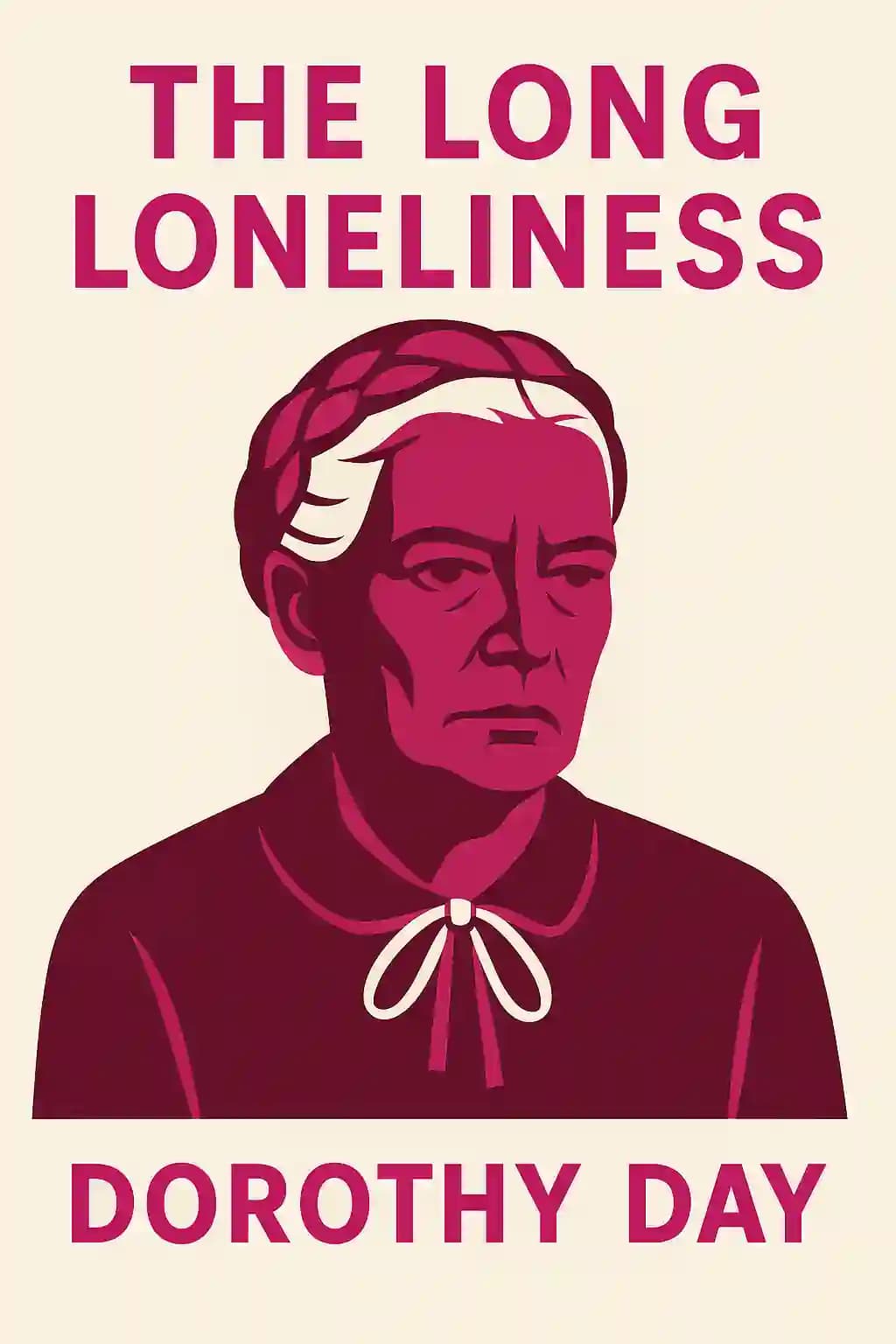
Aperçu de La Longue Solitude
L'autobiographie radicale de Dorothy Day relate son parcours de journaliste bohème à militante catholique. Comparé aux « Confessions » de saint Augustin, ce chef-d'œuvre spirituel de 1952 révèle comment la communauté triomphe de la solitude. Son honnêteté sans faille concernant l'avortement et la pauvreté interpelle encore aujourd'hui les mouvements modernes de justice sociale.
Thèmes clés dans La Longue Solitude
- catholic social teaching
- radical political activism
- voluntary poverty
- spiritual conversion
- communal living
Citations de La Longue Solitude
I have long since come to believe that people never mean half of what they say, and that it is best to disregard their talk and judge only their actions.
We have all known the long loneliness and we have learned that the only solution is love and that love comes with community.
The greatest challenge of the day is: how to bring about a revolution of the heart, a revolution which has to start with each one of us?
People say, what is the sense of our small effort? They cannot see that we must lay one brick at a time, where we can, as we can.
We cannot love God unless we love each other, and to love we must know each other. We know Him in the breaking of bread, and we know each other in the breaking of bread, and we are not alone anymore.
Personnages de La Longue Solitude
- Dorothy DayThe author, radical journalist, and activist
- Mary HarringtonA childhood neighbor who told stories of saints
- Mrs. BarrettA neighbor whose prayer inspired Day's faith
- RaynaA close friend of Day during her New York years
- Mike GoldA radical associate and friend in New York
Telecharger le resume de La Longue Solitude
Obtenez le resume de La Longue Solitude en PDF ou EPUB gratuit. Imprimez-le ou lisez-le hors ligne a tout moment.