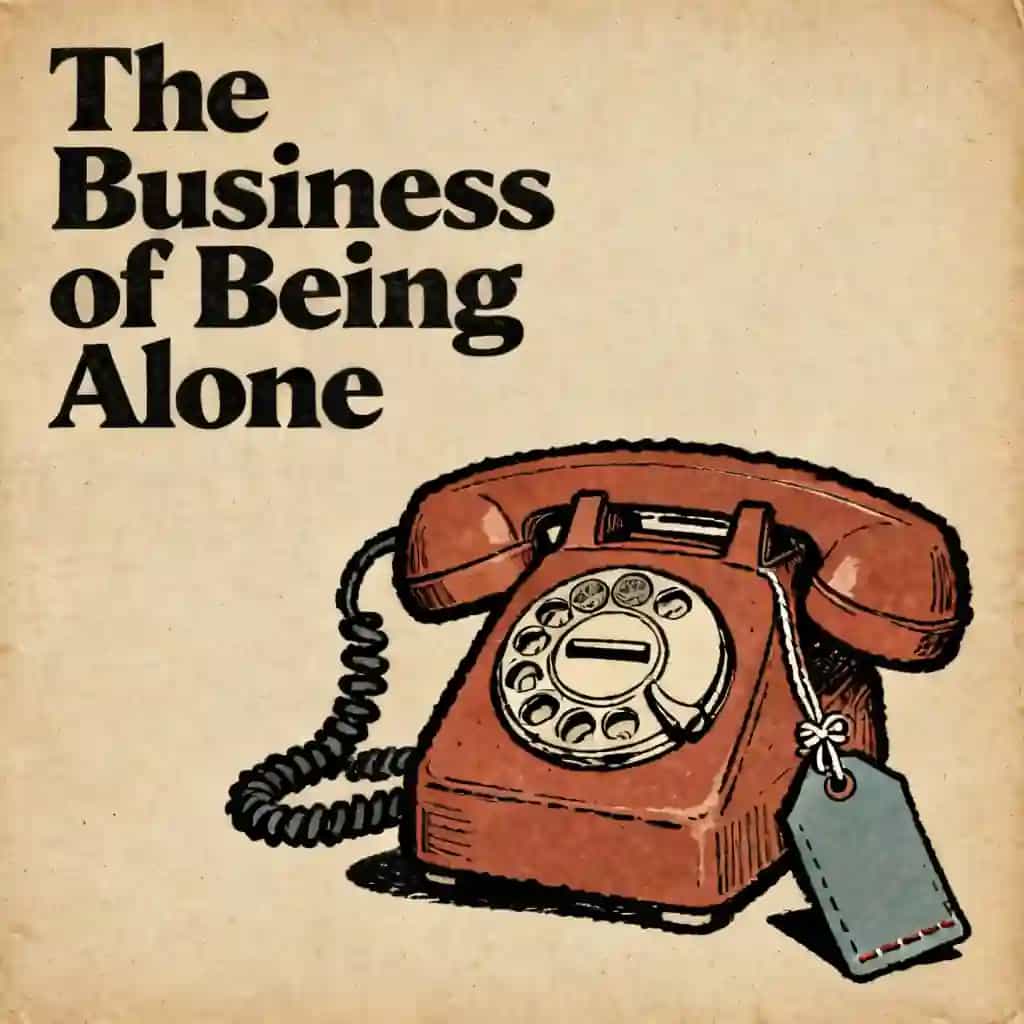
Discover why loneliness emerged around 1800 in this groundbreaking history. Terry Eagleton calls it "compassionate" and "radical" - the first comprehensive English study linking modern isolation to individualism. What health epidemic costs us more than obesity?
Ressentez le livre à travers la voix de l'auteur
Transformez les connaissances en idées captivantes et riches en exemples
Capturez les idées clés en un éclair pour un apprentissage rapide
Profitez du livre de manière ludique et engageante
Loneliness has become our silent killer. When the UK appointed a Minister for Loneliness in 2018, it acknowledged what many had suspected: we're facing a public health crisis affecting an estimated 40% of Americans, with particularly high rates among young adults. But what if this painful emotional state isn't the timeless human condition we assume it to be? Cultural historian Fay Bound Alberti offers a revolutionary perspective: loneliness as we know it emerged around 1800, coinciding with profound social transformations. Before 1800, the word "loneliness" rarely appeared in English texts, and when it did, it simply meant "oneliness"-the physical state of being alone without psychological weight. Consider Robinson Crusoe, published in 1719. Despite depicting a man stranded on an island for 28 years, the novel never once mentions loneliness-a concept incomprehensible to modern readers who immediately relate to Tom Hanks creating "Wilson" in Castaway to preserve his sanity. This absence wasn't an oversight but reflected a fundamentally different understanding of solitude. The transformation coincided with industrialization disrupting traditional communities, the decline of religious frameworks where God provided constant companionship, and the rise of individualism creating new expectations for personal fulfillment. By the Victorian era, novels became filled with lonely characters seeking psychological growth while facing hostile worlds. What we now consider a universal human experience was actually born from specific historical forces that continue to shape our emotional lives today.
Décomposez les idées clés de A Biography of Loneliness en points faciles à comprendre pour découvrir comment les équipes innovantes créent, collaborent et grandissent.
Condensez A Biography of Loneliness en indices de mémoire rapides mettant en évidence les principes clés de franchise, de travail d'équipe et de résilience créative.

Découvrez A Biography of Loneliness à travers des récits vivants qui transforment les leçons d'innovation en moments mémorables et applicables.
Posez n'importe quelle question, choisissez la voix et co-créez des idées qui résonnent vraiment avec vous.

Cree par des anciens de Columbia University a San Francisco
"Instead of endless scrolling, I just hit play on BeFreed. It saves me so much time."
"I never knew where to start with nonfiction—BeFreed’s book lists turned into podcasts gave me a clear path."
"Perfect balance between learning and entertainment. Finished ‘Thinking, Fast and Slow’ on my commute this week."
"Crazy how much I learned while walking the dog. BeFreed = small habits → big gains."
"Reading used to feel like a chore. Now it’s just part of my lifestyle."
"Feels effortless compared to reading. I’ve finished 6 books this month already."
"BeFreed turned my guilty doomscrolling into something that feels productive and inspiring."
"BeFreed turned my commute into learning time. 20-min podcasts are perfect for finishing books I never had time for."
"BeFreed replaced my podcast queue. Imagine Spotify for books — that’s it. 🙌"
"It is great for me to learn something from the book without reading it."
"The themed book list podcasts help me connect ideas across authors—like a guided audio journey."
"Makes me feel smarter every time before going to work"
Cree par des anciens de Columbia University a San Francisco

Obtenez le resume de A Biography of Loneliness en PDF ou EPUB gratuit. Imprimez-le ou lisez-le hors ligne a tout moment.