Chapitre 1
A Magical Odyssey Through Ancient Cairo and Beyond
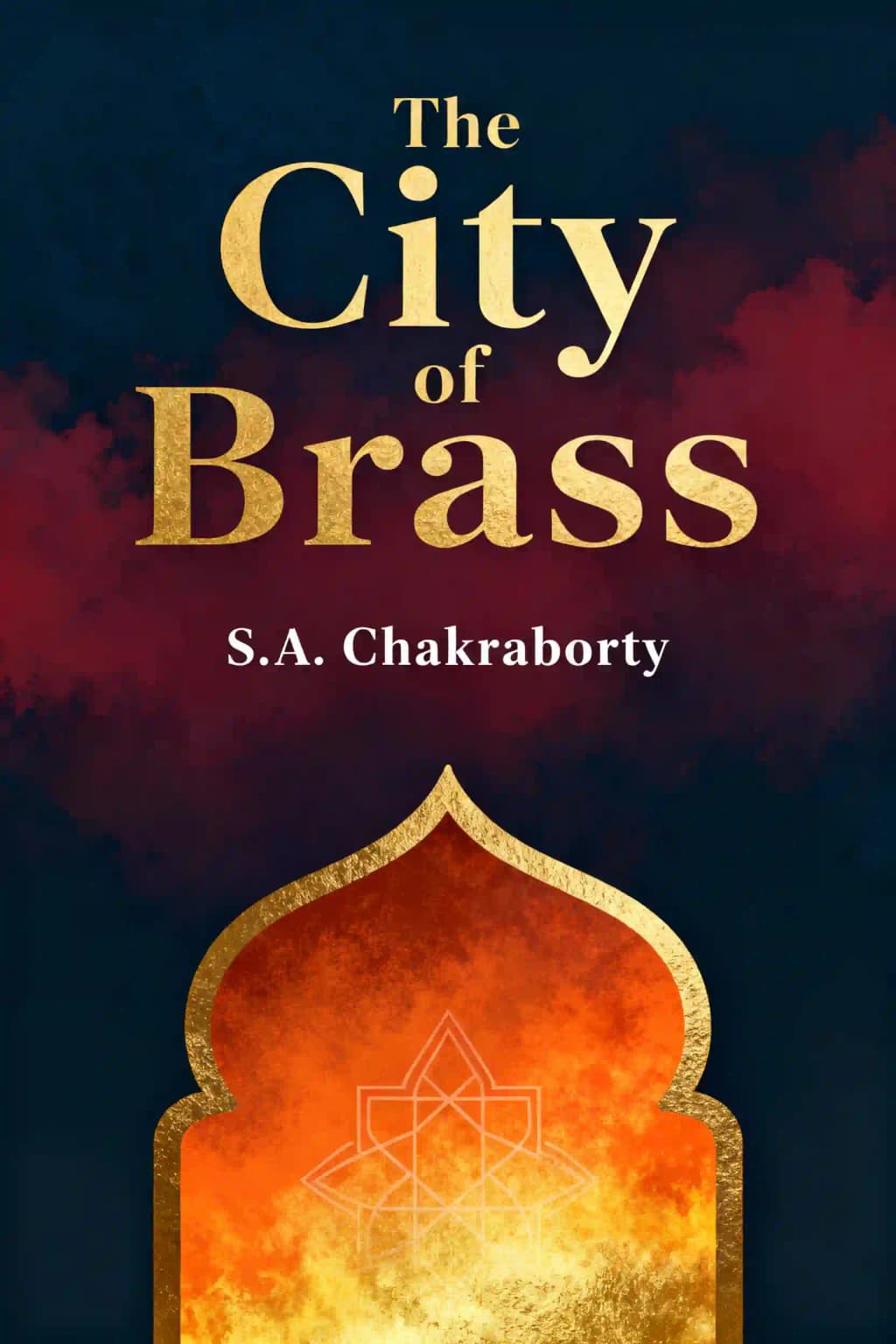
The City of Brass by S.A. Chakraborty burst onto the fantasy scene in 2017, captivating readers with its blend of Middle Eastern mythology and breathtaking world-building. This debut novel, the first in The Daevabad Trilogy, quickly earned acclaim for its complex characters and richly detailed magical system. Chakraborty, who spent years researching Islamic folklore and Middle Eastern history, created a world that feels both authentic and wonderfully fantastical. The novel has developed a devoted following among fantasy readers seeking fresh perspectives beyond European-inspired settings, with Neil Gaiman himself praising its "complex and utterly fascinating" magical world. What makes this story particularly compelling is how it weaves together political intrigue, magical adventure, and profound questions about identity and belonging into a narrative that feels both timeless and urgently relevant.
Chapitre 2
A Cunning Healer with Mysterious Origins
Nahri, a young con artist and healer in 18th-century Cairo, survives by swindling Ottoman nobles with fake magical remedies while secretly possessing genuine supernatural abilities. She can diagnose any illness, heal instantly from injuries, and instinctively understand any language she encounters. Despite these gifts, she lives hand-to-mouth in Cairo's slums, dreaming of legitimacy as a physician's apprentice in Istanbul.
When Nahri impulsively sings in her mysterious native tongue during a fake exorcism ceremony, she accidentally summons Darayavahoush e-Afshin (Dara), a powerful djinn warrior with emerald eyes and terrifying abilities. This summoning also attracts the attention of the ifrit - ancient, vengeful spirits who immediately recognize something special about Nahri. As ghouls rise from graves to attack them, Dara reveals that Nahri isn't human but likely a descendant of the Nahid family - legendary healers from the magical city of Daevabad.
The revelation shatters everything Nahri thought she knew about herself. Dara explains she can't return to her human life - the ifrit will hunt her relentlessly. Despite her protests and attempts to escape, Nahri finds herself on a flying carpet bound for Daevabad, a hidden magical city she never knew existed. During their journey, Dara gradually reveals the complex history of his world: the six magical tribes created by Suleiman the Wise, the ancient wars between them, and the current political tensions under the rule of the Qahtani dynasty.
What makes Nahri such a compelling protagonist is her resilience and adaptability. Rather than collapsing under the weight of these revelations, she approaches each new challenge with the same cunning and resourcefulness that kept her alive on Cairo's streets. When she learns she might be the last descendant of Daevabad's original ruling family, she doesn't simply accept this new identity but questions everything, determined to forge her own path rather than following anyone else's plans for her future.
Chapitre 3
The Haunted Warrior and His Tragic Past
Dara emerges as one of the novel's most complex and tragic figures - a legendary warrior with a dark history that continues to haunt him. Initially appearing as a dangerous, arrogant djinn, Dara's layers gradually unfold to reveal a deeply wounded soul trapped between worlds. His emerald eyes, bronze skin, and supernatural powers make him physically imposing, but his true complexity lies in his psychological scars.
Over the course of their journey to Daevabad, Nahri discovers Dara is actually dead - a slave bound to a vessel, his soul trapped for centuries after drowning at the hands of his enemies. The slave markings covering his body tell the story of countless masters who used his incredible powers for their own ends. Despite his imprisonment and the atrocities he was forced to commit, Dara maintains a fierce pride in his Daeva heritage and an unshakable loyalty to the extinct Nahid family.
This loyalty becomes both his strength and his fatal flaw. When he discovers Nahri's Nahid blood, he becomes her devoted protector, even as his prejudices against mixed-blood "shafit" create tension between them. His hatred for the ruling Qahtani dynasty runs bone-deep, stemming from their overthrow of the Nahids fourteen centuries earlier and the slaughter of his family. Yet beneath his vengeful exterior lies a man capable of tenderness, wonder, and even humor - moments that make his tragic fate all the more poignant.
Dara's character brilliantly illustrates how history shapes identity. His memories stretch back millennia, including the original binding of the djinn by the Prophet Suleiman and the fall of the Nahid Council. These experiences have calcified certain beliefs while leaving him bewildered by the modern world. His inability to reconcile his ancient prejudices with his growing affection for Nahri creates the central tension in his character arc, culminating in his shocking disintegration at the novel's climax - a moment that leaves readers wondering if death can truly be permanent in a world of such powerful magic.
Chapitre 4
The Idealistic Prince and His Impossible Position
Prince Alizayd al Qahtani provides the perfect counterpoint to both Nahri and Dara. While they are outsiders to Daevabad's politics, Ali has been shaped by them since birth. The second son of King Ghassan, Ali has been raised with rigid military discipline at the Citadel, trained to be his brother's future military commander. His devout religious beliefs and strong sense of justice make him increasingly uncomfortable with the inequalities he observes in Daevabad, particularly the treatment of the shafit - mixed-blooded descendants of djinn and humans who face systematic discrimination.
Ali's moral compass leads him to secretly fund the Tanzeem, a shafit rights organization, using his royal allowance. This decision places him in an impossible position - torn between loyalty to his family and his growing conviction that Daevabad's social structure is fundamentally unjust. His internal conflict manifests physically through his distinctive steel-gray Geziri eyes, which mark him as part of the ruling tribe even as he questions their policies.
When Ali meets Nahri, he's immediately intrigued by her outsider perspective and medical knowledge. Their unlikely friendship develops through shared intellectual curiosity and dry humor, even as political forces push them toward inevitable conflict. Ali's growing affection for Nahri further complicates his already precarious position, especially when his father arranges her marriage to his brother Muntadhir.
The novel brilliantly uses Ali to explore questions of privilege and responsibility. Despite his genuine desire to help the shafit, his approach is paternalistic and naive. He funds the Tanzeem without fully understanding how his money is being used, leading to unintended consequences when weapons are purchased instead of food and medicine. His character arc forces him to confront the limitations of good intentions without systemic change, culminating in his father's devastating assessment: "You want to help the shafit? Then help them. Don't play at rebellion while enjoying the protection of my name."
Ali's transformation at the novel's climax - when the mysterious marid of the lake grant him water powers in exchange for his true name - sets up one of the trilogy's most fascinating developments. His exile from Daevabad leaves him fundamentally changed, both physically and spiritually, foreshadowing his evolution from privileged prince to something far more complex.
Chapitre 5
A City Divided by Ancient Grudges
Daevabad itself emerges as perhaps the novel's most captivating creation - a hidden magical metropolis enclosed by massive brass walls, built upon a dark lake, and divided into distinct tribal quarters. Each section of the city reflects the culture of its inhabitants: the austere Geziri Quarter with its military precision, the opulent Daeva Quarter with its fire temples and ancient architecture, the mercantile Ayaanle Quarter with its teal-colored buildings and trade goods from across the magical world.
The city's physical divisions mirror its deep social fractures. Centuries of tribal conflicts, religious differences, and political machinations have created a powder keg of tensions. At the center of these conflicts are the shafit - mixed-blooded descendants who face discrimination from all sides. Pureblooded djinn view them with suspicion or outright contempt, while the ruling Qahtani dynasty maintains an uneasy peace by keeping them marginalized but not completely oppressed.
King Ghassan al Qahtani rules with calculated pragmatism rather than ideological fervor. His willingness to marry his son to Nahri despite suspecting her mixed blood reveals his political acumen - he cares less about racial purity than maintaining power and preventing rebellion. His character embodies the complexity of Daevabad's politics: he's simultaneously a tyrant who executes dissidents and a necessary stabilizing force preventing greater bloodshed between tribes.
The novel excels at showing how Daevabad's divisions extend beyond politics into everyday life. We see this through small details: how different tribes pray differently, how they celebrate festivals, how they dress and speak. These cultural differences create a rich tapestry that makes the city feel alive and lived-in rather than merely a backdrop for political intrigue.
Most compelling is how the city itself seems alive with magic - from the mysterious lake that surrounds it to the palace that responds to Nahri's emotions by shifting its shadows. This magical infrastructure, built by the ancient Nahids, becomes increasingly important as Nahri discovers her connection to the city runs deeper than she initially realized.
Chapitre 6
The Burden of Hidden Histories
Throughout the novel, characters struggle with the weight of histories both personal and political. Nahri must reconcile her identity as a Cairo street healer with her newly discovered heritage as a Nahid. Dara carries the burden of centuries of slavery and the massacre at Qui-zi that earned him the title "Scourge." Ali must confront his family's bloody rise to power and the ongoing oppression that maintains their rule.
These personal histories intersect with larger historical narratives about Daevabad itself. The novel gradually reveals the complex origins of the city's tribal divisions, the true nature of Suleiman's binding of the djinn, and the role of the mysterious marid in the Qahtani conquest. Each revelation forces characters to question their most fundamental beliefs about themselves and their world.
Particularly powerful is the novel's exploration of how history becomes mythology over time. The "official" histories taught in Daevabad often contradict the lived experiences of its inhabitants. The Daevas venerate the Nahids as perfect leaders, while the Geziri remember them as tyrants. The truth, as always, lies somewhere in between - the Nahids brought tremendous healing knowledge but also ordered massacres like Qui-zi when their authority was threatened.
This theme reaches its climax when Nahri learns the full truth about Dara's role in the Qui-zi massacre - how he slaughtered an entire city of silk merchants for allowing intermarriage with humans. This revelation forces her to confront the uncomfortable reality that even her ancestors were capable of terrible cruelty in the name of racial purity. Her decision to publicly condemn Dara while privately honoring his memory represents her first step toward creating a new kind of leadership - one that acknowledges past wrongs while working toward a more just future.
Chapitre 7
Magic Systems and Their Limitations
One of the novel's greatest strengths is its meticulously crafted magical system, which feels both wondrous and logically consistent. Rather than generic spellcasting, magic in Daevabad is elemental and tribal - tied to the essence of each magical race. The Daevas control fire, wielding it with a precision that allows them to create everything from delicate glass artwork to devastating weapons. The Ayaanle command air, using their powers to influence weather patterns and create powerful windstorms. The Geziri's earth magic manifests in their ability to shape stone and sense vibrations through the ground, while the mysterious marid command water with such mastery that they can manipulate entire rivers and seas.
These elemental affinities shape everything from cultural practices to architectural styles. Daeva cities feature intricate glasswork that captures and reflects their inner fire, while Ayaanle settlements incorporate open-air designs that channel wind through their buildings. Geziri structures are carved directly into mountainsides, showcasing their connection to stone and earth. The architectural distinctions serve both practical and aesthetic purposes, demonstrating how deeply magic is woven into the fabric of each society.
The novel explores how magic intersects with religion, particularly through the figure of the Prophet Suleiman, who bound the djinn with his seal. This binding fundamentally changed the nature of magic in this world - limiting the once-godlike powers of the djinn and creating the current tribal system. Before Suleiman's intervention, djinn wielded nearly unlimited power, reshaping reality at will. The binding created a complex hierarchy of magical abilities, with pure-blooded djinn retaining the strongest connection to their elemental magic, while mixed-blood shafit possess unpredictable and often diminished powers. The religious undertones of magic create fascinating tensions, especially for the devout Ali, who must reconcile his faith with his growing magical abilities - particularly when those abilities seem to contradict religious teachings about the proper order of things.
Most compelling is how the novel handles magical limitations. Every power comes with a cost or restriction, carefully balanced to create genuine consequences for using magic. Dara's fire magic weakens him physically, requiring periods of rest after major expenditures of power. The Nahids' healing abilities require intense concentration and can backfire catastrophically, as when Nahri accidentally kills her first patient by misunderstanding the complex interplay of magical energies within the human body. Even the mysterious marid exact a terrible price for their assistance - demanding Ali's true name in exchange for saving him, a transaction that gives them permanent power over him.
These limitations create genuine stakes for magical confrontations and drive much of the plot's tension. When Dara and Ali finally battle in the infirmary, the outcome feels uncertain despite Dara's greater experience because each character's magic operates under different rules and constraints. Dara's superior firepower is balanced against Ali's ability to draw strength from nearby water sources, while both must manage their respective magical limitations. This thoughtful approach to magical systems elevates the novel above typical fantasy fare, where magic often serves as a convenient plot device rather than an integral part of the world's fabric. The system's complexity and consequences make magical conflicts more strategic and emotionally resonant, as characters must carefully weigh the costs of using their powers against the benefits.
Chapitre 8
The Politics of Blood and Belonging
At its heart, The City of Brass is an exploration of identity politics - how societies determine who belongs and who remains perpetually "other." The novel's central conflict revolves around the shafit, whose mixed human-djinn heritage places them in a precarious position. Pureblooded djinn view them with contempt, yet they possess too much magical blood to live safely among humans.
Through characters like Anas and Hanno, we see the human cost of this discrimination. Shafit children are trafficked and exploited, denied education and healthcare, and subjected to violence with little recourse. The Tanzeem's increasing militancy emerges not from inherent violence but from generations of oppression and broken promises.
What makes the novel's exploration of these issues so compelling is its refusal to offer simple solutions. Ali's well-intentioned efforts to help the shafit ultimately backfire because he fails to understand the systemic nature of their oppression. Nahri's initial indifference to shafit suffering stems from her own struggle to survive, yet her perspective shifts as she recognizes parallels between their experiences and her own marginalization.
The novel also examines how prejudice operates differently across tribal lines. The Daevas' discrimination against shafit stems from religious purity beliefs, while the Geziri view them through a more pragmatic political lens. The Ayaanle's merchant culture creates yet another approach to tribal relations, using economic leverage rather than military might.
Most poignantly, the novel shows how characters internalize these prejudices. Dara's hatred of the shafit runs so deep he can barely acknowledge Nahri's mixed heritage despite his growing feelings for her. Nahri herself initially distances herself from the shafit, fearing association with them will diminish her precarious new status. These internal conflicts reveal how systems of oppression corrupt even those who wish to stand against them.
Chapitre 9
A Tapestry of Middle Eastern Mythology
S.A. Chakraborty draws from a rich well of Middle Eastern folklore and Islamic mythology to create a fantasy world that feels both familiar and fresh. Rather than the European medieval settings that dominate much of fantasy literature, The City of Brass immerses readers in a world inspired by 18th-century Cairo, Ottoman culture, and Persian legends.
The novel's magical creatures exemplify this approach. Instead of elves and dwarves, we encounter djinn, ifrit, peri, and marid - beings drawn from Middle Eastern folklore but reimagined with complex societies and motivations. The rukh birds that attack Nahri and Dara come from the tales of Sinbad. The shedu statues guarding Daevabad's gates have roots in ancient Mesopotamian protective deities.
This cultural foundation extends to the novel's language. Characters speak Divasti (based on ancient Persian), Djinnistani (with Arabic influences), and Geziriyya. Religious practices echo Islamic traditions while incorporating magical elements unique to this world. Even the food - from Dara's conjured lentil stew to the elaborate palace feasts - reflects authentic Middle Eastern culinary traditions.
What makes this cultural tapestry so effective is how seamlessly it's integrated into the narrative. Rather than feeling like educational asides, these cultural elements form the foundation of characters' worldviews and motivations. When Dara performs his ablutions before prayer or Ali refuses alcohol due to religious convictions, these actions reveal character rather than serving as exotic window dressing.
The novel also subtly subverts Western orientalist tropes about the Middle East. Rather than presenting a monolithic culture, it shows diverse societies with different religious interpretations, cultural practices, and political systems. Characters like Nahri challenge stereotypes about Middle Eastern women through their agency and complexity. Even the magical elements avoid the "mystical East" cliches by grounding supernatural abilities in consistent rules and limitations.
Chapitre 10
The Devastating Power of Love and Betrayal
As the novel reaches its climax, the personal and political threads converge in a series of devastating betrayals. Ali alerts the Royal Guard to Dara and Nahri's escape attempt, believing he's protecting her from the Afshin's influence. Nahri offers to marry Muntadhir if Dara is allowed to escape, not realizing Ali has already betrayed them. And most shockingly, Ali emerges from the lake transformed by marid magic to destroy Dara, shattering Nahri's last hope for understanding her heritage.
These betrayals cut so deeply because they arise from love as much as political calculation. Ali betrays Nahri because he genuinely believes he's saving her from Dara's manipulation. Nahri agrees to marry Muntadhir out of desperate love for Dara. Even King Ghassan's harsh treatment of Ali stems partly from a father's complicated love for his son - he exiles Ali rather than executing him as treason would normally demand.
The novel's final chapters explore the aftermath of these betrayals. Nahri, forced to publicly condemn Dara while privately mourning him, discovers a new kind of strength in her calculated smile toward King Ghassan. Ali, exiled and transformed by marid magic, begins a new journey in the desert. And in the epilogue's shocking revelation, we learn that Jamshid bears a mysterious tattoo connected to Nahri's mother Manizheh - who is apparently still alive and plotting to resurrect Dara.
This web of love, betrayal, and political manipulation sets the stage for the trilogy's continuation. Rather than providing neat resolution, the novel's ending raises tantalizing questions: Can Dara truly return from death a second time? Will Nahri discover her mother's survival? Can Ali control his new marid-given powers? These unresolved threads create a rich foundation for the subsequent books while still providing enough closure to satisfy readers.
Chapitre 11
Legacy of Fire and Water
The City of Brass concludes with its central characters fundamentally and irrevocably transformed by their experiences in ways that ripple through the fabric of Daevabad society. Nahri's evolution proves particularly striking - from a clever Cairo con artist who once feigned magical abilities to a formidable political operative capable of outmaneuvering King Ghassan himself. Her journey from survival-focused individualist to someone wielding real power while wrestling with its responsibilities mirrors the book's larger themes about the weight of leadership.
Ali's exile represents an even more dramatic transformation, both spiritual and physical. The pious prince who once viewed the world in stark moral absolutes finds himself altered by marid magic - his skin gleaming with scales, his body housing powers he barely understands. His ability to conjure water in the desert isn't just a magical talent but a profound symbol of renewal and change in a land plagued by ancient hatreds. The prince raised in luxury must now navigate life as an outcast, his royal identity stripped away even as he gains abilities that make him increasingly messianic to the Geziri tribes.
Dara's dramatic end - reduced to ash by Ali's enchanted zulfiqar - serves as both culmination and catalyst. His death transforms him from living legend to literal myth, his legacy now malleable in the hands of those who would use his story for their own ends. The revelation that Nahri's mother Manizheh plans to resurrect him adds layers of complexity to questions of death, duty, and the price of power in Daevabad.
The epilogue masterfully sets up future conflicts while deepening existing mysteries. Kaveh's revelation about Manizheh's survival and her plans for Dara suggests the current power structure in Daevabad rests on increasingly unstable ground. The cryptic tattoo discovered on Jamshid's shoulder raises intriguing questions about hidden bloodlines and secret allegiances within the Nahid family - hinting that even characters we think we know may harbor profound secrets.
These developments resonate because they emerge organically from the novel's core themes. The persistent tension between Daevas and Qahtanis illustrates how historical grievances can poison generations, while questions about Nahid leadership probe the complex relationship between power and responsibility. Ali's transformation by the marid magic explores consequences of crossing ancient boundaries and the price of divided loyalties in a world where identity itself can become a battlefield.
S.A. Chakraborty has crafted a world of remarkable depth and authenticity, drawing from Middle Eastern history and folklore while creating something uniquely her own. By grounding her fantasy in genuine cultural traditions while exploring universal themes of belonging, justice, and the cost of change, she's created a novel that feels both timeless and urgently contemporary. The City of Brass demonstrates fantasy's unique power to transport readers while illuminating fundamental truths about power, identity, and the stories we tell ourselves about both.