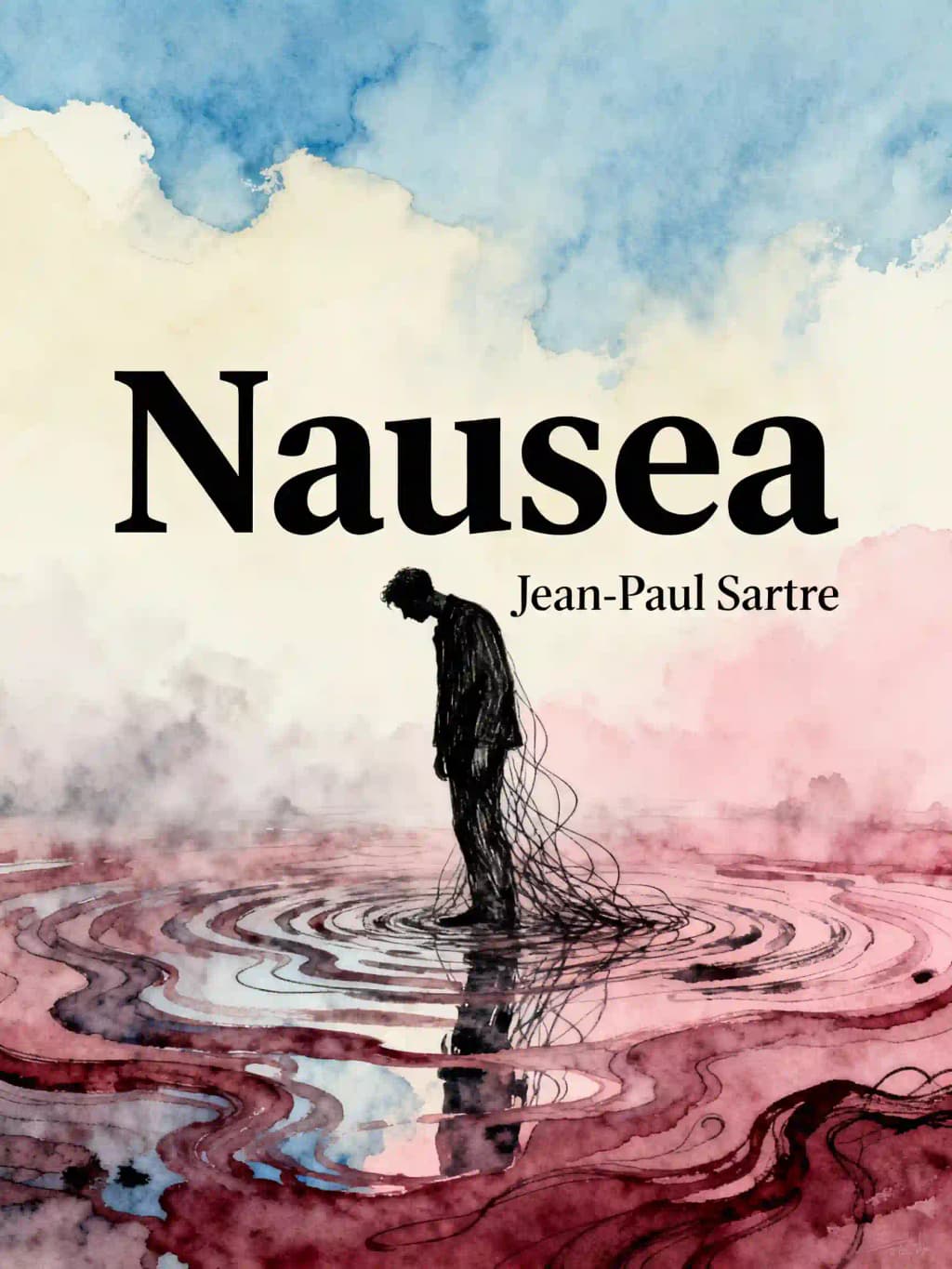
Aperçu de La Nausée
« La Nausée » de Sartre - le chef-d'œuvre existentialiste de 1938 qui plonge les lecteurs dans une profonde aliénation à travers la crise d'Antoine Roquentin. Et si l'absurdité elle-même devenait physique ? Cette pierre angulaire de la philosophie a influencé des générations, Simone de Beauvoir la qualifiant de première expression robuste de la contingence et de l'existence chez Sartre.
Thèmes clés dans La Nausée
- existential dread
- radical freedom
- ontological contingency
- absurdity of existence
- subjective consciousness
Citations de La Nausée
I am, I exist, I think, therefore I am; I am because I think, why do I think? I don't want to think any more, I am because I think that I don't want to think.
I wanted to leave, to go somewhere where I should be really in my place, where I should fit in… but my place was nowhere; I was unwanted.
I exist. It is sweet, so sweet, so slow. And heavy: it never stops.
Every existing thing is born without reason, prolongs itself out of weakness, and dies by chance.
Personnages de La Nausée
- Antoine RoquentinA historian and the protagonist facing nausea
- Marquis de RollebonAn obscure aristocrat and Roquentin's research subject
- AnnyRoquentin's former lover living in Paris
- The Self-Taught ManA lonely acquaintance of Roquentin in Bouville
Telecharger le resume de La Nausée
Obtenez le resume de La Nausée en PDF ou EPUB gratuit. Imprimez-le ou lisez-le hors ligne a tout moment.