Chapitre 1
When Disorder Delivers: The Counterintuitive Power of Mess
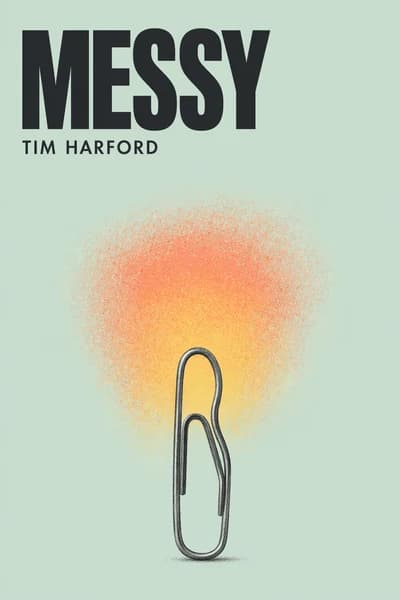
Have you ever found yourself creating something remarkable when everything seemed to be going wrong? In 2015, Adele's album "25" shattered sales records worldwide, yet few know it emerged from what she called a "messy period" of creative blockage and false starts. This pattern isn't unique to Adele. When Keith Jarrett arrived at the Cologne Opera House in 1975, he found a completely unplayable piano-tiny, out of tune, with broken keys and stuck pedals. After initially refusing to perform, he relented and produced what became the best-selling solo jazz album in history, with 3.5 million copies sold. The piano's limitations forced him to innovate, creating repetitive bass patterns to compensate for poor resonance and playing with extraordinary intensity. Tim Harford's "Messy" explores this paradox: how constraints, disruption, and disorder often produce our greatest achievements while our obsession with tidiness frequently leads us astray.
Chapitre 2
The Creative Power of Disruption
When David Bowie fled to West Berlin in 1976-emotionally exhausted, addicted to drugs, and creatively stuck-he found himself in an environment that "screamed you shouldn't be making a record here." Yet in this unlikely setting, working with producer Tony Visconti and Brian Eno, Bowie created some of his most acclaimed work. Eno deliberately introduced chaos into their creative process with his "Oblique Strategies" cards-random instructions like "Emphasize the flaws" or "Change instrument roles." During the Lodger sessions, Eno even had guitar virtuoso Carlos Alomar play drums instead, deliberately introducing productive disorder.
This approach mirrors mathematical problem-solving algorithms that combine systematic improvements with random shocks to avoid getting trapped in suboptimal solutions. We see this pattern repeatedly: Keith Jarrett's unplayable piano forced him to discover new musical territory. London commuters found better routes when forced to change by a tube strike. Even Brian Eno's own distractibility-his inability to filter out ambient sounds-represents the valuable "random leaps" that complement methodical improvement in creative work.
The most successful creative people often work across multiple domains rather than specializing deeply in one area. Erez Lieberman Aiden exemplifies this approach, working as a physicist, engineer, mathematician, biologist, historian, and linguist before age forty. His method is deliberately "nomadic"-moving between disciplines to find interesting problems rather than identifying with any particular skill. This approach pays dividends when he hits dead ends; a failed attempt to sequence the human immune system led him to solve an entirely different problem-mapping the 3D structure of the human genome-by combining immunology knowledge with concepts from mathematical physics.
This pattern appears in both science and art. A study of forty mid-career scientists found that those with enduring impact frequently switched research topics, while "one-hit wonders" like James Watson and Jonas Salk did not. David Bowie similarly thrived on variety, collaborating with different artists, living in multiple cities, acting in films, and writing in various formats. The lesson is clear: creative breakthroughs often emerge from the messy intersection of different fields, perspectives, and constraints.
Chapitre 3
The Productive Discomfort of Diverse Teams
The Robbers Cave experiment revealed how quickly tribal divisions form. Two groups of eleven-year-old boys-the Rattlers and Eagles-initially enjoyed separate camping activities. When they discovered each other, friendly competition rapidly deteriorated into bitter rivalry, with food fights escalating to flag burning and midnight raids. The experiment demonstrated how children could be both cooperative within their group and vicious toward outsiders.
Adults aren't immune to tribalism either. In Colorado, researchers found that when citizens from liberal Boulder and conservative Colorado Springs discussed controversial topics in hometown groups, their views became more extreme and less diverse-the groups polarized dramatically, eliminating previous overlaps in opinion.
Cognitive diversity, while uncomfortable, produces superior results. In mock jury trials, racially mixed juries deliberated more thoroughly than all-white ones. Student groups solving murder mysteries performed 75% better with a stranger present versus 54% for friend-only groups. Yet participants in diverse groups felt less confident and socially awkward, while homogeneous groups enjoyed themselves despite worse outcomes.
Investment clubs showed similar patterns. Brooke Harrington found that clubs formed among friends made poor financial decisions to preserve relationships-avoiding controversial stocks or postponing difficult choices rather than risk hurt feelings. One club refused to even discuss investing in Bombardier because a member incorrectly believed it manufactured weapons. Meanwhile, less sociable clubs had tense meetings with direct criticism but achieved superior financial returns.
This creates a fundamental tension: the conditions that make us feel good often produce inferior results, while productive discomfort leads to better outcomes. We naturally gravitate toward people like ourselves, creating echo chambers that feel harmonious but limit our thinking. The most effective collaborations often involve people with different backgrounds, perspectives, and thinking styles-creating friction that, while uncomfortable, generates better solutions.
Chapitre 4
The Freedom to Create Your Space
In 1923, Le Corbusier designed modernist homes for factory workers near Bordeaux-geometric concrete cubes he found beautiful but the workers rejected. They added shutters, pitched roofs, flowery wallpaper, and garden gnomes to make the spaces livable.
Steve Jobs, similarly devoted to clean design, meticulously crafted Pixar's headquarters with obsessive attention to detail. He believed the right building could enhance collaboration, even designing a single pair of restrooms in the main lobby to force serendipitous interactions.
Both men exemplify a corporate tendency toward tidy, minimalist spaces. This approach has evolved into management systems like "5S" (sort, straighten, shine, standardize, sustain), which began sensibly in manufacturing but has spread questionably to office environments. At Kyocera, "5S inspectors" patrol offices ensuring no personal items or decorations appear-only company plaques allowed.
Psychologists Alex Haslam and Craig Knight tested four office layouts to measure productivity and satisfaction. The "lean" office (bare and spartan) performed worst. The "enriched" office (decorated with plants and art) performed better. But the most successful was the "empowered" office, where workers arranged decorations themselves-productivity jumped 30% over the lean space.
Most revealing was the "disempowered" office, where workers arranged items only to have experimenters rearrange them back to standard positions. Despite looking identical to the enriched office, workers hated it, with one participant admitting, "I wanted to hit you."
This research reveals that control matters more than aesthetics. NASA found marine biologists in cramped undersea labs preferred cooking basic food themselves rather than eating elaborate pre-prepared meals. Robert Sommer's research similarly showed that "soft" spaces (which people can modify) outperform "hard" spaces (where elements are fixed) in productivity and satisfaction.
MIT's Building 20 exemplifies the benefits of messy freedom. This temporary structure, built during WWII, housed an unlikely mix of disciplines-electrical engineers alongside model railway enthusiasts, electronics specialists next to music departments. This unplanned hodgepodge fostered strange collaborations that might never have happened in a more organized setting. With exposed services running along corridor ceilings, researchers could tap directly into water, electricity, and phones without permission. When Jerrold Zacharias developed the atomic clock, his team simply removed a couple of floors to accommodate it. The building's inhabitants felt authorized to make changes because it was so cheap and ugly that "nobody cares what you do in there."
Google's early spaces resembled Building 20 far more than sleek corporate headquarters. For their first two years, Brin and Page worked at Stanford University. In 1998, Google moved to a garage with crude desks made from doors on sawhorses. Their next space featured the same makeshift desks plus a pingpong table and inflatable gym balls-not as design statements but because the founders liked to work out with them. When one Google engineer decided he didn't like his office wall, he and colleagues simply knocked it down overnight. Rather than reprimanding them, the facilities manager considered this "a more Googley environment."
For managers, the lesson is simple: resist the urge to tidy up. Leave the mess-and your workers-alone.
Chapitre 5
The Magic of Improvisation
In 1963, Martin Luther King Jr. delivered his historic "I Have a Dream" speech to a quarter million people at the Lincoln Memorial. King had meticulously prepared, drawing on years of careful speechcraft. Since childhood, his approach involved rigorous research, drafting, memorizing, and passionate delivery. As a teenager, he won prizes for speeches delivered entirely from memory. For his weekly sermons as a minister, he spent fifteen hours crafting each one, researching from Tuesday through Sunday.
Yet the most famous part of his speech emerged through improvisation at a critical moment. After delivering a line about justice running "down like waters and righteousness like a mighty stream" to approving cheers, King looked at his prepared script and found the next line pretentious and limp: "And so today, let us go back to our communities as members of the international association for the advancement of creative dissatisfaction." Unable to bring himself to say these words, he began to improvise with "Go back to Mississippi. Go back to Alabama..."
As King stepped away from his script at this climactic moment, singer Mahalia Jackson called out, "Tell 'em about the dream, Martin," referencing themes King had been sharing in church congregations. Responding perfectly to the moment, King created on the fly what would become one of history's most famous speeches, speaking of his dream "deeply rooted in the American dream" where people "will not be judged by the color of their skin but by the content of their character."
This pattern repeats across domains. Miles Davis's landmark album "Kind of Blue" was largely improvised, with musicians receiving minimal guidance before recording. The album's enduring appeal stems partly from the freshness of musicians responding to each other in real time rather than executing a predetermined plan.
Neuroscientist Charles Limb's research reveals what happens in the brain during improvisation: the dorsolateral prefrontal cortex-responsible for self-monitoring and inhibition-deactivates, while areas involved in self-expression activate. This explains why improvisation feels liberating-we literally turn off our inner critic.
The most powerful communication often combines thorough preparation with the flexibility to abandon the script when the moment demands it. This balance allows us to respond authentically to our audience and environment rather than mechanically executing a plan regardless of context.
Chapitre 6
Creating Chaos as a Winning Strategy
In competitive situations, creating confusion can be a powerful strategy-making your opponent lose rather than simply trying to win. This approach works in war, business, sports, and politics.
During World War II, David Stirling's Special Air Service (SAS) specialized in creating chaos behind enemy lines. In one audacious raid on British headquarters, Stirling demonstrated three principles of messy tactics: First, position yourself for opportunity-breaking into headquarters guaranteed he'd meet someone influential. Second, improvise around obstacles-when the sentry blocked him and the first officer rejected him, he found alternative paths. Third, move faster than those trying to stop you.
An unexpected corollary: teams should understand broad goals but not waste time coordinating. Stirling split forces to operate independently; German Field Marshal Erwin Rommel did likewise; Amazon's Jeff Bezos famously told his management to communicate less, letting small teams achieve results without constant check-ins.
Early SAS missions demonstrated these principles. After their first parachute operation failed catastrophically in a thunderstorm, Stirling simply changed tactics to truck-based raids. When Italians spotted their convoy, he split forces to attack two airfields simultaneously. One failed but the other succeeded spectacularly under Paddy Mayne.
When their canoe broke before a planned harbor attack at Bouerat, Stirling confidently pivoted: "We'll have to reorganize a little. If we can't get the ships, we'll get the harbor installations." His men destroyed pumping equipment, food stores, supply trucks, and twenty loaded petrol tankers-perhaps more damaging than the original plan.
In business, Jeff Bezos applied similar principles at Amazon. Rather than developing a meticulous long-term plan, Bezos embraced experimentation and adaptation. When Amazon's early book business succeeded, he rapidly expanded into new categories despite Wall Street's skepticism. When the dot-com crash threatened Amazon's survival, Bezos pivoted to emphasize profitability rather than growth. Later, when Amazon Web Services emerged from an internal infrastructure project, Bezos recognized its potential and transformed Amazon into a cloud computing giant.
Chess champion Magnus Carlsen similarly creates messy situations his opponents find uncomfortable. Rather than memorizing standard openings, Carlsen often plays unusual moves that force opponents into unfamiliar territory where his superior intuition gives him an advantage.
The pattern is clear: in competitive environments, creating disorder benefits those who adapt better to chaos. By making situations messy, you force opponents to improvise-and if you're better at improvisation, you gain the advantage.
Chapitre 7
When Targets Backfire
In his decade as British Prime Minister, Tony Blair sought to improve the National Health Service through performance targets. One required doctors to provide appointments within forty-eight hours of patient calls. This seemingly reasonable goal backfired spectacularly during the 2005 election when voter Diana Church confronted Blair on live television. Her doctor refused to book follow-up appointments in advance, forcing patients to spend hours on hold each morning trying to secure same-day appointments.
The perverse incentive was clear: doctors maximized their chances of meeting the forty-eight-hour target by prohibiting advance bookings entirely. Those who couldn't get through on the phone weren't recorded in the system, making the target more achievable while service quality deteriorated.
This pattern repeats across domains. In 18th-century Germany, Johann Gottlieb Beckmann pioneered scientific forestry, sending workers with color-coded nails to count and classify trees. This effort to quantify forests for timber production and taxation transformed how governments approached resource management.
The scientific foresters initially focused on measurement, using calculus to estimate wood volume in a "Normalbaum" (standardized tree). But measurement soon led to physical transformation-messy, diverse forests were replaced with orderly rows of single species (often Norway spruce) planted at uniform ages. Dead trees and underbrush were cleared, making forests resemble the neat abstractions on foresters' maps.
This approach proved profitable but had hidden costs. Local peasants lost access to fallen wood, tree saps, medicines, acorns for livestock, and other resources too "messy and trivial" to register in official surveys. Since these resources were never measured to begin with, their loss "did not officially count."
From 18th-century forestry to modern data collection, we continue "hammering colored nails" into our world. The fundamental problem persists: "when we start quantifying and measuring everything, we soon begin to change the world to fit the way we measure it."
Even without top-down mandates, measurement systems trigger unintended consequences. The Apgar score, which rates newborns on criteria like color and crying, turned babies' conditions into comparable numbers. This led competitive doctors to favor predictable C-sections over potentially better but riskier forceps deliveries. Similarly, surgeon "report cards" in New York and Pennsylvania backfired when doctors avoided high-risk patients and performed unnecessary surgeries on healthier ones.
The problem extends beyond healthcare. Universities game rankings by soliciting excessive applications to appear more selective. UK universities exploit research funding loopholes by hiring star academics on minimal contracts. International development goals inadvertently directed aid toward easier-to-improve middle-income countries rather than the neediest.
The solution isn't more complex targets nor simple rules of thumb. It's unpredictability. Just as exams test only a fraction of what students learn, making gaming impossible, Jeremy Bentham noted in 1830 that civil service exams should have deliberate ambiguity, "impossibilizing the knowledge" of how to game them.
For ambulances, regulators should define many metrics and randomly select a few for in-depth examination during each assessment. This approach makes gaming impossible since optimizing for one metric would reduce performance on others. Bank regulators should conduct unpredictable "stress tests"-showing up unannounced to demand immediate answers about specific portfolios.
The world's toughest exam isn't tough if everyone has a cheat sheet. A simple question from an unexpected direction proves far more searching.
Chapitre 8
When Automation Fails Us
When Captain Marc Dubois entered the cockpit of Air France Flight 447, he found chaos. The plane shook violently, alarms blared "STALL STALL STALL," and his co-pilots were panicking. Despite this warning repeating 75 times over four and a half minutes, neither pilot acknowledged it.
The inexperienced co-pilot Bonin kept pulling back on the stick, causing the plane to climb at 7,000 feet per minute while losing airspeed. This was a fundamental error-every pilot learns to fix a stall by pointing the nose down to regain speed. Several factors contributed to this fatal mistake: language barriers (French pilots hearing English warnings), control systems that didn't physically mirror each other's movements, and most critically, mode confusion.
The pilots had grown to rely on the fly-by-wire system that normally prevented stalls automatically. When ice disabled this protection, Bonin likely assumed the "STALL" warnings meant the computer was preventing a stall, not that one was actually occurring. His instincts were calibrated for aborted landings near ground level, where steep climbs are safe. With minimal experience manually flying at high altitude without computer assistance, he lacked the necessary skills when automation failed.
This exemplifies what experts call "the paradox of automation," which has three components: First, automatic systems accommodate incompetence by correcting mistakes, hiding weaknesses indefinitely. Second, automation erodes expert skills through lack of practice. Third, automated systems tend to fail in unusual ways that require exceptional human response. Ironically, more capable automatic systems make all three problems worse.
Earl Wiener observed that "Digital devices tune out small errors while creating opportunities for large errors"-because digital devices tidily tune out small errors, they create opportunities for catastrophic ones. Deprived of modest challenges to maintain our skills, we find ourselves unprepared when crisis arrives.
For situations where humans must monitor machines, Missy Cummings (formerly a Navy fighter pilot) found that drone operators perform better when they take brief, complete breaks rather than trying to multitask. This suggests automated systems should be programmed to serve up occasional diversions or demand more human input-creating small, artificial messes to keep operators engaged for when their skills are suddenly needed.
Hans Monderman, a Dutch traffic engineer, applied similar thinking to road safety. When two children were killed by speeding cars in the village of Oudehaske, rather than adding traffic lights and speed bumps, he removed signs and replaced tarmac with brick paving that blurred the boundary between road and sidewalk. Faced with ambiguity rather than clear guidance, drivers had to engage their brains and drove more cautiously.
Monderman later created the "Squareabout" in Drachten, replacing a dangerous traffic-light intersection with an open square lacking signals or lane markings. Though it feels chaotic and surveys show locals think it's dangerous, accidents fell by half. The apparent messiness forces drivers to pay constant attention, make eye contact with pedestrians and cyclists, and drive slowly enough to react.
Chapitre 9
The Ecosystem Advantage
In 1968, forestry professor Richard Plochman exposed German forestry's dark secret: two centuries after Johann Gottlieb Beckmann had transformed messy ancient woodlands into neat rows of Norwegian spruce, the forests were dying. The "pure stands" that initially thrived showed "amazing retrogression" by the second generation, with yields down by a quarter and continuing to decline. Germans called this Waldsterben or "forest death syndrome."
This pattern repeats across domains. For decades, doctors believed stomach ulcers resulted from stress or spicy food. In 1984, Australian physician Barry Marshall infected himself with H. pylori bacteria to prove it caused ulcers-a discovery that won him the Nobel Prize. Yet subsequent research by Martin Blaser revealed that H. pylori might actually benefit us. Americans with H. pylori were far less likely to suffer from asthma, and laboratory studies showed deliberately infecting mice with the bacteria prevented asthmatic symptoms. Blaser also found H. pylori helps prevent obesity by regulating the stomach enzyme ghrelin.
These discoveries highlight our complex relationship with bacteria. The average human hosts ten thousand bacterial species that outnumber our own cells, weigh about three pounds collectively, and play crucial roles in metabolism. Some bacteria are dangerous, some harmless, and some beneficial-or both dangerous and beneficial depending on context.
Blaser argues our bacterial guests are becoming less diverse, harming our health. University of Toronto researchers found people today are heavier than their 1980s counterparts even with identical diet and exercise habits. A European study showed less diverse microbiomes correlate with obesity. Meanwhile, Lactobacillus sakei appears to prevent sinusitis by outcompeting harmful bacteria-but antibiotics can wipe it out, paradoxically causing infection.
This principle extends beyond our bodies to our neighborhoods and cities. Jane Jacobs championed neighborhood diversity in "The Death and Life of Great American Cities," describing Greenwich Village's "daily ballet" where diverse activities and people created vibrant, safe streets. This diversity depended on mixed-use buildings and a blend of old and new structures.
Jacobs argued diverse cities work better than specialized ones. Birmingham, England, with its "thousand trades," proved more resilient than single-industry cities like Detroit. AnnaLee Saxenian's 1994 study confirmed this, showing how Silicon Valley's messy, interconnected ecosystem outperformed Boston's Route 128 corridor where companies operated in tidy, specialized silos.
Recent research by Cesar Hidalgo at MIT further supports this view. His economic structure maps reveal strong correlations between economic diversity, complexity, and wealth. While specialized economies can become temporarily rich (like petro-states), diverse economies prove more resilient over time-just like diverse forests and microbiomes.
The lesson is clear: when we try controlling complex systems by suppressing seemingly unimportant parts, those parts often prove essential. Messiness and diversity-whether in forests, gut bacteria, or urban neighborhoods-create resilience that tidy monocultures cannot match.
Chapitre 10
Embracing Human Messiness
Our conversations have become increasingly robotic and predictable, as demonstrated by Alan Turing's "imitation game" test for artificial intelligence. By 2008, computers nearly reached Turing's prediction of fooling 30% of human judges-not because computers became more human, but because humans became more robotic.
The "pick-up artist" subculture exemplifies this robotic approach, using pre-scripted "openers" and "negging" techniques that avoid genuine human connection. Similarly, the MGonz chatbot successfully fools humans by firing insults that trigger predictable responses. Our smartphones can now autocomplete entire affectionate messages with minimal input, revealing how formulaic our communications have become.
Even on first dates, we exchange rehearsed biographical information rather than risk meaningful conversation. Dan Ariely's experiment forced online daters to ask provocative questions like "How many romantic partners did you have?" and "How do you feel about abortion?"-resulting in conversations participants found far more engaging than typical exchanges.
Social media platforms like Facebook encourage shallow interaction by expanding one-click reactions rather than thoughtful responses. Young people now find face-to-face conversation frightening precisely because "it takes place in real time and you can't control what you're going to say"-the very spontaneity that makes conversation human.
Brian Christian, competing in the Loebner Prize for "Most Human Human," won by making his conversations deliberately messy: getting off script with unexpected questions, focusing on specific contextual details rather than generic responses, and embracing the natural interruptions and cross-talk of human dialogue. His success proves that our humanity lies in embracing conversational mess.
Children similarly benefit from messy play environments. Danish landscape architect Carl Theodor Srensen noticed children preferred building sites to traditional playgrounds, so in 1943 he created a playground filled with sand, gravel, hammers and nails. Similar "adventure playgrounds" like The Yard in Minneapolis and The Land in North Wales demonstrate that children thrive in unstructured environments where they create their own rules.
Research shows informal games (like street soccer with makeshift goals) foster more creativity than formal organized sports, as they require empathy, compromise, and accommodation of players with different abilities. In messy play, children learn the social skills that formal games with rigid rules cannot teach.
Our obsession with tidiness extends to personal productivity. Benjamin Franklin's virtue journal-his attempt to achieve moral perfection through methodical tracking-exemplifies our enduring belief that the right system will transform us. Modern equivalents include "Inbox Zero" and elaborate filing systems, yet research shows people who meticulously file emails are no better at finding old messages than those who leave them in their inbox.
The pattern is clear: our most human qualities-creativity, resilience, connection-emerge from embracing mess rather than eliminating it. The most vibrant cities, productive workplaces, engaging conversations, and innovative minds all thrive on a certain productive disorder. By learning to value messiness in our environments, relationships, and thinking, we unlock possibilities that tidiness alone could never reveal.