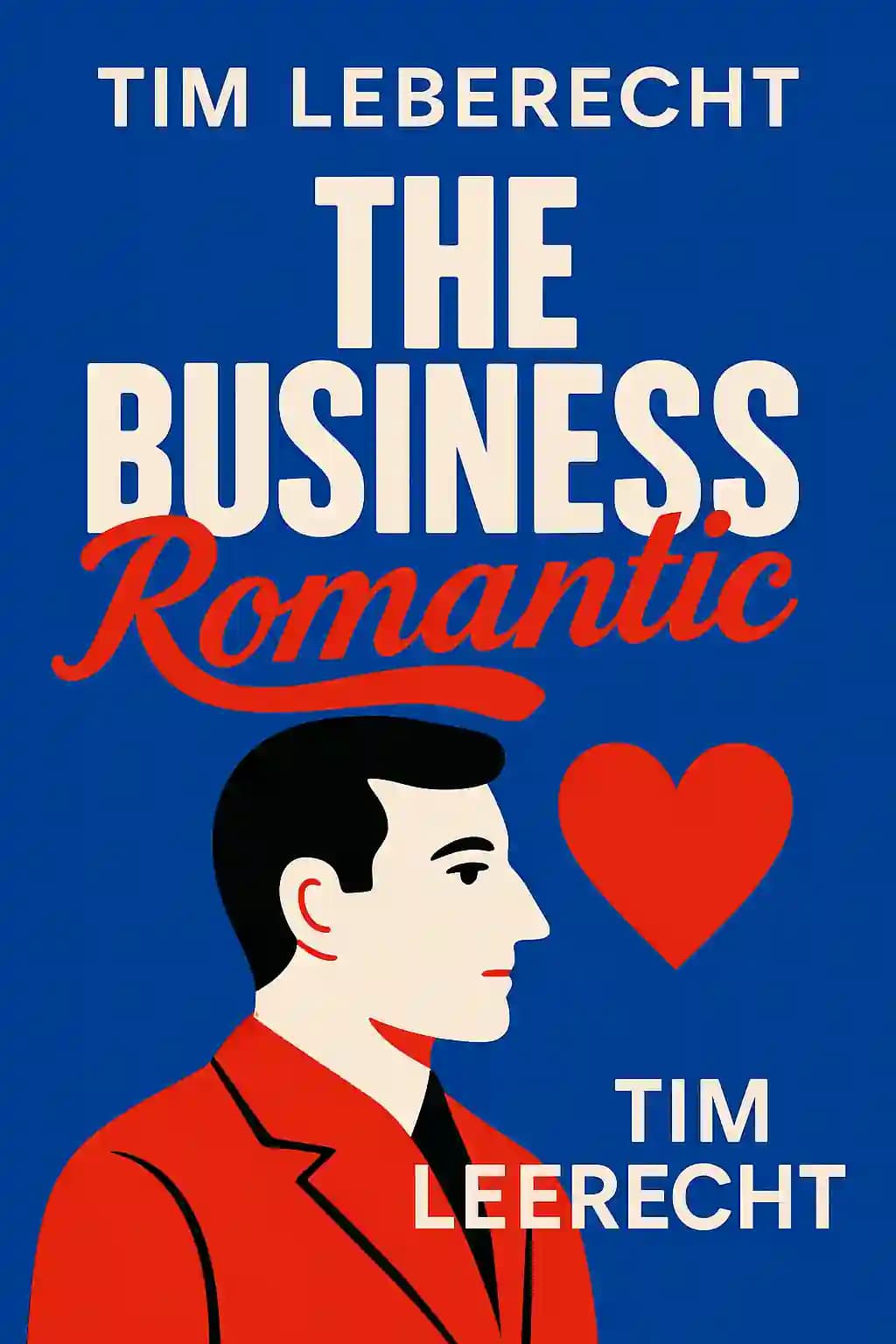
Chapitre 1
When Business Becomes Poetry: The Unexpected Romance of Commerce
In a world obsessed with optimization and efficiency, Tim Leberecht makes a radical proposition: business can be romantic. While carrying the Olympic flame through Cairo as an advance press chief for the 2004 Olympic Torch Relay, Leberecht experienced a profound realization. Despite the commercialization of the Olympics with corporate logos plastered everywhere, the pure Olympic spirit remained vibrantly alive in Tahrir Square as thousands of Egyptians gathered in celebration. This beautiful contradiction-the coexistence of commerce and transcendence-became the foundation for his philosophy of Business Romanticism. The book has garnered praise from influential voices like Adam Grant and Seth Godin, who call it "a refreshing reminder that we should expect more from business and from ourselves." Since its publication, the concept has inspired a global movement, with Leberecht's TED talks on the topic garnering millions of views and spawning "Business Romantic" communities across major cities worldwide.
Chapitre 2
The Modern Yearning for Meaning in Market Society
Our market society stands at a crossroads of confusion and yearning. According to a 2013 Gallup poll spanning 140 countries, only 13 percent of employees worldwide feel enthusiastic about their jobs. Most are disengaged, with nearly a quarter actively spreading negativity. Leadership fares even worse-Edelman's Trust Barometer shows executives are trusted half as much as academics or middle managers.
This disillusionment exists against a backdrop of growing inequality. Since 2008, the wealthiest 10 percent have increased their wealth 9.5 times more than the poorest 10 percent. In America, the top 0.1 percent own one-fifth of the country's wealth, creating what the Aspen Institute calls a "Power-Curve Society." The digital economy exacerbates this trend-when Facebook bought WhatsApp for $19 billion, it valued each employee at $345 million, while Americans work eight weeks longer annually than in 1969 for roughly the same inflation-adjusted income.
Against this backdrop, people increasingly seek meaning through work. Alternative business models are emerging everywhere: B Corps, corporate change-makers, the Maker Movement, and initiatives like Richard Branson's B Team. Aaron Hurst identifies this shift as "The Purpose Economy," driven by desires for meaningful connections, craft-building, and community engagement. Research confirms that employees finding meaning in their work stay longer, experience higher satisfaction, and engage more deeply.
Yet Business Romantics differ from merely purpose-driven workers. While both seek meaning beyond economic incentives, romantics value the journey as much as the destination, prioritizing experience over institutional goals. Romance isn't necessarily moral-it often emerges from intensity, uncertainty, and conflict. Business Romantics seek something more elusive than happiness or purpose-the heightened experience itself.
This yearning for romance exists in tension with our data-obsessed culture. Humanity now generates as much data in two days as it did in all history before 2003, with data doubling every two years. While Big Data promises to enhance our lives through tracking everything from sleep patterns to workout performance, this fixation on measurement leaves us wistful for something more profound. As computational innovation surpasses not just our physical skills but our cognitive ones, the romantic makes a passionate case for the humanities as our most treasured-and useless-"special skills."
Chapitre 3
The Romantic Spirit in Business: Profiles of Modern Mavericks
The Business Romantic isn't a distant ideal but a living archetype embodied by professionals across industries. Consider Gaston Frydlewski and Mariquel Waingarten, who exemplify the "Lovers" archetype-passionate not just about each other but about business itself. Gaston's eight-year obsession with reinventing shoelaces led to HICKIES, elastic bands that transform sneakers into slip-ons. When traditional retailers rejected them, they turned to Kickstarter, raising $160,000 from 4,000 backers. Within their first year, they'd broken even after selling 200,000 packs through Brookstone. Two years later, they'd raised $4.2 million and shipped one million packs to fourteen countries.
"I channel my creativity through business; this is where I express myself," Gaston explained. "Because, at the end of the day, business is just another means of expression."
Emily and Adam Harteau represent the "Business Travelers" archetype. In 2012, they packed their VW Westfalia camper with their two-year-old daughter and began driving south from Los Angeles through Mexico and South America. When their savings dwindled, they launched "24-Hour Bazaar" flash sales offering followers handcrafted items from their travels, like hand-woven Peruvian rugs. These market exchanges became central to their experience, connecting them with local artisans and global customers in meaningful ways.
"For us, as a family, business and adventure are not mutually exclusive," Emily explained. "They are intrinsically intertwined."
Alexa Clay embodies the "Outsider" archetype. After completing her master's at Oxford, she studied social entrepreneurship with Ashoka, eventually co-founding the "League of Intrapreneurs." Her work as a provocateur, including her book The Misfit Economy and performance pieces like playing the "Amish Futurist" at tech conferences, leverages her outsider perspective to reveal possibilities for change. She believes that as we shift from command-and-control capitalism toward peer-to-peer marketplaces, more opportunities for autonomy, creativity, and romance emerge.
Karen Wickre, editorial director at Twitter, serves as the "Voice" archetype. When she joined in 2011, Twitter had around 700 employees but "lacked a unified voice." Now she manages a network of fifteen blogs, orchestrates internal communications, and shapes the company's public presence with the finesse of a master chef rather than a rigid gatekeeper. Her liberal arts background provides the foundation for her work: "There isn't a day that I don't apply my education on the job," she says, drawing from literature, art, and history to inform her writing.
Ansgar Oberholz, founder of St. Oberholz cafe in Berlin, represents the "Guardian" archetype. Unlike Silicon Valley's focus on venture capital, Oberholz created a space that celebrates community and lifestyle, embracing Berlin's unique tolerance for failure and experimentation. Despite his immersion in incubators and valuations, Oberholz maintains an "incorruptible dream" as a Business Romantic: "The heart is very important. There are not a lot of questions you can answer with a calculator."
These profiles reveal that Business Romantics aren't dreamers disconnected from reality-they're pragmatic visionaries who integrate meaning and commerce in innovative ways. They demonstrate that business can be a vehicle for expression, adventure, provocation, voice, and community-not just profit.
Chapitre 4
Finding the Big in the Small: Transforming Everyday Moments
Small gestures that ground us in shared humanity can create moments of unexpected delight in business contexts. Rowan Gormley, CEO of Naked Wines, discovered that writing casual, friendly emails without marketing jargon generated higher response rates than traditional marketing messages. "Simply being yourself is the best value proposition," he found.
This principle of authentic connection was demonstrated in a "15 Toasts" dinner series co-hosted with Priya Parker, where fifteen strangers addressed the question "What is a good life?" with the last person singing their toast. The format created vulnerability and genuine conversation among leaders who were previously strangers. The dinners expanded to different cities and themes, creating a community around the idea that "power and vulnerability could clink glasses at the same table."
Chris Muscarella's Kitchensurfing startup connects home diners with trained chefs, bypassing restaurants to create intimate dining experiences and meaningful conversations. Similarly, the Death Over Dinner movement facilitates difficult conversations about end-of-life care through shared meals. These examples show how the smallest interventions-from name tags to dinner formats-can transform everyday experiences into moments of genuine human connection.
The Business Romantic understands that meaning often emerges from these small, seemingly insignificant moments. Rather than seeking grand gestures or transformative initiatives, they focus on infusing everyday interactions with authenticity, vulnerability, and humanity. This approach doesn't require organizational overhaul-it simply asks us to recognize the potential for connection in every business interaction.
Chapitre 5
The Value of Being a Stranger: Embracing the Outsider Perspective
Organizations benefit from "strangers in their own house"-contrarians who question the status quo. Even the military creates space for disruption through its "Red Team University," designed to combat groupthink by training in-house skeptics. Public editors at newspapers like Margaret Sullivan at the New York Times serve a similar function, holding organizations to high ethical standards while scrutinizing potential biases.
Several initiatives now support these corporate rebels, including the League of Intrapreneurs, Corporate Rebels United, and Rebels at Work, all connecting change-makers inside corporations. Companies themselves increasingly embrace internal opposition, launching disruption units like Anheuser-Busch's "Beer Garage" or bringing in innovation consultancies.
Business Romantics also value the perspective of amateurs-true "lovers" (from Latin amatorem) who bring fresh eyes to familiar problems. LEGO revitalized itself by connecting with fan communities who created stop-motion films and other creative projects out of love for the brand. At Frog Design, researcher Ashley Menger's "Trash Talk" experiment-carrying all her garbage in a yellow bag to raise environmental awareness-began as personal inquiry but grew into a movement that spread globally.
Seeing through another's eyes brings similar revelation, as shown in Dove's "Real Beauty Sketches" campaign where women discovered how strangers saw them more positively than they saw themselves. Role-swapping exercises like "Freaky Friday" or "thinking hikes" that pair natural antagonists like CMOs and CFOs can bridge organizational divides.
The Business Romantic occasionally abandons efficiency's grid to wander like a flaneur, creating space for serendipitous discovery-a principle Bell Labs embraced by designing long hallways where researchers from different disciplines would naturally encounter each other. This principle of engineered serendipity has been adopted by modern innovators like Google and Salesforce.com, with companies like Zappos even measuring "people collisions" to foster creativity.
Yet these controlled encounters can't replace genuine unpredictability. Our digital lives increasingly trap us in "Filter Bubbles" where algorithms reflect back variations of ourselves, diminishing true strangeness. Technology can both worsen and cure this isolation-apps like "20 Day Stranger" connect anonymous individuals to foster empathy, while sharing economy services like Airbnb and Uber reintroduce the thrill of meeting strangers.
Chapitre 6
The Power of Giving Without Expectation
The Business Romantic understands the power of genuine giving. In San Francisco, a couple named Tom and Jerry transform their Victorian home every December into a spectacular holiday display featuring a 60-foot lit Christmas tree, giant stockings, animated teddy bears, and toy trains. This "Tom and Jerry's House" has become a beloved city attraction, yet the creators accept no donations-it exists purely as a gift to the community.
Unlike commodities, gifts create relationships. As Lewis Hyde explains in his work "The Gift," presenting someone with a gift recognizes them as a person, and this acknowledgment is itself the greatest gift. True gifts surprise us by revealing latent desires rather than satisfying immediate needs. Gift cards and money, being fungible, reduce giving to mere transaction.
Business is beginning to incorporate this spirit of generosity into its practices. Tim O'Reilly advises companies to "Create more value than you capture"-a principle that extends beyond mere transaction. Adam Grant's research shows workplace altruism enhances collaboration, innovation, and service quality. LinkedIn's most connected person, Adam Rifkin, recommends giving five minutes of your time to anybody who asks.
Giving time may be the greatest gift in business. For over a decade, Frog Design hosted the opening party of South By Southwest, investing countless hours in elaborate themed installations built largely on team members' own time. Despite questionable ROI, the event became non-negotiable-its very lack of measurable return transformed it from product to gift, born of excessive dedication and curiosity.
Even April Fools' jokes by companies like Google represent a form of gifting-they give us permission "to be a fool" and make the world briefly more unreasonable and romantic. In our everyday lives, gifts can become alternative currencies, from the stranger buying coffee for everyone in a cafe to gain their attention, to the man returning a stolen wallet in exchange for a reward.
Social media thrives on this culture of giving without immediate return. As Liba Rubenstein of Tumblr observes, online sharing often triggers waves of exponential giving that move fluidly between digital and physical worlds. At its best, this creates profound moments of shared humanity, from the Make-A-Wish Foundation's "Batkid for a Day" to the viral "First Kiss" video showing strangers sharing intimate moments.
Chapitre 7
The Value of Frustration and Effort in Experience Design
Why do people wait in long lines at Tartine bakery in San Francisco when other options are available? Three reasons: exceptional quality, social connection, and most importantly for romantics, the element of suffering that creates exclusivity. The waiting is part of the experience, making it more meaningful.
Common wisdom holds that convenience creates customer loyalty, but romantics know this is wrong. From camping outside Apple stores to hiking mountains to glimpse Tour de France cyclists, effort dramatizes moments and increases perceived value. Even loyalty programs operate on delayed gratification, making rewards more meaningful because we had to earn them.
IKEA has perfected the art of customer frustration through its maze-like shopping experience and frustrating self-assembly process. The "IKEA-Effect" describes how consumers place higher value on products they assemble themselves. The right level of effort is critical: too little and consumers don't emotionally invest; too much and they're put off.
These examples show we overrate convenience and underestimate sacrifice. Our commitment gets reinforced with every reward-a virtuous cycle. This explains why prestigious events are held in inconvenient locations like Davos or the Nevada desert. We seek these "critical events" to punctuate our lives in an age where technology has eliminated drama and made everything too easy.
At work, deadlines provide the thrill of suffering-our equivalent of scaling Mount Everest. Knowledge workers secretly crave the adrenaline rush of last-minute pressure, creating self-imposed drama that makes us feel alive.
Sports fandom demonstrates this principle perfectly. The word "passion" comes from the Greek "to suffer," and fans suffer through every defeat. Soccer, with its unpredictability and potential for beauty, offers both drama and ambiguity. The emotional investment never fully pays out, but our romantic capital grows with every game.
Business Romantics know there's nothing more terrifying than complete ease. We find romance in the cracks between comfort and satisfaction. Make your customers work harder for gratification. Let them wait. Frustrate them so they value what they cannot easily get. The ultimate reward is permanent unfulfillment-desire intact, thrill not gone.
Chapitre 8
The Power of Mystery in a Transparent World
Business Romantics embrace ambiguity, drawing inspiration from James Bond's enigmatic aura. While transparency dominates today's business culture, mystery creates possibility and suspense. Secrets, when used judiciously, make experiences thrillingly out of reach rather than oppressive.
Brand remains the most powerful yet esoteric framework in business-a collective identity built on shared experiences. Today's brands are expected to be content-rich conversationalists, constantly engaging in dialogue. But as transparency becomes inflationary, it no longer offers genuine trustworthiness or intimacy.
The strongest brands don't need brand books; their implicit promise is understood without explicit codification. Like Apple under Steve Jobs, they cultivate a mystical void at their center. Similarly, elevator pitches that leave questions unanswered can be more effective than comprehensive explanations-people lean in when given just enough information.
McKinsey exemplifies the power of mystique in business, maintaining its status as the most prestigious and secretive consulting firm through an invisible contract with clients. The firm's recommendations remain unquestioned because they come with an elitist aura infused with mystery. While other professions are forced to "un-bundle" for transparency, McKinsey successfully protects its "black box," drawing a hard line between insiders and outsiders.
Secret societies like nbbX and House of Genius create essential spaces for authentic expression in business. House of Genius events bring together participants who remain anonymous until the end, allowing ideas to be evaluated purely on merit rather than status-creating a level playing field where even Apple's Jonathan Ive might be offering advice incognito.
Secret Cinema has reinvigorated moviegoing by transforming films into immersive mystery experiences. Viewers attend "blind date" screenings in unusual locations, with elaborate sets and performances-paying premium prices for experiences like watching The Battle of Algiers in a transformed warehouse. Similarly, Beck released his album Song Reader only as sheet music, creating artificial scarcity while inviting fans to record their own versions.
Japanese retailer Muji embraces emptiness as its design principle. Art director Kenya Hara connects this to Shinto tradition, describing the empty shrine (Shiro) that invites gods to enter but offers no certainty they will. "Emptiness is not a message," Hara explains, "To offer an empty vessel is to pose a single question and to be forever ready to accept a huge variety of answers."
Chapitre 9
The Art of Meaningful Endings and Transitions
When relationships end, they deserve a proper finale. Performance artists Marina Abramovic and Ulay demonstrated this by walking the Great Wall of China from opposite ends, meeting for one last kiss after 1,500 miles before parting for thirty years. Like great symphonies that end with flourish rather than fading away, powerful endings require the courage to say, "I gave you all of myself. There is no more. Good-bye."
In business, we understand beginnings but often underestimate the power of endings. We lack the skill set for proper closures, failing to anticipate the emotional toll of parting ways. Business divorces include hurt feelings and require more than dry postmortems-they need rituals for what Susan Sontag called "perpetual acts of separation and return."
Romantic leaders find creative ways to consecrate transitions. In 1995, Samsung chairman Lee Kun-hee directed workers to build a mountain of 150,000 flawed mobile phones, then had them burned while employees watched. This dramatic ritual marked Samsung's transformation from low-cost producer to innovation leader-today, the company outpaces even Apple in smartphone sales, and new employees still learn about "The Great Phone Incineration."
Departures from companies can be handled with either bravura or quiet dignity. When Rowan Gormley was fired from Virgin Wines, his twelve employees resigned simultaneously in solidarity. They went to the nearest pub and decided to launch their own business, Naked Wines, which became profitable within four years.
In contrast, soccer coach Frank Rijkaard demonstrated quiet dignity when departing FC Barcelona after a disappointing final season. Despite the humiliating defeats that led to his dismissal, Rijkaard maintained his optimism and integrity, never criticizing his players publicly. In his final game, when young striker Giovanni Dos Santos scored a hat trick, Rijkaard-normally stoic-erupted in joyful celebration as if they'd won a championship. His final press conference was simply: "It has been an honor to work for this club."
The author suggests we need to design for the "way out" just as we plan for beginnings, taking inspiration from Navajo weavers who include a deliberate "spirit line" in their textiles as a pathway to release energy and move forward. Romantics should "hone muscles of separation" and recognize that breaking up can be an act of romantic defiance that helps us confront what we truly want.
Chapitre 10
Cultivating Presence and Embracing Nostalgia
The chapter explores the concept of "relaxed presence" as an antidote to our distracted lives. Priya Parker and her husband organize "I Am Here" days where eight friends spend one Sunday monthly exploring New York City without digital devices, guided by a rotating "curator." The principle is that eight hours with eight people creates deeper connections than one hour with each person eight times. Participants commit to being "thickly in one place, not thinly everywhere."
This "thick presence" extends to other pursuits like cloud spotting-the seemingly purposeless act of watching clouds that Gavin Pretor-Pinney, founder of the Cloud Appreciation Society, celebrates as valuable "aimless activity." Increasingly, thick presence is becoming a luxury, with Sydney retailers refusing to serve phone-distracted customers and hotels offering "Disconnect to Reconnect" programs where guests pay to have devices locked away.
Against business culture's bias toward action, decisiveness and speed, the chapter advocates for contemplation, solitude, and even strategic inaction. Management professor Keith Murnighan preaches "management minimalism," while writer William Deresiewicz notes that "solitude is the very essence of leadership." Business Romantics resist the constant forward momentum, finding meaning in counter-movements-doing things slowly, against the grain, or not at all-that distinguish a merely productive life from a meaningful one.
The chapter also explores nostalgia as a romantic sentiment with deep roots. Coined by 17th-century physician Johannes Hoffer, "nostalgia" combines Greek words for "home" and "pain," representing our suffering from an "old wound"-being cut off from profound truths. The Amish Futurist (Alexa Clay's alter ego) embodies this by questioning technology's purpose while novelist Charles Yu laments losing his ability to feel wonder about technology.
The romantic-as-technologist seeks to expand ambiguity rather than predictability, creating nostalgic wonder through technology. This manifests in initiatives like the School of Poetic Computation, which promotes "more poetry, less demo" through impractical but beautiful programming projects. Our digital age enables reconnection-with old friends, places, songs-amplifying our Proustian remembrance of "firsts" when life felt fresh and full of possibility.
Chapitre 11
Toward a New Romantic Age in Business
The chapter argues that while business transactions often seem impersonal, they can be vehicles for meaningful connection, as shown through examples like the First Kiss video ad. Critics question whether business can truly embrace romanticism's complexities and ambiguities. Some see Business Romance as a luxury of the developed world, a privilege for the fortunate rather than something fundamental and obtainable for everyone.
Leberecht acknowledges these critiques while clarifying that Business Romance doesn't necessarily mean "doing what you love" or "loving what you do." Rather, it means creating moments of love within what you do, finding human connections and glimpses of transcendence even in mundane work. Romance offers hope in times dominated by ruthless logic and resignation.
The author addresses the tension between privacy and public life in Business Romance. While romantics must protect their private "flames," they also need engagement with the public world and an audience. Romance has always been both deeply private and political, as shown by the original Romantic Movement's conflict with authorities who valued reason and usefulness above all.
The chapter draws parallels between Jeremy Bentham's 18th-century "Panopticon" surveillance concept and today's data-driven society where we voluntarily share personal information. Leberecht warns that as personal data becomes a commodity, even our dreams are becoming tracked and analyzed, threatening our sovereignty and eliminating doubt-which romantics consider essential to humanity.
Business Romantics must become "romantic hackers" who subvert surveillance culture, create alternative avenues of meaning, and employ technology to rewrite or reinterpret the world. The book concludes by returning to the metaphor of romance as a flame that casts shadows and creates depth, inviting readers to "fight for your right to romance" and begin a new romantic age.
In our efficiency-obsessed world, the Business Romantic offers a radical alternative-not rejecting business but transforming it from within through small acts of meaning, generosity, mystery, and presence. By embracing the romantic perspective, we can rediscover what makes us human in the marketplace and find transcendence in the everyday transactions of business life.