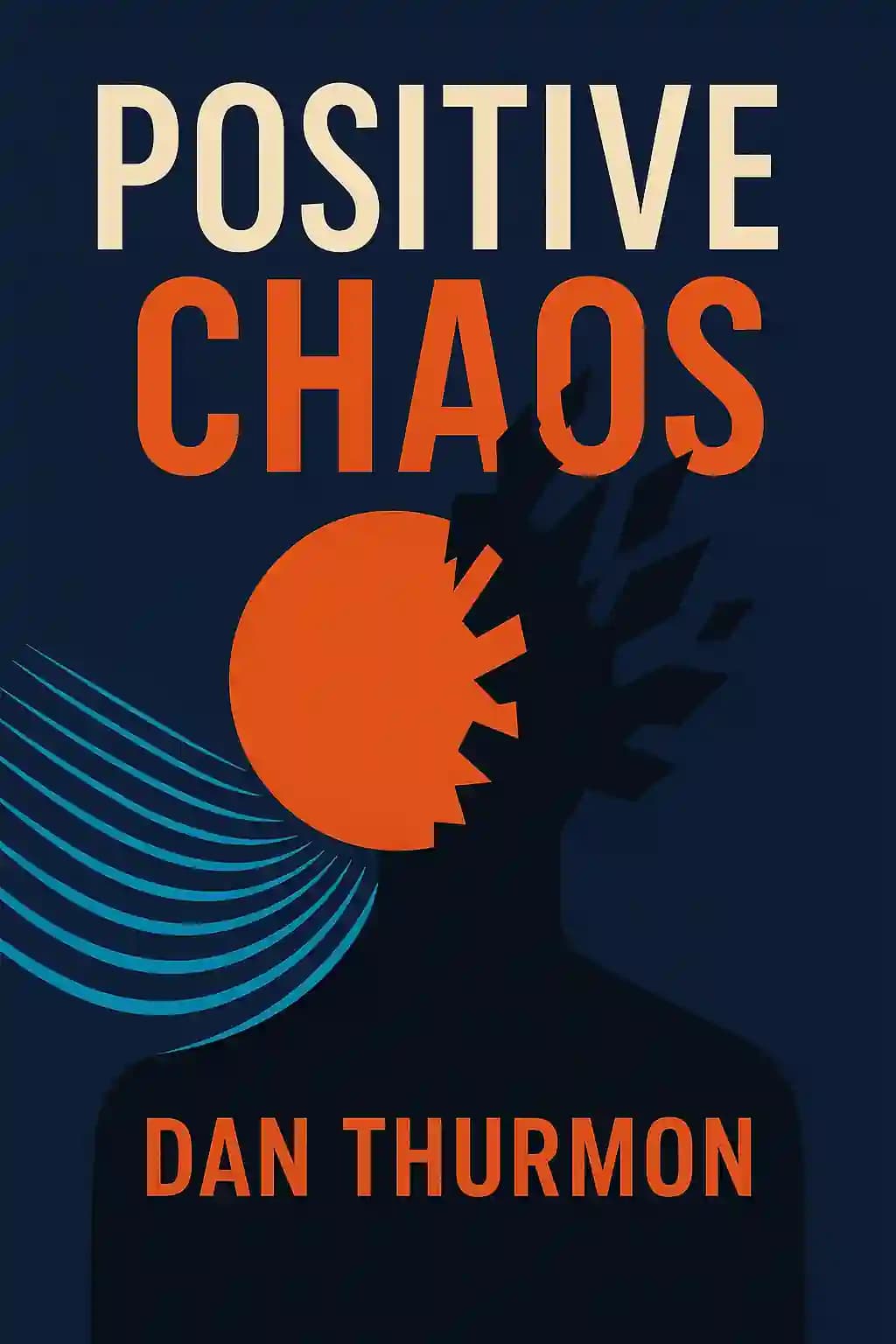
Positive Chaos
Transform Crisis into Clarity and Advantage
Aperçu de Positive Chaos
In a world where 79% of Americans link chaos to mental health challenges, Dan Thurmon's "Positive Chaos" reveals how to transform workplace turbulence into opportunity. Endorsed by CEOs and based on groundbreaking research, it's the unexpected roadmap to thriving when everything falls apart.
Thèmes clés dans Positive Chaos
- uncertainty management
- resilience building
- strategic destabilization
- crisis navigation
- adaptive mindset
Citations de Positive Chaos
Chaos isn't something to fear, but rather an opportunity to embrace.
Chaos is simply a state of disorder and unpredictability - it's neutral until we assign meaning to it.
Strategic destabilization involves intentionally introducing elements of controlled chaos.
Chaotic situations force us out of our comfort zones.
Leaders need to be transparent about challenges and uncertainties.
Personnages de Positive Chaos
- Dan ThurmonAuthor and researcher of chaos and performance
Telecharger le resume de Positive Chaos
Obtenez le resume de Positive Chaos en PDF ou EPUB gratuit. Imprimez-le ou lisez-le hors ligne a tout moment.
FAQ sur ce livre
Positive Chaos by Dan Thurmon teaches readers to reframe chaos as a catalyst for growth, offering strategies to navigate uncertainty in work and life. The book draws on the 2022 State of Chaos in the Workplace study, revealing how 24% of workers consider quitting daily due to stress. Thurmon provides actionable advice on leveraging vulnerability, proactive leadership, and resilience to turn turmoil into opportunity.
Leaders, professionals, and anyone facing rapid change or uncertainty will benefit from this book. It’s particularly relevant for managers seeking to improve team morale during transitions and individuals aiming to build mental resilience. Thurmon’s insights are backed by real-world examples from his work with companies like Microsoft and Coca-Cola.
Yes, for its evidence-based approach to transforming chaos into clarity. Thurmon combines data from his workplace study with accessible frameworks, such as embracing “productive discomfort” and fostering honest communication. The book’s blend of storytelling and practical exercises makes it a actionable guide for modern challenges.
Key strategies include normalizing vulnerability to build trust, prioritizing transparent communication, and focusing on incremental progress. Thurmon emphasizes that leaders who admit gaps in knowledge empower teams to contribute solutions. He also advocates reframing chaos as a “neutral force” that can spark innovation when managed intentionally.
While Atomic Habits focuses on incremental behavior change, Positive Chaos addresses systemic strategies for thriving in volatility. Thurmon’s approach integrates emotional adaptability (e.g., managing anxiety during transitions) with organizational tactics, whereas Clear’s work targets individual habit formation. Both emphasize proactive mindsets but differ in scope.
Notable quotes include:
- “Chaos isn’t personal—it’s potential.” (Highlights the neutral nature of upheaval)
- “Credibility begins when you stop pretending to have all the answers.” (Underscores vulnerability’s role in leadership)
- “The goal isn’t to eliminate chaos but to dance with it.” (Encourages adaptive resilience over control)
Some readers might argue the book leans heavily on individual resilience without addressing systemic causes of workplace chaos, such as corporate policies or economic factors. However, Thurmon counters this by providing tools for influencing organizational culture through personal leadership shifts.
The book offers frameworks like “chaos mapping” to identify controllable variables during transitions. For example, Thurmon suggests auditing stressors, aligning actions with core values, and communicating needs clearly—tactics validated by his client case studies. These methods reduce overwhelm and help professionals navigate pivots proactively.
With AI disruption and remote work reshaping industries, Thurmon’s strategies for managing ambiguity remain critical. The book’s emphasis on mental agility and “learning momentum” (continuously adapting skills) aligns with 2025’s demand for rapid upskilling and emotional intelligence in hybrid environments.
Thurmon’s 20+ years as a Hall of Fame speaker and coach for Fortune 500 companies inform the book’s practical tone. His experience performing for troops in conflict zones (e.g., Iraq) grounds his insights on maintaining composure under extreme pressure. This blend of high-stakes leadership and everyday applicability distinguishes his approach.
Thurmon posits that admitting uncertainty builds team trust and sparks collaborative problem-solving. For instance, leaders who openly acknowledge challenges create space for employees to share ideas, turning chaos into collective innovation. This contrasts with traditional “always confident” leadership models.
The book cites data linking chronic chaos to anxiety and burnout, then offers countermeasures like “micro-resets” (short mindfulness practices) and boundary-setting rituals. Thurmon argues that protecting mental health isn’t self-care—it’s strategic for sustaining performance during upheaval.