Chapitre 1
The Literary Giant Who Defied Convention
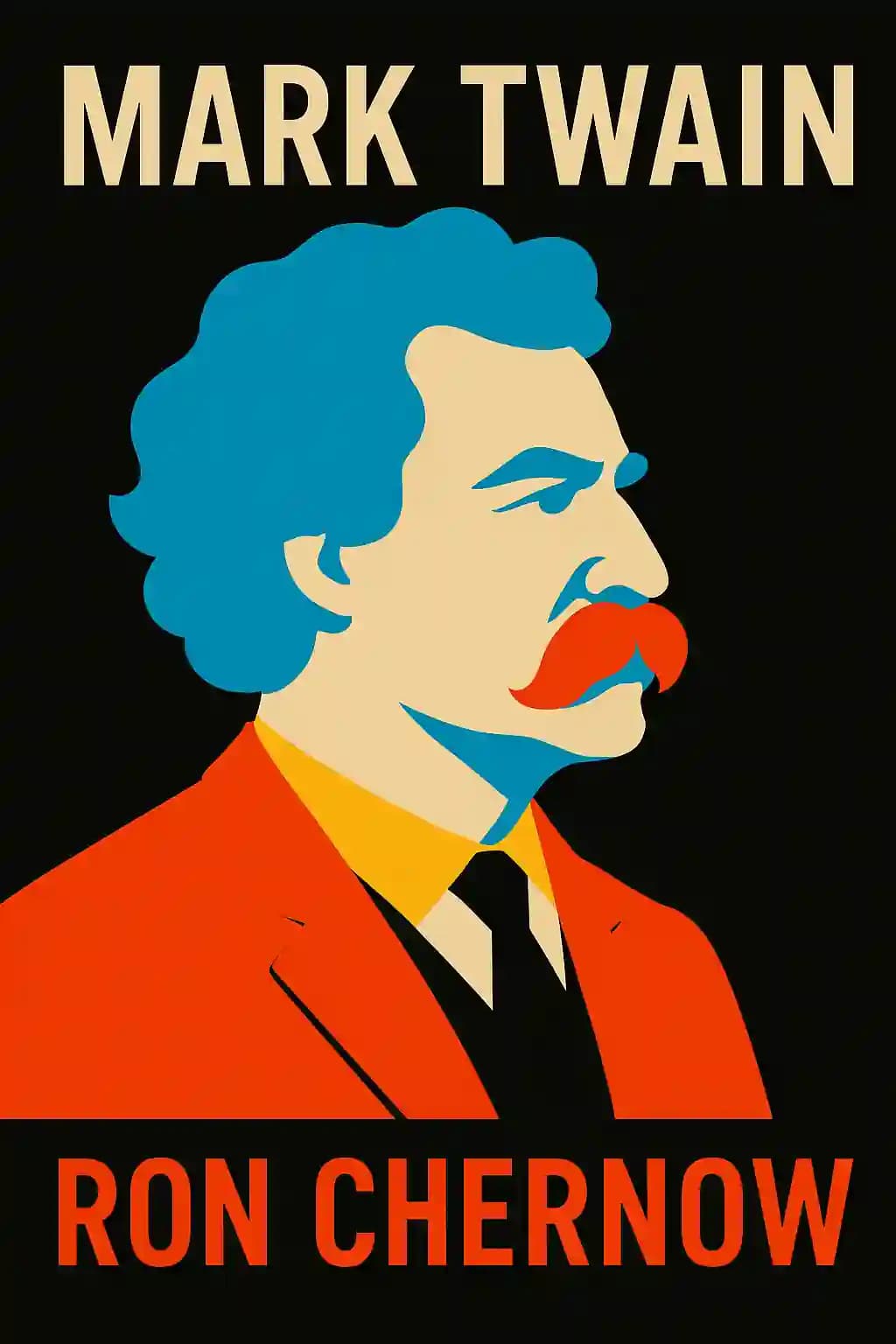
Mark Twain transcends the sanitized image many hold of him-that benign humorist in a white suit dispensing folksy wisdom. Far from being a cracker-barrel philosopher, he was a sharp-tongued critic delivering uncomfortable truths about society and human nature. William Dean Howells recognized this perfectly when noting "what a bottom of fury there is to your fun." Twain's irreverence and growing pessimism stood in stark contrast to America's traditional can-do optimism, making him an anomaly: immensely popular yet fiercely critical of the world around him.
Twain revolutionized American authorship by abandoning the image of the contemplative writer for that of a celebrity engaged in the hurly-burly of American life. His eventful career spanned roles as printer, pilot, miner, journalist, novelist, platform artist, publisher, inventor, crusader, and investor. He created a distinctly American literary voice capturing the vernacular of western towns and small villages, mastering an astonishing variety of literary forms while producing a staggering output of books, articles, letters, notebooks, and manuscripts.
Beyond his literary achievements, Twain was a cosmopolitan figure who spent eleven years abroad, crossing the Atlantic twenty-nine times. His business ventures repeatedly ended in disaster despite his dreams of wealth. As he aged, he evolved from a southwestern humorist into a northeastern liberal with radical views on religion, slavery, aristocracy, and colonialism. His family life-centered on his beloved wife Livy and three daughters-provided his greatest happiness but also profound sorrow through numerous tragedies.
Twain's complex relationship with race presents challenges for modern readers. Born into a slave-owning family, he transcended his southern roots to a remarkable degree, developing from crude racist jokes in his early writings to friendship with Frederick Douglass and forceful denunciations of racial bigotry. William Dean Howells called him "the most desouthernized southerner I ever met." His late-life fascination with teenage girls, while always remaining chaste, represents another troubling aspect of his character that requires careful examination.
Chapitre 2
The Making of Samuel Clemens
Born on November 30, 1835, in Florida, Missouri, Samuel Langhorne Clemens entered a world shaped by stark contrasts. His father, John Marshall Clemens, was a stern, unbending man with "judicial frigidity" who maintained an "armed neutrality" with his son. Tall and lean with lank black hair, he was impeccably honest but emotionally remote, throwing "a distinct chill in the air." Though respected in town as Justice of the Peace, he rarely smiled and found no charm in Sam's juvenile antics.
Fortunately, Jane Clemens provided compensatory warmth with her joie de vivre. Slim and pretty with keen blue eyes, she passed her storytelling passion and insatiable curiosity to her son. Though maintaining proper decorum, she watched Sam's outrageous pranks with exasperated pride, claiming she "discounted him ninety percent" but the rest was "pure gold." From his mother, Mark Twain learned to trust women and express a richer spectrum of emotions than with men.
When Sam was nearly four in 1839, the family moved to Hannibal, Missouri, a thriving Mississippi port town that would prove monumentally important to his future writing career. Judge Clemens purchased buildings in downtown Hannibal and started another general store, but by 1841 faced yet another commercial collapse. The family suffered further when Benjamin Clemens, nearly ten, died in 1842, revealing to young Sam the depths of his mother's grief.
Young Sam's childhood need for attention manifested in deliberate mischief. He once contracted measles on purpose during an epidemic, finding pleasure in being "the centre of all this emotional attention." His natural storytelling ability emerged early-his mother noted that whenever Sam returned from town, children gathered to hear his tales, and when she saw crowds running, she'd ask "what has Sam done now?"
Like his later fictional characters Tom Sawyer and Huck Finn, Sam gravitated toward the town's fringes-Holliday's Hill, McDowell's Cave, and especially the river with its isolated islands that offered freedom. He particularly admired Tom Blankenship, a dirty, school-avoiding petty thief whom Sam considered "the only really independent person" in Hannibal. Sam was drawn to the forbidden, believing "there is a charm about the forbidden that makes it unspeakably desirable."
When Judge Clemens died in March 1847, the family was left in financial distress. For eleven-year-old Sam, his father's death was deeply traumatic, marked by business failures, plunging social status, and his father's cold attitude toward him. So profound was this trauma that Mark Twain commemorated the date for the rest of his life. Following his father's funeral, Sam began sleepwalking, appearing ghost-like in a sheet, which terrified his family.
Chapitre 3
The River and the Writer
The Mississippi River shaped Twain's life and imagination like no other force. Hannibal's sleepy atmosphere was enlivened twice daily by steamboat arrivals that transformed the town instantly. These magnificent vessels planted Sam's first career ambition-to become a pilot, a position that commanded both respect and substantial wages. In 1857, after a failed attempt to reach Brazil with only thirty dollars in his pocket, fate intervened when he met riverboat pilot Horace Bixby on the steamboat Paul Jones. Despite his mother's concerns about the "wicked business" of steamboating, Sam convinced Bixby to teach him piloting for the hefty sum of five hundred dollars.
This rigorous training gave structure and discipline to Sam's previously vagabond character. Bixby proved an exacting but fair teacher, later remarking that Sam "was born for it, just as some men are born to make poetry." For the first time in his life, Sam truly committed himself to mastering something difficult, proudly telling his brother Orion that pilots who once patronized him couldn't hide their chagrin at seeing him "so far ahead of them."
On the Mississippi, Sam finally escaped family complications and emerged from Orion's shadow. The river became his natural element, where he perfected his deadpan storytelling style that left listeners convulsed with laughter. "Piloting on the Mississippi River was not work to me; it was play-delightful play, vigorous play, adventurous play-and I loved it," he later recalled. The river never lost its romance for him. His housekeeper observed that "he loved the Mississippi almost as much as he loved a person." Even forty years later, he would pronounce those Mississippi years as "the darling existence" with "nothing comparable to it in my life since"-a rapturous interlude that distilled all the freedom of youth.
The outbreak of the Civil War abruptly ended Sam's peaceful river life, shutting down Mississippi traffic and replacing colorful steamboats with menacing gunboats. For two memorable weeks, Sam served as a second lieutenant in the Missouri State Guard's Marion Rangers, a pro-Confederate militia. Though he later portrayed this episode comically in "The Private History of a Campaign That Failed," minimizing his involvement as a harmless boyish lark, the experience left him with lingering guilt. When rumors spread of approaching Union forces, Sam and half the company fled, leaving him forever uncertain whether he had lawfully "disenlisted" or deserted.
Chapitre 4
Western Adventures and Literary Birth
Escaping the Civil War, Sam headed west with his brother Orion, who had been appointed secretary of the Nevada Territory. In Nevada, Sam found himself perfectly at home among rogues and outsiders, glorying in his bad boy image with his curly auburn hair, penetrating eyes, and newly added mustache. He embraced frontier life, later recalling with nostalgia the "crimson discipleship" of desperadoes who made life "a joy." The rough-and-tumble environment where violence ruled and murder was commonplace suited his gregarious nature and omnivorous curiosity about people.
Though convinced he would become rich through mining, Sam's pride was too wounded to return home as a failed prospector. His comic vitality emerged in letters home that Jane Clemens published in the Keokuk Gate City. Desperate for cash, he began sending satirical sketches to the Territorial Enterprise under the name "Josh," claiming he "stumbled" into writing "as a man falls over a precipice that he is not looking for."
To his amazement, the Enterprise offered him a position as local editor for $25 weekly-"a sinful and lavish waste of money." At the Enterprise, Sam joined Virginia City's literary community, particularly bonding with Dan De Quille and Steve Gillis. De Quille noted Sam's "bushy brows," "curly pate," chronic insomnia, and tendency toward explosive anger-"things that wouldn't disquiet the average man would grate on him and set him wild."
After adopting the pen name "Mark Twain" in early February 1863, Sam began cultivating a distinct literary identity. The name itself-a Mississippi River term indicating safe water depth-had disputed origins, with Twain claiming he borrowed it from steamboat captain Isaiah Sellers. Whatever its true origin, the nom de plume wrapped around Sam Clemens like a tight cloak, reflecting the dualities in his nature-"sometimes light and on the surface, and sometimes deep," as Helen Keller observed.
Twain's reputation grew through controversial hoaxes like "A Bloody Massacre Near Carson," which satirized financial shenanigans but generated such outrage that Twain "could not sleep" and "tossed, tumbled and groaned aloud." His career trajectory clarified when America's beloved humorist Artemus Ward visited Virginia City in December, showing Twain what a humorist's career could become.
Chapitre 5
Literary Breakthrough and Marriage
Twain's literary ambitions led him to more prestigious publications-first the Golden Era, then the Californian, "the best weekly literary paper in the United States" which "circulates among the highest class of the community." The turning point in Twain's career came during a three-month stay at Jackass Hill with Jim Gillis, where he heard Ben Coon's tale about a jumping frog. Recognizing its potential, Twain crafted "The Celebrated Jumping Frog of Calaveras County," perfecting his signature deadpan humor technique by inserting a narrator oblivious to the tale's comedy. Published in November 1865, the story created a sensation in New York and launched Twain's national reputation.
In 1867, Twain joined a tourist excursion to Europe and the Holy Land aboard the steamer Quaker City. This journey would produce his first major book, "The Innocents Abroad," establishing his literary reputation. More significantly, during this trip he first saw a miniature ivory portrait of Olivia Langdon, the sister of his fellow passenger Charlie Langdon. At thirty-one, having reached maturity without experiencing a serious relationship, Twain was immediately captivated by the twenty-one-year-old's sweet, pure face and intelligent eyes.
After returning to America, Twain pursued Olivia relentlessly despite her initial rejection. When she said "she never could or would love me," she allowed him to write to her as if she were his sister. Undeterred, Twain began sending her almost daily letters-the first of two hundred courtship letters marked by extravagant romantic rhetoric. By mid-November, his persistence paid off. After "twenty-four hours of persecution," Livy finally admitted she loved him, and her parents gave conditional consent to the match, requiring Twain to cut back on alcohol and commit to Christian living.
The wealthy Langdons, hearing rumors of Twain's past from friends like feminist Anna Dickinson who called him a "vulgar boor," demanded character references. When these proved disappointing-with reports of drinking and wild behavior-Jervis Langdon surprisingly declared, "I'll be your friend myself. Take the girl, I know you better than they do." On February 4, 1869, thirty-three-year-old Mark Twain and twenty-three-year-old Livy were formally engaged.
Chapitre 6
Family Life and Literary Success
The newlyweds began their marriage with Twain acquiring a one-third interest in the Buffalo Express for $25,000, half advanced by Jervis Langdon. After the wedding ceremony, the couple traveled to Buffalo where an astonishing surprise awaited them: Jervis Langdon had purchased a magnificent three-story mansion on Delaware Street as their wedding gift, complete with servants, a horse and carriage, and luxurious furnishings secretly arranged by Livy.
The newlyweds were ecstatic in their "Aladdin's Palace." Twain wandered through the thirteen lavishly decorated rooms in disbelief, joking to Jervis Langdon, "Whenever you are in Buffalo, if it's twice a year, come right here. Bring your bag and stay overnight if you want to. It sha'n't cost you a cent!" Livy, normally reserved, became surprisingly playful, as Twain reported to her parents: "so boisterous, so noisy, & so lawless in her cheery happiness that I, even I, am...forced to put on an irksome gravity & decorum."
Following Langdon's death in August 1870, just six months after the wedding, the family moved to Hartford, Connecticut, settling in Nook Farm, an exclusive enclave designed by abolitionists John Hooker and Francis Gillette. This leafy neighborhood functioned as a cultivated community of like-minded, urbane people who kept their doors unlocked and freely wandered across each other's lawns. For Twain, with his compulsive sociability, it was paradise-a high-class community filled with esteemed writers like Harriet Beecher Stowe and prominent Yankees including former governor Joseph Hawley.
In Hartford, Twain built a flamboyant three-story brick mansion with nineteen rooms featuring High Victorian Gothic touches. Its exterior displayed striking patterns of black and vermilion bricks, colored slate tiles, and a riot of turrets, balconies, and gables-described by one biographer as "part steamboat, part medieval stronghold, and part cuckoo clock." Twain's third-floor Billiard Room served as his writing sanctum, where he could be untidy and entertain friends with Scotch and storytelling.
While Twain cherished his Hartford mansion, he found the social whirl of Nook Farm left little time for writing. His serious literary work was concentrated during the three or four summer months the family spent at "Rest-&-be-Thankful," the Langdon family's Quarry Farm outside Elmira. In 1874, Livy's adopted sister, Sue Crane, created Twain's dream writing space: an octagonal gazebo study perched high on the hillside with panoramic views, deliberately designed to evoke a Mississippi steamboat pilot house.
Chapitre 7
Literary Masterpieces and Financial Disasters
The rediscovery of his Mississippi past led to The Adventures of Tom Sawyer, which Twain began as early as 1872. Working from well-worn anecdotes of his childhood, he wrote with such unfeigned longing that he later confessed, "I am Tom Sawyer!" Though Twain initially considered it a book for adults, Howells and Livy convinced him to market it as a children's book that adults would also enjoy. The novel transformed Hannibal into St. Petersburg and populated it with thinly disguised versions of real people.
Tom emerges as the quintessence of American boyhood-a lovable renegade with a craving for mischief who tricks friends into whitewashing a fence while he "sat on a barrel in the shade." The novel celebrates childhood freedom, particularly when Tom and his friends Huck Finn and Joe Harper escape to Jackson's Island to play pirates in "that wild free way in the virgin forest."
Twain's masterpiece, Adventures of Huckleberry Finn, began as a sequel to Tom Sawyer but evolved into something far more profound. Twain revolutionized American literature by abandoning the omniscient narrator and allowing the unlettered Huck to tell his own story in vernacular language. His ear for dialect extended to Black speech patterns, which he admired in other writers and may have based Huck's distinctive rhythms partly on a Black boy called Sociable Jimmy whom he once described as "the most artless, sociable, and exhaustless talker I ever came across."
The novel's moral centers on how "a sound heart & a deformed conscience come into collision & conscience suffers defeat" as Huck's natural goodness overcomes his society's racist indoctrination. Ernest Hemingway later declared that "all modern American literature comes from one book by Mark Twain called Huckleberry Finn."
Despite his literary success, Twain's business ventures repeatedly ended in disaster. His investments, like the failed Hartford Accident Insurance company, revealed a compulsive speculator who could never break free from get-rich-quick schemes. His most catastrophic investment was the Paige typesetter, a complex machine designed to revolutionize printing. Despite expert warnings about reliability issues and competing patents, Twain became completely mesmerized by the machine's potential. His initial $5,000 investment would eventually balloon to a staggering $300,000 (about $10 million today).
By 1894, Twain's financial house of cards collapsed. He declared bankruptcy and embarked on a worldwide lecture tour to pay his debts. With characteristic integrity, he insisted on repaying his creditors in full though legally he wasn't required to do so. By December 1897, he had fully repaid his Webster & Company creditors, completing in four years what he'd projected would take five. For Livy, the debt repayment brought immense satisfaction-she called it "the only really happy day she has had since Susy died."
Chapitre 8
Tragedy and Final Years
Tragedy struck the Clemens family repeatedly. Their first son, Langdon, died of diphtheria in 1872 at just eighteen months old. Twain would forever blame himself, declaring "Yes, I killed him," though others disputed this version of events. In 1896, while Twain was on his global lecture tour, his beloved daughter Susy died of meningitis at age twenty-four. Twain was devastated, writing "I have never greatly envied anybody but the dead. I always envy the dead."
By 1900, the family had returned to America after nine years abroad. Twain settled at 14 West 10th Street in Manhattan, where he lived comfortably with servants, though he quickly found things to complain about. His celebrity followed him everywhere, with Katy Leary noting that the street "was always full of people just walking by to see where Mark Twain lived." Clara recalled an "atmosphere of adulation" with each day like "some great festive occasion."
In his final years, Twain adopted his signature white suit, making him instantly recognizable. Though immortalized as the man in the white suit, Twain only adopted this signature attire in 1906. He had long despised black clothing, once making Livy remove mourning dress after his mother's death. This sartorial rebellion symbolized his freedom from convention in his twilight years-he nicknamed it his "don'tcareadamsuit."
Twain's daughter Jean, who suffered from epilepsy, died suddenly on Christmas Eve 1909, leaving him devastated. He wrote movingly of her death: "For sixteen years, Jean suffered unspeakably... but now she is free, & harm can never come to her more." His one remaining family link was Clara, to whom he wrote touchingly: "You are nearer & dearer to me now than ever; of my fair fleet all my ships have gone down but you; you are all my wealth."
On April 21, 1910, at age seventy-four, Mark Twain peacefully died, perhaps dreaming of being afloat on the biggest river of them all-eternity. True to his prophecy, Halley's Comet streaked across the sky as he lay dying, just as it had when he was born seventy-four years earlier. His last words to Clara were simply: "Goodbye dear, if we meet-"
Chapitre 9
The Enduring Legacy
Albert Paine observed that "perhaps never before had the entire world really united in tender sorrow for the death of any man." Twain had transcended mere authorship to become a personality, a singular character more memorable than his fictional creations. Howells told Clara that death had touched her father's image "into historic grandeur," while Twichell wrote that despite his brilliant success, Twain had become "a lonely, weary-hearted man" for whom death wasn't unwelcome.
Two farewells honored the man who had once joked that funerals weren't much as "diversions." The first was held at Brick Presbyterian Church in Manhattan, where three thousand mourners gathered. Everything was dressed in blinding white: the coffin transported by white horses, Twain in his white suit, white flowers flanking his casket. The second service was in Elmira, where Twain was buried at Woodlawn Cemetery beneath a simple tombstone bearing only his birth and pen names and dates.
Twain's literary immortality was secure-H.L. Mencken called him "the most noble figure America has ever given to English literature," while the New York Times wrote that his death "meant to Americans everywhere what the death of no other American could have meant." A century after his death, Twain engineered one final publicity coup when his embargoed autobiography was published in 2010, allowing his clever tongue to speak from beyond the grave.
Mark Twain remains America's most beloved author not just for his humor, but for his penetrating insights into human nature and his willingness to challenge societal hypocrisy. He transformed American literature by creating an authentic national voice that captured the vernacular rhythms of ordinary people. His works continue to resonate because they speak to universal human experiences-childhood adventure, moral awakening, the search for freedom, and the struggle against societal constraints. In Twain's own words, "The human race has one really effective weapon, and that is laughter." Through his laughter, he taught us to see ourselves more clearly, and his voice continues to echo through American culture more than a century after his death.
Chapitre 10
The Voice of American Literature
What makes Mark Twain's contribution to American literature so revolutionary was his creation of an authentic American voice. Before Twain, American writers often imitated European models, particularly British literature with its formal diction and elevated tone. Twain broke decisively from this tradition by embracing the vernacular speech of ordinary Americans, capturing the rhythms, idioms, and humor of the frontier and small-town life.
His ear for dialogue was unmatched, allowing him to render the speech patterns of various regions and social classes with remarkable accuracy. In Huckleberry Finn, he employed seven distinct dialects, as he explained in a prefatory note: "The shadings have not been done in a haphazard fashion, or by guesswork; but painstakingly, and with the trustworthy guidance and support of personal familiarity with these several forms of speech."
This commitment to authentic American speech transformed American literature. As critic H.L. Mencken noted, Twain "was the first to use the American language naturally in his writing, the first to make it respectable." By elevating ordinary speech to literary status, Twain democratized American literature, making it accessible and relevant to a broader audience while establishing a distinctly American literary tradition independent of European models.
Twain's literary innovations extended beyond language to subject matter. He wrote about ordinary people and everyday experiences with a depth and humanity that elevated them to literary significance. His characters weren't aristocrats or mythic heroes but riverboat pilots, con men, runaway slaves, and mischievous boys. Through these seemingly simple characters, he explored profound themes of freedom, identity, morality, and the human condition.
Perhaps most significantly, Twain employed humor not merely for entertainment but as a powerful tool for social criticism. His satirical eye exposed the hypocrisies, pretensions, and injustices of American society. As he once observed, "Against the assault of laughter, nothing can stand." This combination of vernacular language, democratic subject matter, and satirical purpose created a distinctly American literary voice that continues to influence writers today, cementing Mark Twain's position as the quintessential American author whose work defines our national literature.
Chapitre 11
The Man Behind the Persona
Behind Mark Twain's carefully crafted public persona-the white-suited humorist with the drawling delivery and twinkling eyes-was Samuel Clemens, a man of profound contradictions and complexities. Those who knew him intimately often remarked on his mercurial temperament. Clara recalled that he "could shift from one stand to its opposite with equal elan" and sometimes "poured out condemnation and praise on the same person in the same moment." His daughters nicknamed him the "spitting gray kitten" for maintaining a soft side even when angered.
This volatility extended to his relationships. Twain could be extraordinarily loyal and generous, supporting friends and family members financially for decades. Yet he also nursed grudges with remarkable tenacity, cutting off relationships over perceived slights and writing venomous denunciations of former friends. William Dean Howells noted "what a bottom of fury there is to your fun," recognizing that Twain's humor stemmed from profound dissatisfaction with society and human nature.
Twain's emotional life was marked by deep insecurities and anxieties that he masked with bravado. Despite his tremendous success, he harbored persistent self-doubt about his literary worth, once confessing that humor was his "strongest suit" but "nothing to be proud of." His financial anxieties were equally persistent, driving him to pursue ill-advised business ventures even when he was earning substantial royalties from his writing.
His marriage to Olivia Langdon revealed yet another side of his character. With Livy, Twain showed remarkable tenderness and devotion, writing her passionate love letters throughout their marriage. She became his primary editor and moral compass, tempering his more outrageous impulses and encouraging his literary ambitions. After her death, he wrote movingly that "wherever she was, there was Eden," echoing Adam's tribute to Eve in his own work.
Perhaps the most profound contradiction in Twain's character was his simultaneous embrace of both progressive and regressive views. The same man who advocated for racial justice, women's suffrage, and anti-imperialism could express xenophobic sentiments about immigrants and offensive stereotypes about Native Americans. His views evolved significantly over his lifetime, but this evolution was neither linear nor complete.
In his later years, as personal tragedies mounted and financial anxieties persisted, Twain's worldview darkened considerably. The optimistic young man who had celebrated the American spirit became the cynical philosopher who declared, "The human race is a race of cowards; and I am not only marching in that procession but carrying a banner." Yet even in his darkest moments, his humor never abandoned him, serving as both shield and weapon against life's disappointments.
What emerges from this complex portrait is not the simplified icon of popular imagination but a deeply human figure-brilliant, flawed, contradictory, and ultimately more fascinating than any fictional character he created. As he himself once wrote, "What a wee little part of a person's life are his acts and his words! His real life is led in his head, and is known to none but himself."