Chapitre 1
The Quintessential American: Franklin's Extraordinary Life
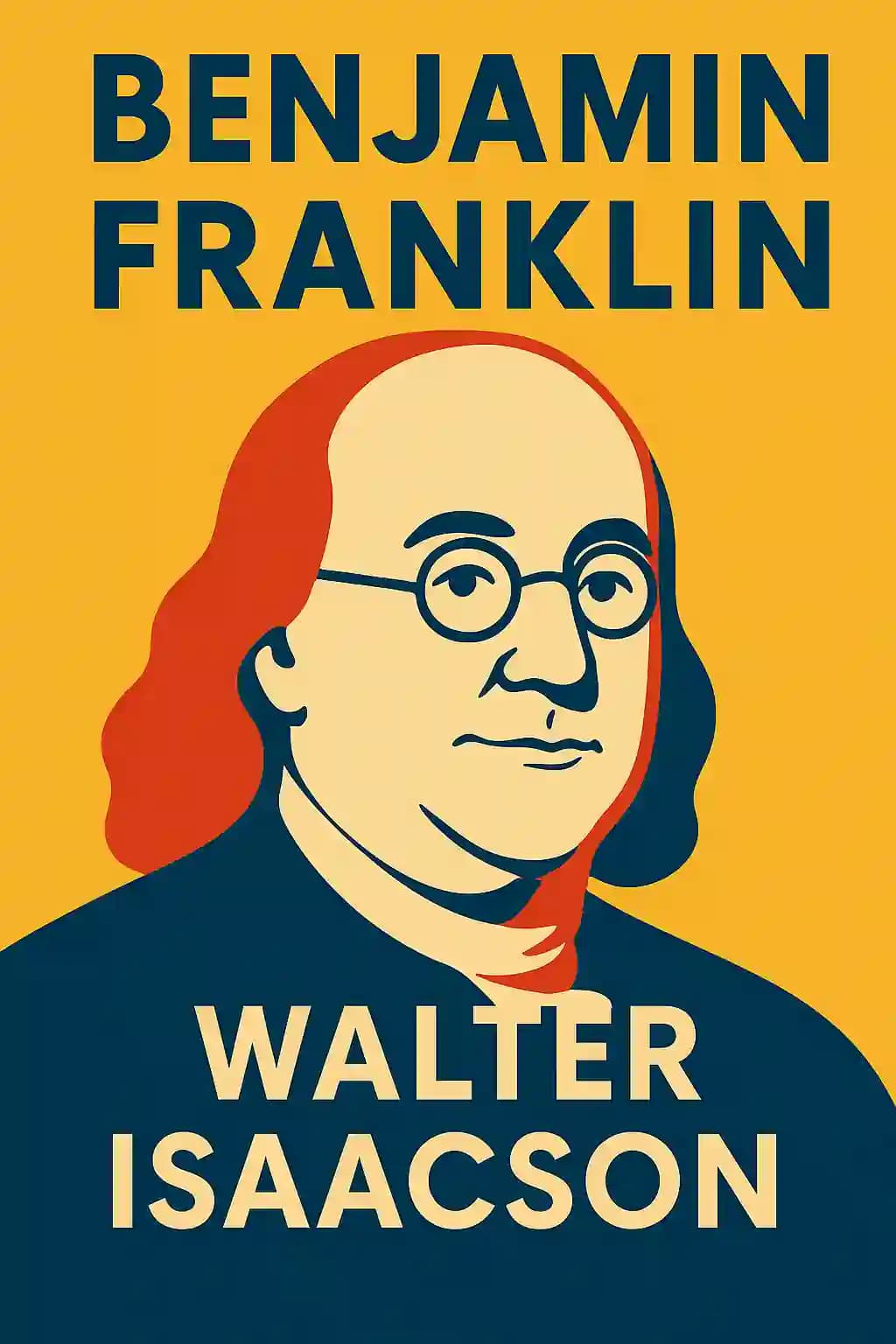
Benjamin Franklin remains one of the most beloved figures in American history, a cultural touchstone whose influence extends far beyond his era. His autobiography consistently ranks among the most assigned texts in American universities, and his wisdom permeates our collective consciousness through countless quotes and aphorisms. Franklin's appeal transcends political divides-both conservatives and progressives claim him as their own, finding in his multifaceted life examples that support their worldviews. What makes Walter Isaacson's biography so compelling is its nuanced portrayal of a man who was simultaneously ordinary and extraordinary-a tradesman who became a statesman, a practical inventor who helped forge a nation. As Barack Obama noted, "Franklin's story is the story of a rising America." His journey from humble beginnings to international renown mirrors the American dream itself, making this biography not just the story of a man, but of a nation finding its identity.
Chapitre 2
The Self-Made Man: Franklin's Early Years
When Benjamin Franklin arrived in Philadelphia in 1723 as a runaway apprentice, few could have predicted the remarkable trajectory his life would take. Years later, at age 65, he would reflect on this moment with characteristic irony, crafting a narrative that balanced self-deprecation with quiet pride in his accomplishments. This talent for self-invention became Franklin's greatest creation-even more significant than his scientific discoveries or political achievements.
Franklin's family heritage prepared him well for this life of pragmatic independence. He descended from a line of English "franklins"-free landowners who stood up for their rights against the rural aristocracy. His ancestors were blacksmiths, dyers, and intellectual dissenters who valued practical skills alongside book learning. This combination of hands-on craftsmanship and intellectual curiosity would define Franklin's approach to life.
His father, Josiah, emigrated to America in 1683 seeking both religious freedom and economic opportunity. In Boston, Josiah established himself as a candle and soap maker, gradually rising in community esteem. Though not wealthy, he earned respect for his sound judgment and civic mindedness. Benjamin described him as "a man of sound understanding" who could draw crowds with his wise opinions on public affairs.
Young Benjamin quickly demonstrated an insatiable appetite for knowledge. Despite limited formal education-less than two years of schooling-he devoured books borrowed from friends or purchased with carefully saved pennies. He particularly loved adventure stories and straightforward prose like Bunyan's "Pilgrim's Progress," which influenced his own accessible writing style.
At twelve, Benjamin became apprenticed to his brother James, a printer. This arrangement proved formative but fraught with tension. While learning the printing trade, Benjamin secretly began writing essays under the pseudonym "Silence Dogood"-a middle-aged widow whose witty observations on colonial life delighted readers of his brother's newspaper. When James discovered the deception, their already strained relationship deteriorated further.
At seventeen, Franklin made the bold decision to break his apprenticeship contract and flee Boston. This act of rebellion-essentially running away-marked his first major step toward self-creation. He arrived in Philadelphia with almost nothing, famously walking down Market Street with "a Dutch dollar and about a shilling in copper" in his pockets while munching on a large roll. This image of the ambitious young man making his way with minimal resources but abundant determination would become iconic in American mythology.
Chapitre 3
Forging a Path: Franklin's Rise in Philadelphia
Franklin's early days in Philadelphia reveal his remarkable ability to turn modest opportunities into stepping stones for advancement. Working for printer Samuel Keimer, he quickly demonstrated superior skills and intelligence, catching the attention of prominent citizens including Governor William Keith. Though Keith's promises of patronage ultimately proved empty-a painful lesson in the unreliability of aristocratic favor-Franklin used every connection and opportunity to improve his position.
After a brief, educational sojourn in London, Franklin returned to Philadelphia and eventually established his own printing business with partner Hugh Meredith. His approach to building his reputation was both deliberate and shrewd. Understanding the power of perception, he made a point of being seen carrying paper through the streets rather than having it delivered, projecting an image of industry and diligence. "To show that I was not above my business," he later explained, "I sometimes brought home the paper I purchased at the stores through the streets on a wheelbarrow."
In 1727, Franklin formed the Junto, a club of like-minded tradesmen and artisans who met weekly to discuss philosophical questions and practical improvements to Philadelphia. This group became the foundation for many of Franklin's civic initiatives, including America's first subscription library. The Junto reflected Franklin's belief that self-improvement and community improvement went hand in hand-a distinctly American perspective that would inform his entire career.
His newspaper, The Pennsylvania Gazette, became a platform for his growing influence. Unlike many colonial publications, it featured original content rather than merely reprinting London news. Franklin's witty writing style and willingness to tackle controversial topics made the paper both popular and profitable. He understood that a newspaper could shape public discourse while also serving as a successful business venture.
Poor Richard's Almanack, which Franklin published annually from 1732 to 1758, further expanded his reach. Through the character of "Poor Richard," Franklin dispensed practical wisdom and moral advice cloaked in humor. Maxims like "Early to bed and early to rise, makes a man healthy, wealthy, and wise" became part of American vernacular culture. The almanac was both financially lucrative and culturally influential-a perfect example of Franklin's ability to combine profit with public service.
Franklin's marriage to Deborah Read in 1730 reflected his practical approach to life. Though not a passionate romance, their partnership proved durable and mutually beneficial. Deborah managed their household and shop while Franklin built his printing business and pursued his various interests. When describing his choice of a wife, Franklin emphasized Deborah's industry and frugality-qualities he valued above beauty or sophistication.
Chapitre 4
The Civic Visionary: Creating American Institutions
What truly distinguished Franklin from other successful businessmen was his extraordinary commitment to civic improvement. As his printing business flourished, he increasingly directed his energies toward creating institutions that would benefit Philadelphia and, by extension, all of colonial America. This impulse toward community service reflected Franklin's deeply held belief that individual success and social progress were inseparable.
"The noblest question in the world is: What good may I do in it?" Franklin wrote, and he lived by this principle. In 1731, he established America's first subscription library, the Library Company of Philadelphia. Recognizing that books were too expensive for most individuals to own but could be collectively purchased, he created a model that would spread throughout the colonies. This democratic approach to knowledge-making learning accessible to ordinary citizens rather than just the elite-embodied the emerging American spirit.
Fire protection came next. After witnessing devastating fires in both Boston and Philadelphia, Franklin organized the Union Fire Company in 1736, America's first volunteer firefighting organization. He followed this with the creation of the Philadelphia Contributionship, the nation's first successful fire insurance company. These innovations combined practical need with community cooperation-hallmarks of Franklin's approach to social problems.
Education remained a lifelong passion. In 1749, Franklin published "Proposals Relating to the Education of Youth in Pennsylvania," which led to the establishment of what would become the University of Pennsylvania. Unlike existing colonial colleges focused primarily on training ministers, Franklin's academy emphasized practical subjects like English, modern languages, history, geography, and navigation-knowledge useful for commerce and civic life.
Even healthcare received Franklin's attention. In 1751, he helped establish Pennsylvania Hospital, America's first public hospital. When initial fundraising fell short, Franklin devised an innovative matching grant scheme, convincing the Pennsylvania Assembly to match private donations. This public-private partnership approach to funding community needs remains relevant today.
Franklin's civic vision extended to city infrastructure as well. He organized the first street-cleaning service in Philadelphia, advocated for paved and lighted streets, and improved the city's night watch system. Each initiative followed a similar pattern: identify a community need, devise a practical solution, organize like-minded citizens, and implement the plan without waiting for governmental action.
What makes these accomplishments remarkable is that Franklin pursued them while simultaneously running a successful business, conducting scientific experiments, and increasingly participating in colonial politics. His capacity for productive work seemed almost superhuman. Yet Franklin himself attributed his success not to extraordinary talent but to ordinary virtues consistently applied: industry, frugality, and a commitment to useful knowledge.
Chapitre 5
The Enlightened Scientist: Franklin's Remarkable Discoveries
While Franklin's civic achievements alone would secure his historical importance, his scientific work elevated him to international fame. What made his scientific approach distinctive was its combination of practical utility and theoretical insight-he was both inventor and discoverer, craftsman and philosopher.
Franklin's interest in science began with practical problems. His improved fireplace design-the "Franklin stove"-addressed the inefficiency of traditional fireplaces, which wasted heat and filled rooms with smoke. Though not perfectly successful, the stove demonstrated Franklin's approach to innovation: identify a common problem, apply rational analysis, and develop an improved solution. Significantly, Franklin refused to patent his invention, writing, "As we enjoy great advantages from the inventions of others, we should be glad of an opportunity to serve others by any invention of ours."
His most famous scientific work involved electricity, a phenomenon poorly understood in the mid-18th century. Beginning with simple experiments using equipment sent from London, Franklin conducted a methodical investigation that transformed electricity from a parlor trick into a scientific field. He developed fundamental concepts including the principle of conservation of charge and the distinction between conductors and insulators. Most importantly, he proposed the revolutionary theory that electricity was a single "fluid" that could be present in excess (positive charge) or deficient (negative charge), rather than two different fluids as previously believed.
The experiment that cemented Franklin's scientific reputation was his famous kite flight during a thunderstorm, which demonstrated that lightning was indeed electrical in nature. This dangerous experiment (which nearly killed others who attempted to replicate it) led to Franklin's most practical invention: the lightning rod. By placing iron rods at the highest points of buildings and connecting them to the ground with wires, Franklin created a system to protect structures from lightning damage-a technology that remains essentially unchanged today.
What distinguished Franklin's scientific work was his ability to move between practical applications and theoretical understanding. He wasn't content merely to invent useful devices; he sought to comprehend the underlying principles of nature. Nor was he satisfied with abstract theories disconnected from practical benefit. This integration of theory and practice characterized the American approach to knowledge that Franklin exemplified.
Franklin's scientific achievements earned him international recognition. He received honorary degrees from Harvard, Yale, Oxford, and St. Andrews. The Royal Society awarded him the Copley Medal, its highest scientific honor. His correspondence with leading European scientists made him America's first internationally renowned intellectual. Yet characteristically, Franklin maintained his unpretentious manner, describing his electrical experiments as merely "philosophical amusements."
Chapitre 6
The Reluctant Revolutionary: Franklin's Political Awakening
Franklin's transformation from loyal British subject to American revolutionary was neither sudden nor straightforward. For much of his life, he identified strongly with the British Empire and sought to strengthen ties between Britain and its American colonies. His political evolution reflects the complex journey many colonists experienced as relations with Britain deteriorated.
In 1757, Franklin traveled to London as an agent representing Pennsylvania's Assembly in its dispute with the Penn family, the colony's proprietors. Initially, he viewed this as a limited mission to resolve specific grievances, not as a harbinger of revolution. Franklin loved London, establishing himself in a comfortable home on Craven Street and enjoying the intellectual stimulation of Europe's most dynamic city. He expected to return to Philadelphia within months, but ended up staying in Britain for most of the next eighteen years.
During these years, Franklin served as an unofficial ambassador for American interests, explaining colonial perspectives to British officials while simultaneously representing British authority to his fellow Americans. He worked tirelessly to prevent the growing rift between Britain and America, believing that the empire offered the best framework for American development and security.
The turning point in Franklin's political thinking came with the Stamp Act crisis of 1765. Though he initially accepted Parliament's right to tax the colonies, he quickly recognized the depth of American opposition to taxation without representation. His testimony before Parliament, arguing against the Stamp Act, revealed his growing alignment with colonial interests. When Parliament repealed the act in 1766, Franklin believed the crisis had passed and harmony could be restored.
However, subsequent British policies-including the Townshend Acts and the coercive measures following the Boston Tea Party-gradually convinced Franklin that reconciliation was impossible. The final break came in January 1774, when Franklin appeared before the Privy Council to present a petition from Massachusetts. There he endured a humiliating verbal assault from Solicitor General Alexander Wedderburn, who denounced him as a thief and a traitor for his role in exposing controversial letters written by Massachusetts Governor Thomas Hutchinson.
This public humiliation transformed Franklin. The man who entered the Cockpit chamber as a conciliator left as a revolutionary. As he later wrote, "I think the New Englanders will now be convinced that I have not been their enemy." Upon returning to Philadelphia in 1775, he found a colony already moving toward independence. Though seventy years old, Franklin threw himself into the revolutionary cause with remarkable energy.
His contributions to American independence were substantial. Elected to the Second Continental Congress, he served on the committee that drafted the Declaration of Independence, making several crucial editorial suggestions to Thomas Jefferson's text. He helped design the Great Seal of the United States and drafted early versions of the Articles of Confederation. Most significantly, Congress appointed him commissioner to France, where his diplomatic skills would prove essential to American victory.
Chapitre 7
The Master Diplomat: Franklin in Paris
Franklin's mission to France in 1776 represented America's best hope for securing the foreign assistance essential to winning independence. At seventy, he undertook an arduous Atlantic crossing in winter, risking capture by British warships. The journey nearly killed him, but upon arrival in France, he immediately began the diplomatic work that would prove crucial to American victory.
Franklin understood that successful diplomacy required more than formal negotiations-it demanded winning hearts and minds. He crafted his public image with extraordinary skill, presenting himself as the embodiment of American virtue and simplicity. Abandoning the powdered wig fashionable among European diplomats, he wore a plain brown suit and a fur cap that became his trademark. This calculated rusticity charmed the French, who saw in Franklin the noble simplicity they associated with classical republicanism.
"His reputation was more universal than that of Leibniz or Newton, Frederick or Voltaire," John Adams jealously observed. "His character was more beloved and esteemed than any or all of them." Franklin's fame opened doors throughout French society, from the royal court at Versailles to the intellectual salons of Paris. He cultivated relationships with influential figures including the foreign minister Comte de Vergennes and the financier Jacques Necker.
Franklin's diplomatic strategy balanced idealism with pragmatism. To the French public, he emphasized America's struggle for liberty against tyranny, appealing to Enlightenment principles. With French officials, he stressed practical advantages-weakening Britain, France's traditional enemy, and gaining access to American markets. This dual approach proved remarkably effective.
The culmination of Franklin's diplomatic efforts came in February 1778 with the signing of the Treaty of Alliance with France. This agreement provided crucial military and financial support for the American cause, including the French fleet that would prove decisive at Yorktown. Franklin negotiated terms remarkably favorable to the United States, securing French assistance without binding America to excessive obligations.
Beyond formal diplomacy, Franklin arranged for loans, military supplies, and volunteer officers for the Continental Army. He managed complex shipping arrangements to evade British blockades and established intelligence networks to gather information on British plans. All this he accomplished with minimal staff and unreliable communications-letters between America and France typically took months to arrive, if they arrived at all.
Perhaps most remarkably, Franklin maintained his effectiveness despite difficult relationships with his fellow commissioners. John Adams, who joined the mission in 1778, resented Franklin's popularity and questioned his diligence. "Franklin's reputation for integrity and ability," Adams wrote, "was more universal in France than that of Newton in England." This barely concealed jealousy created tensions that complicated the commission's work, yet Franklin navigated these personal conflicts while keeping focus on the larger mission.
When peace negotiations began in 1782, Franklin's diplomatic skills again proved invaluable. Working with Adams and John Jay, he secured remarkably favorable terms in the Treaty of Paris. Britain recognized American independence, ceded vast territories, and granted fishing rights off Newfoundland. When France objected that the Americans had negotiated separately despite their alliance, Franklin smoothed relations with a masterful letter that both acknowledged the breach of protocol and justified it as necessary for peace.
Chapitre 8
The Constitutional Architect: Franklin's Final Service
Returning to Philadelphia in 1785, Franklin might reasonably have retired from public life. At seventy-nine, he had accomplished more than enough for several lifetimes. Yet when called to help shape the new nation's government, he answered with characteristic dedication and wisdom.
The Constitutional Convention of 1787 found the states struggling under the weak Articles of Confederation. Economic problems, interstate conflicts, and the inability to present a united front in foreign affairs created a sense of crisis. Franklin, elected as a Pennsylvania delegate despite his advanced age and painful health problems, played a crucial role in the convention's success.
Though physically diminished-he suffered from gout and kidney stones that made movement painful-Franklin's mind remained sharp. He attended nearly every session during that hot Philadelphia summer, carried to the proceedings in a sedan chair. His contributions came less through floor speeches (which were often delivered by fellow delegates due to his weakened voice) than through strategic interventions at critical moments.
When the convention threatened to collapse over the question of representation-large states demanding proportional representation, small states insisting on equality-Franklin proposed the compromise that broke the deadlock: a bicameral legislature with proportional representation in the lower house and equal representation in the upper. This "Great Compromise" saved the convention and established the basic structure of Congress that endures today.
Franklin's most significant speech came near the convention's end, as delegates prepared to vote on the final document. Despite reservations about certain provisions, he urged unanimous approval: "I confess that there are several parts of this Constitution which I do not at present approve, but I am not sure I shall never approve them... Thus I consent, Sir, to this Constitution because I expect no better, and because I am not sure, that it is not the best."
This pragmatic approach-accepting imperfection while working toward improvement-characterized Franklin's political philosophy. He understood that effective governance required compromise and that the perfect should not become the enemy of the good. His support helped secure the Constitution's adoption, both in the convention and during the subsequent ratification debates.
Franklin's final significant public act addressed America's original sin: slavery. In February 1790, just months before his death, he signed a petition to Congress calling for the abolition of slavery and the protection of free blacks from kidnapping and re-enslavement. When southern representatives reacted angrily, Franklin responded with a satirical newspaper piece purportedly written by an Algerian official defending the enslavement of Christians. The moral equivalence was unmistakable, highlighting the hypocrisy of a nation founded on liberty while maintaining slavery.
This evolution on slavery reflected Franklin's lifelong capacity for moral growth. Having once owned slaves himself and published advertisements for slave sales in his newspaper, he had gradually embraced abolitionism. His final public statement thus represented both personal redemption and a challenge to the new nation to live up to its professed ideals.
Chapitre 9
The Private Franklin: Complexities and Contradictions
Behind Franklin's public accomplishments lay a complex private life marked by both warmth and distance, success and failure. These contradictions make him more human and, paradoxically, more admirable-a flawed man who nevertheless achieved greatness.
Franklin's family relationships reveal these complexities. His marriage to Deborah Read lasted forty-four years until her death, yet he spent nearly two decades of that time overseas, separated by the Atlantic. His letters to her were infrequent and often focused on practical matters rather than emotional connection. When she died in 1774, Franklin was in London, having repeatedly postponed his return despite her deteriorating health.
His relationship with his illegitimate son William began warmly, with Franklin raising him openly and securing his appointment as royal governor of New Jersey. Yet when the Revolution came, William remained loyal to Britain while his father embraced independence. This political division became personal estrangement. After the war, Franklin largely disinherited William, writing that "the part he acted against me in the late war... will account for my leaving him no more of an estate he endeavored to deprive me of."
With his daughter Sally, Franklin maintained a warmer relationship, though his letters often emphasized moral instruction over affection. He carefully arranged her marriage to Richard Bache, scrutinizing his character and financial prospects. Later, Franklin took special interest in his grandchildren, particularly Benjamin Franklin Bache, whom he brought to Europe for education.
Franklin's personal appetites were robust. He enjoyed good food, fine wine, and female company. During his years in France especially, he cultivated flirtatious relationships with several women, including Madame Brillon and Madame Helvetius. Though these relationships likely remained platonic given Franklin's age and health, they reveal his continuing desire for female companionship and intellectual exchange.
His approach to religion reflected similar complexity. Raised in Puritan Boston, Franklin abandoned orthodox Christianity in his youth for a rational deism that emphasized moral behavior over theological doctrine. "I think vital religion has always suffered when orthodoxy is more regarded than virtue," he wrote. Yet unlike many deists, he maintained respect for religious institutions and their social utility. He contributed to various churches, attended services occasionally, and advocated religious tolerance.
Perhaps most revealing is Franklin's lifelong project of self-improvement. In his twenties, he created a systematic plan to cultivate thirteen virtues: temperance, silence, order, resolution, frugality, industry, sincerity, justice, moderation, cleanliness, tranquility, chastity, and humility. He tracked his progress in a small notebook, marking failures and striving for better. Though he never achieved perfection (particularly struggling with order and humility), this methodical approach to character development exemplifies his belief that individuals could shape themselves through rational effort.
Franklin's Autobiography, begun in 1771 but never completed, presents this self-creation as a model for others. Written as a letter to his son, it evolved into America's first self-help book, showing how a person of modest origins could achieve success through industry, frugality, and civic-mindedness. Yet characteristically, Franklin includes self-deprecating humor and acknowledges his mistakes, presenting himself not as a perfect exemplar but as a work in progress.
Chapitre 10
The American Prometheus: Franklin's Enduring Legacy
When Franklin died on April 17, 1790, approximately 20,000 people-about two-thirds of Philadelphia's population-attended his funeral, the largest public gathering in the city's history to that point. The French National Assembly observed three days of mourning. These tributes reflected recognition that a truly extraordinary figure had passed from the scene.
Franklin's legacy extends far beyond his specific accomplishments. He embodied a distinctly American approach to life that continues to shape our national character. His integration of practical achievement with intellectual inquiry, private success with public service, and self-improvement with community improvement created a template for American citizenship that remains relevant today.
In science, Franklin established the pattern of American pragmatic innovation-solving practical problems while advancing theoretical understanding. From Thomas Edison to Steve Jobs, American inventors have followed this model of useful creativity. Franklin's refusal to patent his inventions, preferring to share knowledge for the common good, also anticipated the open-source movement and other collaborative approaches to innovation.
Politically, Franklin's evolution from loyal subject to revolutionary to constitutional architect mirrors America's own development. His ability to balance idealism with pragmatism, to seek compromise without abandoning principle, exemplifies the best of American political tradition. His diplomatic achievements demonstrated how American values could be projected internationally through both formal negotiations and public diplomacy.
In business, Franklin established the American entrepreneurial ideal-the self-made individual who achieves success through industry, frugality, and innovation. Yet unlike later glorifications of wealth accumulation for its own sake, Franklin emphasized that prosperity should serve both personal independence and community benefit. His retirement from business at age 42 to focus on science and public service suggests that wealth acquisition was a means to these ends, not an end in itself.
Perhaps most significantly, Franklin helped create a distinctly American identity that transcended regional and sectional differences. Before the Revolution, colonists primarily identified with their individual colonies or with Britain. Franklin's writings and personal example helped forge a unified American character that valued practical wisdom, social mobility, scientific inquiry, religious tolerance, and civic engagement.
This American identity was neither aristocratic nor purely democratic, neither entirely individualistic nor collectivist. It balanced personal ambition with public spirit, practical achievement with moral purpose. In Franklin's vision, America would be a middle-class republic where ordinary people could improve their condition through hard work while contributing to the common good.
Two centuries after his death, Franklin's influence remains visible in American institutions and values. Public libraries, volunteer fire departments, civic improvement associations, and mutual aid societies continue his legacy of community self-help. American universities still balance practical education with broader learning. Our political system, despite its flaws, still seeks the pragmatic compromises Franklin advocated.
Even Franklin's literary style-clear, concise, often humorous-helped establish an American approach to writing that values accessibility over pretension. From Mark Twain to E.B. White to contemporary journalists, American writers have followed Franklin's example of addressing readers directly in plain language enlivened by wit.
Chapitre 11
The Wisdom of Franklin: Lessons for Today
Franklin's life offers valuable lessons for our own time. In an era of increasing polarization, his ability to find common ground without compromising core principles provides a model for constructive engagement across differences. His willingness to change his mind when presented with new evidence-as he did regarding slavery-demonstrates the intellectual flexibility essential to both personal and societal growth.
His approach to civic improvement through voluntary association rather than waiting for governmental action remains particularly relevant. When Franklin saw a community need, he organized like-minded citizens to address it directly. This tradition of civil society operating alongside government continues to distinguish American society, though it requires constant renewal through active citizenship.
Franklin's integration of scientific inquiry with practical application offers guidance for addressing contemporary challenges from climate change to public health. His recognition that knowledge should serve human welfare, not mere curiosity or profit, provides a ethical framework for modern research and innovation.
Perhaps most importantly, Franklin's lifelong commitment to self-improvement while acknowledging his own imperfections offers a humane alternative to both complacent self-acceptance and perfectionist self-criticism. His systematic approach to developing virtues, combined with his self-deprecating humor about his failures, suggests that character development is both serious work and a process that should be approached with patience and good humor.
"Energy and persistence conquer all things," Franklin wrote, and his life exemplifies this truth. From his humble beginnings as a runaway apprentice to his final role as revered elder statesman, Franklin demonstrated how determination combined with intelligence could overcome obstacles and create lasting achievements. His story reminds us that individuals can shape not only their own destinies but also the societies they inhabit.
In our complex, often divided time, Franklin's example of balancing pragmatism with principle, individual achievement with community service, and intellectual inquiry with practical application offers wisdom we would do well to heed. His life, with all its accomplishments and contradictions, remains not just a fascinating historical study but a source of continuing inspiration for those who, like Franklin himself, seek to leave the world better than they found it.