Chapitre 1
When the Moon Reveals Our Darkest Nature
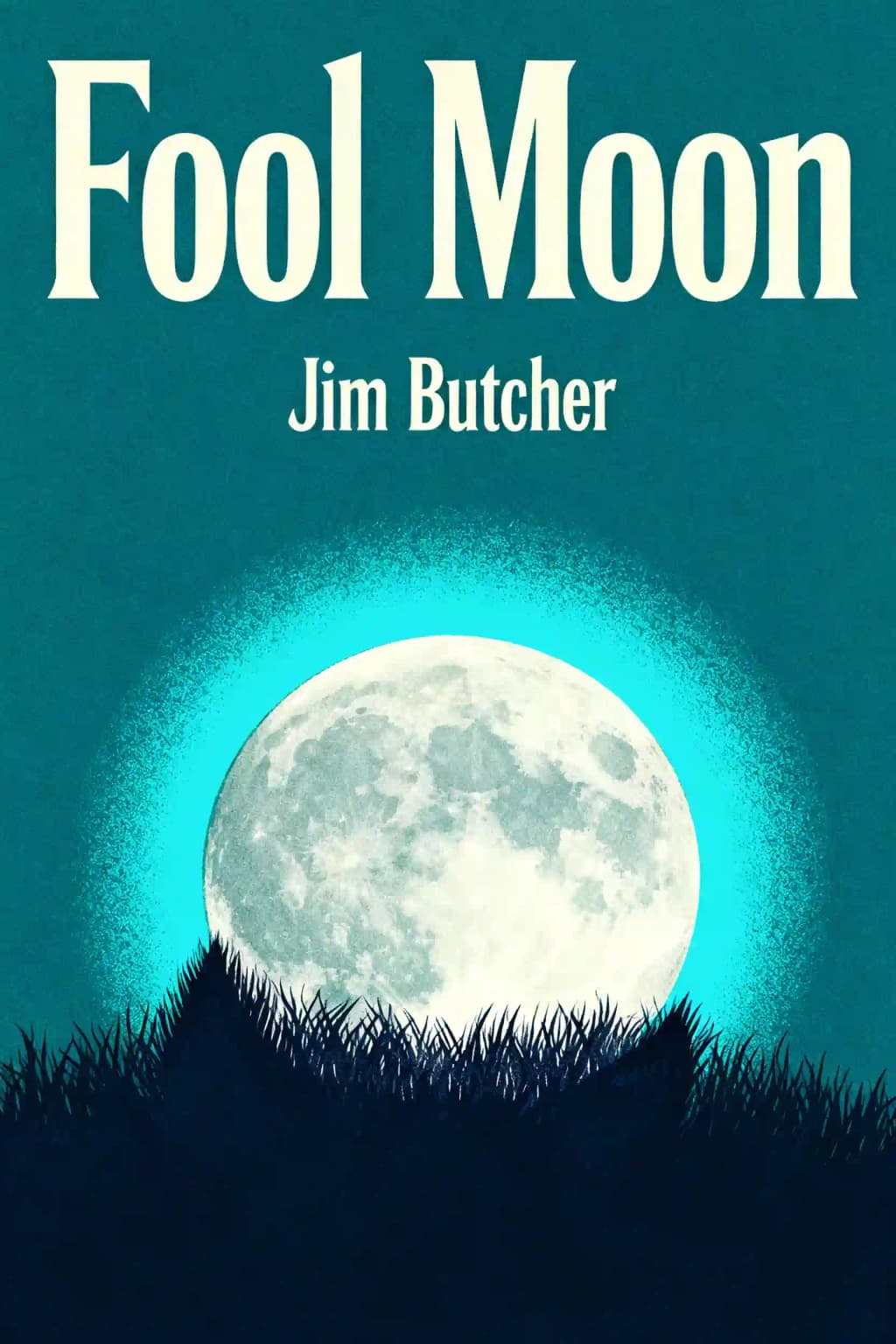
Harry Dresden isn't your average private investigator. As Chicago's only professional wizard, he navigates a world where magic and mundane collide with often deadly consequences. Jim Butcher's "Fool Moon," the second installment in The Dresden Files series, has captivated readers since its 2001 release, selling over 10 million copies worldwide. The novel's exploration of humanity's inner beasts resonated so deeply that it helped establish urban fantasy as a mainstream genre. Even horror master Stephen King praised the series for its "edge-of-your-seat storytelling." What makes this particular installment so compelling is how it forces us to question: what monsters lurk within us all, waiting for the full moon to set them free?
Chapitre 2
A Desperate Client and a Bloody Crime Scene
When Kim Delaney approaches Harry Dresden at McAnally's pub - a sanctuary for Chicago's magical community known for its thirteen columns and ceiling fans that dispel magical energies - she's clutching a dangerous magical diagram with trembling hands. Despite his empty wallet and the tempting prospect of payment, Harry immediately recognizes the third circle she's attempting to create as containment magic far beyond apprentice level. The intricate patterns could unleash forces that would tear through Chicago's magical defenses like tissue paper. Harry crushes her paper and delivers a stern warning about the dangers of advanced thaumaturgy without proper training, though the desperation in her eyes haunts him long afterward.
Lieutenant Karrin Murphy's arrival breaks their month-long silence - a tension stemming from their last supernatural case together. She requests Harry's help with a murder, her stance professional but her eyes betraying genuine concern. Their familiar dynamic returns despite the lingering awkwardness, showing the resilience of their working relationship.
The crime scene at the Varsity Hotel transforms Harry's day from troubling to horrific. One of crime boss Johnny Marcone's most trusted bodyguards lies mutilated in a pool of congealing blood, his face literally torn away and torso split open with surgical precision. The violence suggests both bestial rage and calculated execution - an unsettling combination. A massive paw print in the dust, nearly eighteen inches across, and the timing with the full moon point unmistakably to a werewolf attack, though Harry notes several inconsistencies with traditional lycanthrope behavior.
The investigation takes a hostile turn when FBI agents burst in, led by the imposing Agent Denton. Their aggressive posture and immediate demands to vacate what's technically outside Murphy's jurisdiction raise Harry's paranormal suspicions - especially when Agent Benn's hand moves too quickly to her weapon. The shot she fires goes wide, but Murphy's subsequent cover story about a weapon misfire seems oddly rehearsed.
Murphy reveals the fuller picture over coffee at a nearby diner: these "Lobo killings" - brutal murders occurring precisely on full moon nights - have been escalating. Internal Affairs has been scrutinizing her since a controversial encounter with Marcone, and failure to solve this case means career suicide. Harry's own freedom hangs by a thread, given his consultant status. With four more nights of full moonlight approaching, Harry promises a comprehensive report on werewolf varieties and weaknesses by morning, though he privately admits his knowledge of lycanthropes barely scratches the surface of what they're facing.
What starts as professional courtesy to a friend evolves into a deadly game of supernatural politics. The precise timing of the murders suggests calculation behind the savagery, while the FBI's unusual involvement hints at deeper conspiracies. Harry finds himself navigating between Chicago's mundane power structures and its supernatural underbelly, knowing that one misstep could cost not only his life but also the lives of those he's sworn to protect.
Chapitre 3
The Many Faces of the Wolf
In his laboratory beneath his Chicago apartment, Harry Dresden consults with Bob, his centuries-old air spirit assistant housed in an ancient human skull, about the intricate taxonomy of werewolves they might be facing. What begins as a seemingly straightforward investigation reveals layers of complexity that challenge Harry's previous understanding of shapeshifters. The basement lab, filled with bubbling potions and arcane texts, becomes a classroom for supernatural zoology.
The classic werewolf - often considered the baseline of shapeshifting lore - uses personal magical talent to transform into wolf form while maintaining their human consciousness. These practitioners must dedicate years to mastering their craft, as the early transformations prove especially challenging. Novice shifters struggle with sensory overload: the overwhelming input of heightened smell, superior hearing, and altered depth perception. While formidable, these werewolves typically maintain their human ethics and reasoning, making them less likely to engage in indiscriminate violence. Their greatest challenge lies in balancing human wisdom with newly acquired predatory instincts.
Hexenwolves represent a more insidious threat, using enchanted objects - typically belts or jewelry infused with spirits of bestial rage - to trigger their transformations. These transformed humans become the perfect predators, combining lupine strength and speed with human tactical thinking. The price for this power is steep: the spirit within the talisman slowly corrupts its user, creating an escalating addiction to the rush of transformation. Many hexenwolves start with noble intentions but gradually succumb to bloodlust, requiring increasingly frequent kills to satisfy their growing hunger for violence.
Lycanthropes present a unique variation, never physically transforming but instead channeling primal rage internally. Like their historical counterparts, the Norse berserkers, they tap into humanity's buried bestial nature. Their strength multiplies, pain tolerance increases, and aggressive instincts surge forward - all while maintaining human form. This internalized beast makes them particularly dangerous in urban environments where their nature remains hidden until violence erupts.
The loup-garou stands apart as the most terrifying category - humans cursed by powerful entities to become unstoppable killing machines during full moons. Unlike other variants, these transformations are completely involuntary and absolute. Their near invulnerability to conventional weapons - with only inherited silver capable of causing harm - makes them apex predators even among supernatural beings. The tragedy lies in their lucidity between transformations, fully aware of their curse but powerless to prevent it.
As Harry methodically brews his potions - mixing stimulants to stay alert and concocting scent-masking elixirs to avoid detection - he dispatches Bob to gather intelligence from Chicago's supernatural underground. The investigation's scope expands with each revelation, suggesting they're facing multiple types of werewolves with distinct motivations and origins. Some may be unwilling victims of ancient curses, while others actively chose their path to power, regardless of consequences.
This detailed classification system serves as a profound metaphor for humanity's relationship with its darker nature. Some transformations represent external forces acting upon unwilling victims - curses, circumstances, or trauma beyond their control. Others reflect conscious choices to embrace primal power, trading humanity for strength while risking corruption. Each category illuminates different aspects of human nature: our capacity for violence, our struggle with control, and the eternal battle between civilized restraint and savage impulse.
Chapitre 4
Dangerous Alliances and Hidden Agendas
Harry's investigation takes him to the Streetwolves' headquarters-a rusted garage in Chicago's rougher neighborhoods. Inside, he discovers not werewolves but lycanthropes-humans with the souls of beasts. Their leader, Parker, struggles to control his pack as they chant "Kill him" with growing feral energy. Harry barely escapes after accidentally making soul-gaze contact with Parker, learning the Streetwolves know nothing about the murders but have now become his enemies.
Back at his office, Harry finds an unexpected visitor-crime boss Gentleman Johnny Marcone. Their tense conversation reveals Marcone's fear of the unknown killer threatening his organization. Despite his disgust for what Marcone represents, Harry recognizes the man's humanity-he's afraid and wants to hire Harry to make sense of the supernatural threat. Before leaving, Marcone offers an unexpected lead: "Look up the name Harley MacFinn. Ask about the Northwest Passage Project."
Following this thread, Harry summons the demon Chaunzaggoroth ("Chauncy") to his summoning circle, exchanging one of his names for information about MacFinn. Chauncy reveals MacFinn is one of America's richest men who, after serving in Vietnam, began using his fortune to create a massive wildlife preserve in the Rocky Mountains. James Harding III, recently killed by a werewolf, opposed MacFinn's project. Most significantly, MacFinn comes from an ancient Irish family cursed by Saint Patrick himself to become "a ravening beast at every full moon"-a loup-garou.
When Murphy calls about another murder at MacFinn's Gold Coast address, Harry arrives to find Kim Delaney's mutilated body near a broken summoning circle. In the basement, they discover MacFinn's prison-a silver circle embedded in concrete that had been deliberately damaged. Harry realizes Kim had sought his help to recreate this circle to contain MacFinn during the full moon, and his refusal led directly to her death.
The web of connections grows more complex. Environmental preservation, ancient curses, organized crime, and corrupt law enforcement all intersect in this case. Harry finds himself navigating these dangerous alliances, never certain who to trust or whose agenda might align with his own desire for justice.
Chapitre 5
The Price of Transformation and Power
After escaping police custody with help from Tera West, MacFinn's fiancee, Harry discovers a group of college students called the Alphas who can transform into wolves. Unlike the other werewolves he's encountered, these young people use their abilities to protect their neighborhood from supernatural threats. Their leader, Billy, explains they joined Tera's cause because "Someone has to do something. I can. So I should."
Meanwhile, Harry realizes the FBI agents led by Denton are actually hexenwolves-using magical belts to transform into killer wolves. When Harry confronts Agent Harris, the man confesses everything: the FBI team made a bargain for hexenwulf belts to kill Marcone, planning to frame the Streetwolves. But the power of transformation corrupted them, turning them into addicted killers who hungered for blood and the ecstasy of the change.
"You're not using the power you've been given. It's using you," Harry tells him, confiscating his belt. Tera offers a profound insight: "They have not become animals. Animals kill to eat, to defend themselves or their own. Not for joy. Not for lust. Only humans do that."
This revelation forms the heart of the novel's exploration of power and its corrupting influence. The hexenwolf belts don't create monsters-they merely provide the means for humans to express their darkest desires. When Denton explains why he embraced the belts' power, he coldly states he was tired of watching men like Marcone laugh at the law: "I was given the power. I used it," dismissing innocent deaths as "unfortunate accidents."
The transformation becomes an addiction-not just to the physical power but to the freedom from moral constraints. In wolf form, the hexenwolves can indulge impulses that human society forbids. They can kill without consequence, take what they want, and experience a primal joy in violence. This addiction mirrors how power corrupts in the real world, as those who gain authority often find themselves gradually abandoning the principles that once guided them.
Chapitre 6
The Beast Within Us All
In a desperate battle against Denton's hexenwolves, Harry makes a fateful decision-he puts on one of the wolf belts himself. The transformation is immediate and intoxicating: "My senses became impossibly sharp-I could count individual hairs, hear heartbeats, and see in brilliant shades even through darkness. The world felt right in a profound way I'd never experienced before."
The surge of power is overwhelming as Harry tears at Agent Benn's throat and hamstrings, leaving her helpless. "Her life was mine to take, as it should be," he thinks with savage joy. The belt doesn't just transform his body; it transforms his mind, replacing his moral compass with predatory instinct. When he tastes Denton's blood during their fight, he feels "drunk with power," planning to kill him and "take my rightful place."
Only Susan's terrified voice breaks through this bloodlust. Seeing her fear of what he's become, something inside whispers: "You'll never be Harry Dresden again." Recognizing the dark power consuming him, Harry tears off the belt despite the agony of returning to his injured human form.
This experience forces Harry to confront the beast within himself-the capacity for violence and dominance that exists in all humans. The wolf belt didn't create these impulses; it merely amplified them and removed the social constraints that normally keep them in check. Even after removing the belt, Harry feels "dark pride" at the deaths he caused, suggesting these impulses remain part of him.
The novel asks us to consider what separates humans from monsters. Is it our physical form, our moral choices, or something else entirely? When Harry sees Denton's soul during their confrontation, he witnesses "what had once been a beautiful, ordered structure now decayed and coated with black sludge. A good man poisoned by power until only filth and decay remained." The true transformation isn't physical but spiritual-a corruption of the self that occurs choice by choice, compromise by compromise.
Chapitre 7
Facing the Unstoppable Monster
The climax weaves together multiple narrative threads as Harry, Murphy, and the Alphas converge at Marcone's heavily fortified estate for a confrontation that will test their limits. The initial battle with the hexenwolves - FBI agents corrupted by their belts of wolf magic - serves as a brutal prelude to an even greater horror. Denton and his transformed agents demonstrate the devastating consequences of humans choosing to become monsters, their enhanced strength and speed making them formidable opponents even before the main threat emerges.
The true horror arrives in the form of MacFinn's loup-garou - a creature that transcends typical werewolf mythology. Unlike the hexenwolves, this is no voluntary transformation but an ancient family curse manifest in flesh. The beast towers over them, its proportions defying natural law. Its muzzle stretches impossibly wide, filled with rows of gleaming teeth that shouldn't fit in any earthly skull. Its eyes burn with an inner fire that speaks of supernatural rage, and its fur is matted with the blood of previous victims. The creature's presence alone seems to distort reality, making the air thick and heavy with primal terror.
Harry faces a crisis as his considerable magical abilities prove ineffective against the loup-garou's cursed nature. The beast shrugs off his most powerful spells as though they were summer breezes. In this moment of desperation, Harry's solution comes not from raw power but from heritage and sacrifice - his mother's silver pentacle amulet, a symbol of both his magical lineage and his identity as a wizard. Breaking it from his neck represents both practical necessity and symbolic surrender of protection for offense.
Murphy's appearance creates a moment of crystallized tension - three actors in a deadly triangle. She sees Harry in a threatening pose and reacts based on her recent distrust of him. The loup-garou launches itself toward her with supernatural speed. Harry must act knowing his friend might shoot him, trusting that protecting her matters more than his own safety.
The resolution comes in layers of meaning: The silver pentacle strikes true, carrying with it not just the physical power to pierce the beast's hide but the weight of generations of magical heritage. The blue-white fire that erupts from the wound represents both physical and spiritual purification. MacFinn's transformation back to human form and his final smile carry profound significance - recognition of Harry's mercy in ending not just his rampage but generations of cursed existence.
Murphy's shot, intended for Harry, instead finds Denton - a moment of poetic justice as her mistrust of Harry leads to stopping the true threat she couldn't see. This becomes the catalyst for healing their damaged relationship, demonstrating how trust can be rebuilt through shared danger and revealed truth. The entire sequence illustrates the book's core theme that monsters - whether cursed like MacFinn or choosing their fate like Denton - require specific tools to defeat, be they silver weapons, unwavering courage, or the ability to trust despite doubt.
Chapitre 8
The Aftermath and Lingering Questions
The aftermath brings both closure and new beginnings, though each resolution seems to spawn fresh mysteries. Harry and Murphy work methodically to collect and destroy all the hexenwolf belts, treating each with careful reverence for their dangerous power. They attend the funerals of their fallen colleagues - Officer Carmichael's somber police ceremony with full honors, and Kim Delaney's smaller, more intimate gathering. The weight of these losses hangs heavy, particularly for Murphy, who must now rebuild her department while processing the betrayal of trusted officers.
Susan Rodriguez's career takes an unexpected turn when her footage of the loup-garou's dramatic death briefly makes it to air. Though the segment mysteriously vanishes within hours - replaced by a story about water main breaks - the glimpse of supernatural truth earns her a promotion to lead investigative reporter. Government agencies scramble to suppress the evidence, but traces remain in bootleg copies and internet forums, adding to Chicago's urban legends.
Tera West's recovery and departure prove particularly enlightening. As she prepares to return to her "family" in the Northwest mountains, she shares wisdom about the nature of power and identity that challenges Harry's fundamental assumptions. Her transformation into a timber wolf - graceful and natural - forces Harry to completely invert his understanding. She wasn't a human who could become a wolf; she was always a wolf who could become human. This revelation makes him question other basic assumptions about the supernatural world he thought he knew so well.
The Alphas emerge from the crisis transformed but unbowed. Their pledge of friendship and loyalty to Harry comes with an eager idealism that both touches and concerns him. While they see themselves as potential supernatural vigilantes, ready to fight evil under his guidance, Harry sees young people who don't yet understand the true cost of power. Their enthusiasm contrasts sharply with his hard-earned caution, yet he can't help but admire their determination to use their abilities for good rather than personal gain.
Harry's growing paranoia about being targeted can't be dismissed as mere anxiety. The pattern is becoming clear - first the warlock who seemed to know too much about him, then Denton with the hexenwolf belts appearing in his jurisdiction. These events suggest careful orchestration by unknown forces, hinting at a hidden puppet master testing his capabilities or attempting to eliminate him.
The novel's conclusion crystallizes a crucial truth about monstrosity in all its forms. The most fearsome creatures aren't always those with obvious fangs and claws - they're often the ones hiding behind badges, boardroom tables, or friendly smiles. MacFinn's curse made him a monster one night a month, but Denton's team chose their monstrosity with clear minds. Yet amidst these dark revelations, hope persists. Through the Alphas' idealism, Murphy's resilience, and Harry's unwavering moral compass, we see that conscious choice and ethical conviction can overcome even the most primal urges - even under the revealing light of the fool moon.
Chapitre 9
The Thin Line Between Human and Monster
At its core, "Fool Moon" explores the fragile boundary between humanity and monstrosity. Each character represents a different position on this spectrum, challenging our assumptions about what makes someone-or something-a monster.
Harley MacFinn embodies the unwilling monster-a man cursed to become something he despises during the full moon. Despite his wealth and environmental activism, he cannot escape the ancient curse that transforms him into a killing machine. His tragedy lies in his awareness of what he becomes and his desperate attempts to contain the beast, building elaborate silver circles to imprison himself during transformation. When his containment fails due to sabotage, the innocent people he kills become collateral damage in a war he never chose to fight.
In contrast, Denton and his FBI hexenwolves represent willing transformation-they chose to use the belts for what they initially believed was justice. Their gradual corruption reveals how power erodes moral boundaries, one compromise at a time. What began as vigilante justice against criminals evolved into indiscriminate killing for the pleasure of the hunt. Their transformation is spiritual as much as physical, a corruption of their original ideals.
The Streetwolves occupy yet another position-humans with bestial souls who never physically transform but embrace their predatory nature. Their leader Parker maintains a veneer of civilization while acknowledging his pack's need for violence and dominance. They represent those who accept rather than resist their darker impulses.
Most interesting are the Alphas-college students who learned transformation magic from Tera West to protect their neighborhood. They use their wolf forms for protection rather than predation, maintaining their moral compass despite their bestial shape. They demonstrate that transformation itself is neutral; what matters is the purpose behind it and the choices made while transformed.
Harry's brief experience with the hexenwolf belt forces him to confront his own capacity for violence and dominance. The ease with which he embraces the predatory mindset suggests these impulses existed within him all along, merely waiting for permission to emerge. His resistance and ultimate rejection of this power represent the conscious choice to remain human despite the temptation of becoming something more and less simultaneously.
Through these varied examples, Butcher suggests that monstrosity lies not in our form but in our choices. The true monsters are those who kill for pleasure rather than necessity, who abuse power rather than using it responsibly. In this light, some of the novel's wolves are more human than the people who hunt them, while some humans harbor monsters beneath their skin, waiting for the fool moon to reveal their true nature.