Chapitre 1
When East Met West: The Remarkable Journey of Japan's First Female Exchange Students
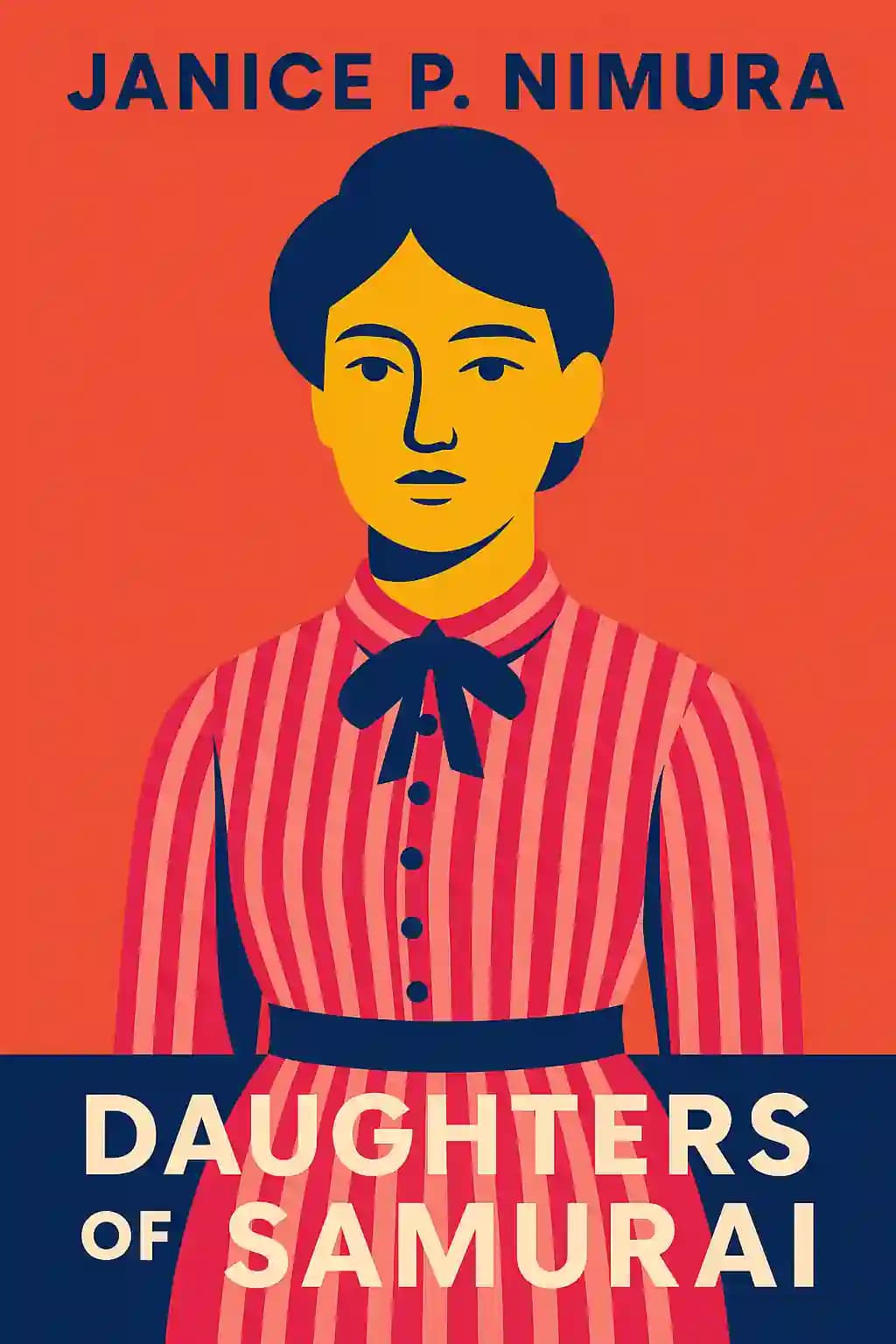
In 1871, five young Japanese girls stood before their empress, receiving an unprecedented commission. They would travel across the ocean to America-becoming the first Japanese females to study abroad-with instructions to return as enlightened women who could help modernize their nation. This extraordinary cultural experiment came during Japan's rapid transformation from isolated feudal society to modern nation-state. Among the many reforms of the Meiji era, sending these daughters of the samurai to America represented perhaps the most radical break with tradition. Their story captivated both American and Japanese society, with newspapers dubbing them "the Japanese princesses." The book became an international bestseller upon publication, with figures like Hillary Clinton citing it as a favorite for its powerful exploration of cultural identity and women's education. Even today, one of these pioneering women-Ume Tsuda-appears on Japanese currency, her legacy honored through Tsuda University, which continues educating Japanese women over a century later.
Chapitre 2
Daughters of the Samurai: A World Transformed
When Commodore Perry's "black ships" forced Japan to open its doors in 1853, the nation faced an existential crisis. For over two centuries, the Tokugawa shogunate had maintained stability through isolation, with the emperor serving as a divine but powerless symbol while the shogun ruled from Edo (Tokyo). The domains, governed by hereditary warlords called daimyo, operated under an ingenious system called "alternate attendance" that required lords to maintain residences in Edo and leave their families there as virtual hostages.
In this world of rigid hierarchy, Sutematsu Yamakawa was born in 1860 to a samurai family in the northern domain of Aizu, known for its martial tradition and fierce loyalty to the Tokugawas. Her childhood unfolded within a walled compound near Tsuruga Castle, where daily life followed strict patterns. Boys studied at the prestigious Nisshinkan school, learning Chinese classics and martial arts, while girls like Sutematsu learned proper conduct and domestic skills at home.
This traditional world collapsed in 1868 when imperial forces overthrew the shogunate. Aizu remained loyal to the old regime, standing defiant against the southern domains supporting Emperor Meiji. Eight-year-old Sutematsu and her family sought refuge in Tsuruga Castle during a month-long siege, where she helped make gun cartridges while cannon fire rained down. After defeat, Aizu's people were exiled to the barren northern province of Tonami, where proud samurai families faced starvation and bitter cold.
The victorious Meiji government dismantled the old order, abolishing domains and replacing them with prefectures administered from Tokyo. Former daimyo received compensation, but lower-ranking samurai lost their stipends and status. Through these changes, Sutematsu's brothers remained determined to reclaim their family's lost prestige, never imagining their sister's future role in the new Japan.
Chapitre 3
A Revolutionary Experiment in Cultural Exchange
In 1871, Kiyotaka Kuroda, a former xenophobic Satsuma samurai turned Meiji bureaucrat, underwent a remarkable transformation after visiting America. Impressed by American women's education and social standing, he concluded that educating Japanese women was essential to national development. His memorandum argued that educated mothers would raise enlightened sons who would lead Japan, serving as "a little leaven" that "leavens the whole lump."
When Tomomi Iwakura planned an embassy to the West, Kuroda proposed sending young women to study abroad. Despite the generous offer-ten years in America with all expenses paid-most families refused to send daughters, fearing they'd return unmarriageable and culturally corrupted. The government eventually selected five girls from defeated samurai families: Sutematsu (11), Ryo and Tei (both 14), Shige (10), and Ume (6).
Twelve-year-old Sutematsu had been sent to Hakodate in Hokkaido to escape starvation in Tonami. Before departing for America, she visited her mother Toi, who reluctantly accepted the decision and gave her daughter a new name: Sutematsu (), combining characters for "discard" and "pine tree"-symbolizing both her sacrificed Aizu heritage and the enduring hope her mother would await her return.
Six-year-old Ume Tsuda was the only girl with any preparation for America-her father Sen Tsuda had previously visited San Francisco and returned with progressive ideas about female education. Having lost his position after the Meiji Restoration, he saw opportunity in sending his daughter abroad. Ume was too young to fully comprehend her fate, knowing only "yes," "no," and "thank you" in English.
Shige's life had been similarly disrupted by political upheaval. Born to a family loyal to the shogunate, she was given away at age seven to Gen'ei Nagai for safety when imperial forces threatened her family. At ten, after three years with her often harsh adoptive mother, Shige was suddenly selected for the American mission without her knowledge.
Chapitre 4
Crossing Boundaries: The Journey to America
The three-week Pacific crossing was miserable. All five girls shared a single cabin and suffered terrible seasickness. After three days, a finance official visited their cabin and, seeing them subsisting on sweets, threw the remaining confections overboard. The journey was marred by an incident when a drunk embassy secretary molested fourteen-year-old Ryo, with embassy leaders showing little concern for the girls' distress.
On January 15, 1872, the steamer America entered San Francisco Bay. As the delegation disembarked, five Japanese girls in bright silk kimonos followed Mrs. DeLong, causing a ripple of excitement through the crowd who believed them to be princesses sent by the Mikado. The Japanese delegates were astonished by American luxury-marble floors, crystal chandeliers, private bathrooms with running water, and especially the elevator, which shocked Kume when "it suddenly started to move and we were pulled upward."
While the men moved freely throughout San Francisco, the five girls remained largely confined to their hotel rooms, taking all meals there and venturing out only under Mrs. DeLong's supervision. Cultural differences proved jarring-having never seen black people before, they were terrified of the hotel waiters and confused by white performers in blackface at the theater.
After two weeks of sightseeing and official functions, the embassy boarded a special train to cross the continent-a journey still novel even for most Americans. They traveled in luxury aboard five Pullman sleeper cars with plush upholstery and ornate decorations. The train journey revealed America's dramatic landscapes-from the stunning heights above the American River to the Sierra Nevada mountains where snowsheds covered miles of track.
After nearly three weeks of delay due to snow blockades, the embassy finally reached Washington on February 29. There they were met by Arinori Mori, Japan's 24-year-old charge d'affaires, who was daunted by the responsibility for the five young females. "What am I to do?" he blurted to his secretary Charles Lanman. "They have sent me a baby!" Fortunately, Lanman and his wife Adeline volunteered to care for the girls.
Chapitre 5
Finding American Families and New Identities
After six months in Washington, Arinori Mori realized the girls weren't progressing in English while living together. He decided to separate them: Ryo, with chronic eye problems, would return to Japan with the homesick Tei; Sutematsu would live with a family in New Haven near her brother Kenjiro; and little Ume would stay with the Lanmans. For Sutematsu and Shige, arrangements were made with Leonard Bacon, a prominent Congregational minister in New Haven.
Leonard Bacon embodied New Haven's intellectual elite-a seventy-year-old minister who had served First Church for over forty decades while teaching theology at Yale. Taking in Japanese girls offered dual benefits: financial support and the opportunity to spread Christianity to "heathens" who would eventually return to Japan as cultural missionaries. When Sutematsu and Shige arrived in New Haven, they were separated to better learn English, with Shige moving to another minister's home while Sutematsu remained with the Bacons.
Sutematsu settled into the Bacon family as the littlest sister in a household of women, forming the strongest bond with Alice, a serious-minded fourteen-year-old with a sharp wit and passion for books. Their friendship accelerated Sutematsu's English acquisition, soon allowing her to attend Grove Hall Seminary alongside Alice. Meanwhile, Kenjiro ensured his sister maintained her Japanese language and Confucian philosophy through weekly lessons.
Sutematsu's education extended beyond academics into social spheres. She attended charitable meetings with Alice, sewing clothes for needy families-her first exposure to philanthropy, unknown in Japan. With neighbor Marian Whitney, daughter of a Yale Sanskrit professor, the girls enjoyed both intellectual pursuits and physical recreation across seasons. By 1875, Sutematsu was ready for Hillhouse High School, New Haven's prestigious public institution whose graduates typically entered Yale or became teachers.
Despite their separate households, Sutematsu and Shige cherished their occasional visits. Shige thrived at the Abbotts' home, which doubled as Miss Abbott's School. Ellen Abbott-"Aunt Nelly" to Shige-became both teacher and maternal figure, introducing her to Christianity and prayer. During summers, Aunt Nelly took Shige on educational excursions to the Berkshires, Boston, Nantucket, and the White Mountains.
Meanwhile, nine-year-old Ume was becoming thoroughly Americanized under the Lanmans' doting care. She excelled academically at Miss Lucy Stephenson's Georgetown Collegiate Institute, winning prizes and embracing Christianity. In essays, she revealed her conflicted cultural identity, advocating for Japan to maintain its language and crafts while adopting American schools and Christianity.
Chapitre 6
At Vassar: Pioneers of Women's Education
In September 1878, Sutematsu and Shige became the first non-white students to enroll at Vassar College, with the Japanese government paying their tuition. Sutematsu pursued a full four-year degree while Shige enrolled as a special music student. Vassar was a self-contained world with distinguished professors, elegant accommodations, structured days beginning at 6:30am, and recreational opportunities from boating to bowling.
Sutematsu and Shige pursued different paths at Vassar. Sutematsu took Latin, math, natural history, English composition, German, and drawing, while insisting they practice Japanese together daily. She cultivated a reserved, intellectual image, excelled in English, contributed polished essays to the Miscellany, and was elected class president. Shige, studying music history, theory, voice, piano and organ, became beloved for her spirited personality, entertaining performances, and unfailing sympathy for ailing classmates.
In October 1881, Shige departed for Japan on the steamer Oceanic, described by the San Francisco Chronicle as "a thorough New-England girl in all her instincts" despite her "petite figure" and Japanese heritage. She offered a parting sentiment about education: "My country will never become advanced until her women and mothers are educated." Unlike her uncertain companions, Shige sailed with excitement to marry Sotokichi Uriu, a man of her own choosing who uniquely understood her American experience.
Returning to Vassar for her senior year, Sutematsu missed Shige deeply. As president of the Philalethean Society, she organized meetings and dramatic productions while carrying a full course load. At graduation in June 1882, Sutematsu delivered a speech on "British Policy toward Japan" that was hailed as "the most notable" oration of the day. The Asahi Shimbun reported that "Never before had a foreigner's speech moved an American audience so much," bringing honor to herself and Japan.
Chapitre 7
The Journey Home: Cultural Whiplash
After Sutematsu's graduation, her foster mother Catherine Bacon died in July, leaving her parentless once again. This created an opportunity for Alice Bacon, now an independent adult, to join Sutematsu in Japan. Both women viewed their futures as devoted to education rather than family, seeing greater impact in the classroom than in marriage.
Instead of vacationing in the Litchfield Hills, Sutematsu spent July and August at the Connecticut Training School for Nurses. Meanwhile, she daydreamed about a life in Japan that resembled her New England experience-she and Alice keeping house together in "American style," teaching English and physiology, and taking summer trips to explore her childhood home.
Seventeen-year-old Ume had just received her diploma from the Archer Institute, excelling in Latin, Mathematics, Physics, Astronomy, and French. After a decade as the Lanmans' beloved foster daughter, she had become a "sprightly, accomplished, affectionate, and opinionated girl" whose farewell party made the local papers.
The steamer Arabic departed San Francisco on October 31, taking the shorter but rougher northern route to Japan. What Ume had expected to be "like a seashore sojourn" became a three-week ordeal of violent storms. As the ship pitched across the turbulent Pacific, Sutematsu and Ume contemplated their uncertain futures. Ume, who had left Japan at seven, retained few memories of her Japanese childhood and had absorbed American Christian morality. Sutematsu's understanding was more sophisticated, having left Japan at nearly twice Ume's age with indelible memories of her ancestral home and the defeat of her domain.
As they approached Yokohama, the girls spotted their welcoming party frantically waving handkerchiefs from an approaching tugboat. The coastline that had once been home now seemed alien to them. When offered a choice between Western and Japanese cuisine, they eagerly chose Japanese, then surprised themselves by naturally handling chopsticks despite their long absence. "Skill in using the chopsticks seems to be inherited and the last thing to be forgotten by Japanese otherwise denationalized," Sutematsu observed with relief.
Chapitre 8
Between Two Worlds: The Challenge of Return
Sutematsu arrived at the Yamakawa home where her mother Toi waited, along with her brother Kenjiro (now a physics professor at Tokyo Imperial University) and his wife, and her sisters. The reunion was marked by Japanese restraint rather than American exuberance. Though her spoken Japanese returned surprisingly quickly, reading and writing would require more effort. With determination, Sutematsu set about relearning her past culture, even making her own Japanese clothes despite aching knees from sitting on tatami floors.
Ume's reentry into the Tsuda family proved dismayingly difficult despite an initially glorious welcome. She found herself physically uncomfortable, especially struggling with Japanese customs like removing shoes indoors. She clung to her Western dresses and undergarments, unable to adapt to kimonos. Most painfully, she couldn't speak her native language. "I am bound hand and foot, I am both deaf and dumb," she lamented in letters to America. Surrounded by unfamiliar faces and customs, she felt awkwardly large in "a land of little people" and perpetually out of place.
Shige's wedding on December 1, 1882, symbolized the momentous shift in all three women's lives. "Such a curious mixture," Ume wrote, "such a wedding never was before and never again will be known." The Japanese bride and groom were perfectly comfortable in Western attire-Shige in maroon silk trimmed with swan's down from Paris, Uriu in his naval uniform. The Christian ceremony was conducted in Japanese, with guests in a mix of Western and Japanese clothing. Most unusual of all, at least to Japanese eyes, was that this was "a love match: love on both sides."
With Shige comfortably employed teaching piano at the Ministry of Education's Music Investigation Committee, Sutematsu and Ume faced uncertain futures. Unlike Shige, they dreamed of founding a school. Their meeting with Kiyotaka Kuroda proved disheartening when, after polite conversation, he asked them to sing, treating them as curiosities rather than educated professionals. "All these great men in Japan are not Christians and are, besides, very immoral," Ume wrote. "We feel as if we were a drop in an ocean."
Chapitre 9
Unexpected Turns: Marriage and Independence
The question of marriage loomed large for Sutematsu. Despite having "refused to marry three distinct persons," her future remained uncertain. In Japan, women over twenty were considered old maids, objects of pity or scorn regardless of their accomplishments. While Sutematsu's ambition battled with her pride, a welcome distraction came when Shige's brother organized a party featuring a performance of "The Merchant of Venice." Sutematsu played Portia brilliantly, with Ume as her lady-in-waiting Nerissa.
Then came the shocking news: Iwao Oyama, the forty-year-old Minister of War and recent widower with three daughters, requested Sutematsu's hand in marriage. Most stunning was that Oyama had been a Satsuma man-enemy of the Aizu-who had fired cannons at Tsuruga Castle where Sutematsu had once dodged shells. The Yamakawa family initially rejected him outright.
Yet Oyama, who had studied in Europe and understood Western ways, saw in Sutematsu the perfect consort: Japan's only female bachelor's degree holder, fluent in English, elegant and poised. His cousin Tsugumichi Saigo intervened, appealing to the family's sense of duty-this union could help transcend old rivalries in the new Japan.
Sutematsu's decision tormented her. A year earlier, marrying a stranger old enough to be her father would have seemed absurd. But her months in Japan had been chastening. Teaching English until her Japanese improved seemed a lonely path with limited impact. As Oyama's wife, she might access power and influence otherwise unattainable. "What must be done is a change in the existing state of society," she wrote, "and this can only be accomplished by married women."
Ume found herself isolated after her friends' marriages, declaring to Mrs. Lanman, "Please don't write marriage to me again-not once. I am so sick of the subject. I am not going to marry unless I want to." While Sutematsu and Shige moved into new phases of life, Ume struggled with her purpose in a Japan that was increasingly rejecting Western influences.
Chapitre 10
Finding Purpose: Education as a Path Forward
Desperate to escape her ennui, Ume reluctantly accepted a teaching position at Kaigan Jogakko ("Seaside Girls' School"). Though she enjoyed playing "schoolma'am" and teaching English, history, and geography, she maintained her distance from her students, noting they lacked "refinement, sense of true honor, or moral standards" of girls she knew.
At a grand government ball celebrating the emperor's birthday, Ume encountered Hirobumi Ito, who had once comforted the five homesick girls during their journey to America. Now minister of the imperial household, Ito became Ume's patron, introducing her to Utako Shimoda, who ran Toyo Jojuku, a finishing school for elite women. Ito arranged for Ume to teach English there while receiving Japanese lessons from Mrs. Shimoda.
Ito soon invited Ume to live in his household, eliminating her commute and providing immersion in Japanese high society. In the Ito household, Ume enjoyed luxurious accommodations, servants, and most importantly, serious conversations with Ito himself about "books, or interesting things about women's work."
As Ume settled into teaching, she reconnected with Sutematsu, who invited her to join weekly sumi-e ink painting lessons. With General Oyama in Europe studying Prussian military systems, Sutematsu focused on advancing women's education. After dismaying visits to court where she witnessed the empress's restricted life, Sutematsu joined Ito's gathering of "learned ladies" to discuss bringing Japanese women "out of the shadows." This meeting birthed plans for a Peeresses' School under imperial patronage where elite daughters could embrace Western ideas while simultaneously introducing such thinking to the court.
Sutematsu soon spearheaded Japan's first-ever charity bazaar to benefit Tokyo's Charity Hospital. This revolutionary concept required persuading aristocratic ladies who "never heard of charity" to make and sell handicrafts-something they considered "very lowering." Despite initial resistance, over two hundred women participated, contributing paintings, embroidery, and other crafts. With over ten thousand visitors and proceeds six times the expected amount, the bazaar was declared a triumph despite some criticism from traditionalists.
Chapitre 11
Legacy: Building Educational Foundations
In 1888, Alice Bacon arrived in Japan to teach at the Peeresses' School. She and Ume shared a house that perfectly symbolized their bicultural lives, with Ume occupying the traditional Japanese side while Alice inhabited the Western-style portion with glass windows, swinging doors, and carpeted floors.
Alice's year in Tokyo coincided with significant ceremonial events showcasing Japan's rapid modernization. She witnessed the Emperor Meiji reviewing Western-style troops on his birthday, noting how the once-hidden sovereign now appeared publicly in European-style military uniform. In February 1889, she observed the emperor promulgating Japan's first constitution. The signatories included many who had been involved with the girls' American journey years before: Prime Minister Kuroda who initiated their education abroad, Ito who had traveled with them, and Sutematsu's husband General Oyama.
As Alice departed Japan in 1889, Ume Tsuda was making her own journey to America, arriving in Philadelphia to pursue higher education at Bryn Mawr College. At Bryn Mawr, Ume thrived among ambitious, intellectual women, forming a deep friendship with fellow student Anna Cope Hartshorne. Though sent to study American teaching methods, she chose to focus on biology, coauthoring a scientific paper on frog eggs.
After returning to Japan in 1892, Ume resumed teaching at the Peeresses' School while promoting the American Women's Scholarship she had helped establish. Despite her progressive educational views, Ume's concept of women's roles remained surprisingly traditional-she advocated education primarily so women could be intellectual equals to their husbands and wise influences on their children.
By the early 1890s, Japan embraced Western imperialism, viewing Korea as vital to national security. When war with China erupted in 1894, Sutematsu channeled her anxiety into organizing women's support for the war effort. She joined the Ladies' Volunteer Nursing Association, making bandages for the Red Cross: "We all wear nurses' costume and we carbolize our hands & clothes in a truly hospital style."
Chapitre 12
A Lasting Educational Legacy
On September 14, 1900, Ume opened Joshi Eigaku Juku (Women's Home School of English) in a small rented house with fourteen students. The teaching staff consisted of Ume, Alice Bacon, Utako Suzuki, and Alice's daughter Mitsu. In her opening speech, Ume emphasized that true education required treating each student as an individual rather than focusing on facilities.
Within six months, enrollment doubled despite strict entrance standards. The curriculum went beyond English to include Japanese and Chinese literature, history, and ethics. Ume's revolutionary teaching methods required students to prepare before class, offer opinions, and even disagree with teachers-a radical departure from Japanese educational norms that emphasized memorization and deference.
In March 1902, thirty years after the Iwakura Mission, surviving members gathered for a reunion at the former Rokumeikan, now the Peers' Club. Sutematsu, Shige, and Ume were the only women invited. After the event, the three women spent the night at Sutematsu's home, temporarily setting aside considerations of rank to reminisce like girls again, united by their shared extraordinary journey.
Ume's school flourished rapidly, moving to a well-equipped building next to the British embassy in 1903. By 1904, it received government approval as a senmon gakko (vocational college), the highest standard possible for a women's private school, and its graduates were exempted from teaching certification exams.
The Russo-Japanese War of 1904-5 once again placed Iwao Oyama and Sotokichi Uriu in prominent military roles, with Oyama serving as commander-in-chief in Manchuria and Uriu leading a naval squadron that sank Russian ships. In April 1908, tragedy struck when Sutematsu's son Takashi and Shige's son Takeo, both naval cadets, died when their training ship Matsushima accidentally exploded.
In July 1912, the Emperor Meiji died, ending an era marked by both vision and folly, progress and frustration. His funeral procession stretched for miles, uniting Japan's promising future with her glorious past in a spectacular display that completed the national identity project first imagined by the Iwakura Mission leaders.
Sutematsu died of influenza in 1919 at age sixty. Shige died of cancer in 1928 at sixty-seven, the same evening Emperor Hirohito officially received the imperial treasures. Ume died less than a year later at sixty-four. Her school was renamed Tsuda Eigaku Juku-the "Tsuda Home School of English"-and her ashes were placed on the rebuilt campus, surrounded by plum trees. Today, Tsuda College thrives with 2,500 women students who call themselves "Umekos" and sometimes visit her memorial before important examinations to ask for help.
These three remarkable women-Sutematsu, Shige, and Ume-navigated between two worlds at a pivotal moment in history. Their extraordinary journey from samurai daughters to American-educated pioneers helped shape modern Japan's approach to women's education, creating legacies that continue to resonate over a century later. Through their struggles and triumphs, they embodied the complex cultural exchange between East and West that would define Japan's entry into the modern world.